Every parent knows the kitchen is the real center of the house — homework gets done at the island, snacks get made mid-afternoon, and somehow every spill, scuff, and sticky handprint finds its way to the same three surfaces. For families in Longmont, designing a kitchen that can actually keep up with kids isn't about sacrificing style. It's about choosing safe, durable materials that stand up to everyday life from the start.
A kid-friendly kitchen isn't a separate design style — it's a smarter version of a great kitchen. Rounded edges instead of sharp ones. Surfaces that shrug off crayon and juice instead of staining. Flooring that's forgiving underfoot instead of unforgiving when a toddler slips. Here's what to prioritize, room feature by room feature.
What Makes Cabinetry Safe and Durable for Kids?
Cabinetry takes more daily abuse in a family kitchen than almost anything else — little hands pulling on doors, backpacks banging into corners, drawers used as step stools when nobody's looking.
The most family-friendly cabinets combine thoughtful safety features with finishes that hold up to years of everyday use. A few features worth prioritizing:
● Soft-close doors and drawers. These eliminate slammed fingers and reduce the "step stool drawer" temptation, since drawers can't be yanked open with a hard jolt.
● Eased or rounded cabinet edges and corners. Sharp corners at counter height can increase the risk of injury if a child falls or bumps into them. A rounded profile softens the risk without changing the overall look of the cabinetry.
● Child safety latches on lower cabinets. Especially important for cabinets storing cleaning supplies, sharp tools, or anything near the stove.
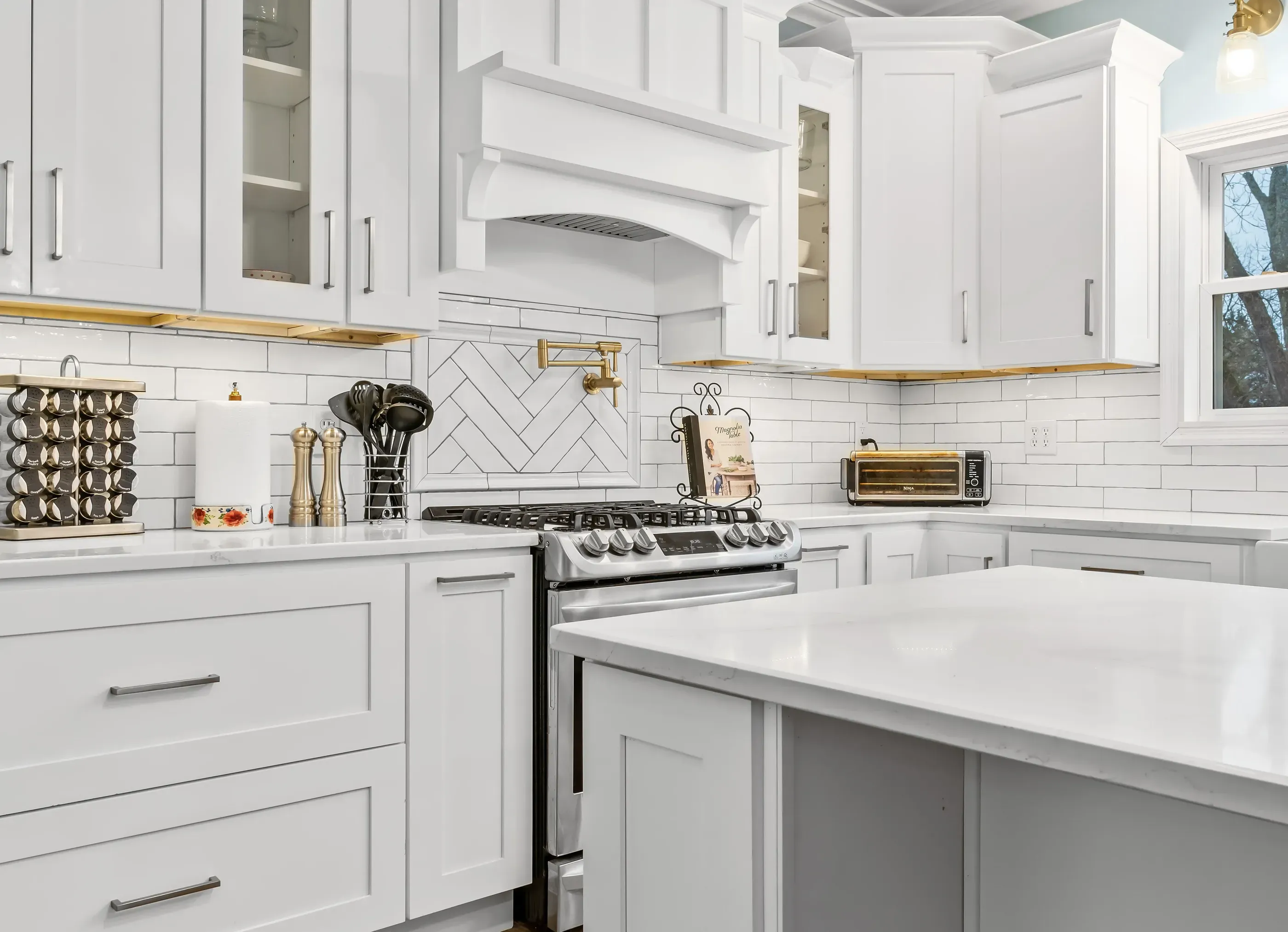
● Scratch- and moisture-resistant finishes. Thermofoil, quality laminate, and well-sealed painted finishes tend to hold up better to daily wear than delicate stains or unsealed wood, especially on lower cabinets that take the brunt of kid-height contact.
● Durable hardware. Many families prefer pulls because they're easier for small hands to grip and often stand up well in busy kitchens.
What Countertop Materials Hold Up Best to Kids?
Countertops need to survive crayons, juice, dropped dishes, and the occasional standing-on-the-counter incident every parent pretends doesn't happen. Some materials are simply built for that reality better than others.
● Quartz is one of the strongest choices for families — non-porous, highly stain- and scratch-resistant, and it never needs sealing. Spilled juice and most everyday messes are typically easy to wipe away.
● Granite, when properly sealed, is heat- and scratch-resistant and holds up well to daily use, though it does need periodic resealing to stay stain-resistant.
● Solid surface materials (like Corian) are seamless and repairable if scratched, which makes them a practical option for high-traffic family kitchens.
● Butcher block brings warmth but requires more upkeep — regular oiling and quick cleanup of spills — so it works best paired with a more resistant material at the main prep zone.
Edge profiles matter as much as the material. A rounded ("bullnose") or eased edge softens what is otherwise one of the most common injury points at counter height for young kids.
What's the Safest, Most Durable Flooring for a Family Kitchen?
Kitchen flooring in a family home needs to handle three things at once: spills, drops, and the occasional slip during a chase around the island.
● Luxury vinyl plank (LVP) is a favorite for family kitchens — waterproof, highly scratch-resistant, and softer underfoot than tile, which matters when a toddler takes a tumble.
● Porcelain tile is extremely durable and water-resistant, though it's harder and colder underfoot, so a slip-resistant finish and area rugs near play zones are worth considering.
● Engineered hardwood offers real wood warmth with better moisture resistance than solid hardwood, though it's still more vulnerable to water damage than vinyl or tile.
● Cork flooring is naturally soft, warm, and has a bit of give — a genuine plus for households with young kids — though it needs a quality sealant to resist water and staining.
Slip resistance deserves special attention. Look for a matte or textured finish rather than high-gloss, especially in the zones right around the sink and refrigerator where spills are most common.
Which Kitchen Materials Are Easiest to Maintain?
Busy families benefit from materials that require minimal upkeep. Quartz countertops typically need only soap and water for everyday cleaning, while luxury vinyl plank flooring is easy to sweep and mop. Cabinets with durable painted or laminate finishes are often easier to clean than unfinished wood, helping your kitchen look newer despite fingerprints, spills, and everyday wear.
What Other Details Make a Kitchen Genuinely Family-Friendly?
Beyond the big three surfaces, a handful of smaller design choices make a real difference in day-to-day safety and function:
● Low-VOC and non-toxic finishes. Cabinet and countertop sealants with low volatile organic compound levels mean better air quality in a room where kids spend a lot of time.
● Rounded island corners. Kitchen islands are a common place for bumps and scrapes, particularly for toddlers who are still developing balance.
● A dedicated low-drawer "kid zone." A single accessible drawer stocked with kid-safe dishes, snacks, or activities keeps little hands out of everything else.
● Non-slip rugs with grip backing. Especially in front of the sink and stove, where water and oil are most likely to end up on the floor.
● Stove knob covers and appliance latches. Small additions, but genuinely important ones for households with young kids.
Why Longmont Families Trust The Designery Longmont with Their Kitchen Design
Every family's kitchen has a different rhythm — different ages, different routines, different tolerance for mess. That's exactly why material selection shouldn't be a one-size-fits-all catalog decision.
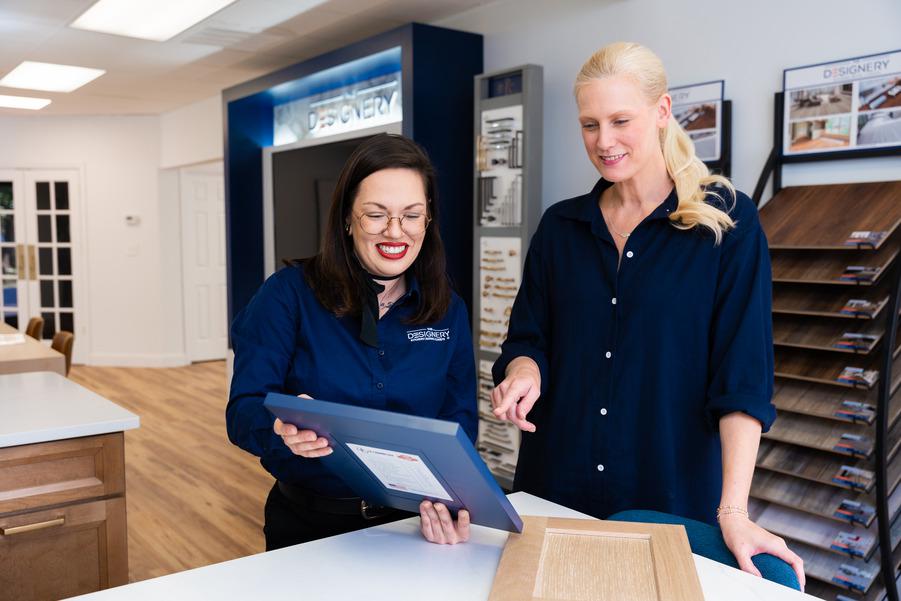
When you visit our Longmont showroom, our design team can walk you through full-size samples of scratch- and stain-resistant countertops, durable cabinet finishes, and family-tested flooring options side by side, helping you compare materials based on your family's lifestyle, budget, and design goals. We'll also help you think through the small details, like edge profiles and hardware choices, that make the biggest difference for households with young kids.
Whether you're planning a full kitchen remodel or simply exploring material options, we're here to help you create a space that's beautiful, functional, and built for everyday family life.
Visit our showroom: The Designery Longmont 1350 Ken Pratt Blvd, Ste 4, Longmont, CO 80501
Frequently Asked Questions
What is the most durable countertop material for a family with young kids?
Quartz is generally considered the top choice for families because it's non-porous, highly resistant to scratches and stains, and requires no sealing. It stands up well to the daily wear of a busy household kitchen.
Is vinyl or tile flooring better for a kitchen with kids?
Luxury vinyl plank tends to be the better choice for households with young children, since it's waterproof, scratch-resistant, and softer underfoot than tile — a meaningful difference when a fall or slip happens. Porcelain tile is more durable long-term but is harder and colder, so a textured, slip-resistant finish is important if you choose it.
Are rounded cabinet and countertop edges actually necessary for child safety?
They're not required, but they're one of the simplest ways to reduce injury risk at counter height, where sharp corners are more likely to make contact during a fall. Many Longmont families choose an eased or bullnose edge specifically for this reason on islands and lower cabinetry.
What cabinet features help keep kids safer in the kitchen?
Soft-close doors and drawers, child safety latches on lower cabinets, and durable pull-style hardware are the features that make the most day-to-day difference. Together, they reduce pinched fingers, limit access to unsafe items, and hold up well to repeated use by small hands.