If you've started researching flooring for a remodel, you've almost certainly landed on this same fork in the road: luxury vinyl plank (LVP) or engineered hardwood? Both look beautiful. Both are significantly better than the carpet or dated tile they're replacing. Both are staples of Front Range home design right now.
But they are not the same product, and the right choice depends heavily on your home, your household, and — critically — the specific conditions that come with living in Colorado.
At The Designery Longmont, this is one of the most common conversations our design team has with homeowners. Here's the honest breakdown.
What Each Product Actually Is
Before comparing them, it helps to understand what you're actually buying.
Luxury vinyl plank (LVP) is an engineered synthetic product built in rigid layers: a wear layer on top (measured in mils — more on that shortly), a printed design layer that mimics wood or stone, and a rigid core — either SPC (stone polymer composite) or WPC (wood polymer composite) — that gives it its structure and dimensional stability. It contains no real wood.
Engineered hardwood is a real wood product. It has a genuine hardwood veneer on top — the species you're actually seeing and walking on — bonded over multiple cross-laminated layers of plywood or high-density fiberboard. That layered construction is what separates it from solid hardwood and gives it greater stability across humidity and temperature changes.
Both can be made to look nearly identical from a few feet away. The differences emerge in performance, longevity, and the conditions each handles best.
How They Compare: The Factors That Matter Most
Water and Moisture Resistance
This is where LVP wins decisively — and in Colorado, it's worth paying attention to.
LVP is 100% waterproof. Not water-resistant. Waterproof. It won't swell, buckle, or delaminate from standing water, which makes it the clear choice for bathrooms, basements, laundry rooms, and mudrooms — anywhere moisture is a regular presence.
Quality LVP lines, like MSI's Everlife® collection (which we carry at The Designery Longmont), are specifically engineered with rigid SPC cores and protective wear layers that hold up in high-moisture environments without sacrificing the visual warmth of a wood look.
Engineered hardwood is meaningfully more moisture-tolerant than solid hardwood, but it is not waterproof. Prolonged exposure to water or persistent moisture can cause the veneer to lift, warp, or separate from the core. In living rooms and bedrooms — where spills are occasional and manageable — this isn't a significant concern. In bathrooms or basements, it is.
Colorado's dry climate also adds a variable most homeowners don't consider: our average indoor relative humidity in winter can drop well below 30%, which causes wood products to shrink slightly and can create gapping between planks. Engineered hardwood handles this better than solid hardwood, but LVP — with no wood content — is essentially unaffected.
Winner for moisture and climate stability: LVP
Durability and Scratch Resistance
This one is more nuanced.
LVP's wear layer is typically made with aluminum oxide — an extremely hard protective coating. Thicker wear layers (20 mil and above) provide excellent resistance to scratches, scuffs, and pet claws. The Everlife® line uses MSI's proprietary CrystaLux wearlayer technology, which is specifically designed to resist the kind of daily damage that active households dish out.
Engineered hardwood's surface is real wood, which means it can scratch — and over time, in high-traffic areas or homes with large dogs, that wear will show. However, engineered hardwood with a thick enough veneer can be lightly sanded and refinished when the surface eventually shows its age. LVP cannot be refinished; when it's worn, it's replaced.
For scratch resistance in the short-to-medium term: LVP. For long-term surface restoration potential: engineered hardwood.
Winner for scratch resistance: LVP. Winner for long-term refinishability: Engineered hardwood.
Resale Value and Buyer Perception
Real estate data is consistent on this point: homes with real wood flooring sell faster and command higher prices than comparable homes without it. In Colorado's competitive housing markets — particularly Boulder, Longmont, and the surrounding Front Range communities — buyers in the $500,000+ price range actively look for hardwood and view it as a premium feature.
LVP is viewed positively by buyers, especially compared to old carpet or worn laminate. But it doesn't carry the same premium as real wood, and in higher-end markets, sophisticated buyers may note the difference.
If resale value is a primary consideration and your budget allows, engineered hardwood is the stronger investment in most Front Range markets.
Winner for resale value: Engineered hardwood.
Installation and Lifestyle Fit
Both products are available in click-lock installation systems that go over most existing subfloors, which simplifies the installation process and can reduce labor costs compared to nail-down or glue-down applications.
LVP is somewhat more forgiving of minor subfloor imperfections, and its waterproof nature means it can go virtually anywhere in the home — all on the same product. For homeowners who want a cohesive look from the mudroom through the kitchen, living room, and into the bedrooms without switching materials, LVP makes that continuity easy to achieve.
Engineered hardwood requires a clean, level subfloor and some acclimation time before installation — particularly important in Colorado, where the product needs to adjust to our low ambient humidity. Professional installation is strongly recommended to ensure the floor performs as intended.
Which Rooms Should Get Which Product?
Here's a practical room-by-room guide for Colorado homes:
● Primary bedroom → Engineered hardwood. Low moisture risk and light foot traffic make this the ideal room to invest in real wood. The warmth underfoot and natural character are most appreciated in a space designed for comfort.
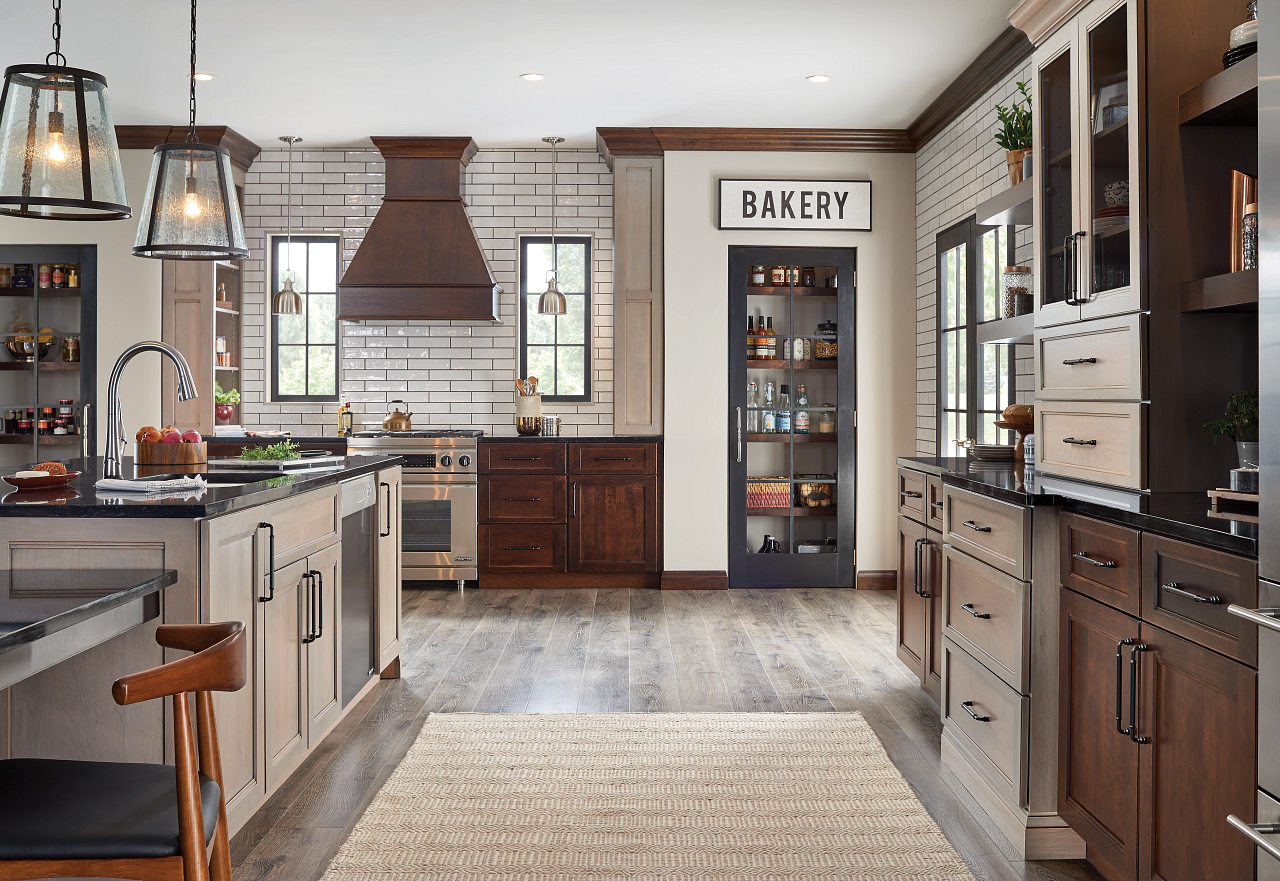
● Living and dining areas → Either, based on your priorities. In open-concept layouts, whichever material you choose should run continuously for a clean, expansive look. Choose engineered hardwood if resale value is a driver; LVP if you want seamless continuity from high-traffic zones without switching products.
● Kitchen → LVP. Spills, dropped dishes, and constant foot traffic make waterproof the right call here. Premium LVP handles it all without flinching.
● Bathrooms → LVP. No exceptions. Moisture resistance isn't optional in a bathroom, and engineered hardwood simply isn't built for this environment.
● Basement → LVP. Even in Colorado's dry climate, basements carry moisture risk. LVP's waterproof core means you're covered if conditions change.
● Mudroom and entryway → LVP. Snow boots, wet paws, and mud tracked in from the trail — this space takes the most abuse in any Colorado home. LVP holds up; engineered hardwood won't thank you for it.
● Home office → Either. Low traffic and personal preference drive this one. If the office connects visually to a room with engineered hardwood, match it for continuity.
The Honest Bottom Line
Neither product is universally better. The right answer depends on you.
Choose LVP if: you have kids, pets, or high-traffic conditions; you need a single product that works throughout the home including bathrooms and basement; your budget is a meaningful constraint; or you want maximum durability with minimal maintenance.
Choose engineered hardwood if: you want real wood character and warmth; resale value is a priority; you're investing in a long-term home and want a floor you can refinish; or you're designing a space where the feel of natural material genuinely matters to you.
Many homeowners we work with choose both — LVP in the practical zones (bathrooms, basement, mudroom, kitchen) and engineered hardwood in the spaces where the look and feel of real wood is part of the design intent (primary bedroom, main living areas).
See Both Side by Side at The Designery Longmont
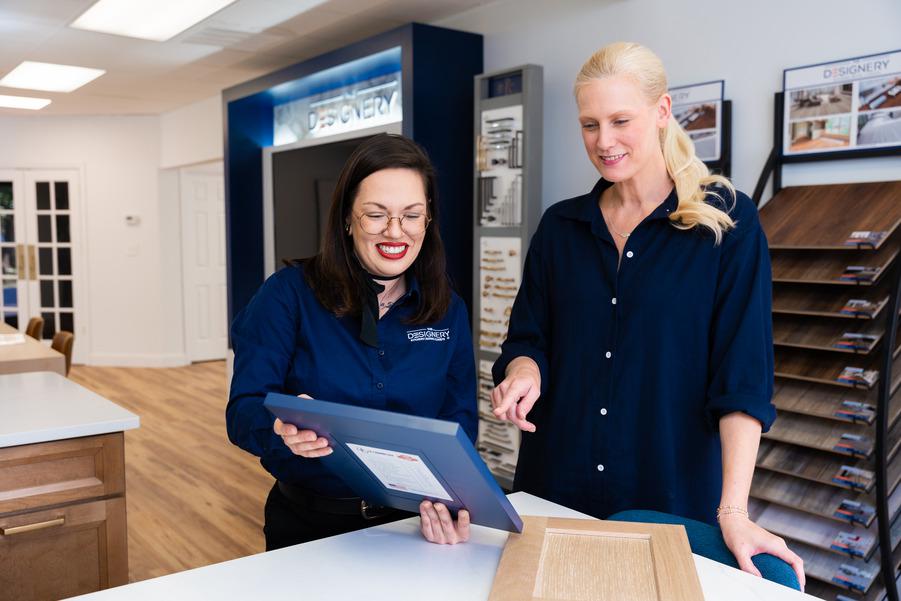
The best way to make this decision isn't on a screen — it's in person. At our showroom at 1350 Ken Pratt Blvd Ste. 4 in Longmont, you can see full-scale samples of both LVP and engineered hardwood, feel the difference underfoot, and work with our design team to find the right fit for your specific rooms, budget, and lifestyle.
We carry quality MSI Surfaces flooring products alongside other trusted lines, and our team is experienced helping Front Range homeowners — from Longmont and Boulder to Erie, Loveland, and Fort Collins — make flooring decisions they're genuinely happy with years later.
Schedule a free consultation or stop by the showroom to get started.
Frequently Asked Questions
Is LVP or engineered hardwood better for Colorado homes?
The best flooring for Colorado homes depends on the room, lifestyle, and budget. Luxury vinyl plank (LVP) performs exceptionally well in Colorado because it is waterproof and unaffected by the state's dry climate and seasonal humidity swings. Engineered hardwood offers the authentic look and feel of real wood and can add more resale value, making it a popular choice for living rooms, dining rooms, and primary bedrooms. Many Front Range homeowners choose a combination of both products to balance durability and aesthetics.
Does engineered hardwood hold up in Colorado's dry climate?
Yes. Engineered hardwood is specifically designed to be more dimensionally stable than solid hardwood, making it well-suited for Colorado's low humidity environment. Its layered construction helps reduce expansion, contraction, and gapping caused by seasonal moisture changes. However, maintaining indoor humidity levels between 30% and 50% can help maximize the long-term performance of any wood flooring product.
What adds more resale value: luxury vinyl plank or engineered hardwood?
In most Colorado and Front Range real estate markets, engineered hardwood is generally viewed as a premium flooring material and can contribute more to resale value than luxury vinyl plank. Buyers often prefer real wood flooring in main living areas and primary suites. That said, high-quality LVP is highly desirable in kitchens, bathrooms, basements, and mudrooms because of its durability and waterproof performance. The highest-value approach often combines engineered hardwood in living spaces with LVP in moisture-prone areas.