There's something no manufactured flooring product has fully replicated: the feeling of walking on real wood. The warmth underfoot, the natural grain variation, the way light moves across the surface differently at every hour of the day. Engineered hardwood delivers all of that — and in Colorado's demanding climate, it does so with a structural intelligence that solid hardwood simply can't match.
If you're drawn to the look and feel of real wood flooring but have concerns about our dry winters, temperature swings, or long-term durability, this guide is for you.
What Engineered Hardwood Actually Is
Engineered hardwood is a real wood product — that distinction matters and is worth stating clearly. It is not laminate. It is not vinyl. The surface you see and walk on is genuine hardwood, cut from the same species you'd find in a solid plank floor.
What makes it "engineered" is what's underneath that surface. Rather than a single solid piece of wood from top to bottom, engineered hardwood is constructed from a real hardwood veneer bonded over multiple cross-laminated layers of plywood or high-density fiberboard. Those underlying layers are oriented in alternating grain directions, which gives the floor its structural stability — counteracting the natural tendency of wood to expand and contract with changes in humidity and temperature.
That construction is the key to why engineered hardwood outperforms solid hardwood in Colorado specifically. More on that below.
How It's Built: The Specs That Matter
Like LVP, engineered hardwood has a few critical numbers worth understanding before you shop.
Veneer thickness is the most important spec. This is the real hardwood layer on top — the part you're actually living on — and its thickness determines both how the floor wears over time and whether it can be refinished when the surface eventually shows its age.
● 2mm veneer: Entry-level engineered hardwood. Suitable for lower-traffic spaces; limited refinishing potential, typically one light sand at most.
● 3–4mm veneer: The residential sweet spot. Handles daily wear well and can typically be refinished one to two times over its life, significantly extending its usable lifespan.
● 4–6mm veneer: Premium tier. Found in high-end products, allows for multiple refinishes over decades of use, and provides the most authentic solid-hardwood feel underfoot.
Total plank thickness affects how the floor feels underfoot and its ability to bridge minor subfloor imperfections. Most quality residential engineered hardwood falls between 1/2 inch (12mm) and 5/8 inch (15–16mm). Thicker planks feel more substantial and sound more like solid hardwood when walked on.
Plank width has become a defining design choice in current Front Range home design. Wide-plank formats — 7 inches and above — read as more luxurious and contemporary, show off the natural grain character of the wood species more dramatically, and create a sense of visual spaciousness in a room. Narrower planks (3–5 inches) read as more traditional and are often associated with older home styles.
MSI's W Series engineered hardwood — which we carry at The Designery Longmont — exemplifies the wide-plank direction the market has moved. The Ladson® collection features 7.5-inch wide planks in genuine European White Oak with a 2mm sliced veneer, while the McCarran® collection steps up to an ultra-wide 9.5-inch plank with a more substantial 4mm sawn-cut veneer and 5/8-inch total thickness. Both use MSI's CrystaLux Ultra™ protection layer and a multi-ply engineered core built for long-term dimensional stability.
Why Engineered Hardwood Outperforms Solid Hardwood in Colorado
Solid hardwood is a beautiful product, but it has a real vulnerability in our climate: it moves with moisture. In Colorado's semi-arid winters, when indoor relative humidity can drop to 25–30%, solid hardwood shrinks. You see it as gaps between planks. In more extreme cases, you see cupping, cracking, or boards that start to lift at the edges.
Engineered hardwood's cross-laminated core largely solves this problem. Because the layers beneath the veneer are oriented in opposing grain directions, they pull against each other when the wood wants to move — significantly reducing the expansion and contraction that solid hardwood experiences. The floor stays flatter, tighter, and more dimensionally stable through Colorado's humidity swings.
This doesn't mean engineered hardwood is immune to humidity effects — it's still real wood, and extremes matter. But in a normally conditioned Colorado home, a quality engineered hardwood product performs with the stability solid hardwood simply can't deliver here.
A few additional Colorado-specific advantages worth noting:
● Radiant heat compatibility. Engineered hardwood is generally compatible with in-floor radiant heating systems, which are common in Front Range homes. Solid hardwood is not recommended over radiant heat.
● Below-grade installation. Engineered hardwood can be installed in above-grade basements or at ground level where mild moisture is a variable. Solid hardwood cannot.
● Acclimation. Engineered hardwood still benefits from acclimating to your home's environment before installation — particularly important in Colorado, where the product is likely arriving from a more humid climate. Your installer should allow adequate time for this step.
Choosing a Wood Species
The species determines the color palette, grain character, and hardness of your floor. Here's how the most popular options compare for Colorado homes:
● European White Oak — The dominant choice in current Front Range design. Offers a clean, tight grain with subtle variation, available in a wide range of tones from warm honey to cool gray. Sits at a Janka hardness rating around 1,360 lbf — excellent scratch resistance for residential use. Extremely versatile across design styles from transitional to contemporary.
● Domestic White Oak — Similar characteristics to European White Oak with slightly more pronounced grain character. A classic, enduring choice that works well in traditional and transitional homes.
● Hickory — The hardest of the domestic species at around 1,820 lbf on the Janka scale. Bold, high-contrast grain pattern with significant color variation. Excellent for high-traffic homes; the look skews rustic or craftsman.
● Walnut — Rich, dark tones with a fine, flowing grain. Softer than oak at around 1,010 lbf, so it shows wear more readily in very high-traffic areas. Best suited to spaces where the dramatic, luxurious aesthetic is the priority and foot traffic is moderate.
● Maple — Very light in color with a subtle, consistent grain. Exceptionally hard at around 1,450 lbf. Creates a clean, contemporary look; particularly effective in modern and Scandinavian-influenced interiors.
For most Colorado homeowners we work with, European White Oak hits the ideal balance of durability, design versatility, and the current aesthetic direction of Front Range home design.
Finish Options and What They Mean
The finish on an engineered hardwood floor affects both its appearance and how it wears over time.
● Matte and satin finishes are the dominant choice in current design. They show less glare, hide everyday dust and minor scratches better than glossy finishes, and read as more natural and understated.
● Wire-brushed and hand-scraped textures add deliberate surface texture that mimics the look of aged or reclaimed wood. These finishes are extremely effective at disguising everyday wear because the texture itself provides camouflage.
● Smooth finishes show the grain and color most clearly and give a cleaner, more formal look. They require more attentive maintenance to stay looking their best.
● UV oil finishes penetrate the wood rather than sitting on top of it, giving a more natural, matte appearance and making spot repairs easier. These may require periodic re-oiling but tend to age gracefully.
Where Engineered Hardwood Belongs in Your Home
Engineered hardwood is most at home in living spaces where its natural warmth and character are appreciated and moisture isn't a consistent factor:
● Primary bedrooms — The quietest, most personal space in the home is where the warmth and authenticity of real wood is felt most. Low moisture risk, low foot traffic, ideal environment.
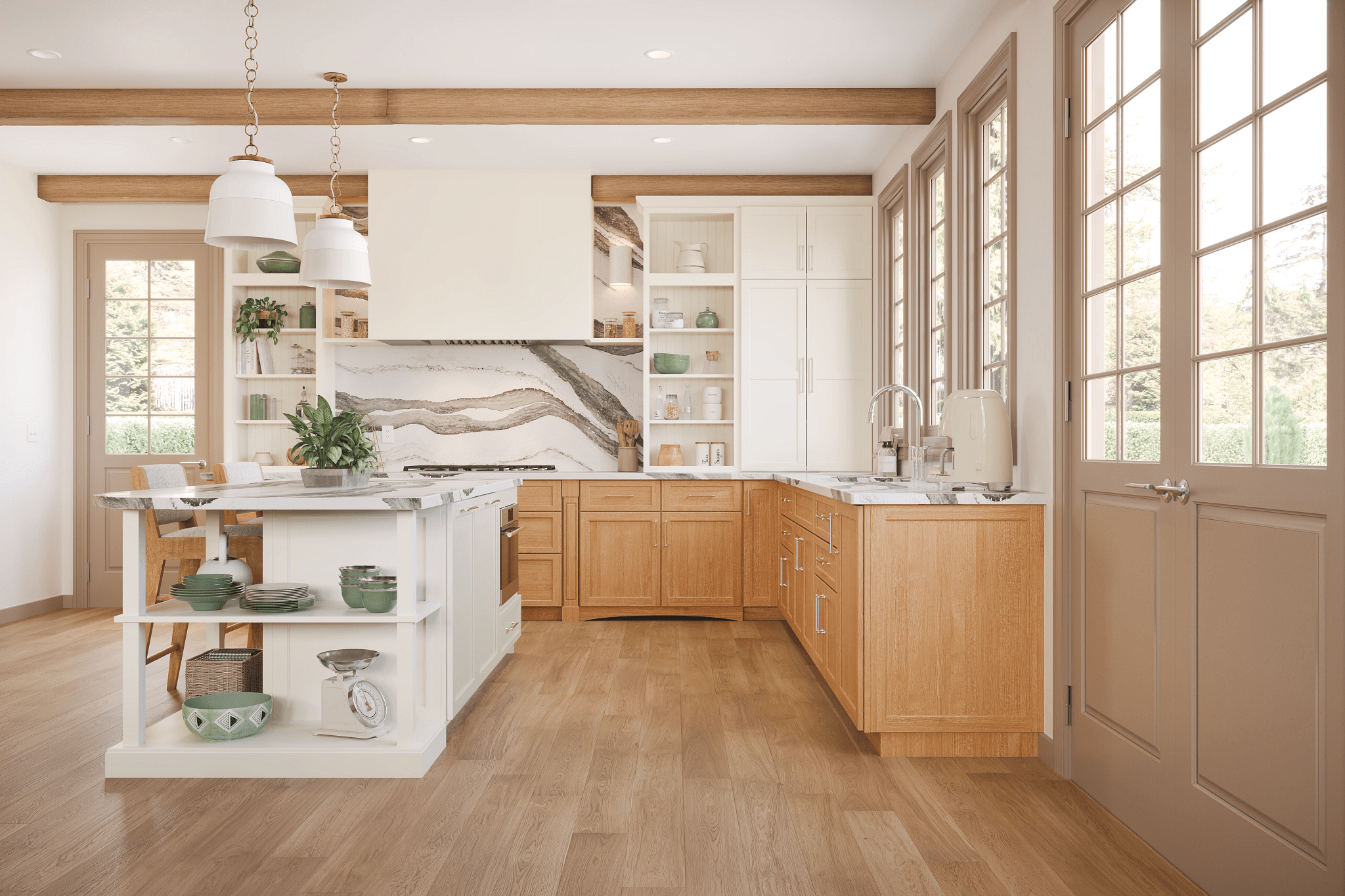
● Living and dining rooms — The heart of the home is where engineered hardwood earns its keep visually. Wide-plank oak running continuously through an open-concept space creates a cohesive, elevated look that defines the design.
● Hallways and transition spaces — Carrying the same hardwood through connecting hallways maintains visual continuity and avoids the fragmented look of switching materials in every room.
● Home offices — Light traffic, personal environment, and often a space where design quality matters to the homeowner. Engineered hardwood fits naturally.
● Above-grade spaces with radiant heat — If you have in-floor heating, engineered hardwood is the wood flooring option designed for it.
Where we generally recommend against engineered hardwood: bathrooms, below-grade basements with moisture risk, and mudrooms that see heavy snow and wet traffic. LVP is the stronger choice in those environments.
A Note on Refinishing and Longevity
One of the most compelling arguments for engineered hardwood over LVP is what happens 15 or 20 years from now. A quality product with a 3–4mm veneer can be lightly sanded and refinished when the surface shows wear — refreshing the floor without replacement. That's not possible with LVP.
For homeowners planning to stay in their home long-term, the math on engineered hardwood improves significantly over time. A floor that can be refinished and look new again is a floor that can last 40 or 50 years. That's an investment in the home, not just a renovation expense.
See It in Person at The Designery Longmont
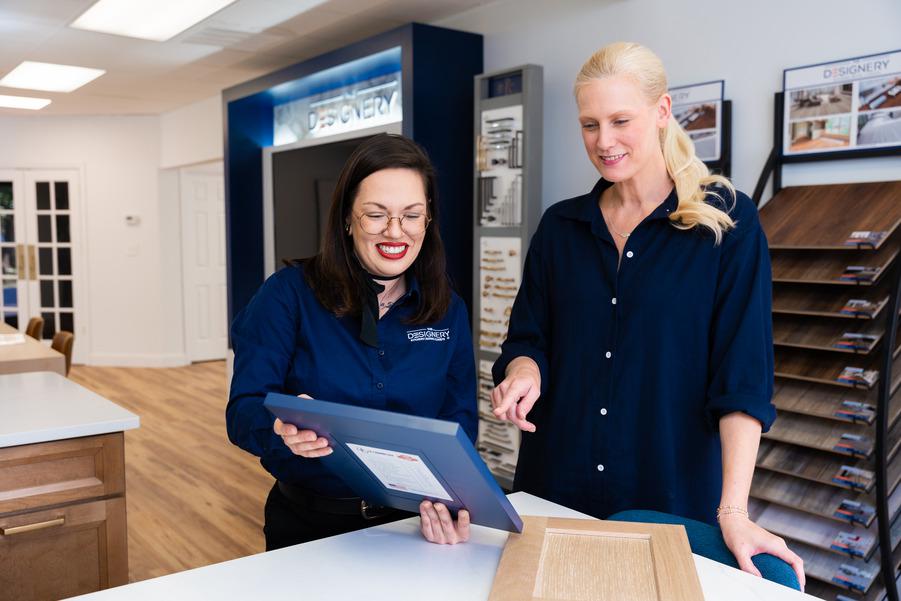
Engineered hardwood is a product that genuinely needs to be experienced at full scale. A 4-inch sample card doesn't communicate what a 9.5-inch wide-plank European White Oak floor looks like running through a living room. It doesn't capture the texture, the light reflection, or the warmth underfoot.
Our showroom at 1350 Ken Pratt Blvd Ste. 4 in Longmont has full-scale hardwood displays alongside our LVP, tile, and natural stone collections — so you can see the materials in context and make comparisons that actually mean something. Our design team works with homeowners throughout the Front Range, from Longmont and Boulder to Erie, Loveland, and Fort Collins, to find hardwood solutions that fit their homes, their lifestyles, and their budgets.
Frequently Asked Questions
Can engineered hardwood be installed over radiant heat in a Colorado home?
Yes — engineered hardwood is one of the few real wood flooring options compatible with in-floor radiant heating, making it a strong choice for the heated slab applications common in Front Range homes. The key is maintaining stable temperature settings; dramatic swings in radiant heat output can still stress the wood over time. Your installer should verify compatibility with the specific product and heating system before installation.
How does Colorado's dry climate affect engineered hardwood differently than solid hardwood?
Solid hardwood expands and contracts significantly with humidity changes, which in Colorado's dry winters can cause visible gapping, cupping, or cracking. Engineered hardwood's cross-laminated core counteracts this movement, keeping the floor flatter and more stable through our seasonal humidity swings. It's not immune to humidity effects — extremes still matter — but for a normally conditioned Colorado home, the performance difference is substantial.
How many times can engineered hardwood be refinished?
It depends on the veneer thickness. A 2mm veneer allows for one light sand at most. A 3–4mm veneer can typically be refinished one to two times. A 4mm or thicker veneer may allow for two to three refinishes over its lifetime. This is why veneer thickness is one of the most important specs to ask about when shopping — it directly determines the long-term value of the investment.