Luxury vinyl plank flooring has earned its place as the most installed flooring product in American homes — and nowhere does that make more sense than in Colorado. Waterproof, dimensionally stable, scratch-resistant, and available in styles that convincingly replicate the warmth of real wood, LVP is built for exactly the kind of active, climate-variable life Front Range homeowners live.
But not all LVP is the same. The difference between a floor that looks and feels great a decade from now and one that shows its age in three years often comes down to a few key specs most homeowners don't know to ask about. This guide covers all of it — so when you walk into a showroom, you know exactly what you're comparing.
What LVP Actually Is (And How It's Made)
Luxury vinyl plank is a synthetic flooring product constructed in four bonded layers, each serving a specific function:
● The wear layer sits on top and is the single most important spec on any LVP product. It's a clear, protective coating — typically made with aluminum oxide — that takes the daily punishment of foot traffic, pet claws, furniture legs, and dropped objects. Its thickness is measured in mils (one mil = one-thousandth of an inch), not millimeters. More on this below.
● The design layer is a high-resolution photographic print that gives the floor its visual character — the wood grain pattern, color, and texture you're actually seeing. Advanced printing and embossing technology in today's better LVP lines makes this layer remarkably convincing.
● The rigid core gives LVP its structure and stability. Most quality LVP today uses an SPC (stone polymer composite) core — a dense blend of limestone powder and PVC resin that is inherently rigid, dimensionally stable, and 100% waterproof. SPC is heavier and harder underfoot than earlier foam-core products, and it holds its shape across temperature and humidity swings far better.
● The backing layer provides sound dampening and a degree of cushioning underfoot. Some products include a pre-attached underlayment; others require a separate underlayment to be installed.
Understanding these four layers explains why two LVP products that look similar on a sample board can perform very differently in your home.
The Spec That Actually Matters: Wear Layer Thickness
Wear layer thickness is the most important number on any LVP product — more predictive of long-term performance than overall plank thickness. Here's a practical guide:
● 6 mil: Entry-level. Suitable for very light-traffic areas or short-term installations. Not recommended for most residential applications.
● 12 mil: A solid baseline for moderate residential use — guest bedrooms, home offices, low-traffic living areas. Provides good everyday protection under normal conditions.
● 20 mil: The sweet spot for active households. This is commercial-grade protection applied in a residential context, and it's what we recommend for kitchens, main living areas, mudrooms, and any home with pets or children. A 20 mil wear layer resists scratches, scuffs, and the kind of daily abuse that Colorado homes see from hiking gear, dogs, and kids who never take their shoes off at the door.
● 22 mil and above: Premium tier, offering maximum protection for the highest-traffic residential or light commercial applications.
The lines we carry at The Designery Longmont — including products from MSI's Everlife® collection — are available with wear layers up to 20 mil and above, with MSI's proprietary CrystaLux wearlayer technology providing additional protection against scratches, spills, pet accidents, indentations, and UV fading. These aren't just marketing claims — they're backed by ASTM testing standards and industry-leading warranty coverage.
One common misconception worth clearing up: a thicker plank does not mean a more durable floor. A 5mm plank with a 20 mil wear layer will outperform an 8mm plank with a 6 mil wear layer every time. Total plank thickness affects comfort, sound dampening, and the floor's ability to bridge minor subfloor imperfections — all of which matter — but the wear layer is what protects your investment.
Why LVP Works So Well in Colorado
Colorado's climate creates flooring challenges that LVP handles better than almost any other material.
Low humidity. Front Range winters can push indoor relative humidity well below 30%. Wood-based flooring — solid hardwood especially, but even some engineered hardwood — responds to that by shrinking, which creates visible gaps between planks. LVP, with its SPC core and no real wood content, is essentially unaffected by humidity fluctuation. It stays put through dry winters and humid summers alike.
Temperature swings. Colorado homes experience significant seasonal temperature variation, and in spaces like sunrooms, mudrooms, or finished basements, that variation can be dramatic. Quality SPC-core LVP is engineered to handle this without buckling, gapping, or delaminating.
Active households. Snow boots, dog paws, muddy kids, ski gear, mountain bikes moving through the garage — Colorado homes see it all. LVP's waterproof construction and scratch-resistant wear layer are designed for this kind of use without requiring the careful maintenance that wood demands.
Basements. Even in Colorado's relatively dry climate, below-grade moisture is a real variable. LVP is the only flooring material we recommend without reservation for basements — it's fully waterproof and won't react if conditions shift.
What LVP Looks Like Today
One of the most common objections to LVP from homeowners who haven't seen it recently is that it "looks fake." That objection is increasingly obsolete.
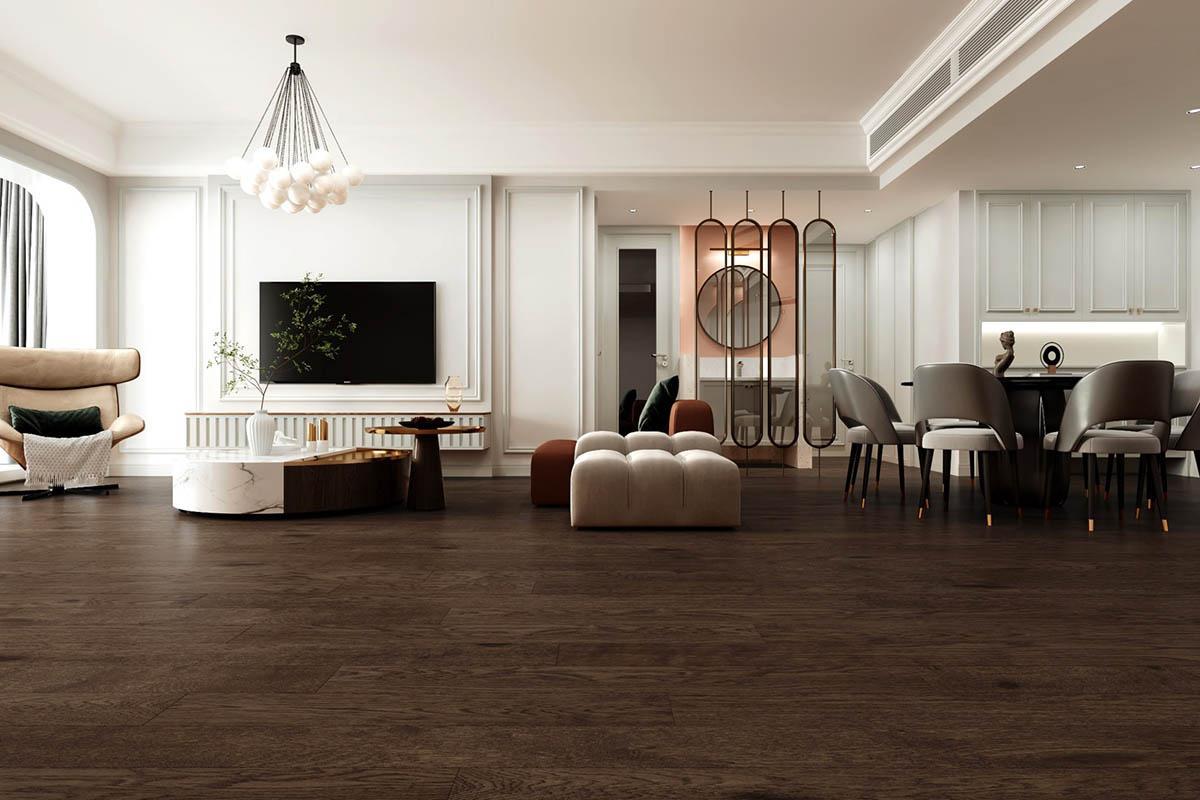
Modern LVP uses emboss-in-register technology, which aligns the surface texture of the plank precisely to the printed grain pattern beneath it — so the grain lines you see are also the texture you feel. Wide-plank formats (7 inches and above) look more like real hardwood than ever. Color variation, realistic knot patterns, hand-scraped and wire-brushed textures — today's quality LVP requires a closer look than most people expect to identify it as vinyl.
The range of styles available now covers virtually every design direction: warm honey oaks for traditional spaces, cool gray tones for contemporary interiors, rich dark stains for a dramatic look, light natural finishes for a coastal or Scandinavian aesthetic. If you have a design vision, there's an LVP colorway that fits it.
Where LVP Performs Best in Your Home
LVP's waterproof nature makes it the strongest choice in moisture-prone and high-traffic spaces, but its durability and design range make it a legitimate option throughout the home:
● Kitchens — Waterproof and scratch-resistant, easy to clean, stands up to the spills and foot traffic that kitchens generate daily.
● Bathrooms — The unambiguous choice for bathroom floors. No moisture concerns, no warping, no complicated maintenance.
● Basements — Fully waterproof construction handles below-grade moisture that would compromise wood products.
● Mudrooms and entryways — Takes the punishment of Colorado's outdoor lifestyle without complaint. Choose a 20 mil wear layer here.
● Open-concept main levels — LVP can run continuously from kitchen through living and dining areas in a single material, creating visual continuity across the whole level.
● Bedrooms and home offices — Perfectly viable, particularly if budget, pet-friendliness, or design continuity across the home is a priority.
What to Ask When You're Shopping for LVP
When you're comparing products — whether in our showroom or anywhere else — these are the questions that matter:
● What is the wear layer thickness?
● Is the core SPC or WPC? (SPC is denser and more dimensionally stable — generally preferred for Colorado's climate)
● Is it FloorScore® or GREENGUARD Gold certified? (These certifications indicate low VOC emissions — important for indoor air quality)
● What does the warranty cover, and for how long? (Residential vs. light commercial, and what conditions apply)
● Does it include an attached underlayment, or do I need to purchase that separately?
At The Designery Longmont, our team walks through all of this with you in the context of your specific rooms, your household, and your design goals. We're not here to sell you the most expensive product — we're here to help you find the right one.
Professional Installation: Why It Matters for LVP
LVP is often marketed as a DIY-friendly product, and the click-lock installation system does make it more accessible than many flooring types. But for a whole-home installation or rooms with complex layouts, transitions, and subfloor variables, professional installation makes a meaningful difference in the finished result.
The subfloor must be flat, clean, and dry — within 1/8 inch per 6 feet — before LVP goes down. Irregularities at the subfloor level will telegraph through the floor over time, causing locking issues, gaps, and uneven wear. Our installation partners are experienced with Colorado's specific subfloor conditions and know how to set a floor up to perform the way the product is designed to.
See Our LVP Collection at The Designery Longmont
If you're considering LVP for a kitchen remodel, bathroom renovation, basement finish, or full-home update, the best next step is seeing the options in person. Sample cards don't do justice to how LVP looks and feels at full scale.
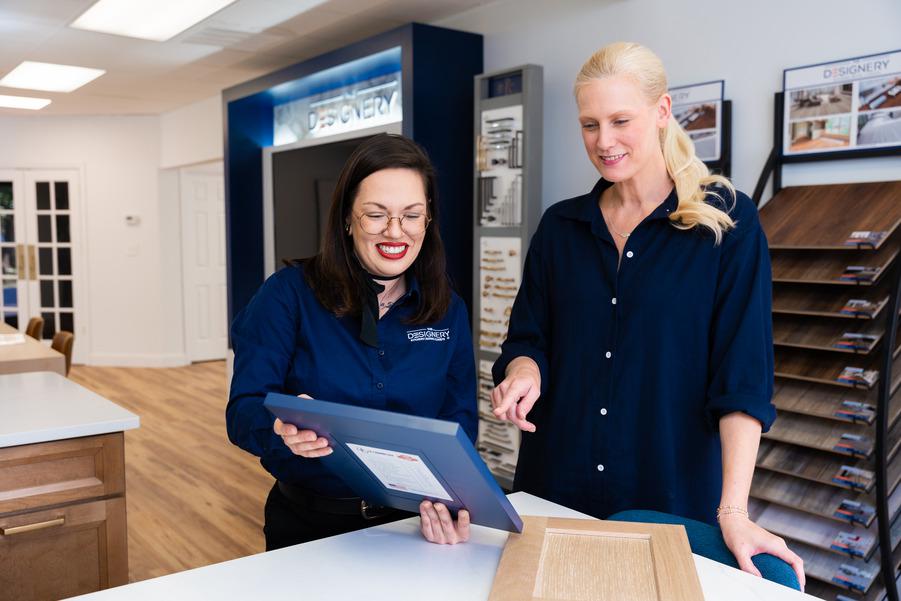
Visit our showroom at 1350 Ken Pratt Blvd Ste. 4 in Longmont to walk full-size displays, compare wear layers and core constructions side by side, and talk through your project with our design team. We serve homeowners across the Front Range — Longmont, Boulder, Erie, Loveland, Fort Collins, and beyond — and we're here to help you make a decision you'll be happy with for years.
How long does luxury vinyl plank flooring last in a Colorado home?
Quality LVP with a 20 mil wear layer typically lasts 15–25 years in a residential setting with normal care. Colorado's dry climate actually works in LVP's favor — low humidity doesn't affect it the way it affects wood flooring. Longevity comes down to wear layer thickness, installation quality, and subfloor preparation. A properly installed 20 mil product in a well-maintained home can comfortably reach the upper end of that range.
Can LVP be installed over existing flooring?
In most cases, yes. MSI Everlife® and similar quality LVP products can be installed over existing hard surfaces — tile, hardwood, concrete — as long as the surface is clean, dry, and level within 1/8 inch per 6 feet. This can simplify a renovation significantly by eliminating demo costs. Your installer will assess the existing surface and flag any issues that need to be addressed before installation begins.
Is luxury vinyl plank flooring a good choice if I plan to sell my home?
LVP is viewed positively by buyers — far more so than carpet or worn laminate — and its durability means it will still look good at resale time. In the mid-range Colorado market, it's a strong, broadly appealing choice. In higher-end homes above $700K–$800K, buyers may expect real wood in main living areas, so engineered hardwood is worth considering for those spaces. Many homeowners use LVP in practical zones and engineered hardwood where it's most visible.