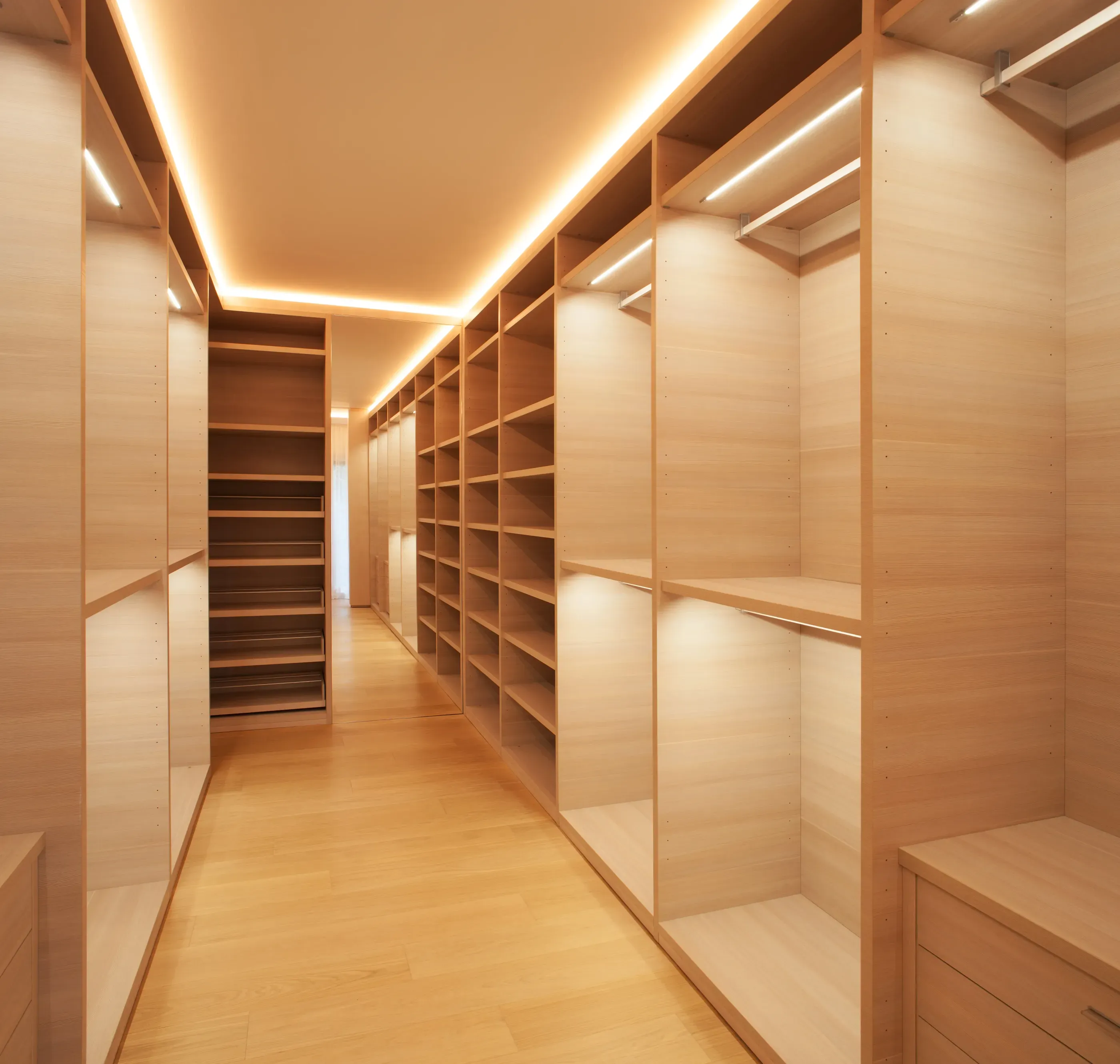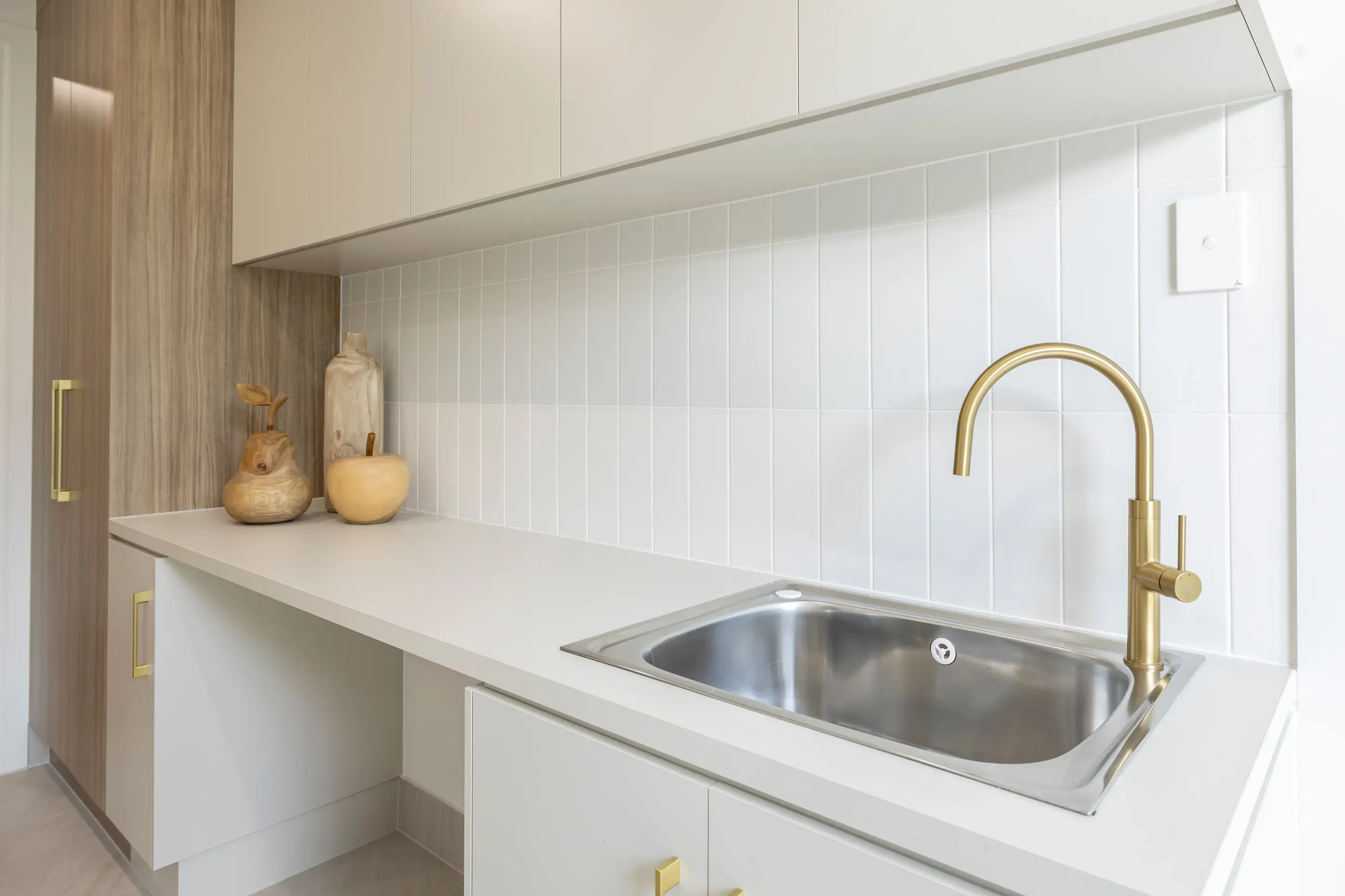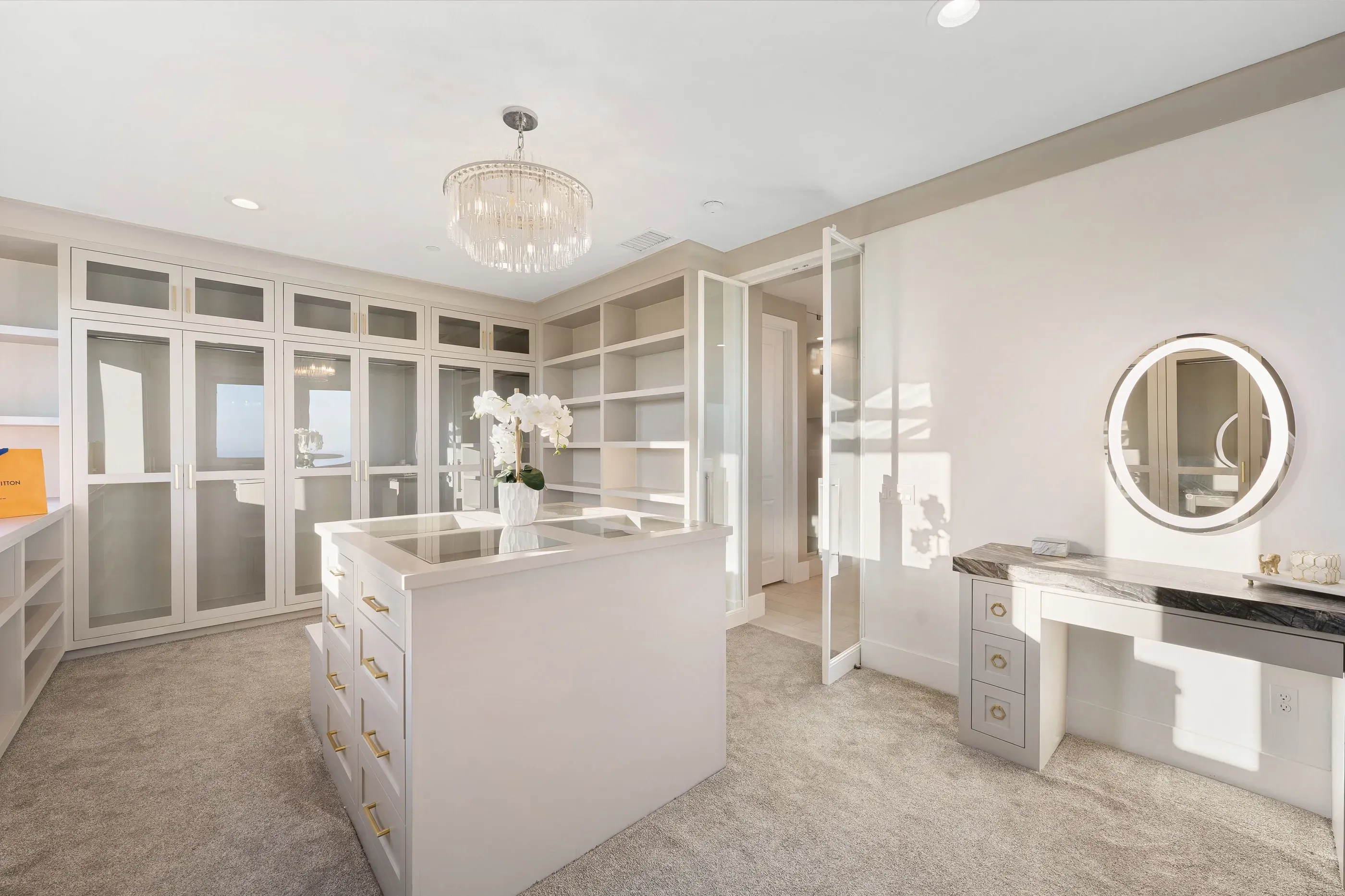
Outlets in a custom closet remodel should be located based on your routine and where you most use any devices or appliances. Usually, we move into a space and alter our habits to fit what’s already installed. In your newly designed closet, you get to choose where outlets will go near vanities or in drawers.
Keep reading for more discussion on this topic, with plenty of practical tips for your closet remodel.
Why does outlet placement matter in a closet remodel?
Outlet placement determines where you iron clothes, charge your phone, or get ready. It also has an aesthetic impact, with many choosing to keep outlets out of sight. Task lighting, like LED mirrors, can also be determined by where an outlet sits.
If you’re remodeling an old design and wondering whether to update the outlet locations for a walk-in closet, the answer is likely yes. We’re charging devices today that didn’t exist several years ago and using smart technology everywhere. The upgrade will help future-proof your custom closet.
Common mistakes with outlets in a custom closet remodel
Why do people end up tripping over extension cords in their very own custom closet? Electrical outlets weren’t treated as an important design detail. Avoid these missteps to get the function and convenience you deserve.
-
Installing cabinets before deciding where outlets go. Imagine your closet with different zones and plot out where you’d use outlets even before you choose a cabinet material.
-
Putting them behind hanging rods. If you want hidden outlets, plan for them in places where they won’t be concealed by reams of fabric. Same with shelves.
-
Not considering future tech. Charging docks for vacuums, smart mirrors, and the best place to hide a router. Don’t default to traditional placements only.
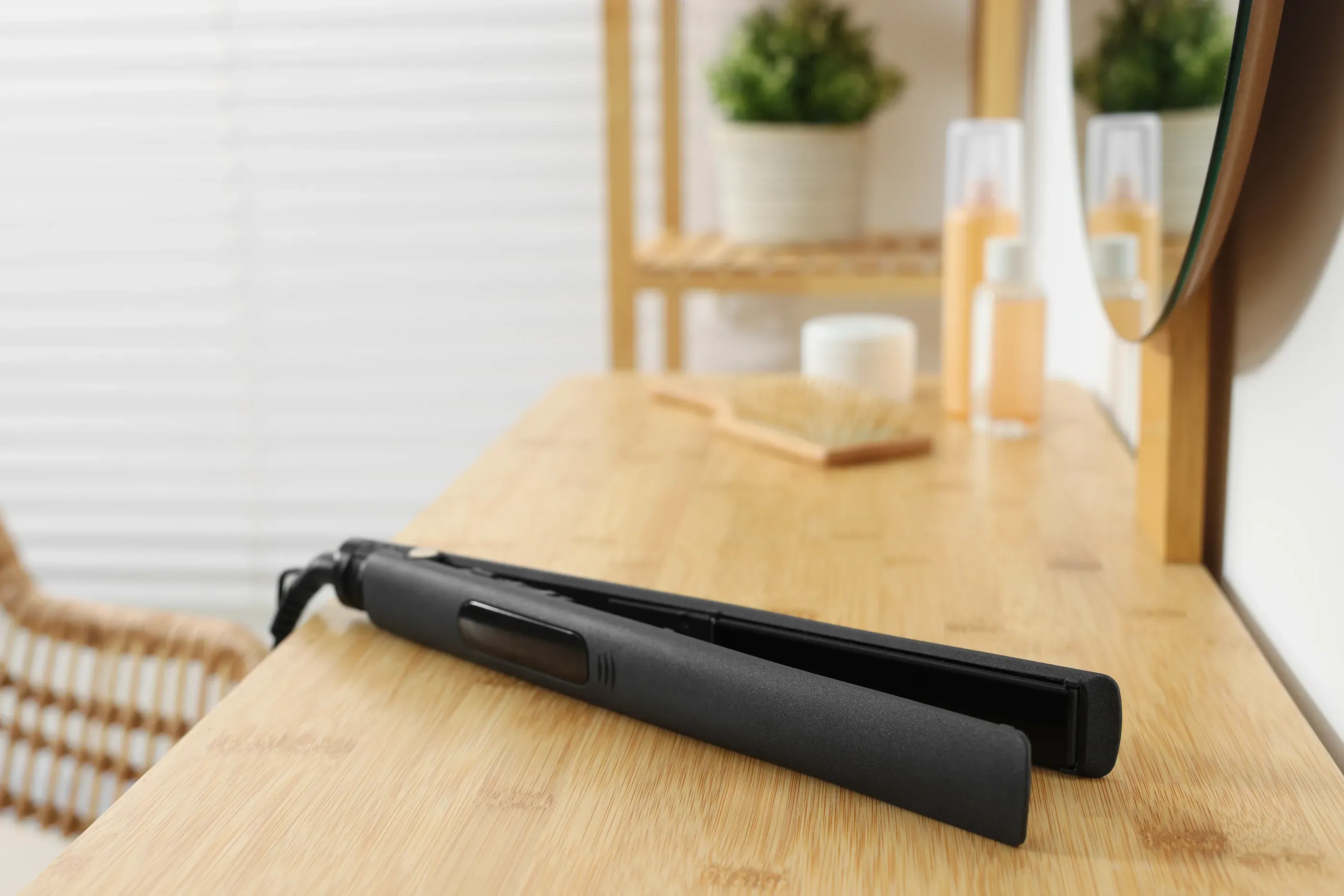
Where should outlets go for a closet vanity or makeup station?
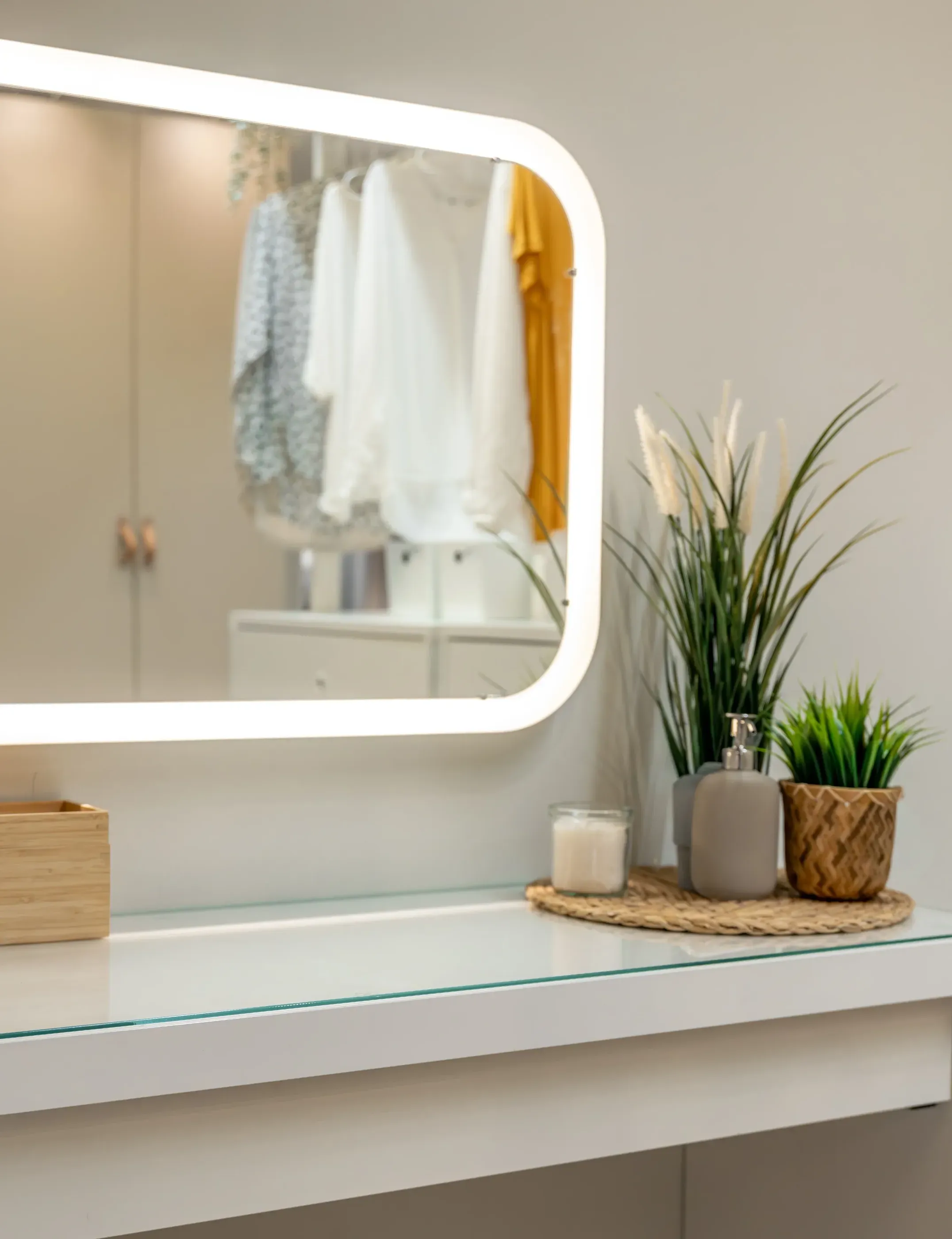
If your walk-in will have its very own GRWM spot, choose outlets at counter height and/or face height. This can be anywhere from 36-42” inches off the floor for the counter and 48-52” up the wall for face height.
Which you choose depends on what you use most. However, face height will keep cords from hot tools off your work surface and out of the mirror’s reflection. Face-height outlets are also a great feature for eye-level lighting sconces.
Counter-height outlets are often the go-to if you want to charge your phone at your vanity. New in-drawer outlets may be a better spot.
Outlet location for walk-in closet charging stations
Want to hide cords and cables and keep closet countertops clear? Install outlets on the side wall of your closet system cabinets, not the back wall. Customizations like this are one of the biggest benefits of choosing professional closet design over DIY.
In-drawer charging stations work here as well. Earbuds, smart watches, and phones charge here without creating clutter and catching dust. Side-wall outlets are good for charging larger devices like tablets.
Don’t forget to consider USB vs. standard outlets. Adding a few combo ports to your drawer outlets means you won’t have bulky charging blocks sitting around.
Where to put outlets for closet appliances
Irons, steamers, vacuums, dehumidifiers. The goal is to keep these cords off the floor and out of your organization system. If you stand while actively using these, install them approximately four feet off the floor. Dehumidifier outlets can be lower, but don’t take it down to the baseboard; that’s best for robotic vacuum docking and little else.
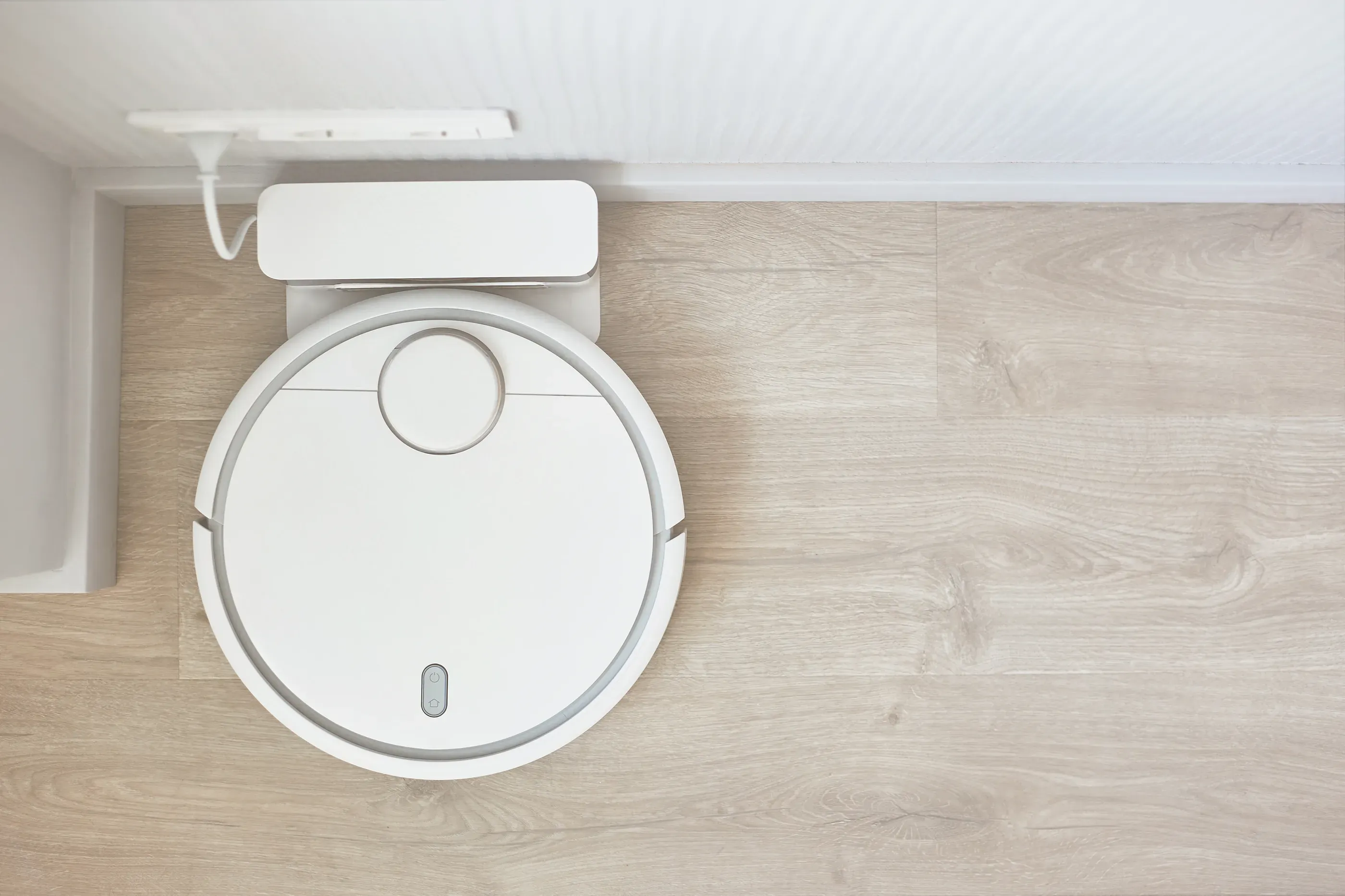
As for how many appliance outlets you need, think about how long you use the item per session. If it’s in use for five minutes or more every time you switch it on, it should have its own dedicated outlet. If you’re building an ironing station in your custom closet, electrical outlets can be installed inside the ironing board cabinet or on the side wall.
Small or large custom closet? Electrical outlet placement for all spaces
Here’s some final, general advice about outlets in a custom closet remodel, even if you’re sticking with that reach-in.
-
One strategically placed outlet is all you need for a reach-in closet.
-
Choose three to four outlet locations for walk-in closets.
-
A drawer depth of at least 20” is recommended for hidden outlets.
-
A side wall outlet is best for reach-in closets.
-
Preview your design. If you think you’d be able to see the cord sitting out, the outlet is not in the right location.
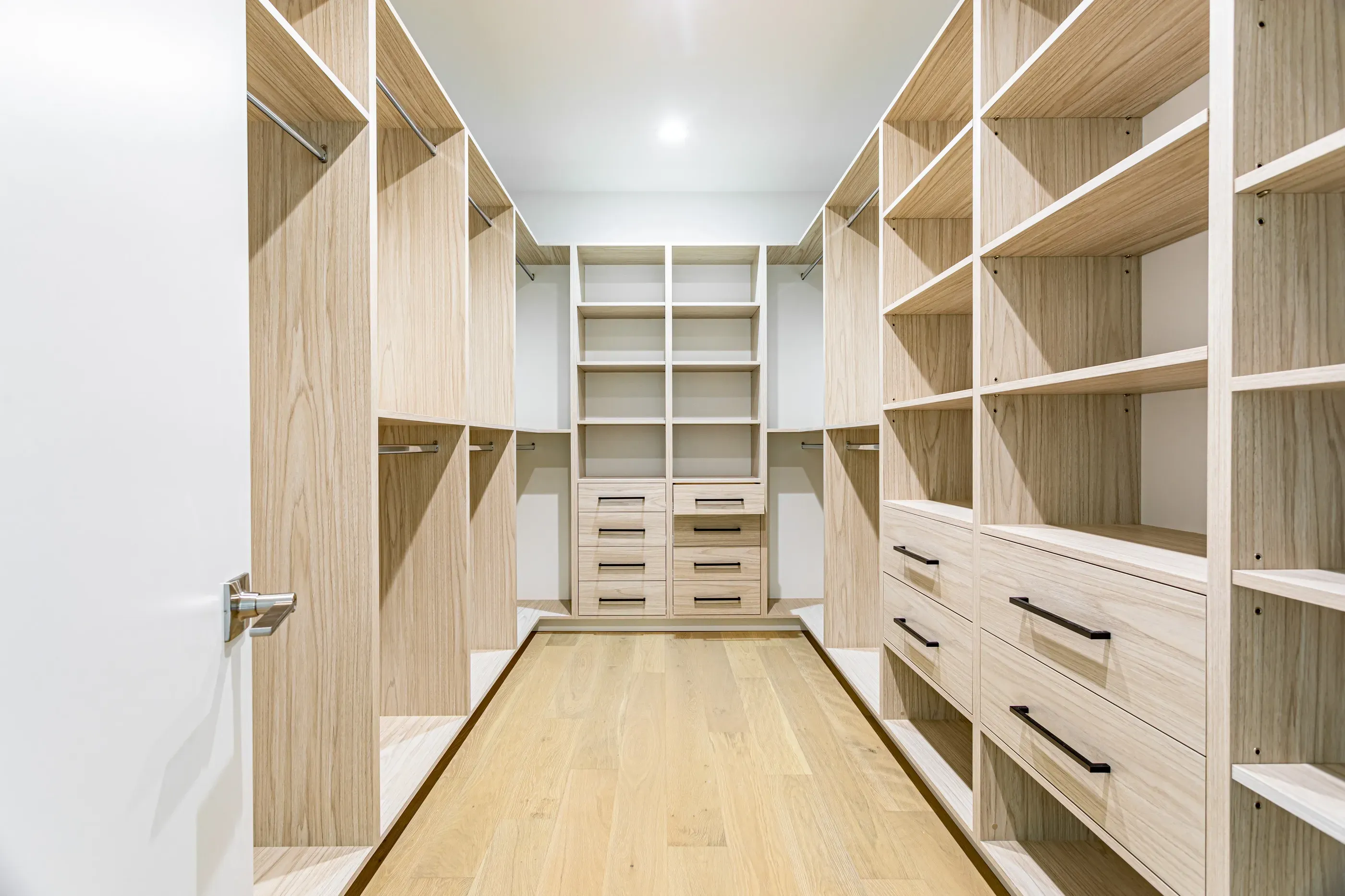
Discuss more key details with a professional closet designer.
That’s a brief breakdown of the role of outlets in a custom closet remodel. We didn’t even get to hardware, organizing accessories and inserts, stone countertops, or tailor-made shelving. Fortunately, there’s always a pro at The Designery ready to discuss your new closet.
“So helpful in making our closets functional and beautifully organized! We also love the custom shade install and appreciated the attention to detail when choosing a proper color and design. Highly recommend!”
Chelsea, The Designery client
Visit your local The Designery showroom for beautiful materials, precision planning, and quality fabrication and installation.