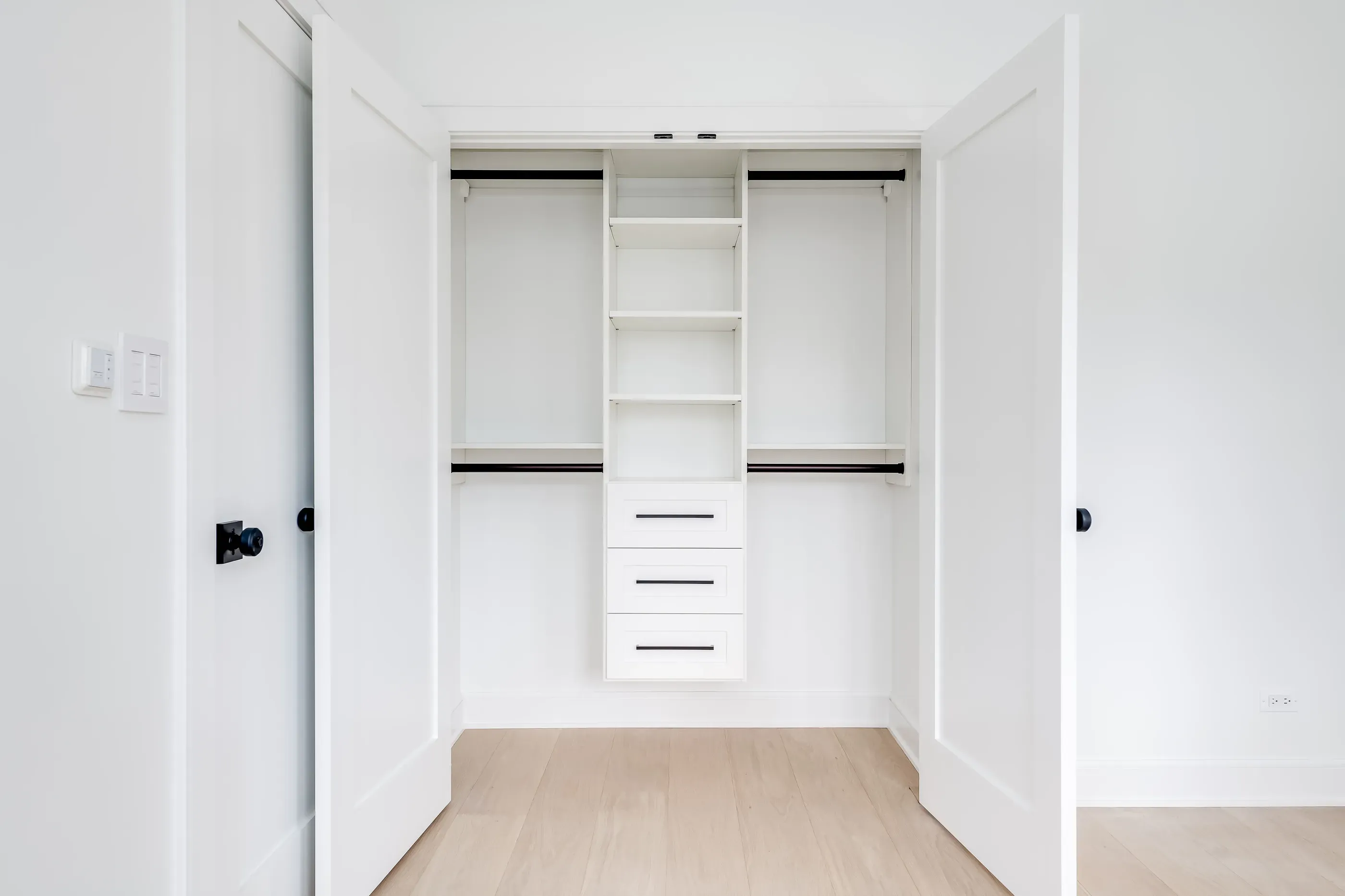
A reach-in to walk-in closet conversion is usually only worth it if the walk-in would be at least 4x4, or 16 square feet. However, meeting this goal doesn’t guarantee you a better closet. A remodeled reach-in can add more value and storage as well as improve daily use.
Designers in your area do this sort of math all of the time. Closet remodels are puzzle-like projects where every inch counts. Keep reading for help deciding what’s best for your small closet.
Key takeaways:
-
Reach-in to walk-in closet conversions are worth it only if the new closet is truly walkable.
-
An optimized reach-in closet can be more storage-efficient and easier to use daily than a walk-in.
-
The ROI of a closet remodel is higher when it’s done in the primary bedroom, and lower in a guest.
Reach-in to walk-in closet: Should you convert?
If you want to lend a little bedroom floor space to a bigger closet, the real question is, how much do you have to spare? If you’re cutting it close, tick down this list.
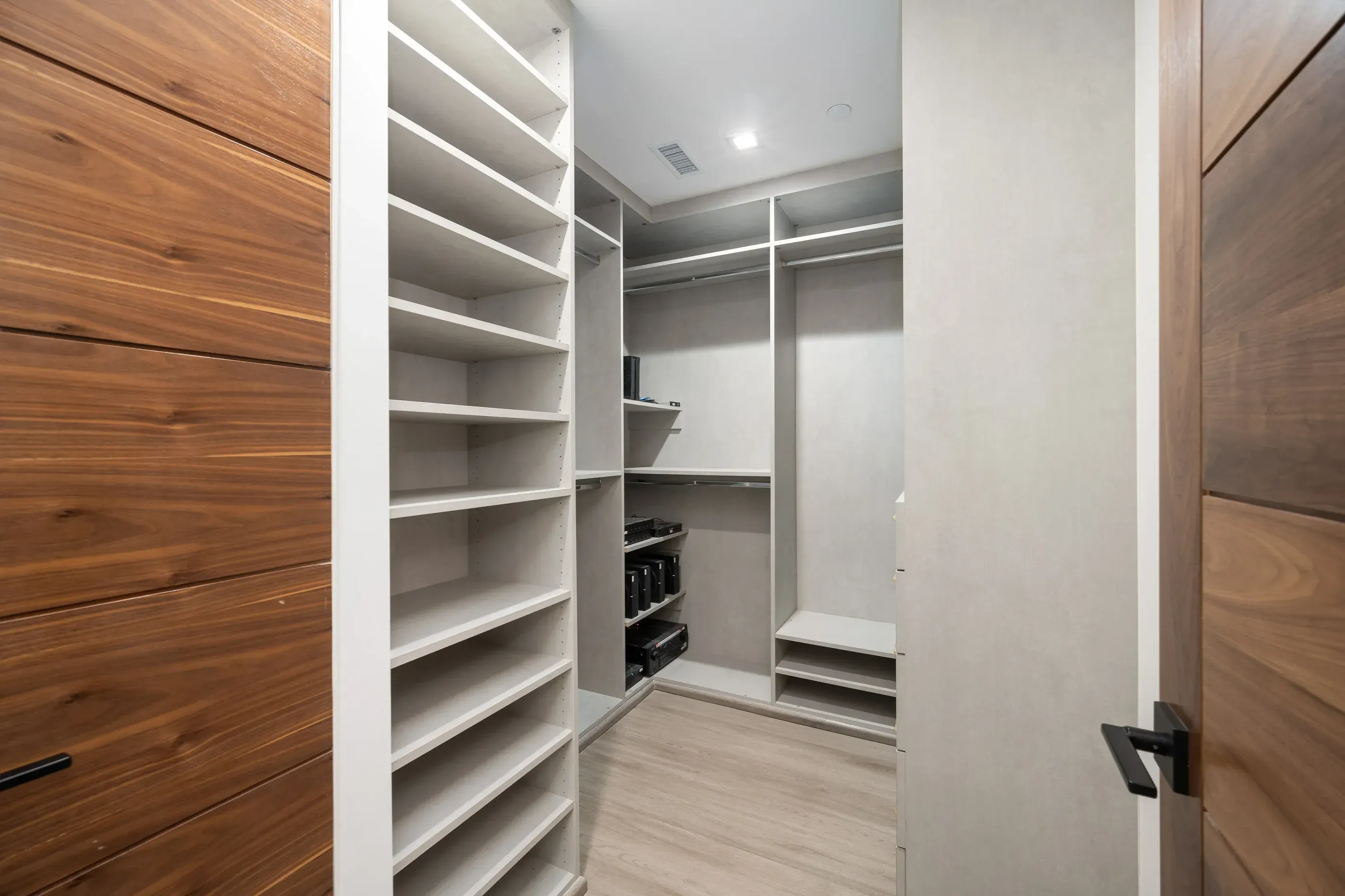
Question 1: Will the walk-in actually have walking space?
Having a closet be walk-in in name only hurts you on a few levels. Some of these tiny closet conversions essentially just add a door to what was a completely serviceable reach-in. Calculate what the clear floor space leftover would be after system installation.
Question 2: Are you looking to sell/add value to your property?
Nearly three-quarters of prospective buyers want a walk-in in the primary suite. That’s the room where the highest ROI of a closet remodel lives. Guest rooms are better off with some better shelving or new doors added to a classic reach-in.
Question 3: Where are you getting this extra space?
If the bedroom is less than 10x10, see if you can take it from a hallway. Or, consider keeping the reach-in. Having both a cramped bedroom and a tiny walk-in will not improve most routines or storage needs. Nor will it add substantial value to the home.
Small walk-in vs. large reach-in: Storage space face-off
A six-foot-wide reach-in offers more hanging space than a small walk-in. Think of a walk-in that meets the minimum criteria of 4x4. Add a door, and many still only hit nine linear feet of hanging space. The typical reach-in can accommodate 12.
That’s never the whole story with these spaces, though. Here are a few features to compare.
|
|
Small walk-in |
Large reach-in |
|
Daily use |
More decorative elements and a space for collections or a hamper |
Everything visible and easy to access |
|
Storage |
Better for mixing storage forms like hanging plus shelves and drawers |
Good amount of linear footage for more hanging space, can use corners |
|
Value |
High ROI when it does not subtract too much square footage from the primary bedroom |
Worth it for small primaries and all guest spaces |
Bring your measurements to a professional closet designer.
Converting to a walk-in is often only worth it if the final product is at least 5x5 and it doesn’t shrink the bedroom to less than 10x10. That’s a general guideline; let’s find the best result for your unique property.
Compact custom walk-in or full-tilt, max efficiency reach-in. The choice is yours at The Designery. We offer quality, custom solutions for all of your needs, whether they’re spatial or stylish.
“So helpful in making our closets functional and beautifully organized!”
Chelsea, The Designery client
Come down to your local The Designery showroom to begin.
FAQ: Reach-in to walk-in closet conversion
Does a walk-in add more value than a large reach-in?
In a guest room, likely not. In a primary bedroom, a walk-in will add value if it is at least 25 square feet, the door can open all of the way, and there’s true walkable space.
How does the ROI of a closet remodel compare to other projects?
Custom walk-in closets commonly exceed 65% ROI. They can add a few to several thousand dollars to the value of your home, depending on size and features.
This is still lower than bathroom and kitchen remodels, which can have an ROI of 80-125%. Closet remodels have a higher ROI than swimming pools, niche luxury features, and secondary room expansions.
Why are people taking doors off closets?
Many people are ditching doors to improve the flow of a space as well as make it feel bigger. Open wardrobes are also more ventilated, reducing musty odors. Others have a no-door policy because seeing the contents of their closet at all times inspires them to keep it neat and organized.
How deep does a reach-in closet need to be?
Reach-ins must be a minimum of 24 inches deep. The average reach-in is slightly deeper than this. Two feet (24”) is the standard depth of a hanging system. If the reach-in isn’t deep enough, clothes can get caught in the doors or not hang properly at all.