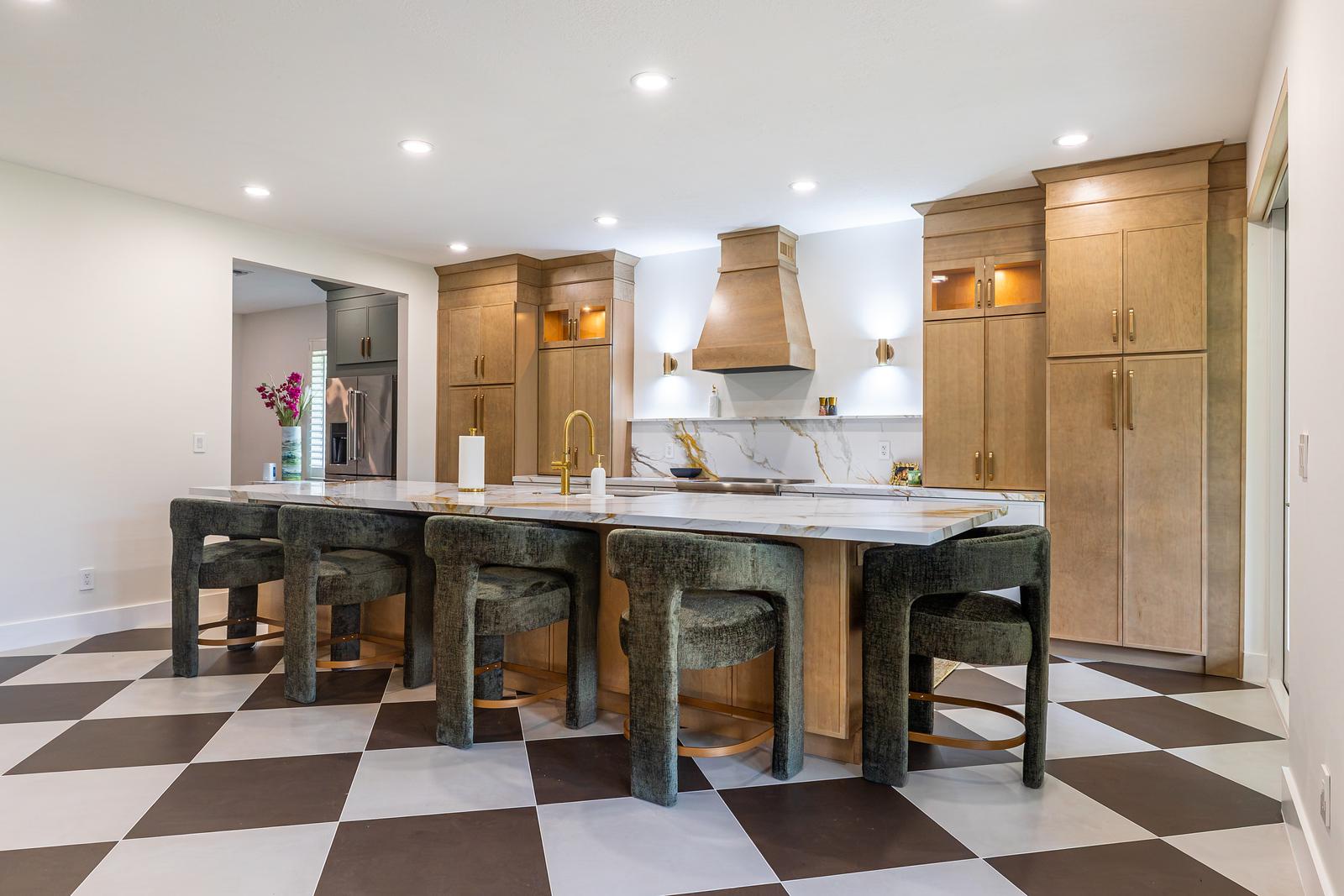
Real kitchen remodel regrets don’t stem from cabinet colors and flooring finishes. They come from the refrigerator being on the wrong side of the room, or the sink being a foot away from its ideal location.
Today, we’re answering a common kitchen remodeling question: “Is it worth changing my kitchen floor plan?” Keep reading to learn more about costs, considerations, and mistakes.
What does it mean to change a kitchen layout?
First, let’s be clear about what it truly means to change a kitchen layout or floor plan. Moving appliances and sinks is a layout change. So is adding an island, removing walls, or changing the location of doors and windows.
Replacing what you have (cabinets, counters, floors) is considered cosmetic when you keep them in the same spot. Even if you keep that layout, but go open-concept with walls, it’s considered a floor plan change.
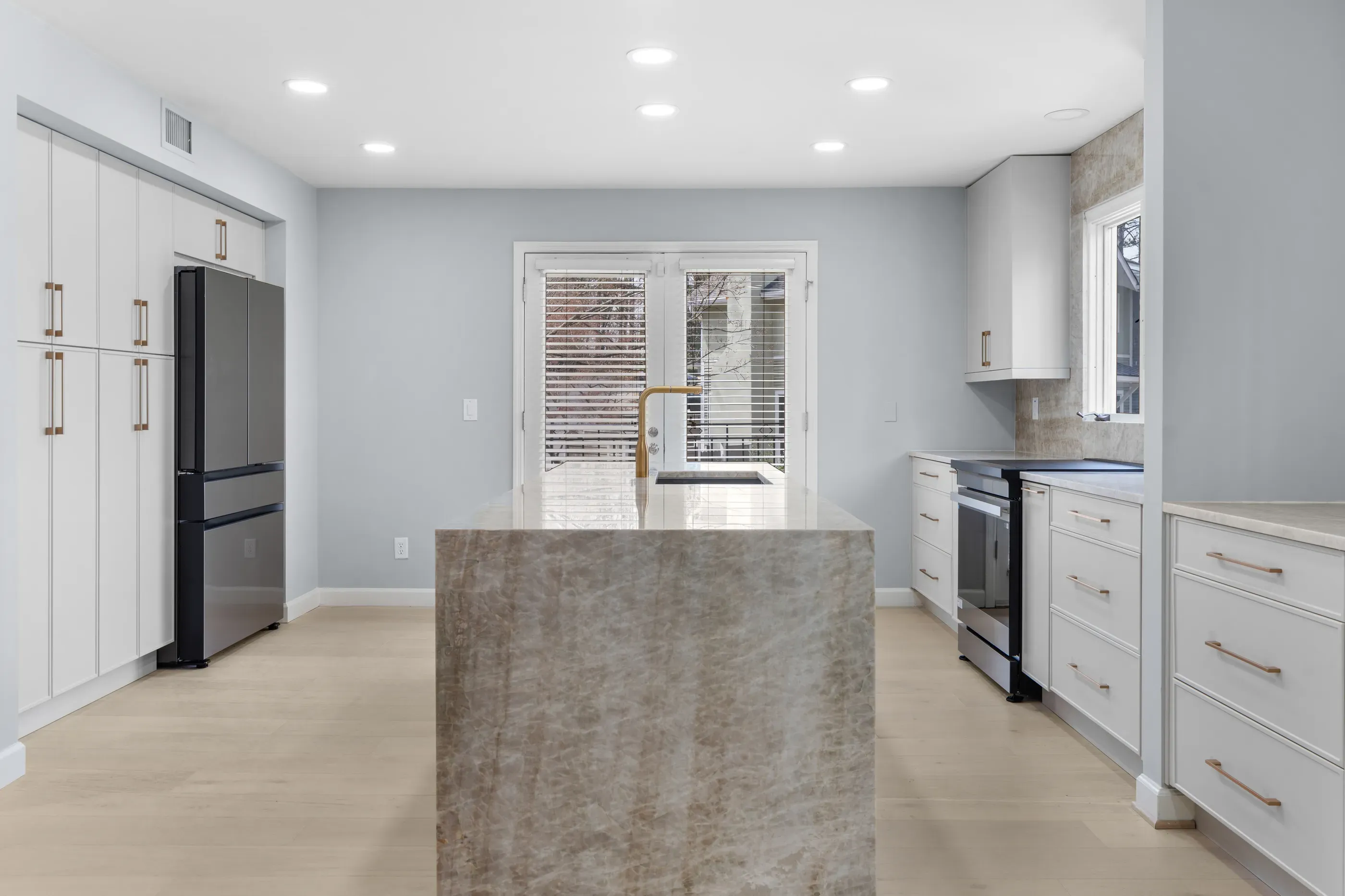
The cost of changing a kitchen floor plan
Your location, materials, square footage, and much more will affect the price of a new floor plan. What we’re about to discuss doesn’t qualify as an estimate from your local Designery, either.
However, we can’t ignore the main reason people fret during a kitchen remodel layout change: cost.
Why does it cost so much to change a kitchen layout?
Changing a kitchen layout can cost twice (or more) what an existing-floor-plan remodel does, due to utility and structural changes. All of these items can icur more costs in your kitchen remodel:
-
Changing the location of your plumbing
-
Repositioning and updating gas and electric
-
Removing a load-bearing wall
-
Permitting and inspections for a new kitchen floor plan
Sometimes, these costs are enough to convince people to love their layout. Downsizing the island, improving cabinet layouts, and widening doorways can be cost-saving alternatives.
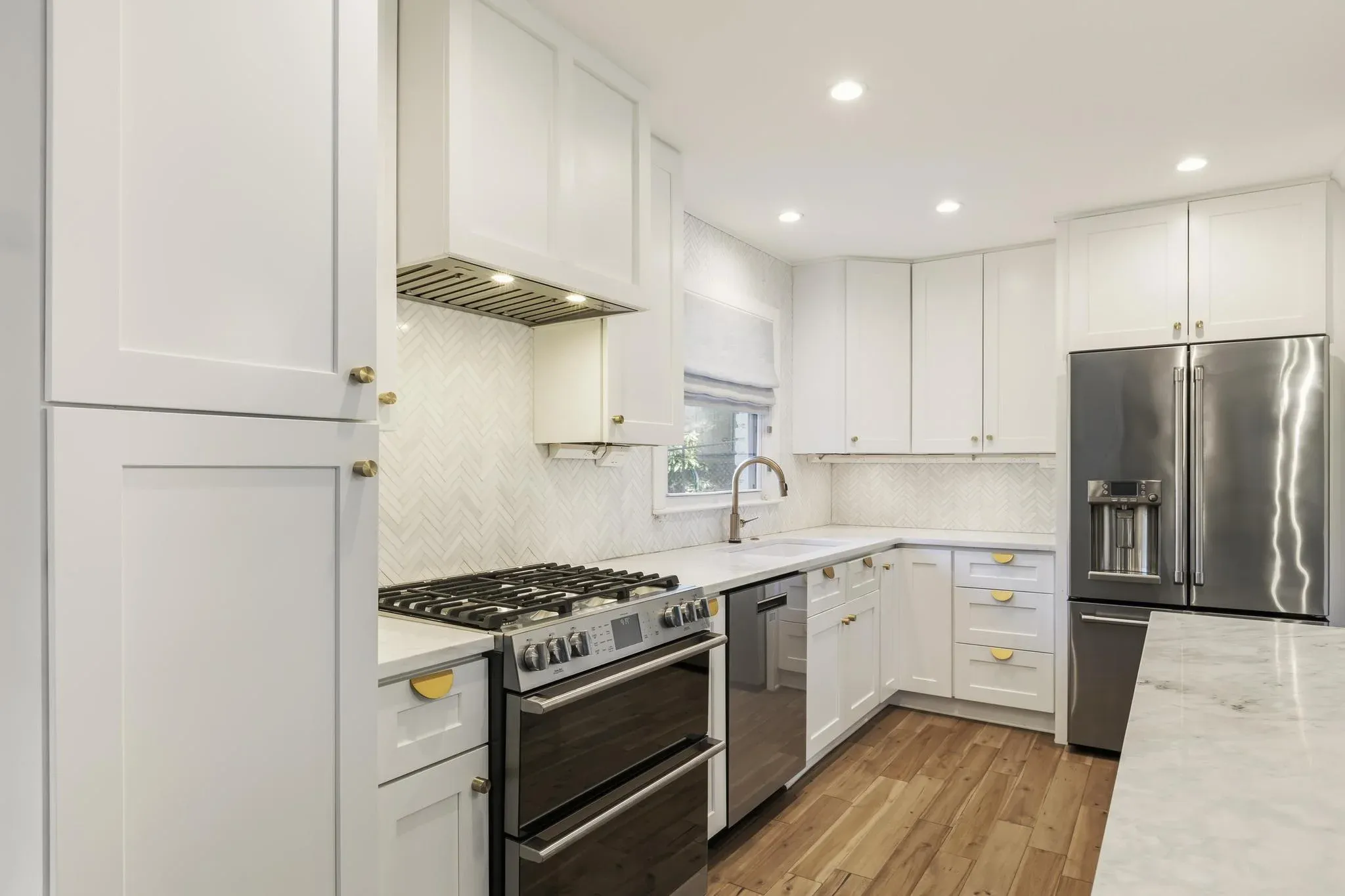
Is it worth changing my kitchen floor plan? Signs that your current layout doesn’t work
In what instances are there no alternatives for a changed floor plan? Here are the most justifiable reasons for going ahead with demolition and utility relocation.
You’re fighting against your own kitchen triangle.
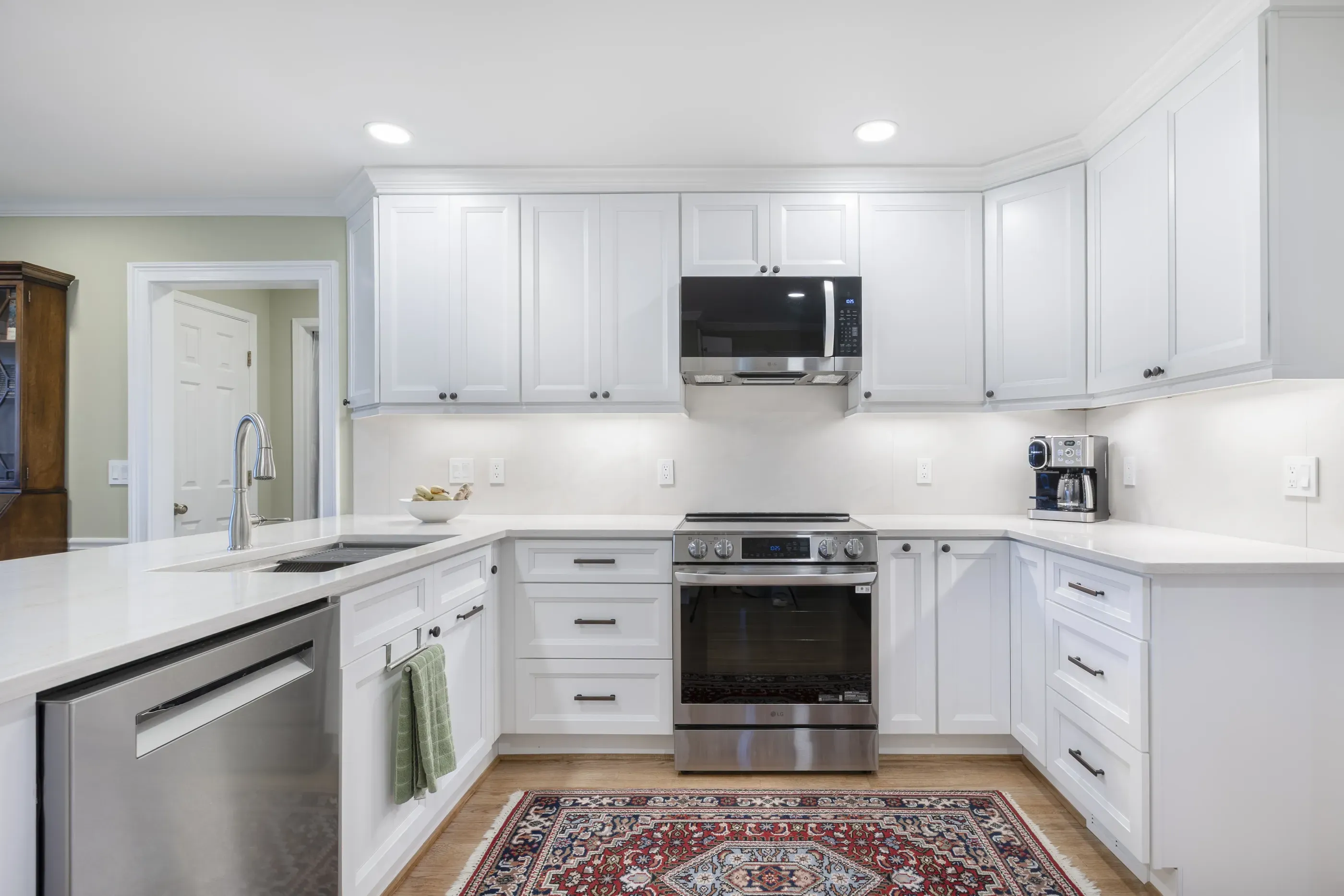
Your kitchen triangle is made up of the sink, stove, and fridge. If the positioning of these is off, or there aren’t enough steps between, you might hate cooking. Having to turn a corner or navigate blocked access to one of these features isn’t livable.
Example: A small, one-wall kitchen is turned L-shaped by putting the stove and refrigerator side by side on the opposite wall. The sink is decently positioned on the main wall. However, the hot surface of the range is flanked by the primary workspace and the refrigerator. This cools the temperature of the fridge, and makes you break a sweat while prepping.
It doesn’t support your lifestyle at all.
People who were born to entertain may not feel isolated in a galley kitchen. Multiple cooks trying to prep on the same peninsula experience daily frustration.
Another common complaint is a kitchen that’s too upscale. A chef’s kitchen sounds exciting, but it can fail to meet practical needs. What could be essential family gathering space is taken up by a double deep freeze, eight burners, and a roaring, industrial-strength exhaust system.
At times, it feels dangerous.
This is the biggest reason we alter layouts for small kitchens. If you’re constantly looking over your shoulder before you do anything, the floor plan could use improvement. Kids who have nowhere to run but through the work zone are a hazard.
Galley kitchens with an aisle less than 42 inches wide can also be a danger. Inadequate clearance for any doors creates accidents and generally holds up daily tasks.
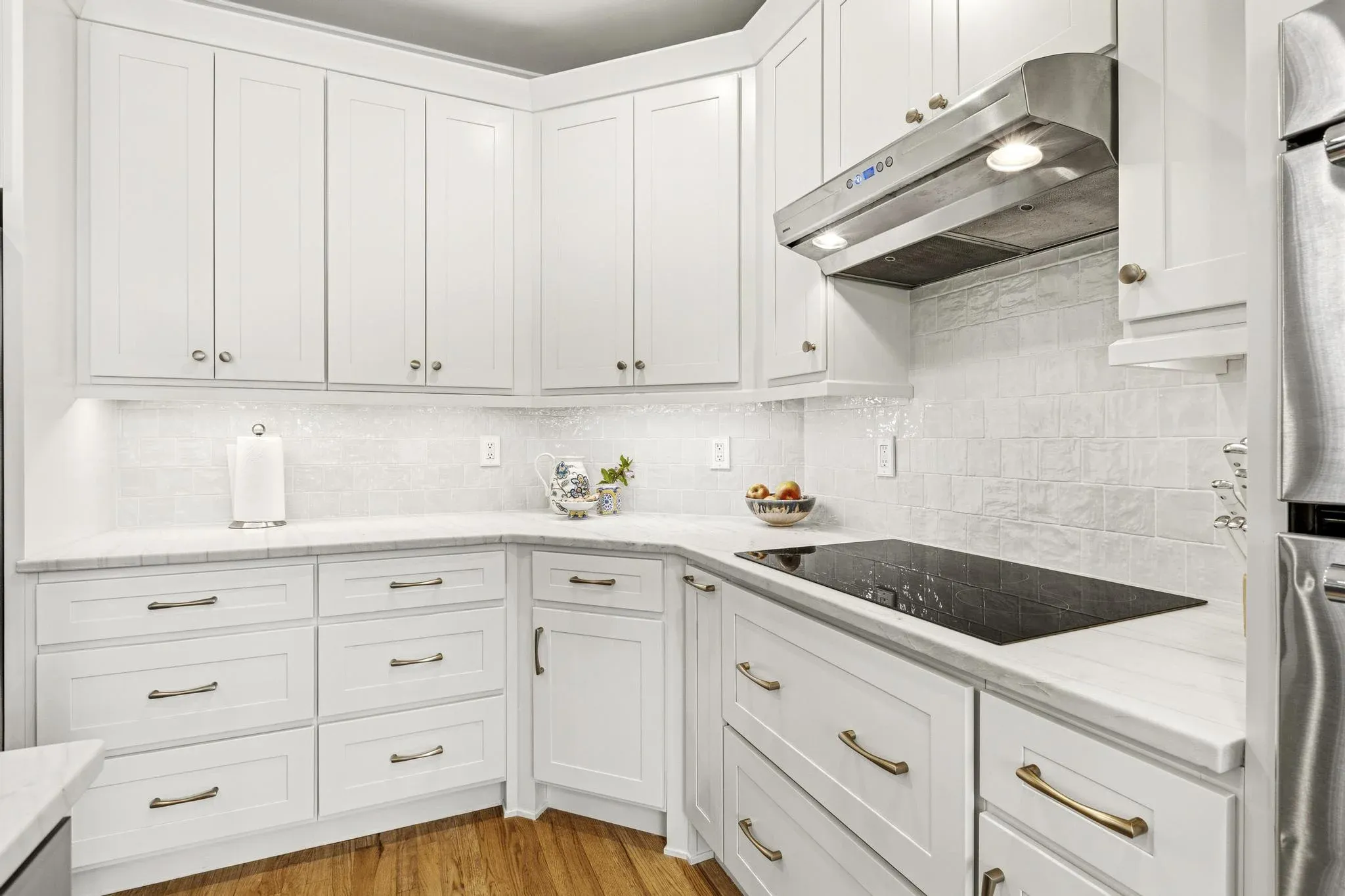
It’s difficult to maximize available space.
And in some cases, you can’t access the space you have. Dead corners and unreachable cabinets are the two biggest complaints. In some cases, new cabinets solve the problem.
However, if the arrangement of utilities and appliances is helping create these corners and crevices, you should relocate them.
Kitchen layout mistakes to avoid
So, you’re getting a new floor plan. Excellent! Surely, you’ve already taken commonly overlooked kitchen remodel features into account, like lighting and ventilation. Here are four more potential pain points to stay ahead of.
Getting too hung up on looks.
We all want the most visually appealing kitchen we can possibly afford. However, what looks good in a photo online may not look as great in your new kitchen.
Glossy backsplash tiles are beautiful, but might not be ideal if you fry foods in oil frequently. Tons of open shelving, a range under a window–these can look aesthetic when they’re brand-new and staged. They’re not always practical for real life.
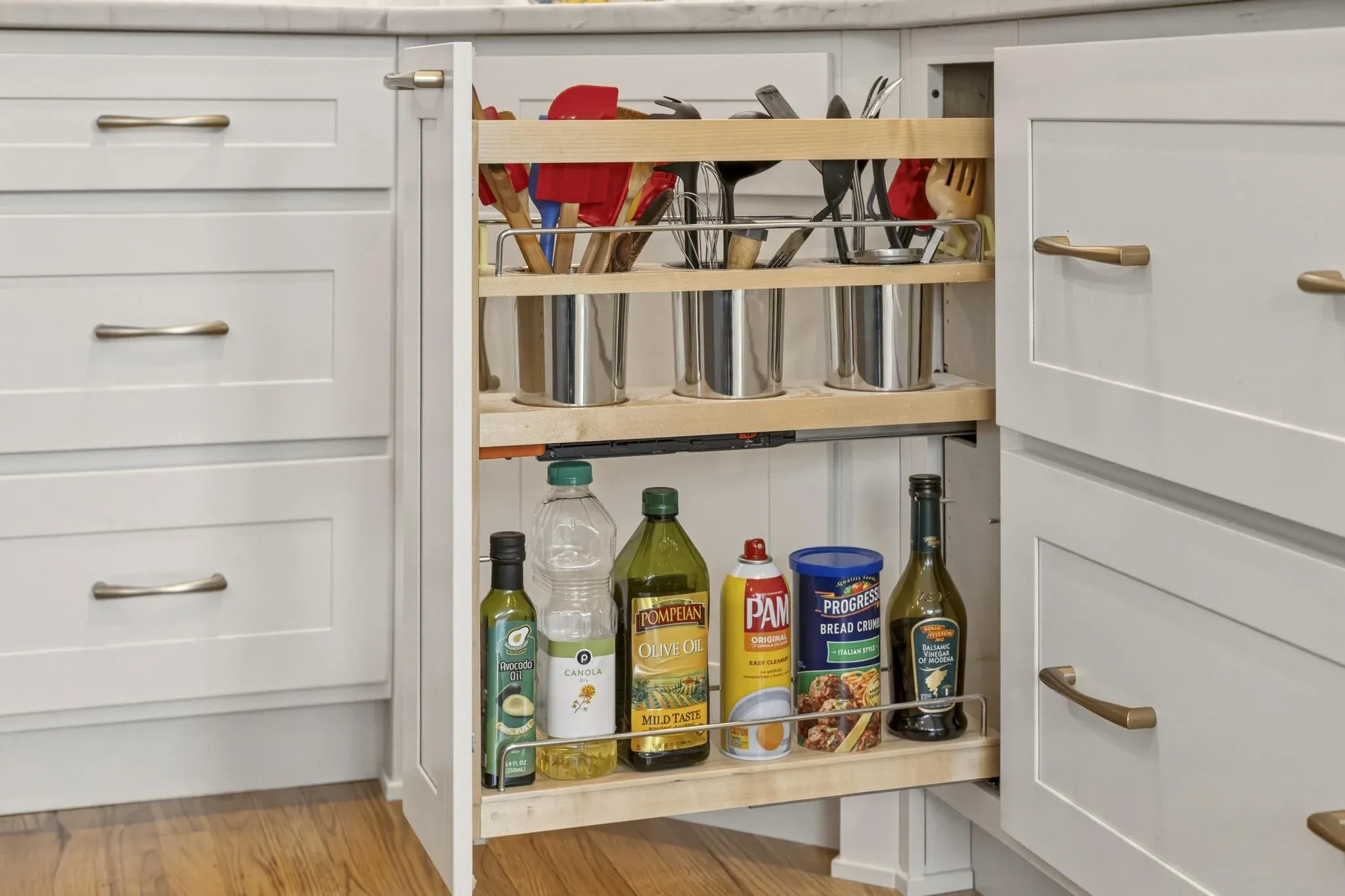
Not figuring storage into your new work triangle.
Your last work triangle was so senseless and inefficient, changing that alone was a massive relief. But now, why is the spice rack nearest the sink? Why is the garbage receptacle next to the range?
You don’t just need a work triangle; you need work zones. The triangle is the foundation for a total solution. Decide what populates the areas around each point of the triangle.
Making appliances a lower priority.
Jamming a refrigerator against a wall, a sink that’s too close to an oven. You have the layout you want, but the appliances are an awkward fit. Doors don’t open all the way, or food doesn’t have enough room to cool.
Even if layout changes are the main priority, design your new kitchen with appliances in mind.
Choosing an island when a peninsula makes more sense.
Kitchen islands can be an amazing, no-brainer decision in many designs. That doesn’t mean you need one, too. Single-cook households, smaller kitchens, or a desire for maximum spaciousness can make peninsulas a better choice.
A general rule of thumb is to make sure every side of an island has 3.5 to four feet of clearance.
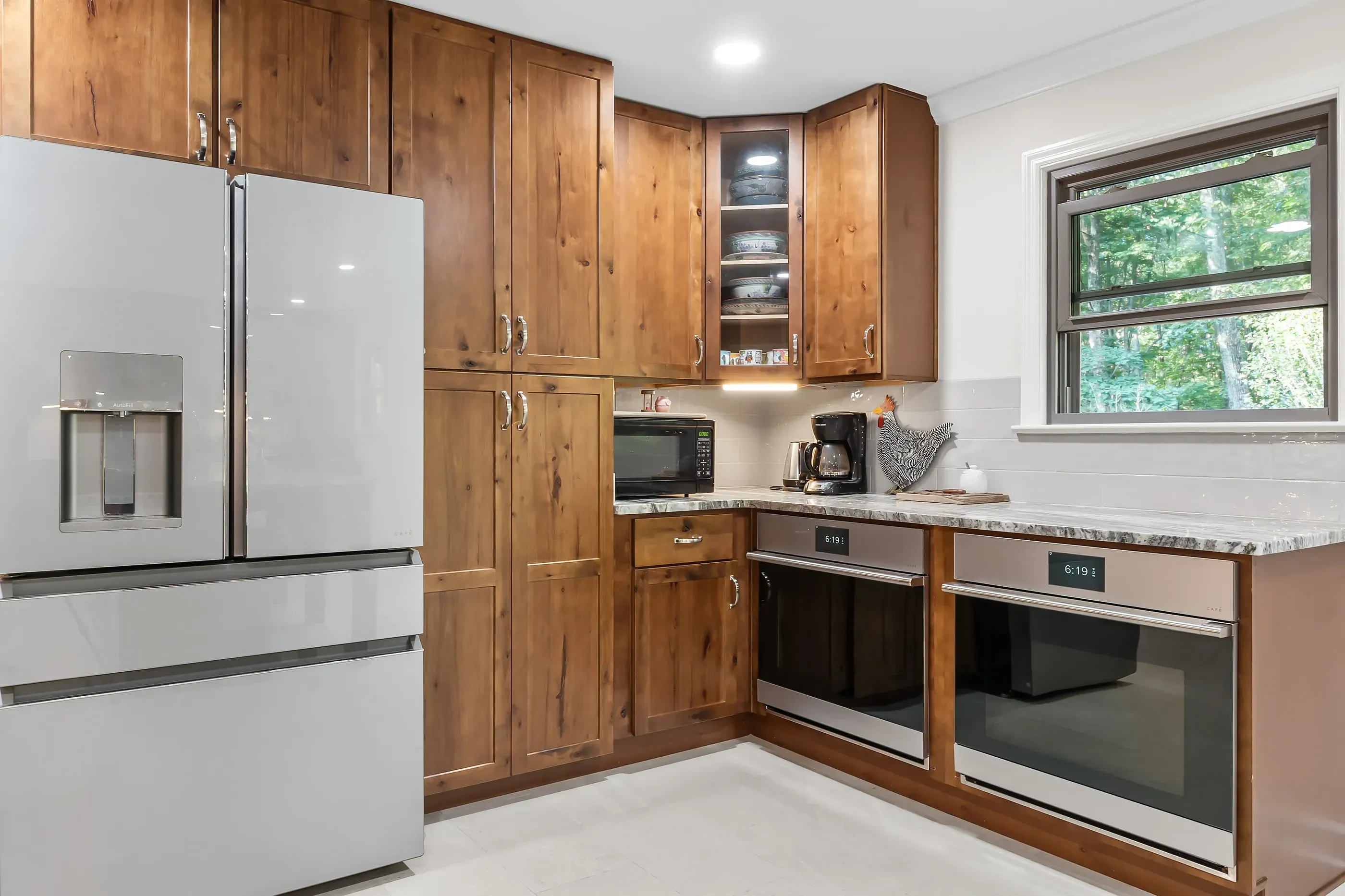
Don’t commit to a new kitchen floor plan until you speak to a professional designer.
Knowing what kitchen layout mistakes to avoid, determining if changing the floor plan is worth it, and finding the budget for it all. If you suspect that a cosmetic remodel isn’t going to solve your daily problems, stop what you’re doing and give us a call.
A professional kitchen designer from The Designery can help you exhaust every alternative in your quest for the perfect kitchen. From custom solutions to visual previews of every possible layout, you’ll be able to move forward in complete confidence.
“We are extremely satisfied and overjoyed with our brand new, fully functional kitchen. We will use the Designery again when we’re ready to upgrade bathrooms.”
Michelle, The Designery client
Schedule a free consultation today.