
Flooring is one of the most consequential decisions you'll make in a home remodel. It sets the tone for every room, bears the brunt of daily life, and when done right, can add real value to your property. Done wrong, it's an expensive fix.
For Colorado homeowners, the stakes are even higher. Our climate is unlike most of the country: low humidity that can cause wood to shrink and crack, dramatic seasonal temperature swings, and the constant tracking-in of mud, snow, and gravel that tests every surface underfoot. Choosing flooring here isn't just about aesthetics — it's about finding materials that can keep up with Colorado life.
This guide walks you through everything you need to know: the most popular flooring types, how to match material to room and lifestyle, what Colorado's climate means for your choice, and what to expect from the installation process. Whether you're starting a full kitchen remodel, renovating a primary bath, or updating an entire level of your home, the right information makes all the difference.
Understanding Your Flooring Options
The flooring market has expanded dramatically in the last decade. What was once a simple choice between carpet, hardwood, and tile now includes a wide range of engineered and manufactured options that deliver impressive performance at various price points. Here's a clear-eyed look at the most relevant categories for Colorado homes.
Luxury Vinyl Plank (LVP)
Luxury vinyl plank has become the most popular flooring choice for remodelers in the Front Range — and for good reason. Modern LVP is nothing like the vinyl of decades past. It's constructed in rigid layers that resist moisture, dents, and scratches, and today's printing technology means it can convincingly replicate the look of wood, stone, or tile.
For Colorado homeowners, LVP's greatest advantage is its dimensional stability. Unlike solid hardwood, it doesn't expand and contract significantly with humidity shifts — a major benefit in our notoriously dry climate. It's also 100% waterproof, making it a strong candidate for basements, mudrooms, laundry rooms, and bathrooms where moisture is a constant concern.
LVP is comfortable underfoot, relatively easy to install, and available at a wide range of price points. If you have pets, kids, or a household that sees heavy use, it's worth serious consideration.
Engineered Hardwood
Engineered hardwood offers the warmth and authenticity of real wood with better dimensional stability than solid hardwood. It's constructed with a genuine hardwood veneer bonded over layers of high-density plywood or composite core, which gives it more resistance to Colorado's dry winters without sacrificing the natural grain and character that wood lovers want.
Wide-plank engineered hardwood in particular has become a signature look in Front Range homes — it reads as elegant and substantial, works well with both traditional and contemporary design styles, and can often be refinished once or twice over its lifespan. It's an excellent choice for main living areas, bedrooms, and open-concept spaces where visual continuity matters.
It's worth noting that engineered hardwood is not fully waterproof, so bathrooms and basements are not ideal applications. But in the right rooms, it's hard to beat for timeless appeal.
Tile: Ceramic and Porcelain
Tile is the workhorse of the flooring world — and one of the most versatile. Ceramic tile offers a wide range of colors, glazes, and patterns at accessible price points, making it a go-to for kitchen backsplashes and bathroom walls. Porcelain tile is denser, harder, and more water-resistant than ceramic, making it the preferred choice for bathroom floors, shower surrounds, and any high-traffic area that sees significant moisture.
Both materials are highly durable when properly installed, easy to clean, and available in an enormous range of styles — from large-format slabs that mimic natural stone to handcrafted looks that add character to a powder room or mudroom entry. If you want a surface that will look great in 20 years with minimal maintenance, tile is a compelling option.
One important consideration for Colorado: tile grout can be susceptible to cracking if a subfloor has any flex. A professional installation that accounts for proper substrate preparation is essential.
Natural Stone
For homeowners who want flooring that is genuinely one-of-a-kind, natural stone — marble, travertine, slate, and quartzite — delivers character that no manufactured product can fully replicate. Each slab and tile is unique, with natural variation in veining, color, and texture.
Stone is heavy, requires a solid subfloor, and needs sealing and ongoing maintenance to protect against staining. It's also among the more expensive options. But in the right context — a primary bathroom, a dramatic entryway, a kitchen with a timeless design — natural stone creates a sense of permanence and luxury that justifies the investment.
Matching Flooring to Room and Lifestyle
No single flooring material is ideal everywhere. Here's a practical room-by-room framework:
Kitchen: High foot traffic, spills, and grease splatter demand a surface that cleans easily and holds up to impact. Porcelain tile and LVP are the top performers here. If you love the look of wood in your kitchen, wide-plank engineered hardwood is a beautiful option, provided it's properly sealed and you address spills promptly.
Primary and Guest Bathrooms: Moisture resistance is non-negotiable. Porcelain tile is the gold standard — it handles water, steam, and daily cleaning with ease. Choose a finish with enough texture to prevent slipping when wet. LVP is a solid second choice, particularly in guest baths where budget is a consideration.
Living and Dining Areas: These are the spaces where aesthetics drive the decision most. Engineered hardwood, LVP in a premium wood-look finish, or large-format tile all work beautifully here. Consider the visual flow between rooms — if you have an open-concept plan, consistency in flooring across the space creates a cleaner, more expansive feel.
Basements: Colorado basements tend to be on the drier side compared to humid climates, but moisture can still be an issue, especially in older homes. LVP is the most reliable choice here — it's waterproof, comfortable underfoot, and won't swell if you get occasional moisture intrusion. Avoid solid hardwood in basements entirely.
Mudrooms and Entryways: These spaces take a beating. Think snow, mud, dog paws, and everything in between. Porcelain tile is the most durable and cleanest option, and it can be paired with a drain for easy hosing down. LVP is a practical runner-up.
What Colorado's Climate Means for Your Flooring Decision
Colorado's semi-arid climate — with average relative humidity often below 30% in winter — creates conditions that affect flooring in ways many homeowners don't anticipate. Solid hardwood, in particular, can shrink, gap, and crack when indoor humidity drops significantly. If you're set on wood flooring, a whole-home humidifier can help maintain the 35–50% relative humidity range that wood flooring prefers.
Engineered hardwood and LVP are both engineered to handle these fluctuations better than solid wood, which is a significant reason they dominate in Front Range homes.
Colorado's freeze-thaw cycles also mean entryways and transition areas see significant thermal stress. Tile that's installed without proper expansion joints can crack. Materials for high-traffic exterior transition zones — like covered patios or sunrooms — need to be rated for temperature extremes.
Working with a local installer who understands Colorado's specific conditions is one of the most important decisions you can make. Generic installation guidance from national retail chains often doesn't account for the unique demands of our climate.
The Installation Process: What to Expect
Choosing the right material is only half the equation. A beautiful floor improperly installed will fail — and flooring failures are rarely cheap to correct.
A professional installation typically begins with a site assessment: evaluating the subfloor for levelness, moisture, and structural integrity. Any issues at the subfloor level must be addressed before new flooring goes down. From there, materials are acclimated to the home's environment (particularly important for wood-based products), then installed according to manufacturer specifications and local best practices.
Plan for furniture to be moved, rooms to be temporarily inaccessible, and — depending on scope — some dust and noise. A full-floor installation in a single room typically takes one to three days. Larger whole-home projects are planned in phases to minimize disruption.
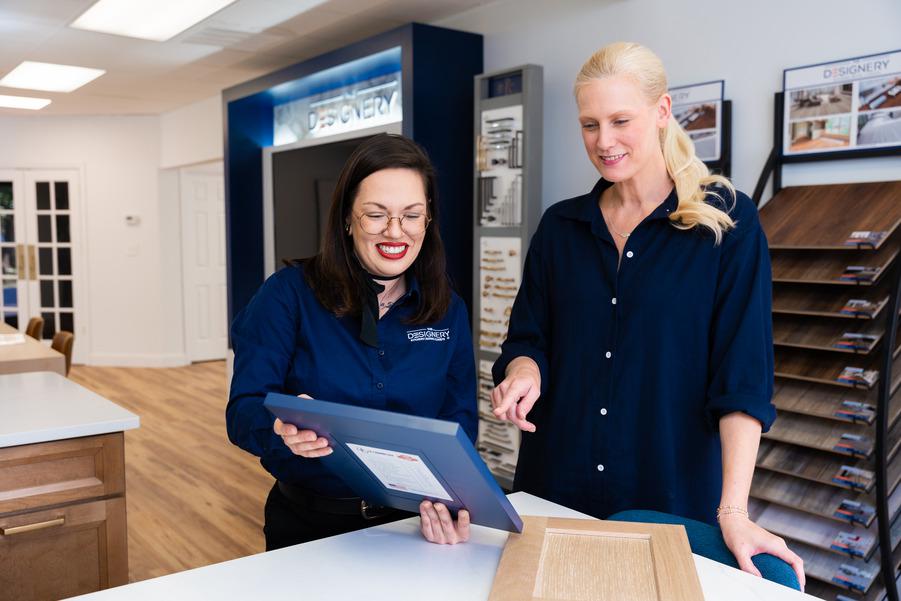
At The Designery Longmont, our team guides you through every step of this process — from initial product selection and design consultation at our Longmont showroom, to coordinating professional installation by our vetted installation partners. We work with homeowners, contractors, and builders across the Front Range, including Boulder, Erie, Loveland, and Fort Collins.
Ready to Choose Your Flooring?
The right flooring transforms a space — and the right guidance makes the selection process far less overwhelming. Whether you're drawn to the warmth of wide-plank engineered hardwood, the practicality of luxury vinyl plank, or the timeless durability of porcelain tile, we'll help you find the material that matches your design vision, your lifestyle, and your Colorado home.
Visit our showroom at 1350 Ken Pratt Blvd Ste 4 in Longmont, or schedule a consultation with our design team. We're here to help you get it right.
Frequently Asked Flooring Questions
What flooring works best in Colorado's dry climate?
Engineered hardwood, luxury vinyl plank (LVP), and porcelain tile are among the best flooring options for Colorado homes. Unlike solid hardwood, engineered hardwood and LVP are designed to better withstand the state's low humidity and seasonal fluctuations, helping reduce issues like shrinking, gapping, and warping.
Is luxury vinyl plank (LVP) a good choice for Colorado homes?
Yes. LVP has become one of the most popular flooring choices in Colorado because it is waterproof, durable, scratch-resistant, and less affected by humidity changes than traditional hardwood flooring. It's particularly well suited for kitchens, bathrooms, basements, mudrooms, and busy households with pets or children.
How long does professional flooring installation take?
The timeline depends on the size of the project, the flooring material selected, and the condition of the existing subfloor. A single-room installation may take one to three days, while larger whole-home flooring projects are typically completed in phases. A professional site assessment can help determine a more accurate timeline for your specific project.