Cabinets set the shape of a kitchen. Countertops set the mood. And when the two aren't speaking the same design language, even a beautifully built kitchen can feel slightly off — a modern slab door under a heavily veined, traditional marble, or a rustic farmhouse cabinet topped with a cold, glossy surface that doesn't match its warmth.
Getting the pairing right isn't about matching perfectly. It's about choosing a countertop that reinforces the story your cabinetry is already telling — whether that's clean and contemporary, warm and traditional, or somewhere in between. Here's how to think through it.
Why Does Countertop and Cabinet Pairing Matter So Much?
A kitchen reads as "designed" or "assembled" almost entirely based on whether its major surfaces feel intentional together. Cabinets and countertops are the two largest visual masses in the room, which means any mismatch in tone, veining, or style is immediately noticeable — even to someone who couldn't articulate why a kitchen feels off.
The goal isn't uniformity. It's harmony: choosing materials that share a visual language, even when they contrast in color or texture.
What Countertop Material Pairs Best with Shaker-Style Cabinets?
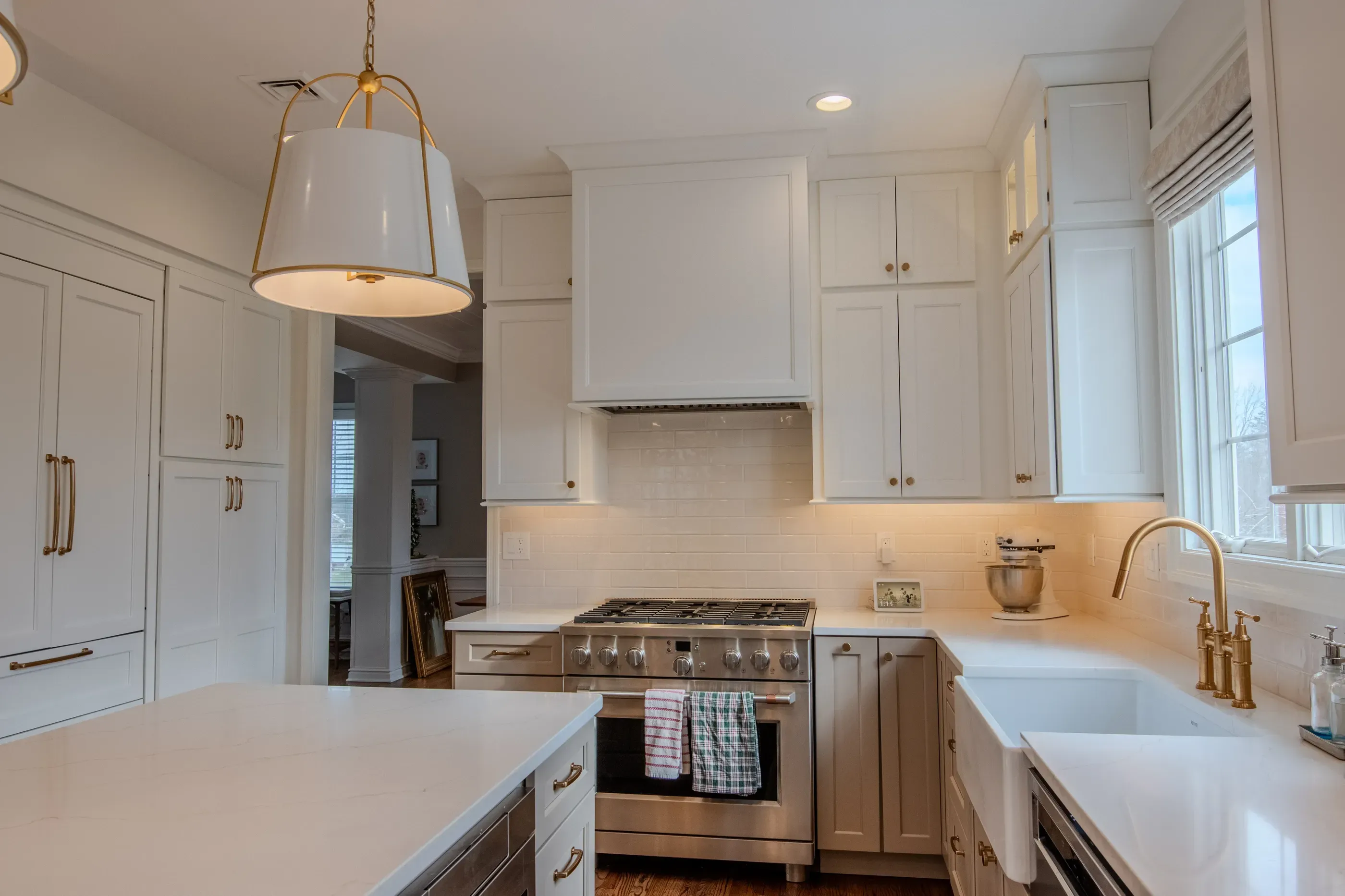
Shaker cabinets are the most versatile door style in cabinetry — clean lines and a recessed panel that works across nearly every era and aesthetic. That versatility means shaker cabinets pair well with almost any countertop, which is exactly why they're a safe, popular choice for Longmont homeowners who aren't ready to commit to one strong style.
● Quartz in a soft white or warm greige keeps a shaker kitchen timeless and adaptable.
● Granite with subtle, consistent veining suits a shaker kitchen aiming for a more traditional, textured feel.
● Butcher block brings out the classic, slightly farmhouse character shaker doors are known for, especially on a kitchen island.
What Countertop Works Best with Flat-Panel or Slab Cabinets?
Flat-panel (slab) cabinets are the modern, minimalist choice — no molding, no ornamentation, just a clean plane of color or wood grain. These cabinets photograph beautifully, but they're also the least forgiving when the countertop doesn't match the mood.
● Quartz with minimal veining keeps the look sleek and uncluttered, reinforcing the simplicity of a slab door.
● Concrete countertops lean into the same modern, industrial energy as flat-panel cabinetry, especially in matte finishes.
● Bold, dramatic veining (in quartz or natural stone) can work beautifully here too — but only as a deliberate contrast, paired with an otherwise simple, solid-color cabinet.
The rule with slab cabinetry: pick one visual "statement" — either the cabinet color or the countertop veining — and let the other stay quiet.
What Countertop Pairs Well with Farmhouse or Traditional Cabinetry?
Farmhouse and traditional kitchens lean on warmth, texture, and a sense of history — think raised-panel doors, cup pulls, and apron-front sinks. The countertop needs to match that same lived-in richness.
● Soapstone has been a farmhouse staple for generations — soft, matte, and it develops a natural patina over time that only adds to the character.
● Honed granite or quartzite brings warmth without the high-gloss shine that can feel out of place in a traditional kitchen.
● Butcher block remains one of the most classic farmhouse pairings, especially on an island paired with a more durable perimeter countertop.
Avoid highly polished, glassy finishes here — the shine tends to fight against the softer, more textured feel farmhouse cabinetry is going for.
How Do You Pair a Countertop with Two-Tone Cabinets?
Two-tone kitchens — a different finish on the island than the perimeter cabinets, for example — are one of the most popular design trends we see in Longmont right now. They're also the trickiest to pair correctly, because the countertop has to work with two cabinet colors at once, not just one.
The safest strategy: choose a countertop with a neutral base tone and subtle veining that picks up hints of both cabinet colors. A quartz with soft gray and warm undertones, for instance, can bridge a navy island and white perimeter cabinets without competing with either.
A bolder approach: use two different countertop materials — a statement stone on the island, something quieter on the perimeter — but this only works when both surfaces share the same undertone family (warm or cool), or the kitchen can start to feel disjointed.
How Do You Match Undertones Between Cabinets and Countertops?
This is the single most common mistake we see homeowners make — pairing a beautiful cabinet color with a countertop that has the wrong undertone, which throws the whole room slightly off without an obvious explanation.
● Warm cabinets (creams, warm whites, natural wood tones) pair best with countertops that have beige, gold, or brown undertones.
● Cool cabinets (grays, cool whites, navy, black) pair best with countertops carrying gray, blue, or silver undertones.
● When in doubt, go neutral. A true neutral countertop — one without a strong warm or cool cast — is the most flexible choice and pairs safely with nearly any cabinet color.
The easiest way to catch an undertone mismatch is to view large-format samples of both materials together, in your actual kitchen lighting, before making a final decision. Undertones can shift dramatically under different light sources, which is one of the most common surprises homeowners run into after ordering from a photo online.
Why Longmont Homeowners Pair Their Countertops and Cabinets at The Designery Longmont
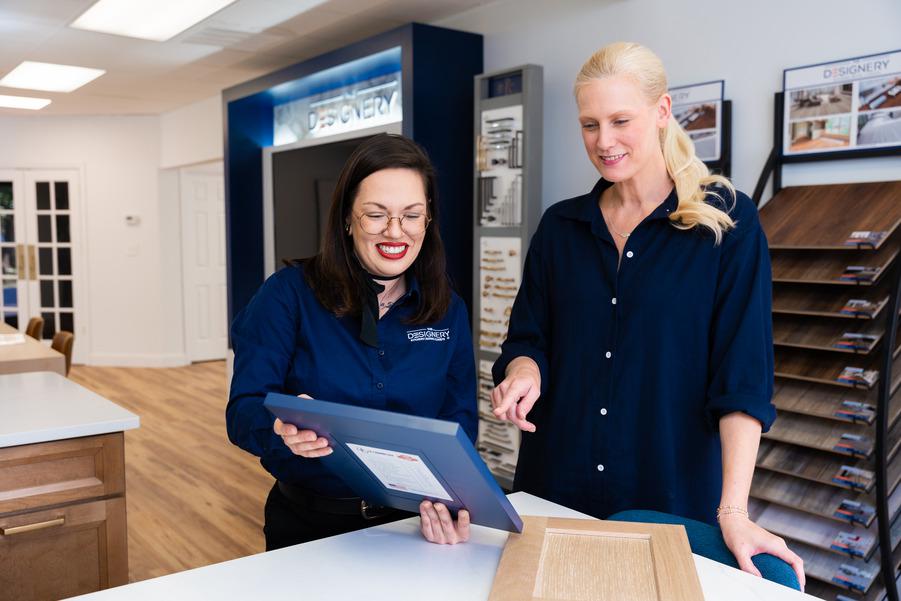
Undertones, veining, and finish sheen are nearly impossible to judge accurately from a screen — they shift depending on the light in your specific kitchen, the size of the slab, and what's sitting right next to them. That's why we bring cabinet doors and countertop slabs together, in person, before you commit to either one.
At our Longmont showroom, our design consultants will help you:
● See large-format samples side by side, so you can judge undertone and veining accurately.
● Test pairings under real lighting, not just showroom spotlights.
● Coordinate the whole picture — cabinet finish, countertop, hardware, and backsplash — so nothing feels chosen in isolation.
Visit our showroom: The Designery Longmont 1350 Ken Pratt Blvd, Ste 4, Longmont, CO 80501
Frequently Asked Questions
What countertop color goes best with white shaker cabinets?
White shaker cabinets pair well with almost any countertop, but a soft white or warm greige quartz with subtle veining is one of the most popular, timeless choices. For more contrast, a darker granite or quartzite with warm undertones also works beautifully.
Should countertops match or contrast with cabinet color?
Contrast generally creates a more dynamic, designed look, while matching tones creates a calmer, more cohesive feel. Most successful kitchens use a mix — sharing an undertone family while varying in lightness or texture, rather than matching exactly.
What's the best countertop for a two-tone kitchen?
A neutral countertop with subtle veining that picks up tones from both cabinet colors is generally the safest and most cohesive choice. If using two different countertop materials, make sure both share the same warm or cool undertone family.
How do I know if a countertop and cabinet undertone will clash?
The most reliable way is to view large-format samples of both materials side by side in your actual kitchen's lighting, since undertones can look different under showroom lights than they will at home. A design consultant can also help flag subtle undertone mismatches before you commit.