Why Are Cabinet Trends in 2026 Moving Away From All-White Kitchens?
For most of the last decade, white kitchens ruled. Bright, clean, and safe, white cabinetry became the default choice for homeowners who wanted a fresh, modern look without taking too many risks. It photographed beautifully, appealed to buyers, and felt timeless enough to justify the investment.
In 2026, that era is clearly shifting.
The cabinet trends defining kitchens this year are not just about color. They reflect a broader change in how people want their homes to feel. After years of high-gloss minimalism and all-white interiors, homeowners are gravitating toward spaces that feel warmer, more personal, and more connected to the natural world around them.
Across Longmont and Boulder, the palettes emerging in kitchen design draw heavily from the Colorado landscape itself: the sage of the high plains, the warm clay of the foothills, the deep amber of pine forests at dusk, and the muted blue-grey of a winter sky above the Flatirons.
At The Designery Longmont, we think of this movement as Grounded Luxury. It is sophisticated without feeling cold, expressive without becoming overwhelming, and rooted in materials and colors that feel authentic to Front Range living.
What Colors Are Defining Colorado Kitchens in 2026?
Alpine Green
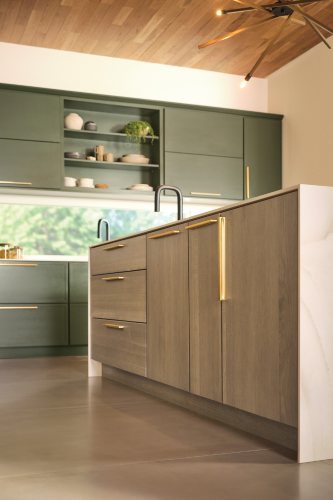
Green has firmly established itself as one of the defining cabinet color trends of 2026, and it feels especially natural in Front Range homes.
From deep forest tones to softened sage hues, green cabinetry brings the outdoors into the kitchen in a way few other colors can. In homes surrounded by foothills, pine trees, and open landscape, it often feels less like a design statement and more like a continuation of the environment outside the windows.
What makes Alpine Green particularly compelling is its restraint. The versions gaining popularity this year are not bright or highly saturated. They are layered, muted, and slightly weathered, closer to lichen on stone or sagebrush after a dry summer than anything bold or glossy.
Used thoughtfully, green cabinetry creates warmth and depth without overwhelming a space. It also works beautifully alongside the natural wood and stone materials already common throughout Colorado architecture, which gives the trend a sense of permanence rather than novelty.
Warm Earth Tones
The cool grey kitchens that dominated the early 2020s are steadily giving way to something softer and considerably more inviting.
Warm earth tones are becoming increasingly popular because they create spaces that feel comfortable rather than clinical. Clay, terracotta, ochre, mushroom, sand, and creamy neutrals all bring a sense of warmth that feels especially welcome during long Colorado winters.
There is also something emotionally grounding about these palettes. A kitchen wrapped in warm natural tones feels calmer, quieter, and more lived-in than the stark white kitchens that defined the previous decade.
Part of the appeal is practical as well. Earth tones tend to age gracefully and conceal the small signs of daily life more naturally than bright white cabinetry. In active kitchens where people genuinely cook and gather, that softness becomes part of the charm rather than something to constantly maintain.
Midnight Oak and Saturated Darks
Dark kitchens are returning in 2026, but the new version feels richer and far more livable than the flat black kitchens that briefly dominated social media a few years ago.
The difference is texture.
Rather than opaque painted surfaces, homeowners are gravitating toward deep midnight stains applied over natural oak or ash. The grain remains visible beneath the finish, giving the cabinetry depth and movement that changes subtly throughout the day.
In morning light, these finishes can read as warm charcoal or espresso brown. By evening, they deepen toward near-black. That variation is what keeps the space from feeling heavy. The cabinetry feels more like finely crafted furniture than a painted surface.
The most successful executions tend to balance darker lower cabinetry with lighter upper elements or open shelving, preserving a sense of openness while still delivering the sophistication and drama that dark kitchens offer.
Two-Tone Kitchens, Evolved
Two-tone cabinetry is not new, but the approach in 2026 feels noticeably more refined.
A few years ago, the trend leaned heavily on contrast: white uppers paired with navy lowers, often in combinations that felt visually sharp and intentionally trendy. Today’s versions are quieter and more architectural.
The combinations gaining traction now tend to rely on tonal balance rather than contrast alone. Natural White Oak paired with muted charcoal, forest green, or deep navy creates a kitchen that feels layered and grounded without becoming overly rustic or overly modern.
The reason two-tone kitchens continue resonating with homeowners is balance. Natural wood introduces warmth and texture, while painted cabinetry adds depth and definition. Together, the space feels more collected and intentional than a single finish applied uniformly throughout the room.
When the surrounding materials are selected carefully, two-tone kitchens can feel remarkably timeless despite being one of the strongest cabinet trends of 2026.
Matte Finishes Across the Board
If there is one characteristic tying nearly all cabinet trends together this year, it is the shift toward matte finishes.
High-gloss cabinetry has largely disappeared in favor of surfaces that absorb light rather than reflect it. Matte finishes give colors a softer, more complex appearance and create a texture that feels considerably more natural in residential spaces.
A matte green cabinet, for example, feels layered and architectural in a way gloss rarely achieves. The same is true for warm neutrals and dark stains, which gain depth and richness when finished with a softer sheen.
There is also a practical advantage. Matte surfaces are far more forgiving in everyday life, concealing fingerprints, smudges, and minor wear with far less effort than polished finishes.
Ultra-matte finishes are becoming especially popular because of their almost velvety texture. They are difficult to fully appreciate in photographs, which is one reason so many homeowners end up wanting to see them in person before making a final decision.
How Do You Choose a Cabinet Color That Will Still Feel Right Years From Now?
The safest long-term choice is rarely the safest-looking color in the moment.
The cabinet colors that tend to age best are usually the ones connected to something authentic: the architecture of the home, the surrounding landscape, or materials that already exist naturally within the space.
That is one reason greens, warm earth tones, natural wood finishes, and muted dark stains feel particularly enduring right now. They do not rely on novelty to feel interesting. They already exist comfortably within the visual language of Colorado homes.
It also helps to evaluate cabinet colors in the context of the entire kitchen rather than in isolation. Lighting, flooring, countertops, and even the direction the windows face can dramatically influence how a finish feels once installed.
At The Designery Longmont, we encourage homeowners to view materials and finishes in person whenever possible because subtle differences in tone and texture become much clearer in real light than they do online.
Can Dark Cabinets Work in Smaller Kitchens?
Absolutely. In many cases, dark cabinetry can make a smaller kitchen feel more intentional and visually grounded rather than cramped.
The key is balance.
Keeping darker finishes concentrated on lower cabinetry or islands helps maintain openness, while lighter upper elements and thoughtful lighting prevent the room from feeling visually heavy. Texture also matters. Dark stained wood with visible grain generally feels warmer and more dimensional than flat painted black surfaces.
Some of the most successful smaller kitchens we see are the ones willing to embrace mood and contrast rather than trying to make every surface feel bright and reflective.
Why Visit The Designery Longmont to Explore Cabinet Trends in Person?
Color is one of the most personal decisions in a kitchen remodel, and it is difficult to fully evaluate finishes, textures, and undertones through a screen alone.
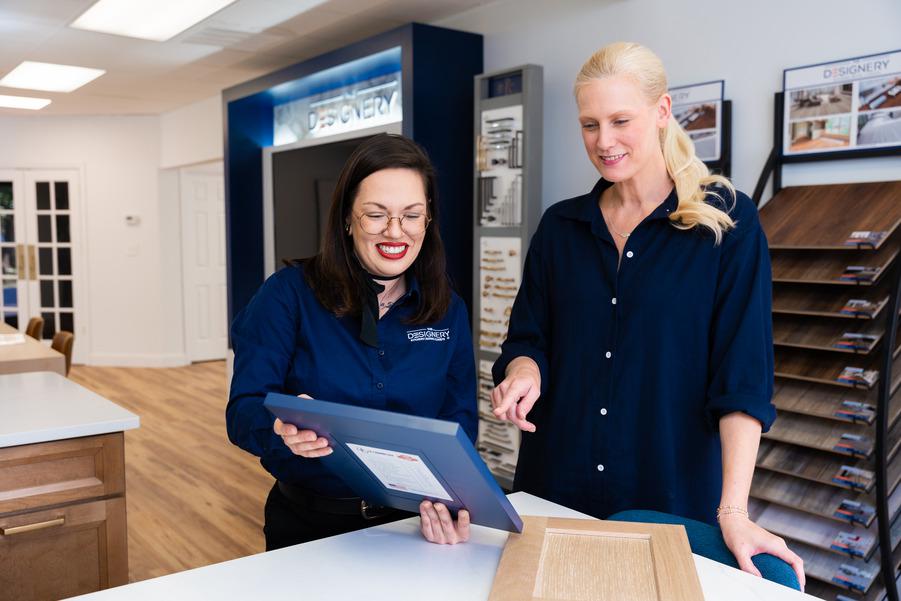
At The Designery Longmont, our showroom features a wide range of cabinet trends for 2026, including ultra-matte finishes, natural wood cabinetry, layered earth tones, and the deep stained finishes defining today’s Mountain Modern kitchens.
Seeing these materials in person allows homeowners to understand how light interacts with texture, how undertones shift throughout the day, and which palettes genuinely feel right for their home.
Visit our Longmont showroom or schedule a consultation to explore cabinet colors and finishes designed specifically for Colorado living.
Frequently Asked Questions About 2026 Colorado Cabinet Trends
What cabinet colors are trending in 2026 for Colorado homes?
In 2026, Colorado homeowners are moving away from all-white kitchens and toward warmer, more natural palettes. The most popular cabinet colors include muted sage greens, warm earth tones like clay and sand, deep stained woods such as midnight oak, and layered neutral tones like mushroom and greige. These colors are strongly influenced by the Front Range landscape and pair well with natural materials like wood and stone.
Are matte cabinets better than glossy cabinets for kitchens?
Matte cabinets are becoming the preferred choice in 2026 because they offer a softer, more modern look and are significantly better at hiding fingerprints, smudges, and everyday wear. Unlike high-gloss finishes, matte surfaces reduce glare and allow colors to appear richer and more natural. They are especially popular in busy households where durability and low maintenance are important.
How do I choose a cabinet color that won’t feel outdated in a few years?
The most timeless cabinet colors tend to be those inspired by natural environments, such as warm neutrals, muted greens, and natural wood tones. Instead of focusing on short-term trends, it helps to consider your home’s lighting, flooring, and overall architectural style. Colors that feel grounded and connected to your space are far more likely to remain appealing over time.