Defining the "Mountain Modern" Style
The Colorado Front Range has developed a distinct architectural identity that did not exist a generation ago. It sits at the intersection of rugged naturalism and clean, contemporary design, and it has become one of the most recognizable regional aesthetics in the country.
When we talk about modern kitchen cabinets Boulder homeowners are gravitating toward in 2026, we are not referring to the cold, sterile white-box kitchens that dominated design magazines a decade ago. Today’s Colorado aesthetic is warmer, more organic, and deeply connected to the landscape just outside the window.
At The Designery Longmont, we see this design philosophy reflected in the way Front Range residents actually live. It blends an active outdoor lifestyle with a deep appreciation for a calm, well-designed home environment.
Your cabinets are the single largest visual surface in your kitchen. They set the tone for everything else in the room, and in a Mountain Modern home, they need to do that with both warmth and intention.
This guide breaks down the key elements of the Front Range cabinet aesthetic, from materials and door profiles to finishes and functional features, so you can walk into your next design conversation with clarity.
Why Are Natural Wood Textures Dominating Front Range Kitchens Right Now?
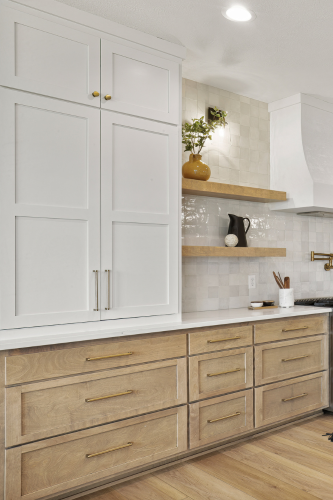
If there is one material defining Front Range kitchens in 2026, it is real wood. After years of painted cabinets dominating the market, homeowners throughout Boulder County are returning to natural wood finishes in a big way, but with a modern sensibility that keeps the look architectural rather than rustic.
White Oak is the clear frontrunner, particularly in rift-sawn or quartersawn cuts. These milling techniques produce a straight, consistent grain pattern that reads as clean and intentional rather than rustic or busy.
The color palette of rift-sawn White Oak reflects the natural environment of the Front Range: warm ambers, sandy tones, and soft greys that echo sandstone formations, high plains grasses, and mountain light.
For homeowners who want more character, European White Oak and natural Walnut are also strong choices. Walnut brings a deeper, chocolate-toned richness that pairs well with warm brass hardware and stone countertops. Both species perform well in Colorado’s dry climate when properly finished, which is an important consideration in material selection.
Which Door Profiles Define the Mountain Modern Kitchen in 2026?
The door style you choose defines the visual personality of your kitchen more than almost any other decision. In Mountain Modern design, two profiles are leading the conversation.
The slim shaker door is a refined evolution of the classic Shaker style. Traditional Shaker doors use wider rails and stiles, which can feel heavy in a contemporary space. The slim shaker reduces those frame elements to create a lighter, more architectural profile while maintaining structure and depth. It works well in both painted and natural finishes.
The slab door takes minimalism a step further by eliminating the frame entirely. It is a single flat panel with no surface detail, which shifts attention to the material itself — whether that is wood grain, matte paint, or veneer texture. Slab doors are particularly popular in downtown Longmont loft-style spaces and contemporary homes in communities like Prospect New Town.
Both profiles reduce visual clutter and allow materials and hardware to take center stage.
What Finish Colors and Textures Connect Best With the Colorado Landscape?
High-gloss cabinetry has largely disappeared from Boulder County design preferences, replaced by matte finishes that feel more grounded and natural.
From a design standpoint, matte finishes absorb light rather than reflect it, creating a softer and more balanced kitchen environment. Deep, saturated tones such as Iron Ore, Navy Moss, Terracotta Clay, and Sage work especially well in matte applications. These colors are drawn directly from the Colorado landscape — red earth, sagebrush, alpine skies, and mountain shadow.
From a practical standpoint, matte finishes also hide fingerprints and smudges far better than gloss, making them ideal for active households.
If you are drawn to painted cabinetry, a two-tone approach is especially popular right now. Pairing a matte painted perimeter with a natural wood island adds depth while keeping the palette cohesive and grounded.
How Do Boulder Homeowners Blend Function and Beauty in a Modern Kitchen?
A Mountain Modern kitchen is not just about appearance — it is about how effortlessly it functions. Boulder County homeowners are increasingly drawn to the “invisible kitchen,” where appliances and storage are integrated into a calm, cohesive design.
Integrated appliance panels are one of the most requested features. A panel-ready dishwasher blends into the cabinetry, and a panel-ready refrigerator can disappear entirely into the design when executed well. The result is a kitchen that feels streamlined rather than appliance-heavy.
Appliance garages are also becoming more common. These dedicated cabinet spaces, often with lift or tambour doors, store countertop appliances like coffee makers and blenders. When closed, the kitchen immediately reads as clean and uncluttered.
Interior organization systems complete the approach. Pull-out spice drawers, deep storage for pots and pans, and custom inserts for utensils ensure that everything has a designated place. The goal is simple: the kitchen should function intuitively while maintaining a visually calm environment.
Bringing It All Together
Mountain Modern kitchen design is ultimately about balance — between natural materials and clean lines, between warmth and minimalism, and between function and visual simplicity.
At The Designery Longmont, we help homeowners translate this aesthetic into real-world kitchen spaces that reflect both the Colorado landscape and the way people actually live in their homes. Whether you are exploring modern kitchen cabinet trends or planning a full remodel, the goal is the same: a kitchen that feels intentional, durable, and deeply connected to place.
Frequently Asked Questions About Modern Kitchen Cabinets in Boulder
How do I know if the Mountain Modern aesthetic is right for my home?
A good starting point is looking at the exterior of your home and the surrounding neighborhood. If your home already leans toward natural materials, clean lines, and a connection to the outdoors, the Mountain Modern interior will feel like a natural extension of what is already there. If your home has more traditional or ornate architectural details, a hybrid approach that blends warm wood tones with more classic profiles can bridge the gap beautifully. A design consultation will help you find the right balance.
Are natural wood cabinets difficult to maintain in Colorado's dry climate?
With the right finish and the right wood species, natural wood cabinets perform very well on the Front Range. The key is choosing a finish specifically formulated for low-humidity environments and ensuring the wood was properly dried and acclimated before installation. Rift-sawn White Oak and Walnut are both excellent choices for Colorado because of their dimensional stability.
What hardware works best with the Mountain Modern style?
Warm metals are leading the trend right now. Unlacquered brass and brushed gold add warmth without feeling flashy, and they complement natural wood tones beautifully. Matte black is a strong choice for kitchens that lean more industrial or graphic. Brushed nickel remains a versatile option that works across a wide range of color palettes. As a general rule, choose one metal finish and stay consistent throughout the kitchen for a cohesive, intentional result.