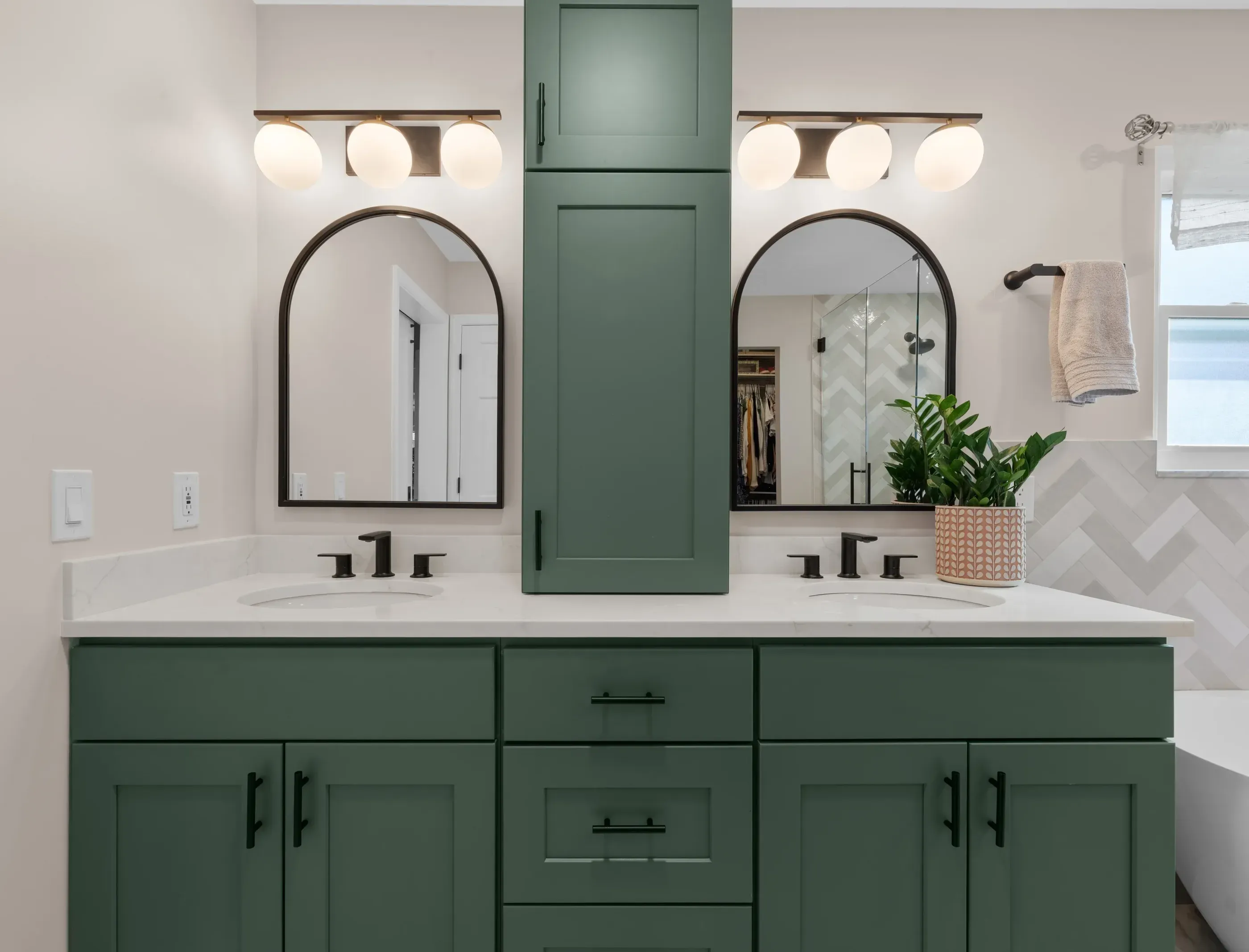
The biggest mistake that occurs with bathroom vanity height is installing for the room, not the person using it. This one foundational detail is a major culprit for daily back pain.
If it’s time for a bathroom remodel (or maybe just a better vanity), keep reading. As it turns out, bathroom vanity height isn’t as standard as we think.
Standard vanity height vs. comfort height
If you have an older or historic home, your bathroom vanity may be a mere 30” high. Case closed–that’s why your back hurts. But even a little lift may not be enough for everyone. Discover the best heights for tall people or aging in place.
Standard height of 32”
So, older vanities were too low. Builders naturally began bumping it up until we saw a standard of 32 inches. In truth, this is a good vanity height for users between 5’ and five foot four. Your elbows will bend at a 90-degree angle, give or take, which lends itself to an ergonomic posture.
Comfort height of 36”
A bathroom vanity height of 36” is appropriate for tall users–think 5’10” and up. Thirty-six inches is the approximate height of a kitchen counter, if you want to test this size. The trick to getting this height right, however, usually means choosing an undermount sink.
The ADA standard may be your best bet
The Americans with Disabilities Act (ADA) recommends a finished bathroom vanity height of 34 inches. This is indeed the sweet spot for most, as it works for wheelchair users and most people 5’10” and under.
The sink can change everything: Finished height vs. cabinet height
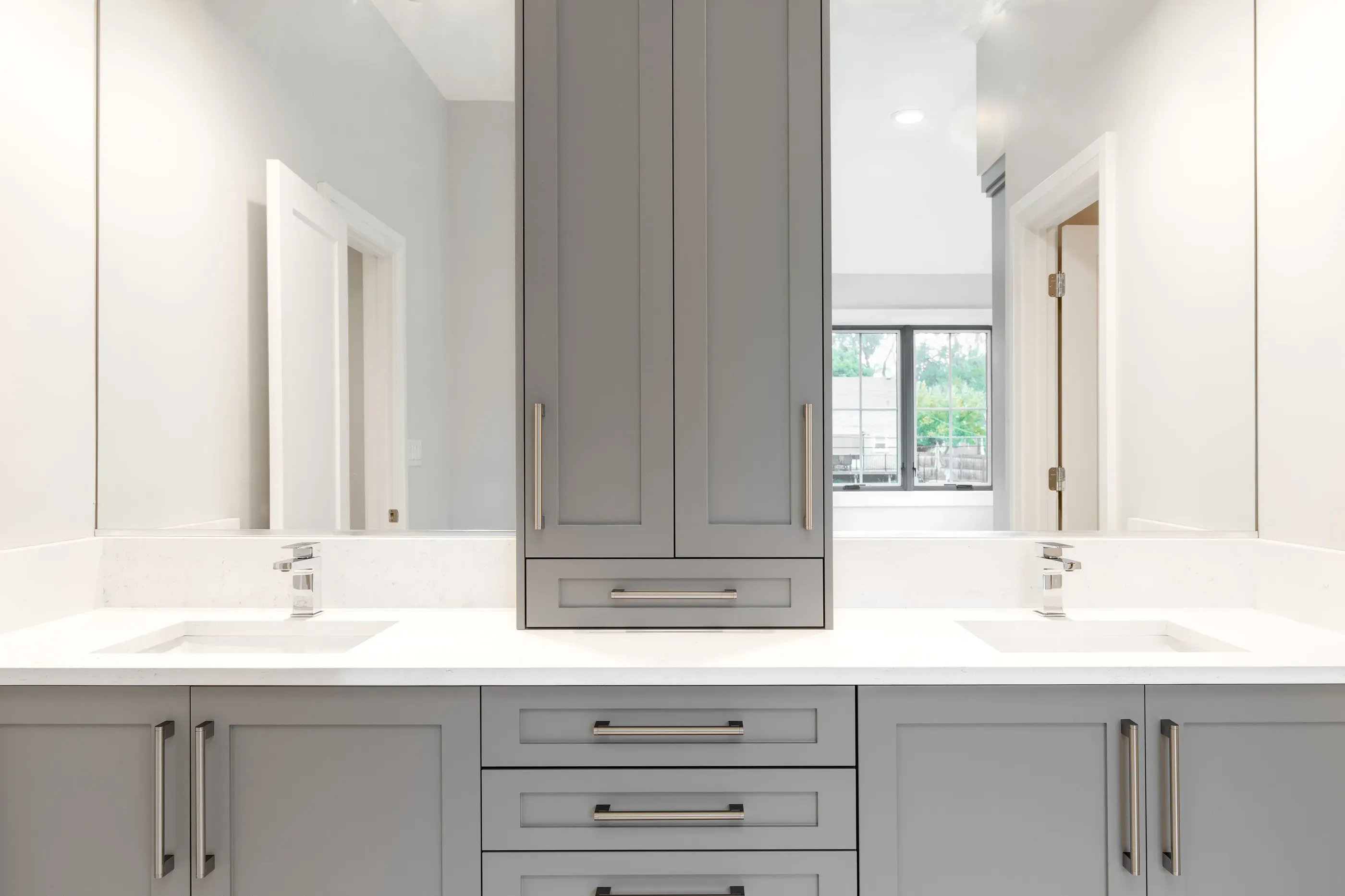
Measuring a vanity cabinet, figuring in an inch or two for the counter, and installing it doesn’t mean you got it right. Your sink is factored into the ideal, final bathroom vanity height. Some common examples and combinations:
-
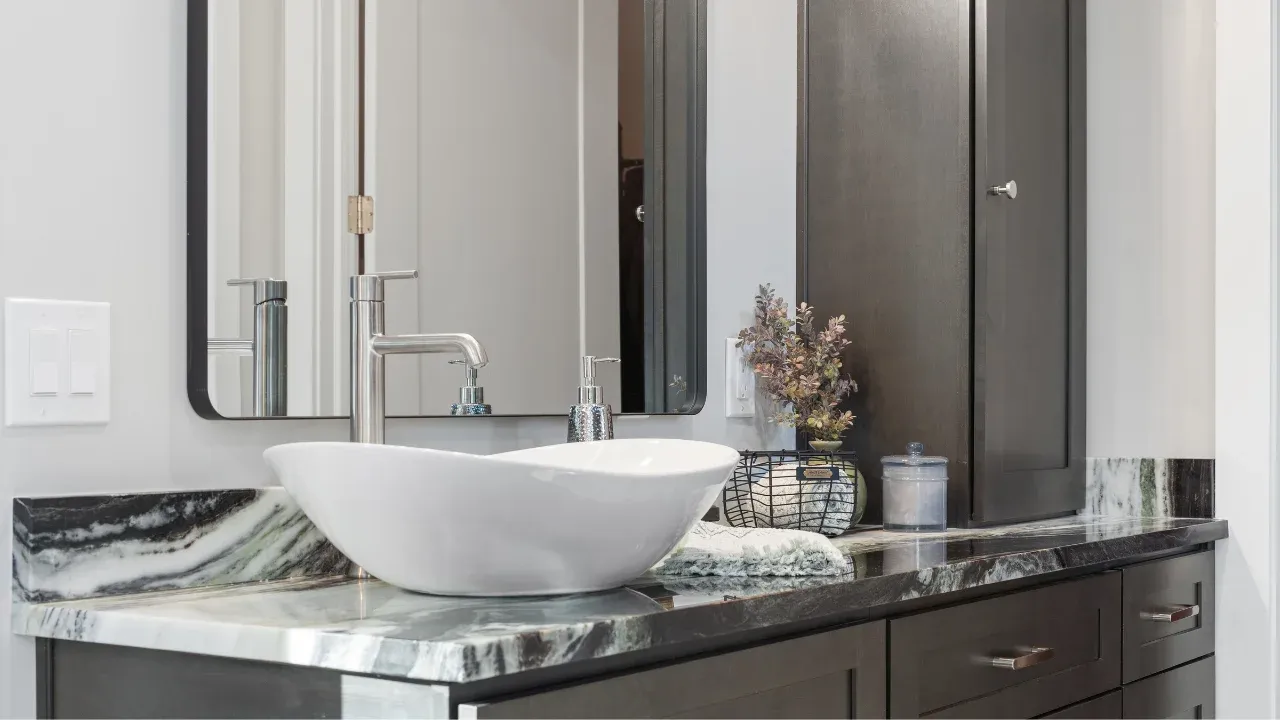
A 32” vanity cabinet with a 2” stone countertop and a vessel sink can take you up to a finished height that’s too high for most users.
-
A 34” cabinet with the same countertop and an undermount sink totals us up to 36”, a great combo for taller users.
-
Wall-mounting a counter or floating vanity 34-36” up the wall may be too high if you’re installing a vessel sink on top of that. Thirty inches is better.
-
In any case, choosing a cabinet that is 36” high by itself is probably too much. Cabinets alone are best selected at 30-32 inches. The countertop will add another few inches. Additional height can be added via the sink, but an undermount or integrated is preferable for the widest range of users.
Can you fix a bathroom vanity height mistake?
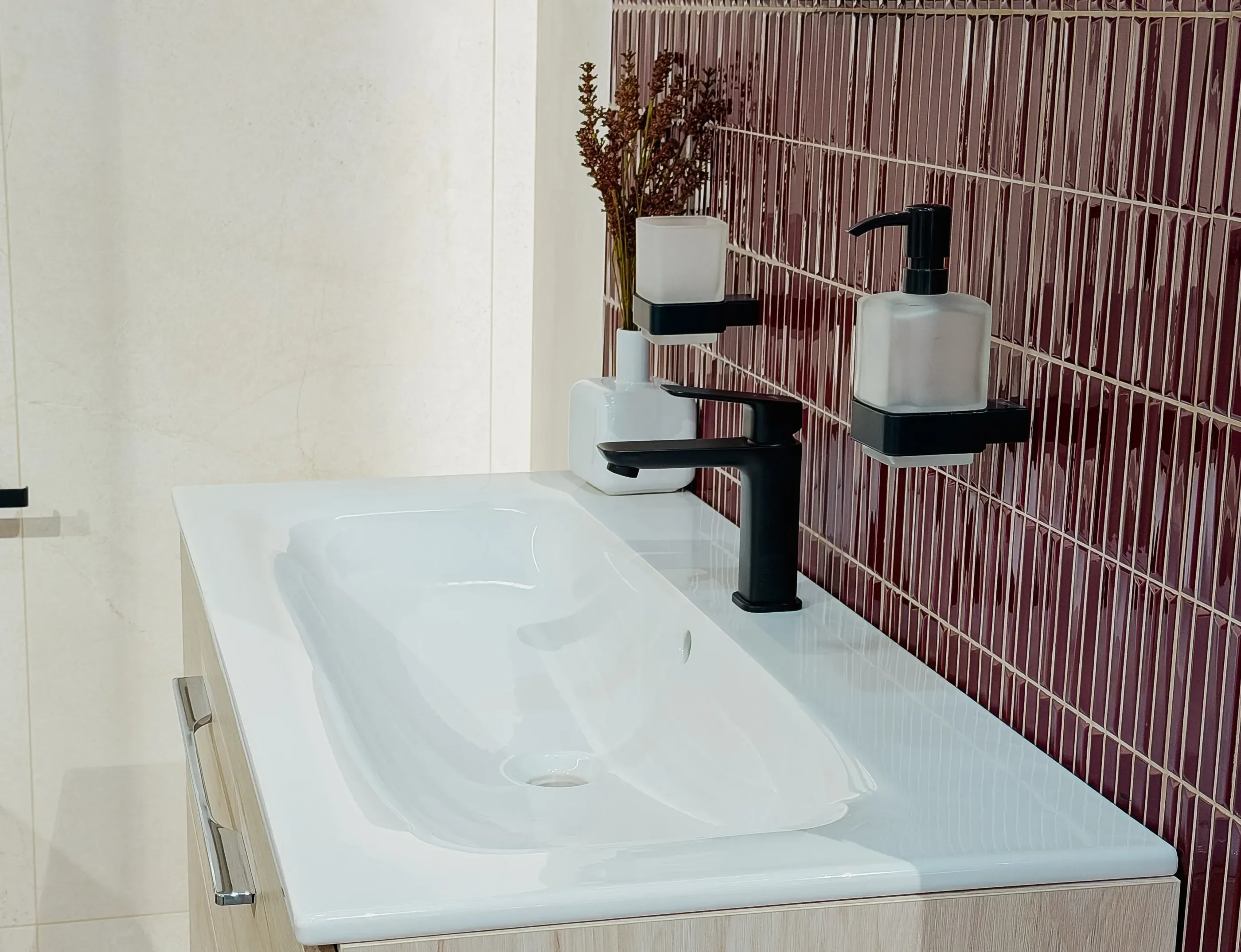
You know your bathroom vanity height isn’t quite right. Fix or replace? One of the key questions to ask here is whether or not a fix requires moving bathroom plumbing. These adjustments cost enough that you may as well go ahead and replace the vanity.
Outside of this, it’s possible to raise existing cabinets or make a careful adjustment to wall-mounted units. Fixes like these can be labor-intensive and should be completed by a professional.
If you have a historic home with a low vanity, a new stone countertop and vessel sink can bring you up to a comfortable height.
No detail goes unexplored at The Designery.
Standard vanity height vs. comfort height often goes unquestioned by homeowners. They assume that “standard” means it’s a firm rule applicable everywhere. As we’ve seen here today, vanity height standards are very flexible and hinge almost entirely on your other design choices.
Don’t make a painful mistake. Let a professional bathroom designer define new standards for your home. From initial measurements and planning to customizations and quality material selection, we take the ache out of remodels.
“The Designery transformed the last remaining eye-sore in our home into a simply beautiful and tranquil oasis that we get to enjoy on a daily basis. I would fully recommend The Designery to anyone and would happily work with them on any future projects.”
Thomas, Designery client
Visit your showroom for a first look today.