Breaking down cabinet materials isn’t about deciding which one is best. These materials are chosen for purpose, and many cabinets contain all three. Solid wood frames, plywood cabinet boxes, and MDF cabinet doors are a common, excellent-quality configuration.
Keep reading to learn how each adds longevity and beauty to bathroom and kitchen remodels.
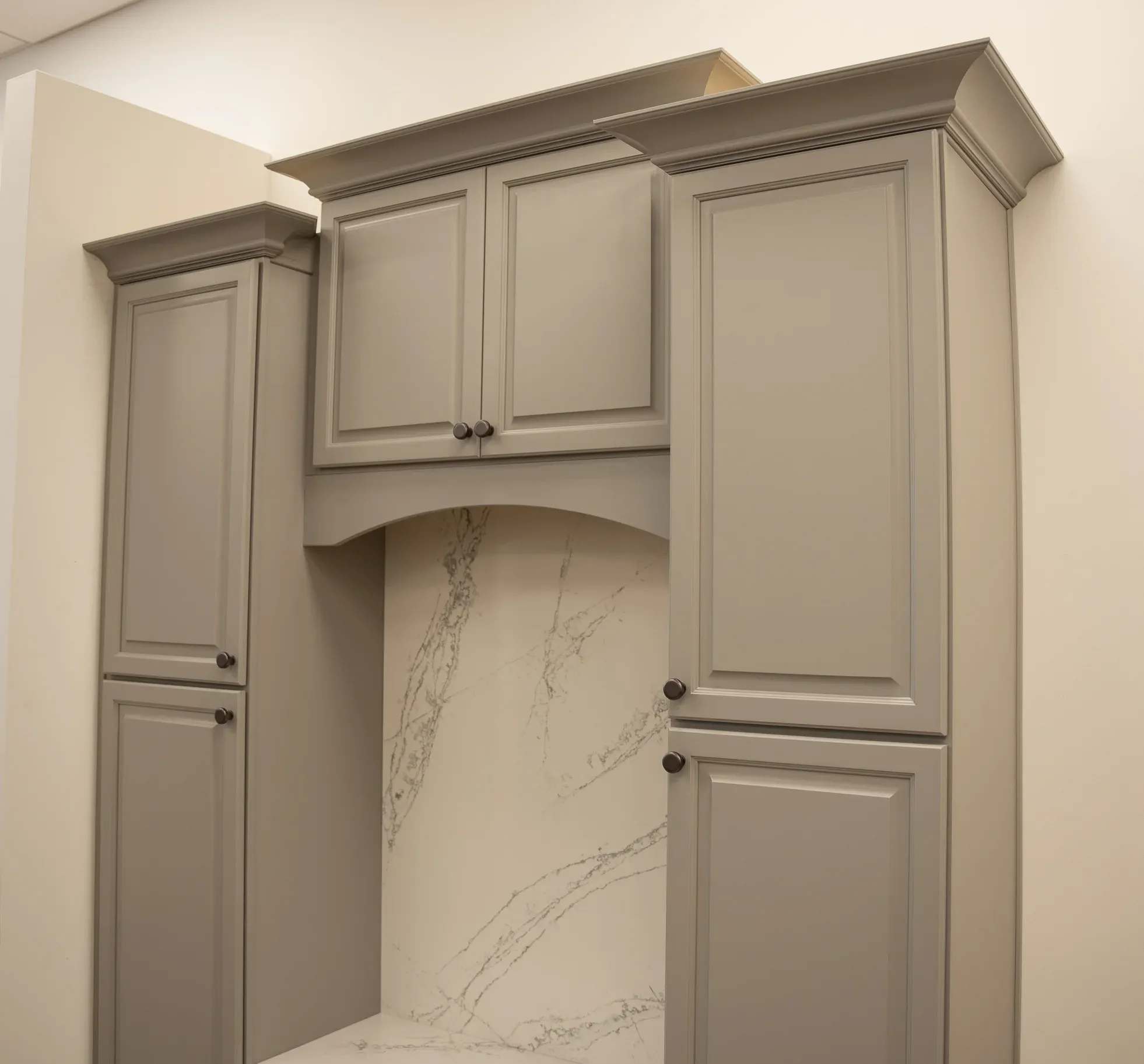
Why mixed cabinet materials?
You might assume that 100% solid wood is the best your money can buy. However, there are very good reasons manufacturers mix solid and engineered wood. Think of what we structurally, realistically need from cabinets:
-
Boxes shouldn’t expand and contract with the seasons.
-
The cabinets need to be light enough to stay anchored to the walls.
-
Many people don’t want visible grain or knots on their fronts, just a smooth surface.
Solid wood, plywood, and MDF come together to make this happen.
Solid wood cabinet materials
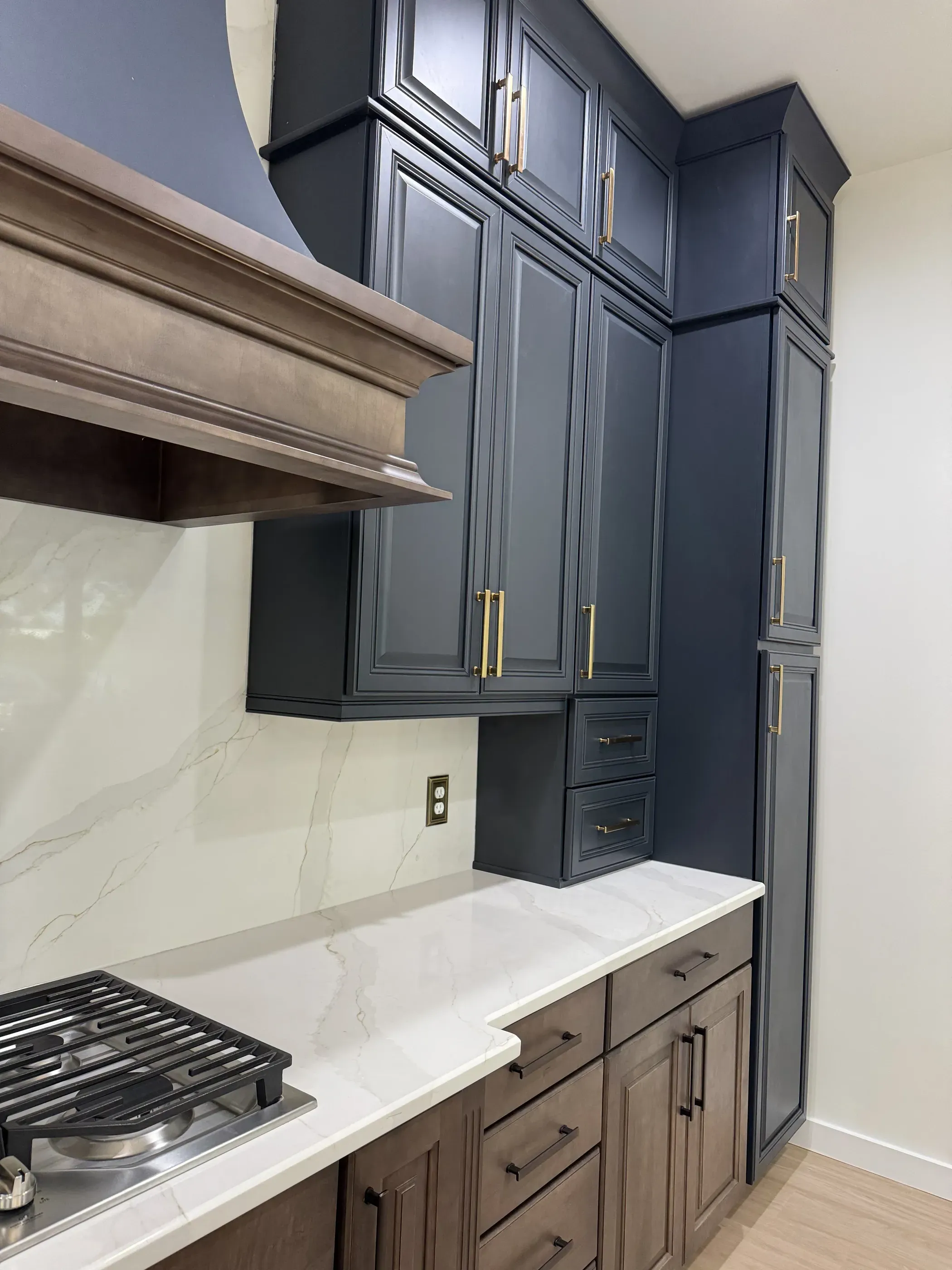
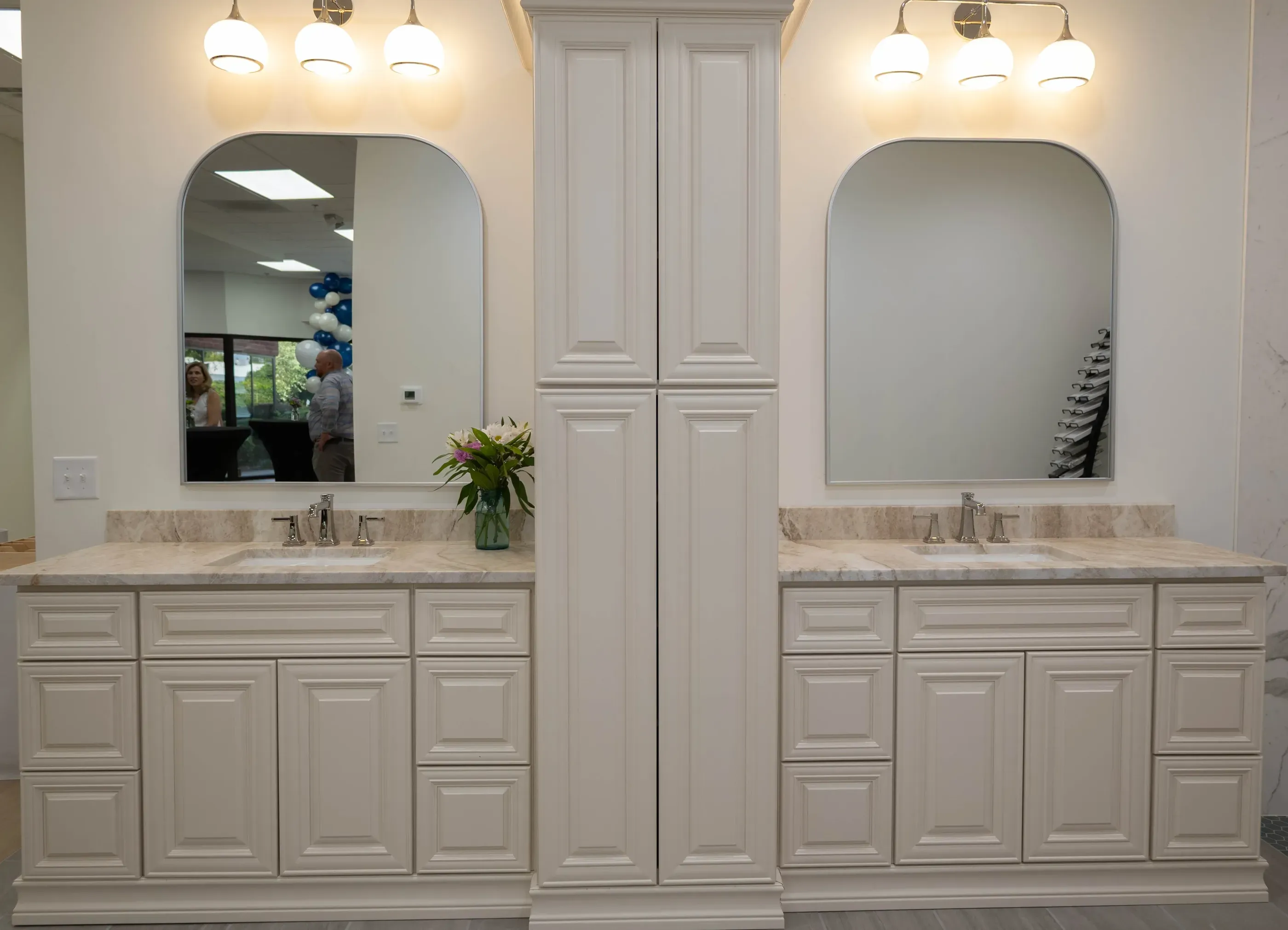
Cabinet frames, doors, and decorative moldings are the best places to include solid wood. You’ll see more wood in traditional, craftsman, and rustic style cabinets, where raised panels are the perfect fit.
Solid wood is typically reserved for areas we touch most or see, such as exposed frames. But because it’s heavy and prone to warping, it isn’t always the best material for boxes.
Most popular solid wood cabinet materials: Oak, maple, cherry, walnut
Plywood cabinet boxes
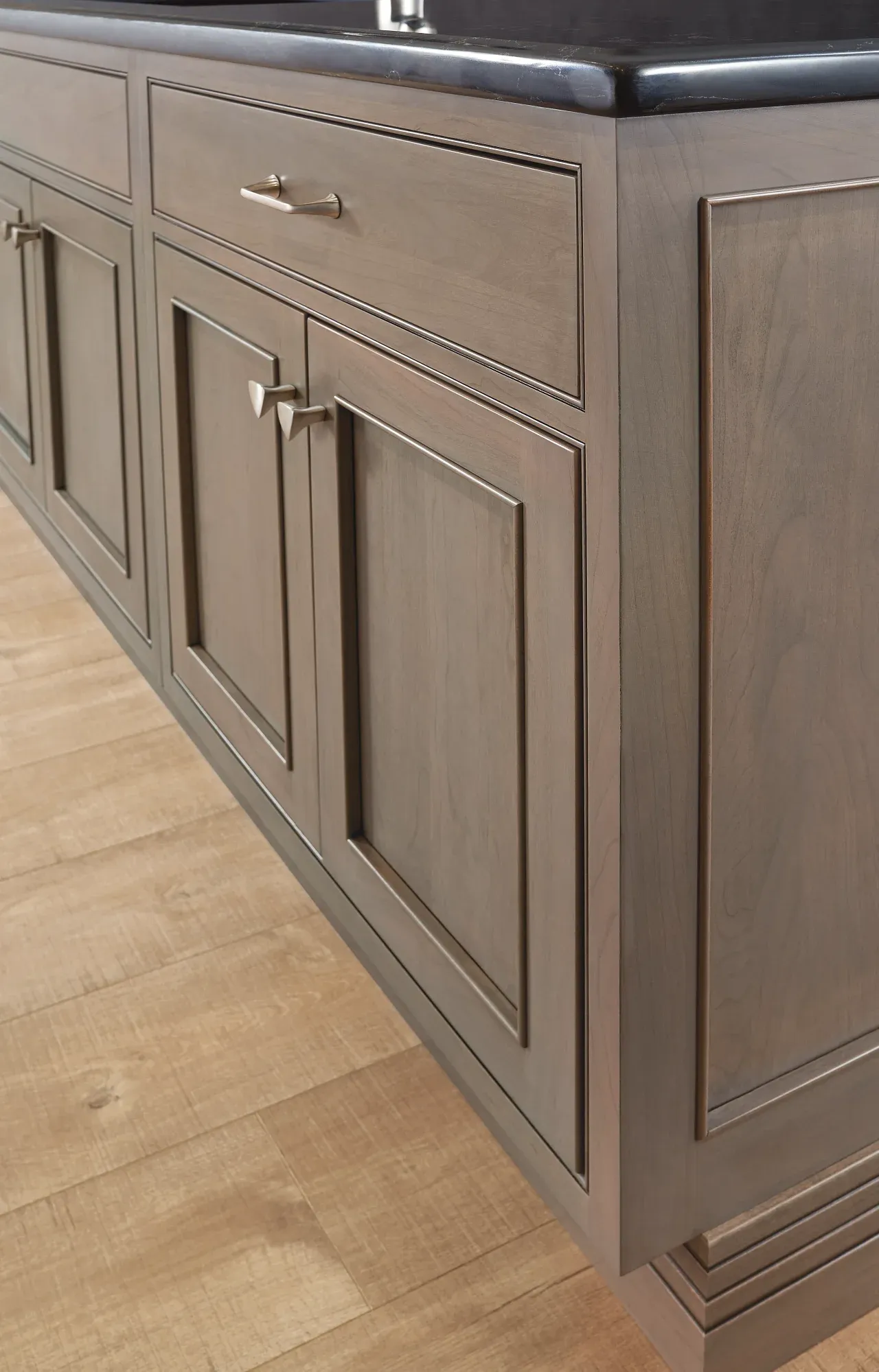
How do we get the natural strength of solid wood, but make it more lightweight and stable? Enter plywood, the best possible material for your new cabinet boxes. Plywood is made up of very thin layers of natural wood. These layers are glued together in different orientations so the grain crosses in all different directions, enhancing its strength.
This is also the material many subfloors are made of, so you know it can take a beating. Plywood retains its shape in humid environments and is approximately half the weight of solid wood. It’s the best engineered wood product for structural stability.
Quality plywood cabinet boxes: Go for plywood box sides with a thickness of ¾.”
MDF cabinet doors
Why do old cabinets crumble, peel, and mildew? Because they used to be made from particleboard, a budget material of low-density wood chips compressed together with a rough surface.
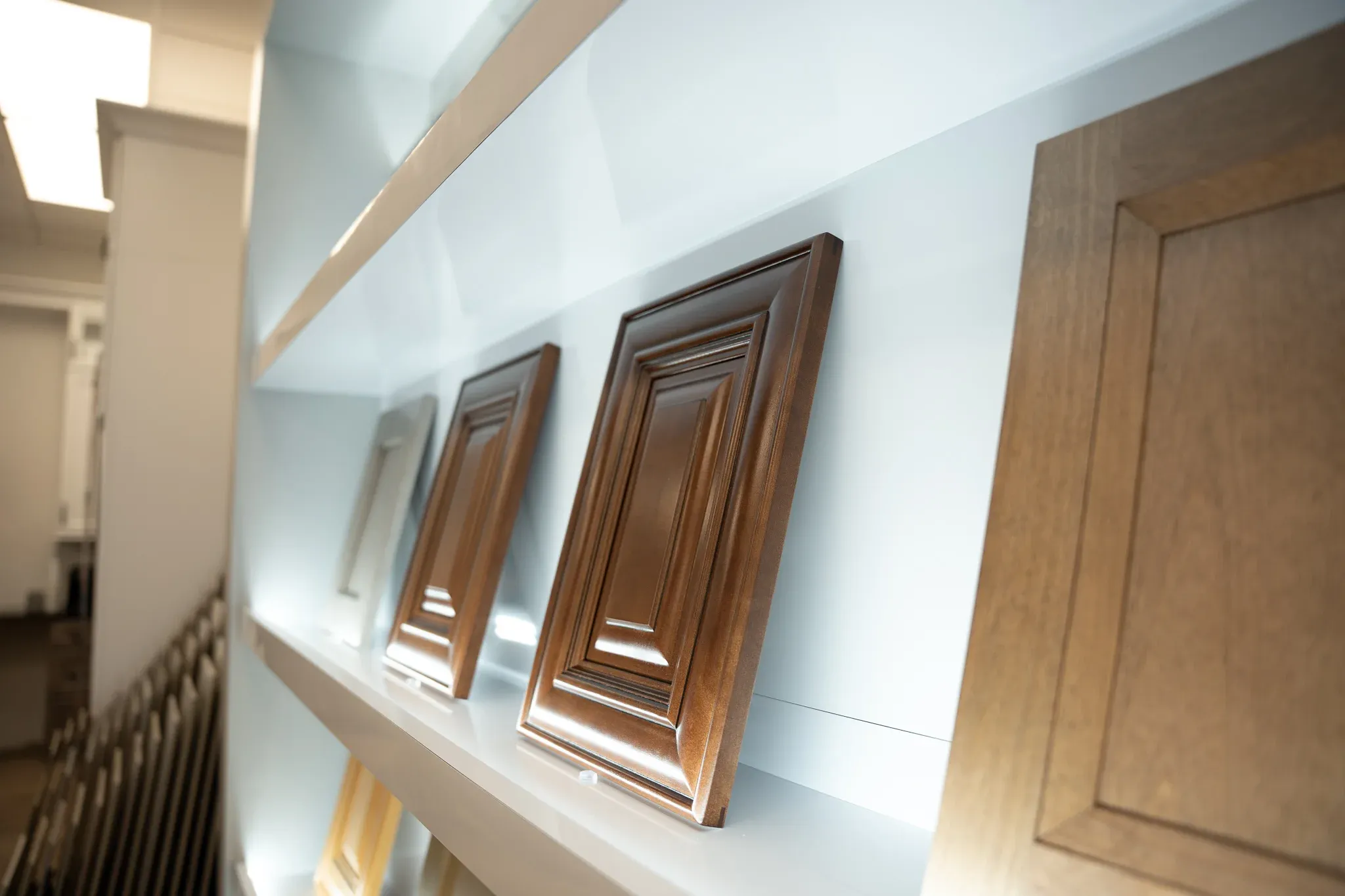
We’ve since upgraded. MDF is medium-density fiberboard, where wood fibers are bound together with resins and waxes. The result is something much smoother, stronger, and more consistent than the old stuff. We use MDF for the center panels of cabinet doors because they are the perfect texture for designer colors, and can even be finished with wood veneer.
Better for busy kitchens: MDF doesn’t scratch or dent as easily as solid wood.
Cabinet material red flags to watch out for
It’s not enough to know about the material itself. How and where it’s applied makes all of the difference. Here’s what you should side-eye:
-
Particleboard boxes. Specifically, those with unbanded edges. They’re susceptible to swelling and water damage. Play it safe with plywood.
-
Paper-thin back panels. The back panel should be ¼” or greater, greater for frameless cabinets.
-
Poor hinges. Soft-close hinges prevent so much slamming, preserving the structural integrity of your cabinets.
Come straight to the cabinet source
The Designery is a direct source for quality cabinets in all colors and styles, in the ideal blend of materials. From bathrooms and laundry rooms to indoor and outdoor kitchens, we have the semi-custom solutions you’re looking for.
“We recently used The Designery for a major update to our home, and we couldn’t be happier with the results. They handled everything from designing our new cabinet layout to the final installation of both the cabinets and our new flooring.”
Josh, The Designery client
Begin reviewing your options at your local Designery showroom.
Cabinet materials FAQ
What is the best material for cabinet doors?
Solid wood, MDF, or a combination of both. Solid wood is great for detail and that natural grain look. MDF center panels can provide a smoother, wear-resistant surface in the center panel.
Which cabinet material lasts the longest?
That depends on where it’s used and how it is finished. Plywood offers the most longevity in cabinet boxes, especially in thicknesses common to quality cabinetry.
Solid wood is higher performing as framing or trim, not as a box. MDF center panels for doors serve aesthetic needs and won’t be subjected to the structural wear plywood and wood are, making them quite long-lasting.
All told, this configuration can last 30-50 years.
Can solid wood cabinet doors crack?
Yes, but it’s often minor and over a longer period of time, with drastic humidity changes. It’s more unlikely to occur in framed door construction. Single flat wood panels would be more susceptible.
Can plywood be painted?
Technically, yes. However, it requires a lot of surface prep. If you ever consider painting cabinet doors down the line, MDF offers a much better surface. You’ll get far more even coverage.
Aren’t all solid wood cabinets better quality?
Not necessarily. Construction, joinery, and hardware can take affordable materials to the next level. They can also make expensive ones practically useless. Mixed materials maximize the benefits of each. You get the beauty of solid wood where it truly counts, with the stability and customization offered by other material combinations.