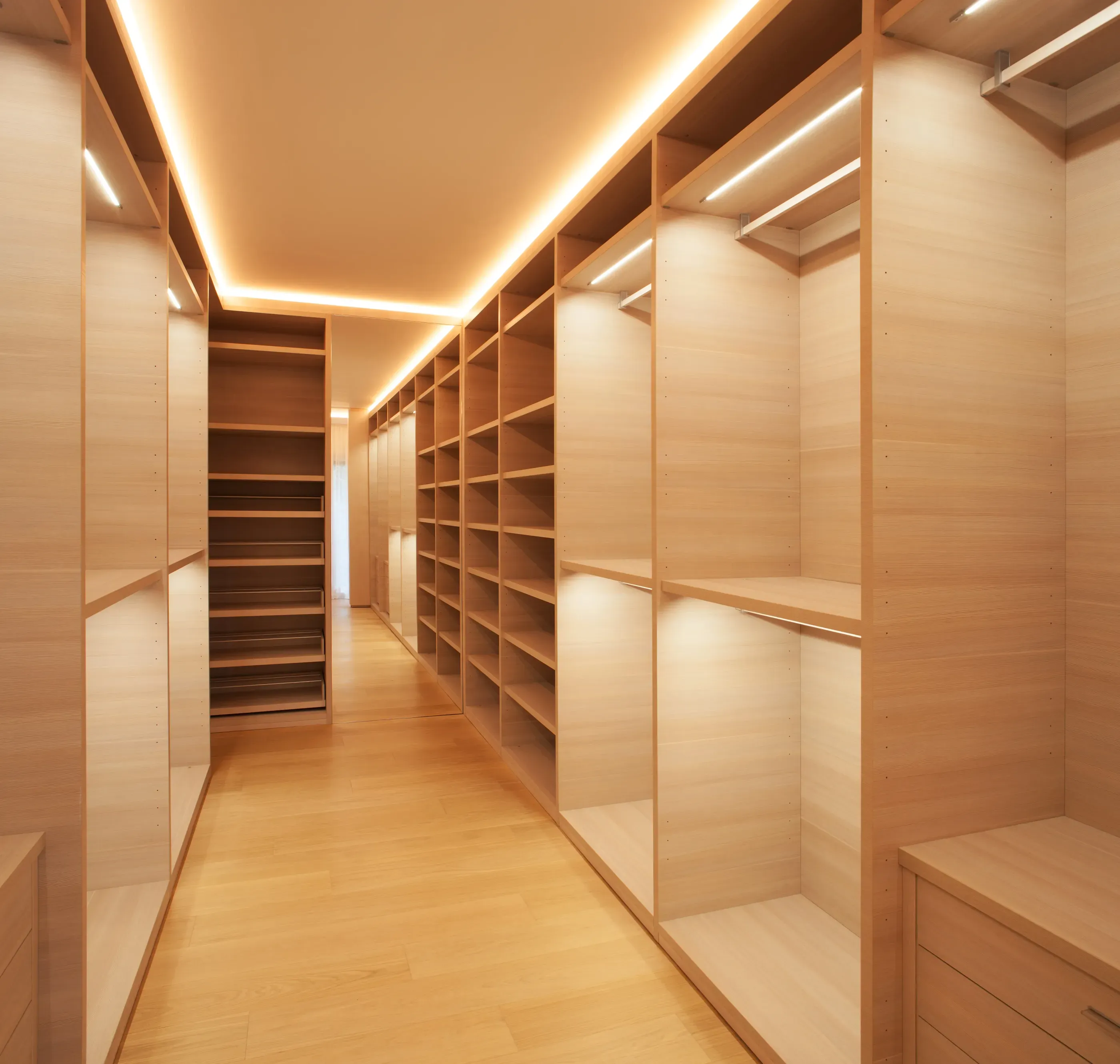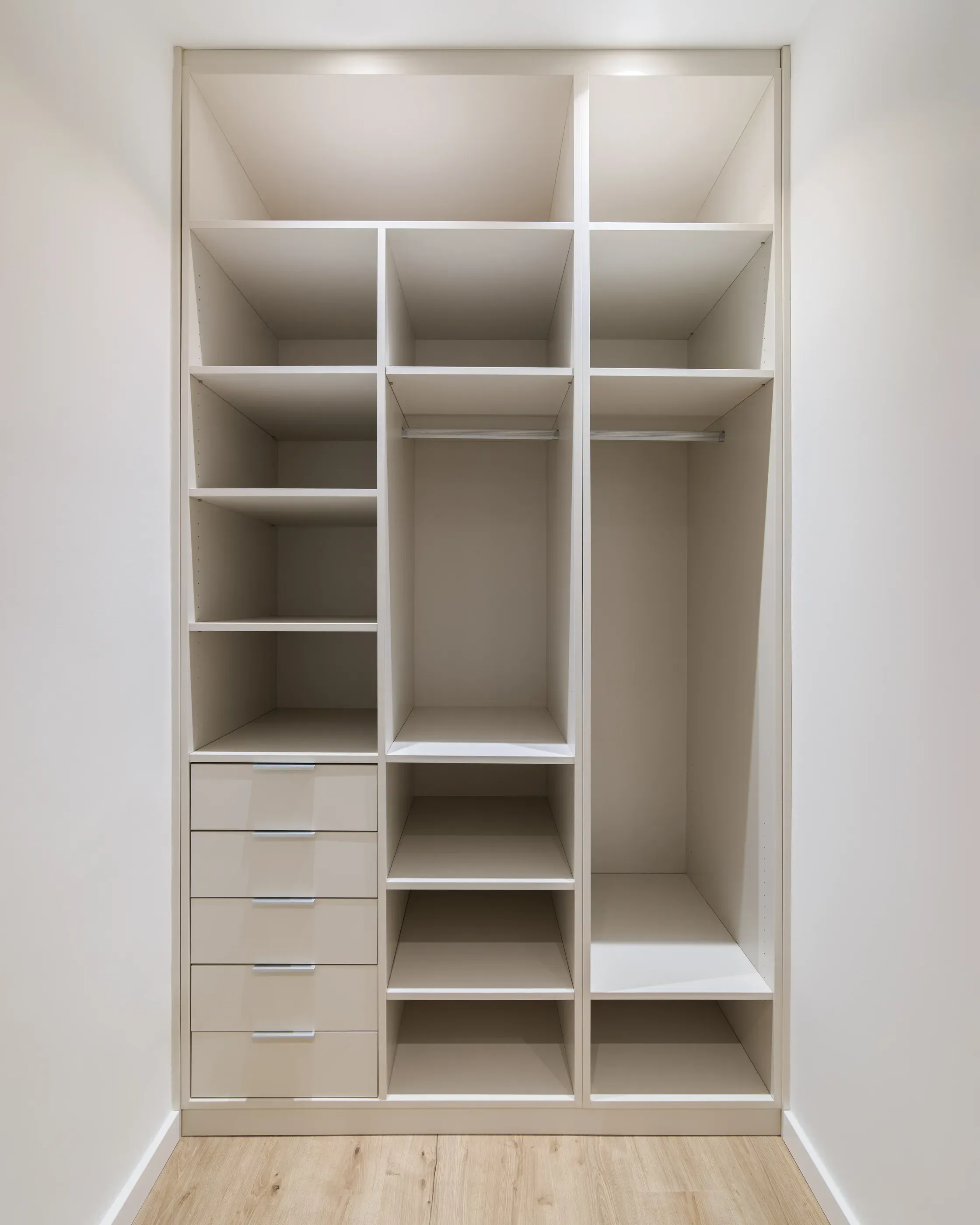
If there’s one space that requires designing within an inch of its life, it’s the small bedroom walk-in closet.
The average small-sized, store-bought, pre-fab closet system is for a 7x10 walk-in. Closet designers rarely, if ever, see walk-ins smaller than 5x5. So, what do you do if you’re in that 5x5, 5x6, or 6x6 category? Or maybe, just maybe, a little smaller?
It’s time to get creative. Prep for your small closet remodel with this breakdown on miniature walk-ins.
What’s the minimum size for a walk-in closet?
The smallest walk-in closets are 4x4, or 16 square feet. You may find a walk-in this size in an older property, but it’s pretty uncommon otherwise. Today, the minimum size for a walk-in closet is 5x5, or 25 square feet.
Walk-in or reach in? How to tell if a walk-in closet is right for you
If you have 1) a choice, and 2) a 5x5 space or smaller, a reach-in closet is going to offer more storage. You’ll get more linear feet for hanging space that would otherwise be needed for entering on foot. It will also make your belongings more visible and accessible.
This only applies to storage, though. If you have a 5x5 area and want a personalized space, a clever walk-in design is still a viable option.
Small bedroom closet ideas: Walk-in closet layouts for compact spaces
Choosing the walk-in? Every property (and closet owner) is unique, but here are three layout choices to consider.
1. The galley closet layout.
Most homeowners want a galley layout, but it eats more space. You’ll need about 30-35 square feet for it to make sense. Think about width alone here. Two 24” depth storage systems on either side, with a minimum 24” wide aisle of walking space between them.
A good choice for: People with the square footage who want to dedicate it to hanging space.
2. An L-shaped or corner closet layout.
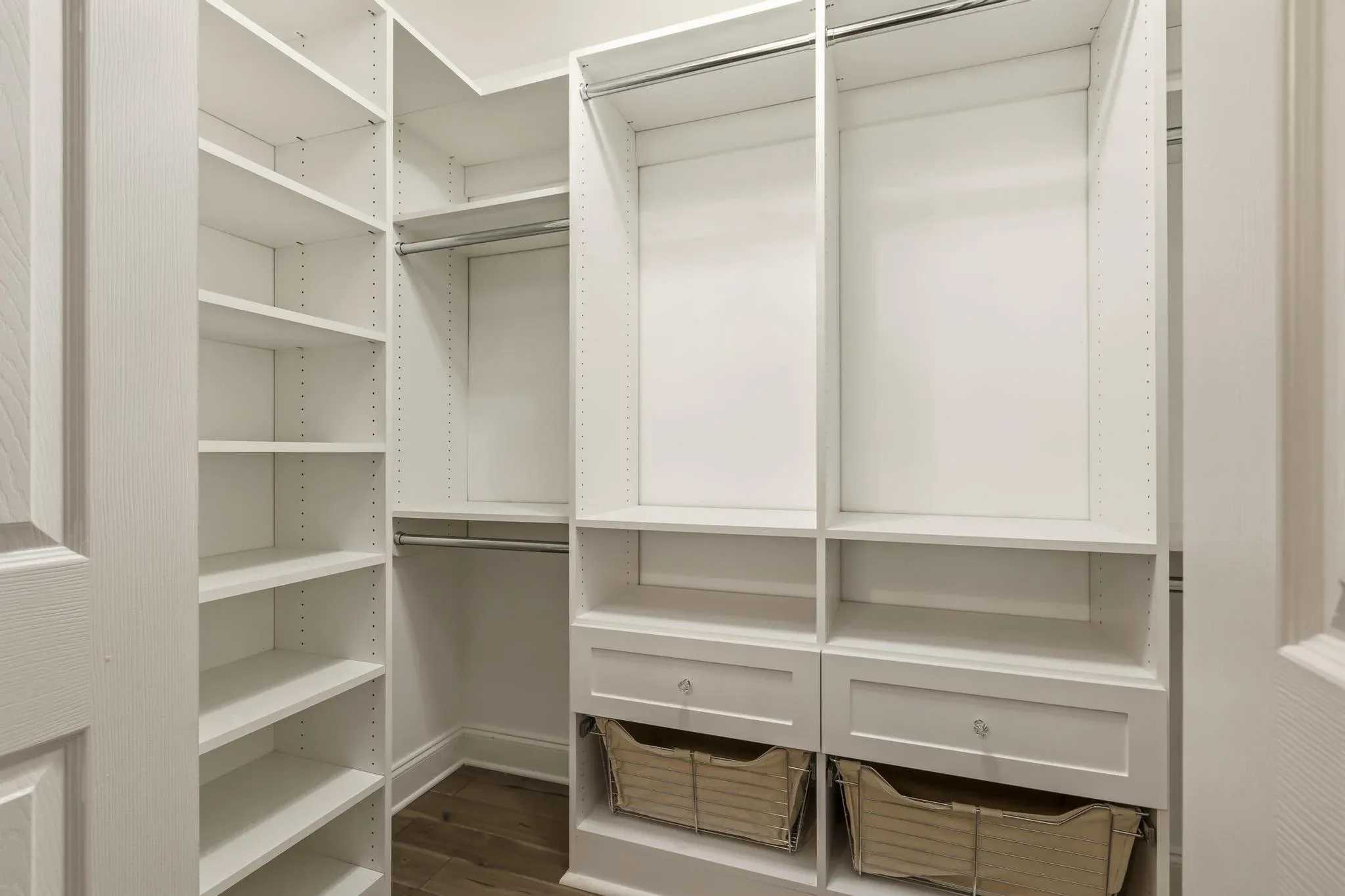
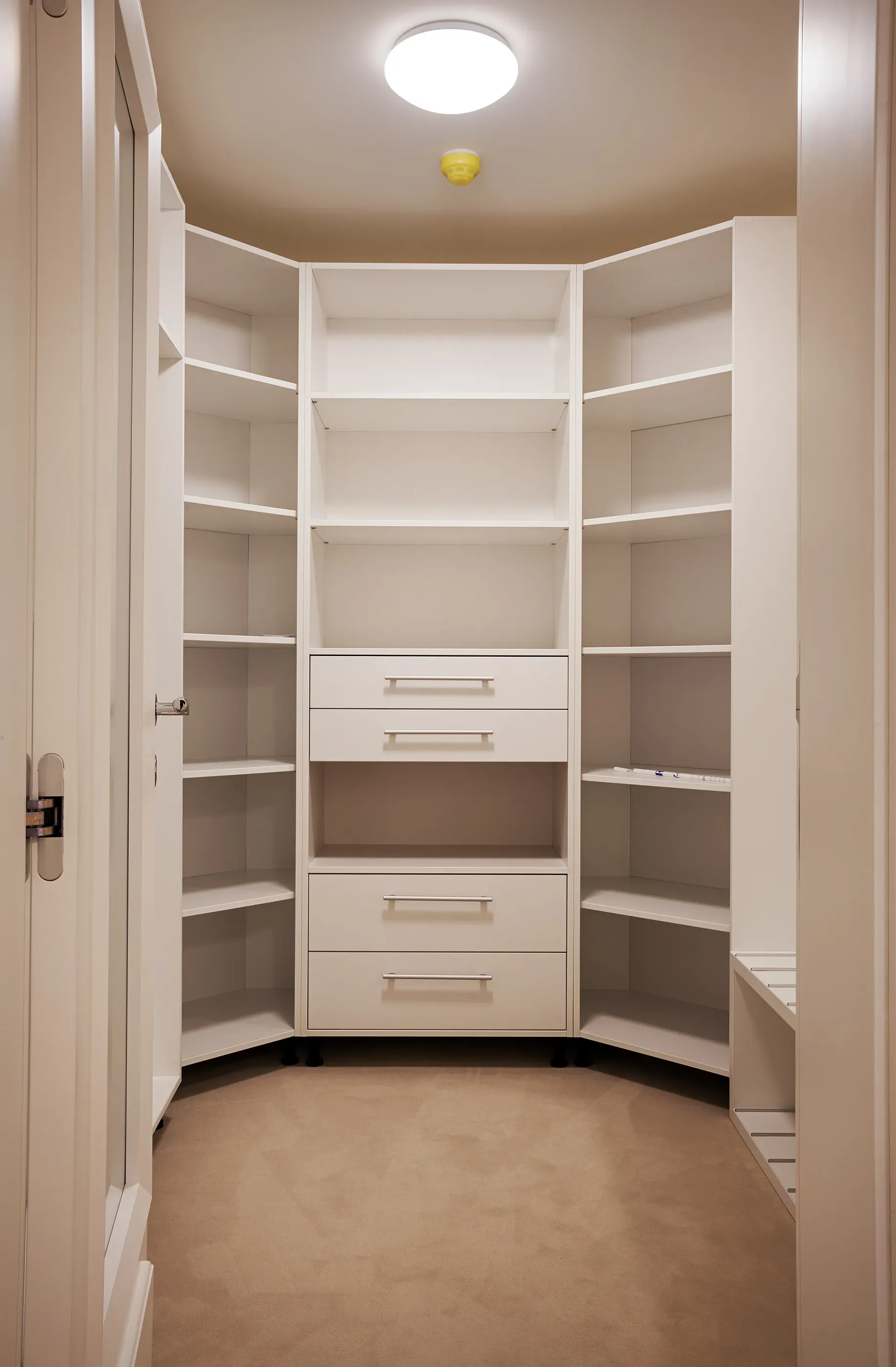
Here, we retain those two 24” systems, but have them meet in a corner. This leaves room for floor space. Where galley layouts work best for rectangular walk-ins, L-shaped layouts can help you get more out of a 5x5 or 6x6 square.
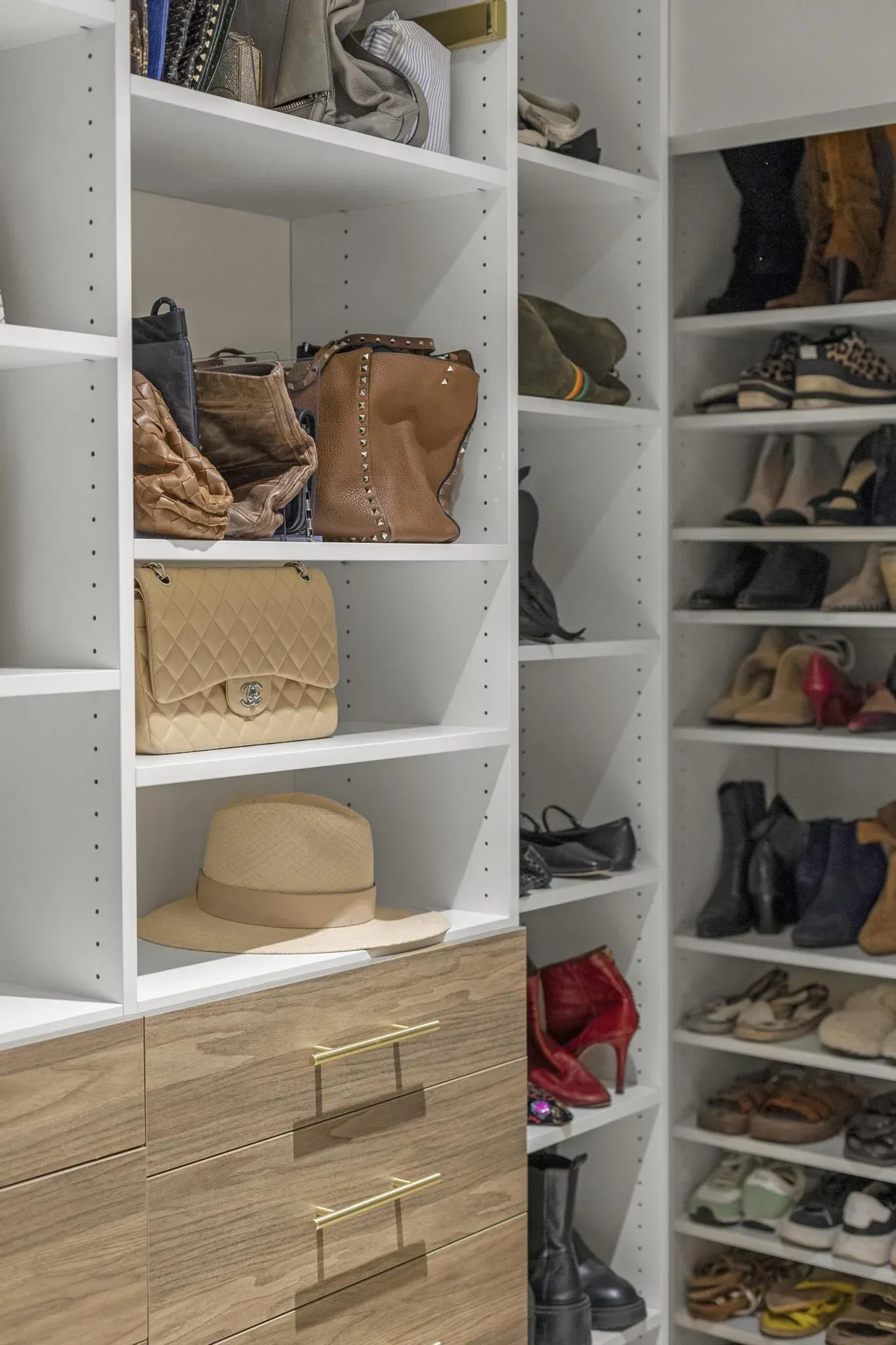
A good choice for: Those who want a personalized, dressing-area style closet. Shallower shelves and drawers are great for shoe display or accent décor.
3. A single-wall walk-in closet layout.
This is essentially a reach-in closet you can walk inside. You get a 24” deep storage system along one wall, with a walking/dressing area of 24-36”. These closets can be fashioned out of alcoves or the odd dead-end hallway.
A good choice for: Spaces in that 4x4 or 5x5 range. People who want to implement tiny closet solutions and still have room for personal style.
Design mistakes that make walk-ins feel smaller
When applied to real life, many small bedroom closet ideas end up creating a cramped cave. Here’s what to avoid as you start designing.
-
Lighting as a finishing touch and not a key feature. Dark corners are a challenge in a tiny walk-in. There’s nothing like a poorly-lit walk-in niche to make you wish you had chosen the reach-in.
-
Doors and drawers as visual design instead of functional elements. You plot out a small closet with neatly closed doors and drawers. What happens when you open either of these?
-
Inefficiently deep shelves. Shelves 24” deep aren’t practical for a lot of small walk-ins. That average system depth is perfect for hanging. Average drawer depth, front to back, is slightly less than that.
-
A single hanging section. This doesn’t maximize small spaces. Make use of vertical storage with two hanging sections, one over the other -- or a single hanging section with storage below. It’s a better choice than one rod with that big, bulky deep shelf on top.
Maximize every square inch with a professional closet designer.
If you want that walk-in, 30” of clear space outside of your storage system is best. Some come in for a small walk-in remodel and leave understanding that an optimized reach-in simply suits them better. Find out what makes the most sense for your space and needs with The Designery. We’ve bundled professional guidance, quality materials, and custom craftsmanship under one tidy roof.
“We had an excellent experience with The Designery! Julie helped me design custom closets for my pantry, our upstairs linen closet, cabinet solutions for the laundry room, and even a creative closet built into the unique space under our stairs.
We bounced ideas back and forth until we landed on designs that felt both functional and tailored to our home. The entire process was smooth and collaborative from start to finish.”
Raychel, The Designery client
There’s no closet too small! Contact us for a free consultation or visit your local showroom today.
FAQ: Small bedroom walk-in closet layouts
Do you need a door on a small walk-in closet?
No, you don’t. Doors require about 30” of clearance to swing in. The right trim, color palette, and lighting can make a no-door closet look perfectly, intentionally designed. Bi-fold doors, sliding doors, and even curtains are other options to explore with a closet designer.
How much does a small walk-in closet cost to build in 2026?
Custom closets cost several hundred to several thousand dollars. A small walk-in will be on the lower end. A fully redone small custom closet can get into the thousands, but this isn’t universal. The features, materials, and layout will ultimately determine how much it really is.
Where should you put a walk-in closet in a small bedroom?
If your small walk-in is part of a new construction, choose a corner. It makes use of what’s normally dead space. Others prefer the wall opposite the bed. The dimensions of your bedroom, and even the space directly outside of it, are key to this decision.
Will a small walk-in closet hurt resale value?
Walk-in closets are almost always seen as a plus to potential buyers. But if you have one of the 4x4 or even 5x5 spaces, you might refrain from advertising it as a walk-in. “Dressing area” or “generous reach-in” may be a safer way to describe it.