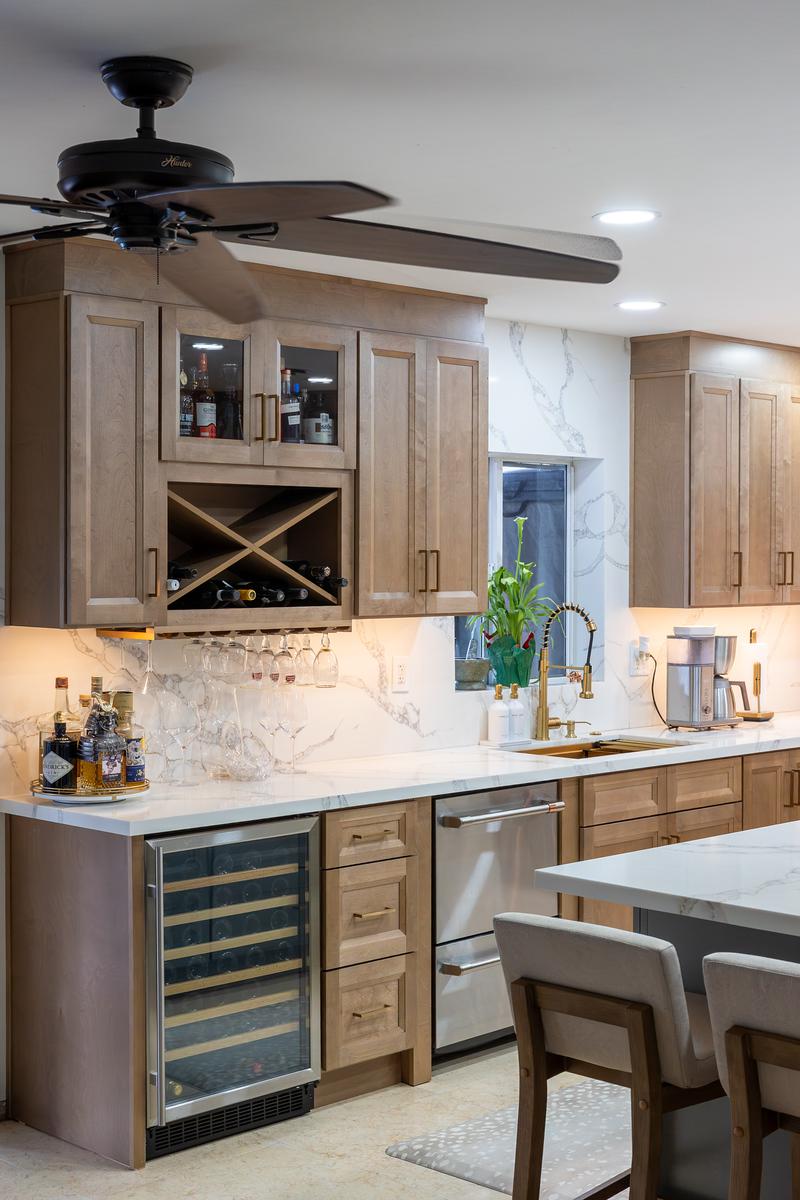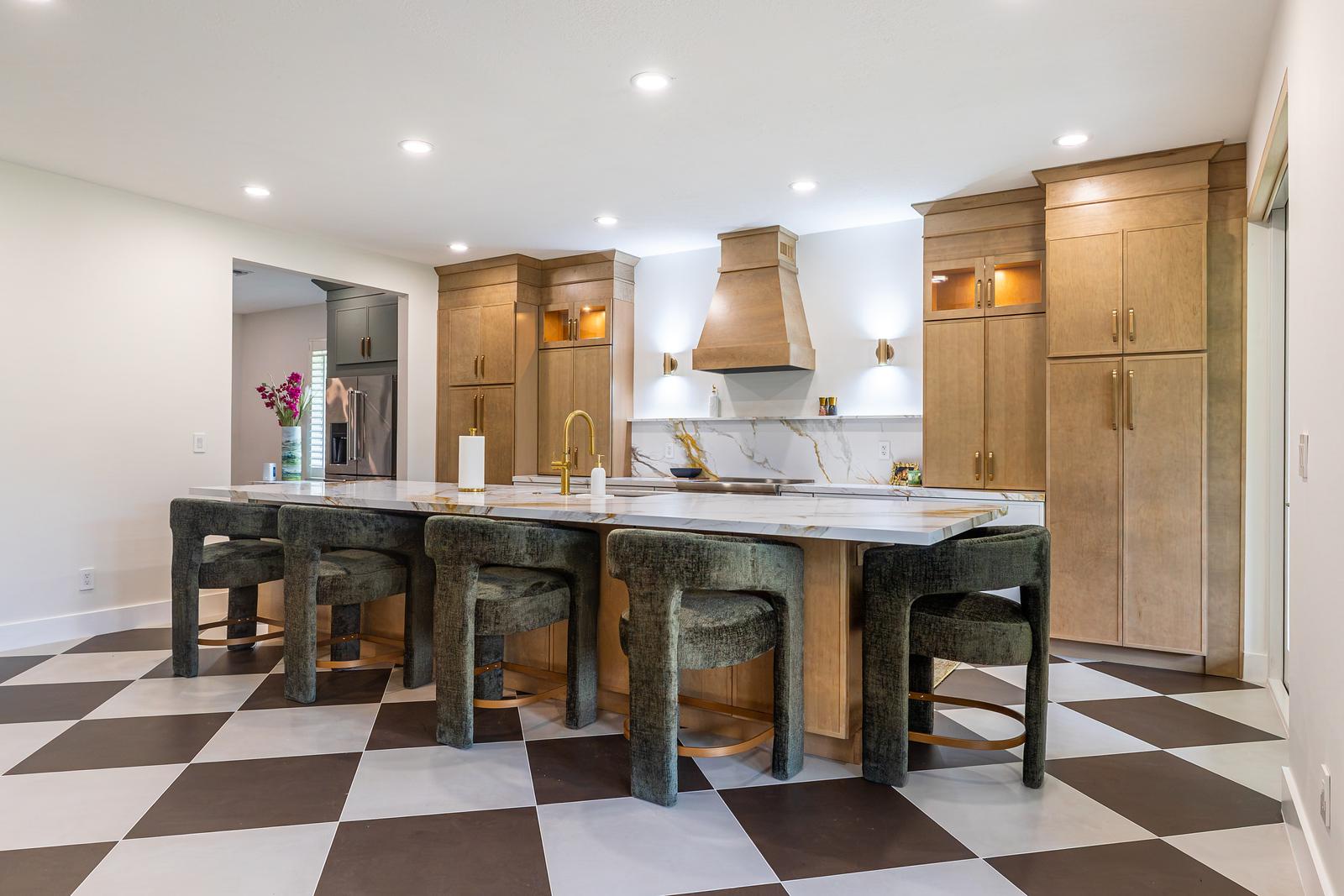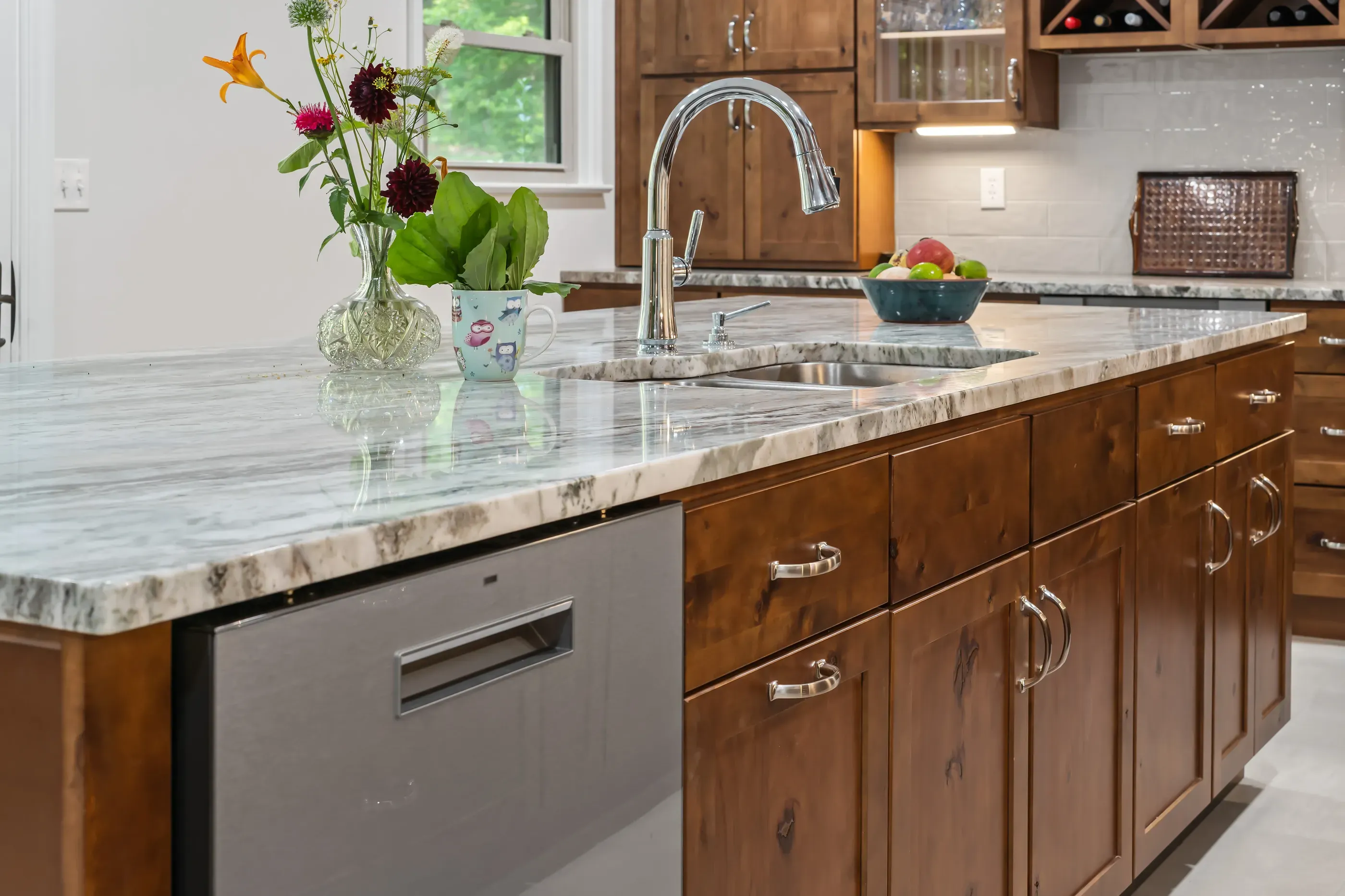
For nearly 100 years, designers were beholden to the kitchen work triangle. Open-concept kitchens and islands of every size and configuration changed this. Now, kitchen work zones are where it’s at.
Keep reading to find out if one or both are best for your kitchen remodel. We’ll look at the benefits of each, pit the kitchen work triangle vs. the kitchen work zone, and share designer layout tips.
Key takeaways:
-
The kitchen triangle is for efficiency and traffic control.
-
Kitchen work zones are for efficiency and organization.
-
Work zones are better for larger kitchens and open concepts. Kitchen triangles make sense for single-cook households and small kitchens.
-
Both design principles can be used to improve your kitchen layout.
The kitchen work triangle is still working.
The classic kitchen work triangle is made up of the sink, stove, and refrigerator. Its purpose is efficiency in your workflows and foot traffic control. For instance, the sink would be a midpoint between the stove and refrigerator. This makes sense for taking produce from the fridge to wash as well as filling a pot of water to take to the stove.
Traditionally, each side of the triangle spans from four to nine feet. Because every space is different, there’s also guidance stating the sum of all sides can be 13-29 feet.
Kitchen triangles still matter for utility placement and single-cook households. You’d employ this principle before work zones for small kitchens, galleys, and many average-sized L and U-shaped kitchen layouts. We use triangles to help design outdoor kitchens, too.
Is the kitchen triangle outdated?
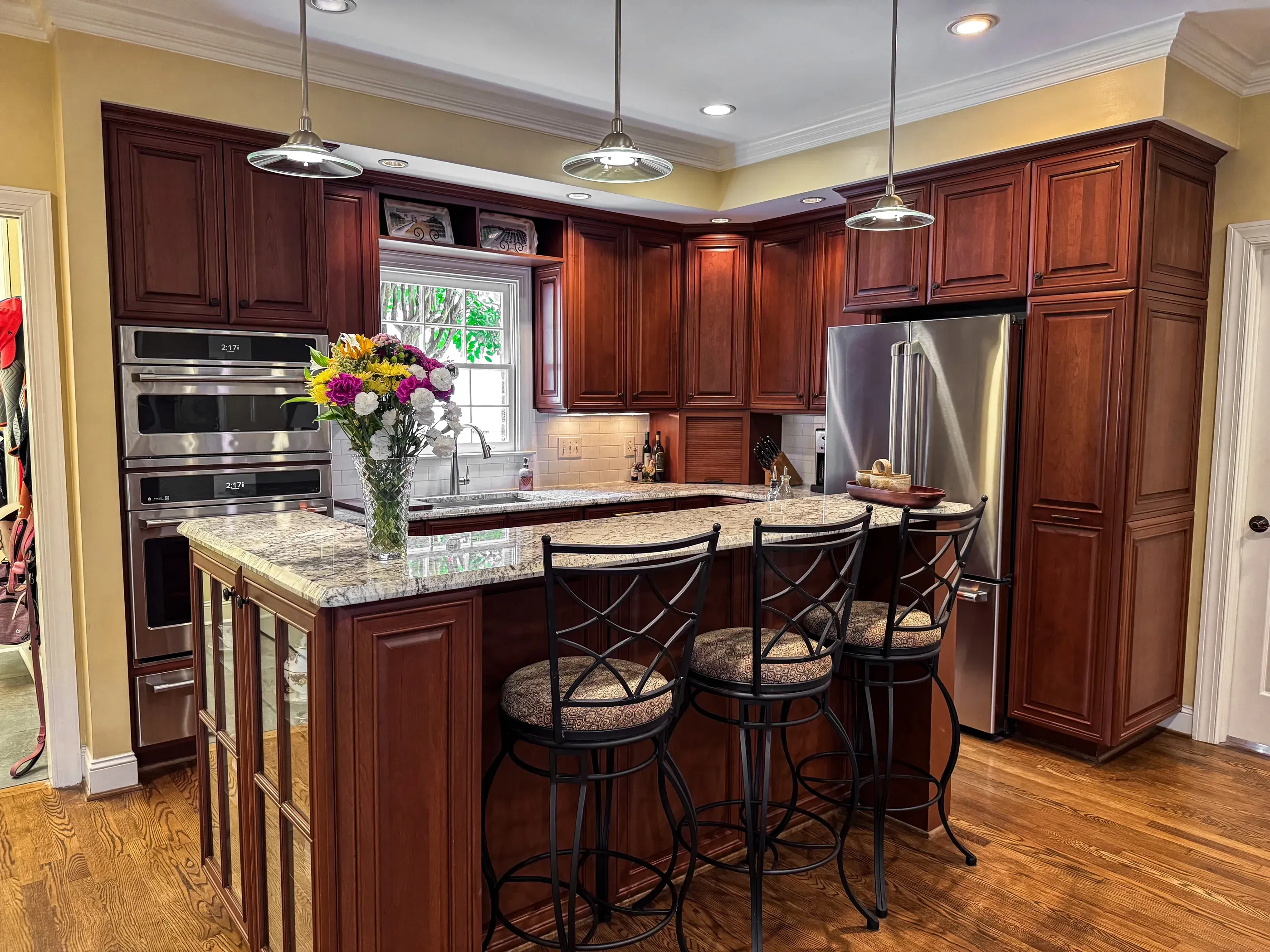
No, the National Kitchen and Bath Association still instructs and sets standards for it. It has become more flexible with the evolution of kitchen layouts. In an open kitchen with an island, the triangle may be made up of sink, dishwasher, and stove.
In modern kitchens, the triangle is now a functional principle to tuck inside your kitchen work zone configuration.
The 5 kitchen work zones to add in modern homes
The kitchen work triangle is more difficult to devise in feature-heavy kitchen islands and homes with multiple cooks. Kitchen work zones help us choose appliance placement, protect efficient workflows, and generally organize everything that lives in the kitchen.
1. Prep
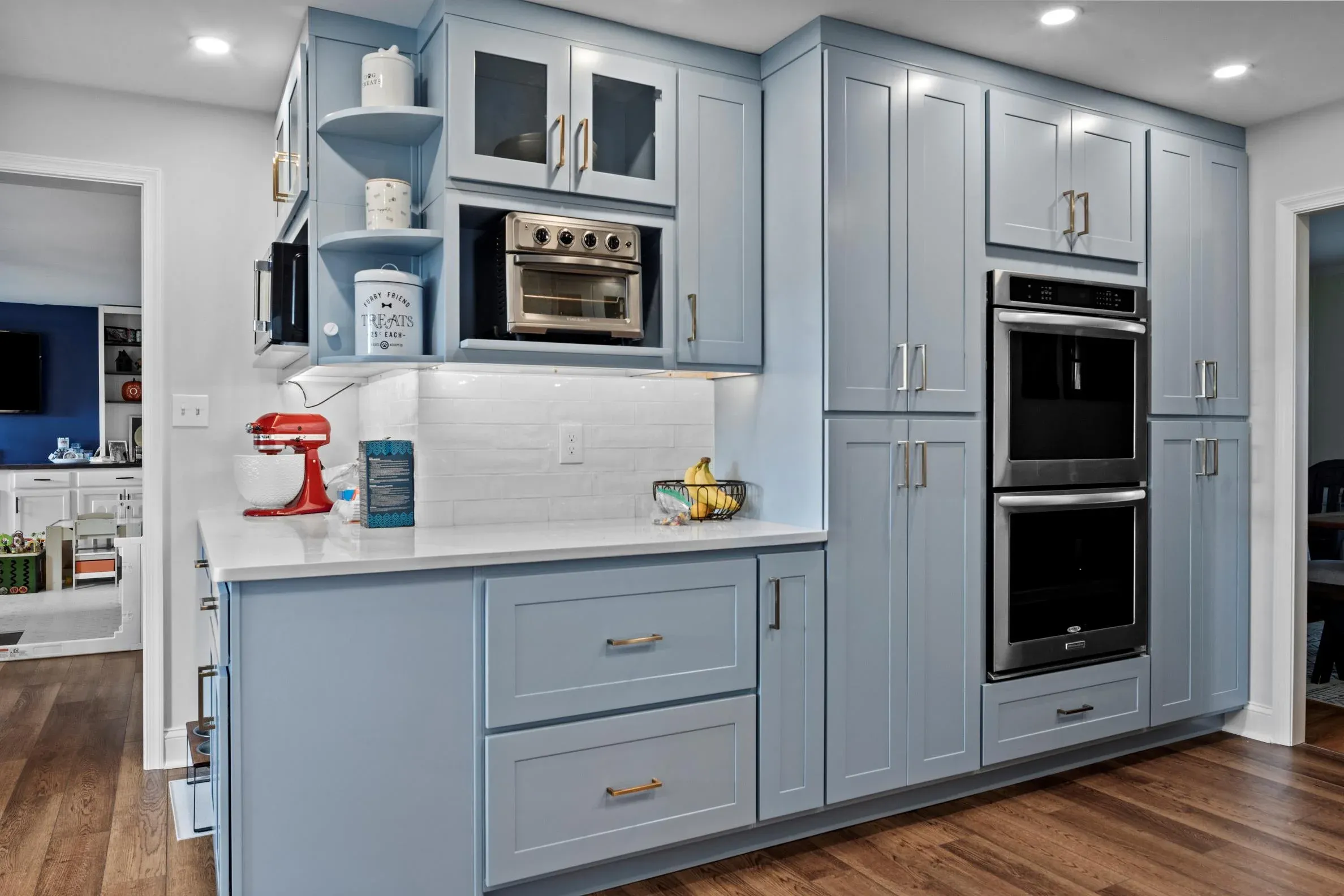
A stretch of counter space and storage for knives, cutting boards, measuring cups, and mixing bowls make up the preparation zone. You’ll usually find this between the consumables and the cooking zone. Most commonly, on an island.
2. Cooking
Your range, stove, and all bakeware, pots, and pans live in the cooking zone. Placement should provide the best access to the prep zone. If you keep a microwave or an air fryer on the counter or built into the cabinetry, it lives in this zone, too.
3. Cleaning
The cleaning station is where you store all your cleaning supplies. It’s placed near the appliances you use to clean, such as the sink and dishwasher. Trash and recycling bins are best included in this zone.
4. Storage
Storage includes your dishware, glassware, and utensils. This zone is intentionally placed near dishwashers and prep areas. It makes unloading the dishwasher and plating/putting together dishes more efficient.
5. Consumables
Dry goods, frozen, and refrigerated foods are located closest to the kitchen entrance for convenient unloading of groceries. Your refrigerator/freezer will be the closest appliance when you walk in, with the pantry on that same side.
Need help choosing appliances? Read up on how to remodel a kitchen with appliances in mind. This can reveal what’s bothering you about your current layout and create smarter zones.
Kitchen work triangle vs. kitchen work zones: A side-by-side comparison
Which should you prioritize when designing a new kitchen, triangles or zones? Here’s the breakdown.
|
Consideration |
Work Triangle |
Work Zones |
|
Kitchen size |
200 square feet or less |
More than 200 square feet |
|
Primary benefit |
Daily efficiency |
Layout flexibility |
|
# of cooks at home |
One at a time |
Two or more simultaneous |
|
Flow of traffic |
None through triangle |
Traffic between zones |
|
2026 remodel trends |
Smaller homes, rentals, older or historic homes, existing layouts that work |
Open-concept, large families, luxury homes, aging in place |
Kitchen layout ideas for including both
Many modern, well-done kitchen remodels make great use of a hybrid layout. Here are some ways kitchens include both a work triangle and dedicated work zones:
-
Putting the triangle first. When in doubt, create your ideal three-pointer and build kitchen work zones around it. Triangles are also more budget-friendly.
-
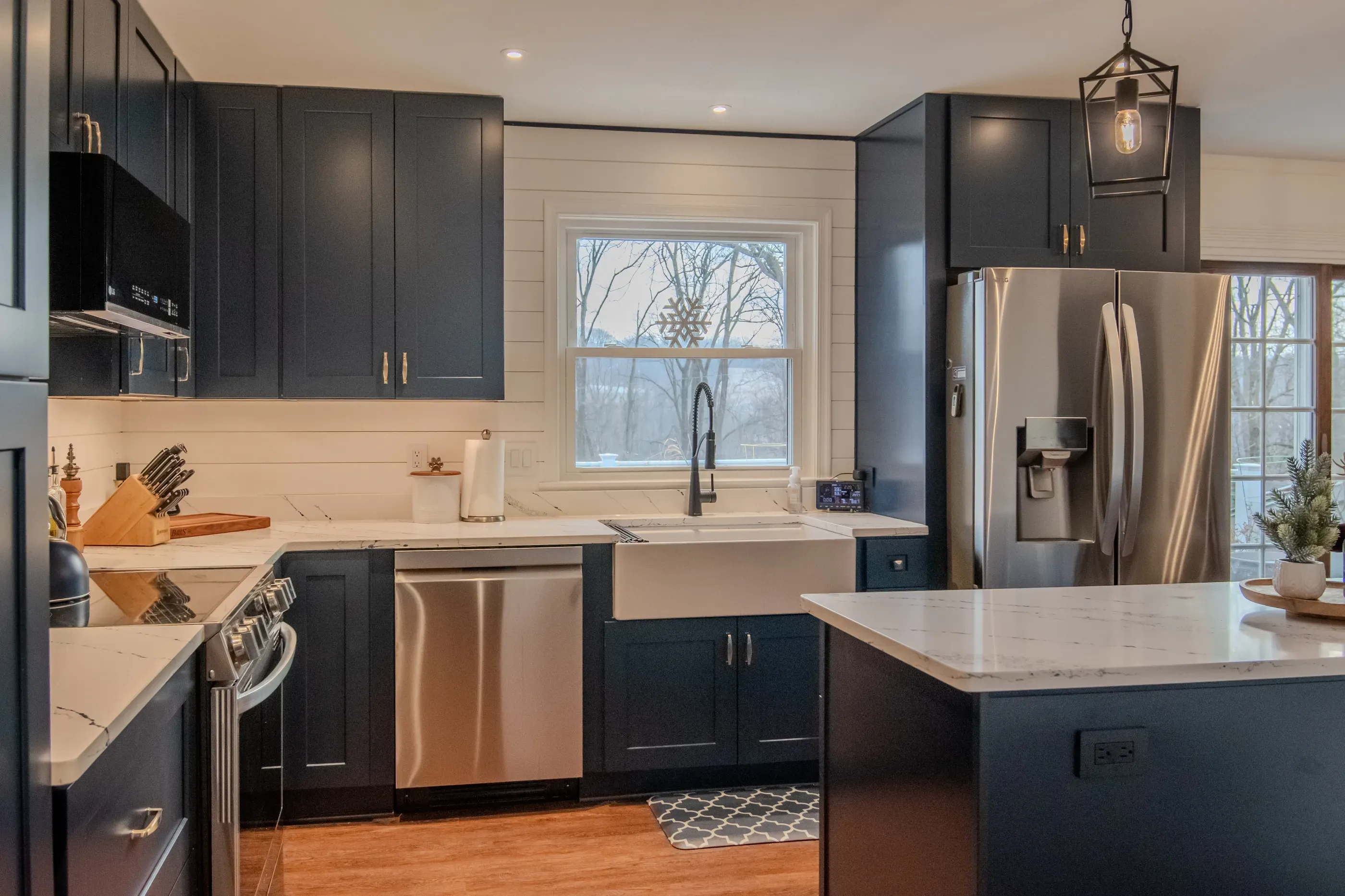
Start with a daily cooking triangle. Sink, dishwasher, stove. An island can hold prep, and consumables can be off to the side.
-
Consider two sinks. In kitchens with at least 300 sq. ft., this helps you use a traditional triangle without completely blowing the placement of cleaning and prep zones.
Bring your kitchen remodel questions to us.
The classic kitchen triangle still matters, but that rule alone isn’t enough to design a larger or open concept kitchen. A solid mix of the triangle principle and work zones tailored to your life makes more sense.
Bring your measurements to The Designery. When you walk in, you’ll immediately see a showroom full of inspiring concepts and quality materials. Look closer, and you’ll also find design professionals ready to help you plot the perfect layout.
“You walk in with ideas, and somehow they help you see what’s actually possible. It’s not just design, it’s creating a space where real life happens. You can feel the care, the attention to detail, and the pride they take in what they do. If you’re thinking about updating your home, I highly recommend stopping in.”
Justin, The Designery client
Visit a showroom and begin your kitchen design today.