Engineered hardwood and LVP are the two most popular alternatives to solid hardwood flooring. But is engineered hardwood better than luxury vinyl plank? That would depend on where you’re putting it, your budget, and overall lifestyle.
Keep reading for a full comparison of engineered hardwood vs. LVP. We’ll even share a quick guide to choosing the best flooring for kitchen and bathroom remodels.
What is luxury vinyl plank (LVP)?
LVP is a more refined type of vinyl flooring. It features a durable wear layer, a high-quality printed layer that mimics the appearance of stone or wood, and a core for stability. There may also be an underlayment for a softer, noise-reducing feel underfoot.
The pros of LVP flooring:
-
Modern design options
-
Affordable
-
Can be easy to install
-
Durable and scratch-resistant
-
Waterproof
What is engineered hardwood?
Engineered hardwood is a more user-friendly alternative to solid hardwood. It features a veneer of real hardwood on top of high-density fiberboard or plywood. Homeowners get the timeless beauty of real wood with lower maintenance and reduced damage concerns.
The pros of engineered hardwood flooring:
-
Unique beauty of the real wood layer
-
More affordable than solid hardwood
-
Easier to install than solid wood
-
Can be refinished during its lifespan
-
More moisture-resistant than solid wood
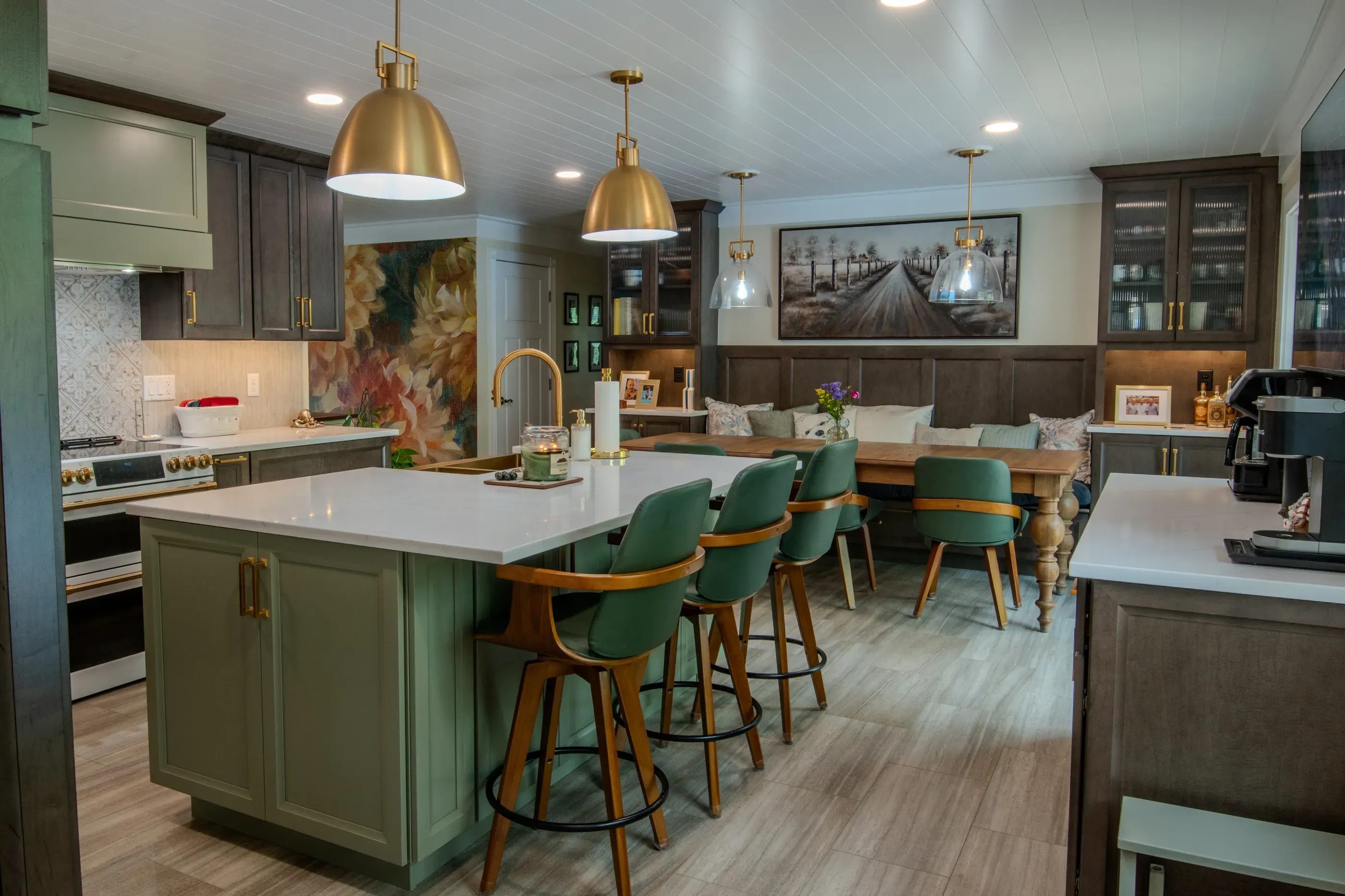
Engineered hardwood vs. LVP
Let’s see how our options stack up against one another in six important categories.
|
LVP |
Engineered Hardwood |
|
|
Durability |
Very resistant to scratching, staining, dents, and moisture. Seen as the practical option for high-traffic areas with pets and kids. |
Very durable but more prone to scratches and moisture damage than LVP. However, unlike LVP, some damage can be repaired with refinishing. |
|
Appearance |
Wide range of manufactured colors, patterns, and finishes. |
Offers the beauty of real wood, looks higher quality than LVP up close. |
|
Maintenance |
Low. Can be swept and mopped as normal, gentle cleansers best. |
Relatively low. Sweep and use a damp mop to avoid oversoaking the wood. |
|
Installation |
Floating click-lock or glue down, some installs are DIY-friendly. |
Glue, nail, or floating. More forgiving than solid hardwood install but pro still recommended. |
|
Cost |
One of the most affordable flooring options, a good middle ground between laminate and engineered. |
Costs more than LVP but makes up for it in increased lifespan and appeal of real wood. |
|
Applications |
More waterproof and suitable for basements, laundry rooms, and baths. |
Long-lasting and luxurious option for all living spaces, as well as kitchens. |
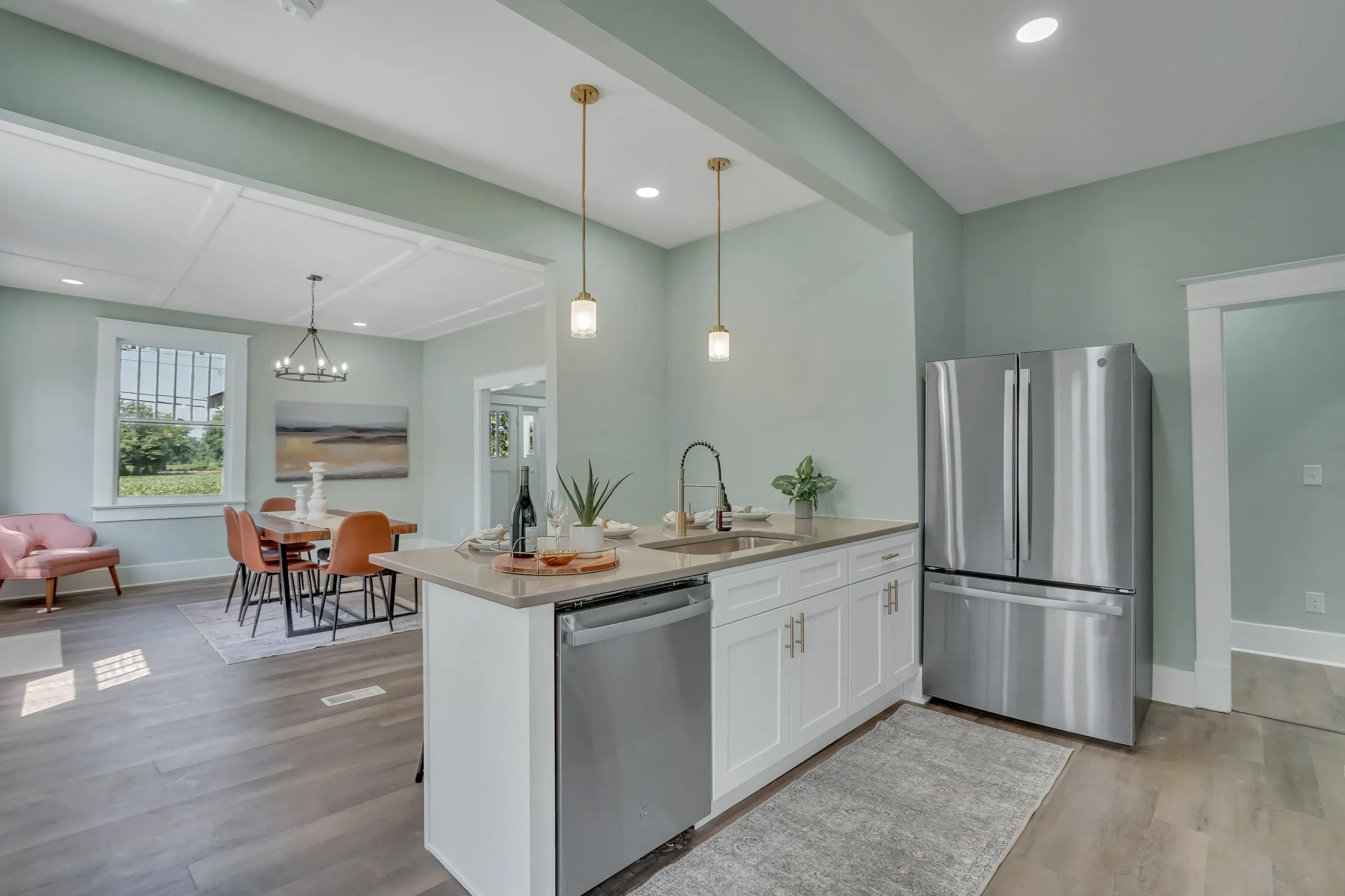
How to choose the best flooring for kitchens and bathrooms
Not sure if either option is right for your purposes? Choosing floors for kitchens and bathrooms requires more consideration. Here’s how these two perform in different types of “wet” areas.
Using LVP in kitchens and baths
LVP is a more waterproof option than any wood. Because it’s more affordable to replace if it meets disaster, it’s the better choice for laundry rooms, basements, and most bathrooms.
That being said, water can still seep between planks. Installing it in a bathroom that’s used daily may shorten its lifespan. This is generally fine for those who’d prefer a budget-friendly flooring update every so often anyway.
LVP is great for kitchens and large spaces that are more expensive to floor. It’s easy to clean, attractive, and comfortable underfoot. Be advised that in bright natural light or close up, it is not going to match the beauty of real wood.
Using engineered hardwood in kitchens and baths
The biggest benefit of engineered hardwood is that it’s more moisture-resistant than solid hardwood. There’s less risk involved with installing it in a kitchen, where drips, spills, and the occasional leak may occur.
If you must have real wood in a kitchen, this is a great pick. Engineered hardwood is perfect for open concepts and floor plans where you want smooth, high-quality transitions. It’s more than perfect for living rooms, bedrooms, and closets, too.
Installing engineered hardwood in a bathroom is only advisable if it’s a half-bath or powder room. Ceramic or porcelain tile is, without a doubt, the best quality option for your master or high-traffic bathrooms.
Need more help? Ask a professional.
The Designery makes consulting a professional about your flooring options easy–and free. From ceramic tile and solid hardwood to engineered options and the latest developments in. LVP, you’ll find it here.
“What a beautiful showroom! Owners are knowledgeable and have great creative ideas. Family-owned and local. Good selection of high-quality options. Highly recommend!”
Erica, The Designery client
Engineered hardwood vs. LVP FAQ
Which lasts longer, engineered hardwood or luxury vinyl plank?
Engineered hardwood has a longer lifespan than luxury vinyl plank. It can last for 20-50 years, depending on the product.
During this time, engineered hardwood can be refinished once or twice. LVP cannot be refinished and usually lasts a maximum of 20-25 years.
Can engineered hardwood go in a kitchen or basement?
Yes, while solid hardwood is not a good option for basements, engineered versions fare better. However, engineered hardwood can still warp in consistently humid areas or under standing water. LVP is usually a better choice for basement flooring.
Which flooring looks more like real wood?
Engineered hardwood will always look more like real wood because the upper layer is genuine wood. That doesn’t mean you should discount the appearance of LVP; colors, patterns, and finishes have come a long way in recent years.
Which is better for resale value, LVP or engineered hardwood?
Engineered hardwood will add more value because it includes real wood. Choose it if you plan on selling in the next few years and want to bump up asking prices.
Buyers still like LVP because it’s sensible and easy to replace. If you plan to sell and have a tight budget for a remodel, replacing damaged old vinyl with new LVP can also pay off.