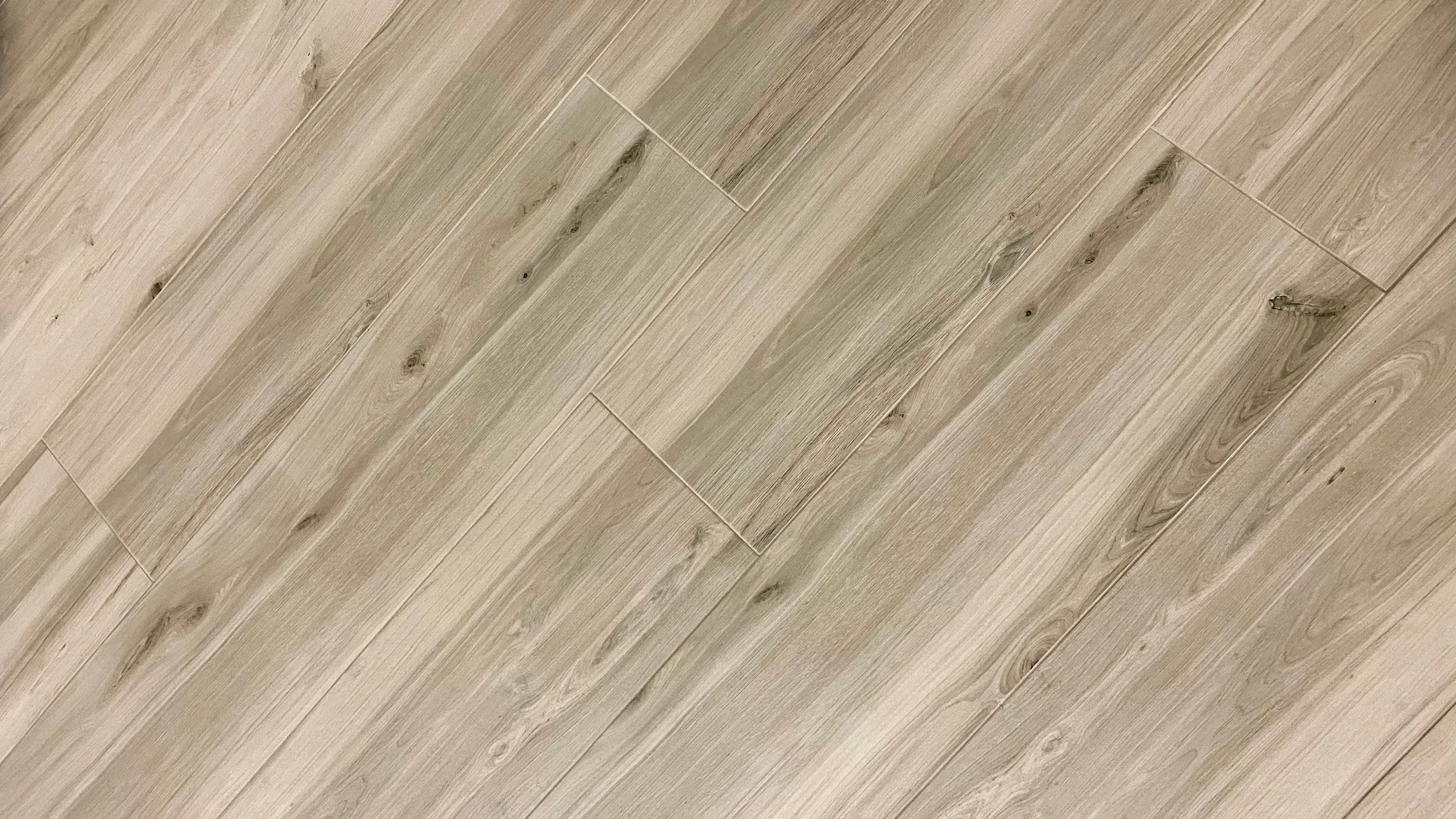
Luxury vinyl plank (LVP) is a more premium product than older vinyl flooring options for several reasons. Key among these are the latest advancements in waterproofing.
That’s a brand-new concept for a lot of us. Wood-look flooring in a bathroom? As always, there’s more to know. Keep reading as we answer the question “Can I use LVP in my bathroom remodel?” from various angles.
Is LVP good for bathrooms?
Yes, LVP is suitable for bathrooms–so long as you choose the right product. Ensure your LVP is waterproof, not water-resistant. After that, protecting the subfloor is your main concern.
The core of your luxury vinyl plank will be either stone-plastic composite (SPC) or wood-plastic composite (WPC). These materials are made to withstand moisture and humidity. They’re why LVP won’t swell or warp like solid wood. However, water could seep between the planks and impact the subfloor. The best possible fit during installation, as well as silicone to fill any gaps, is crucial.
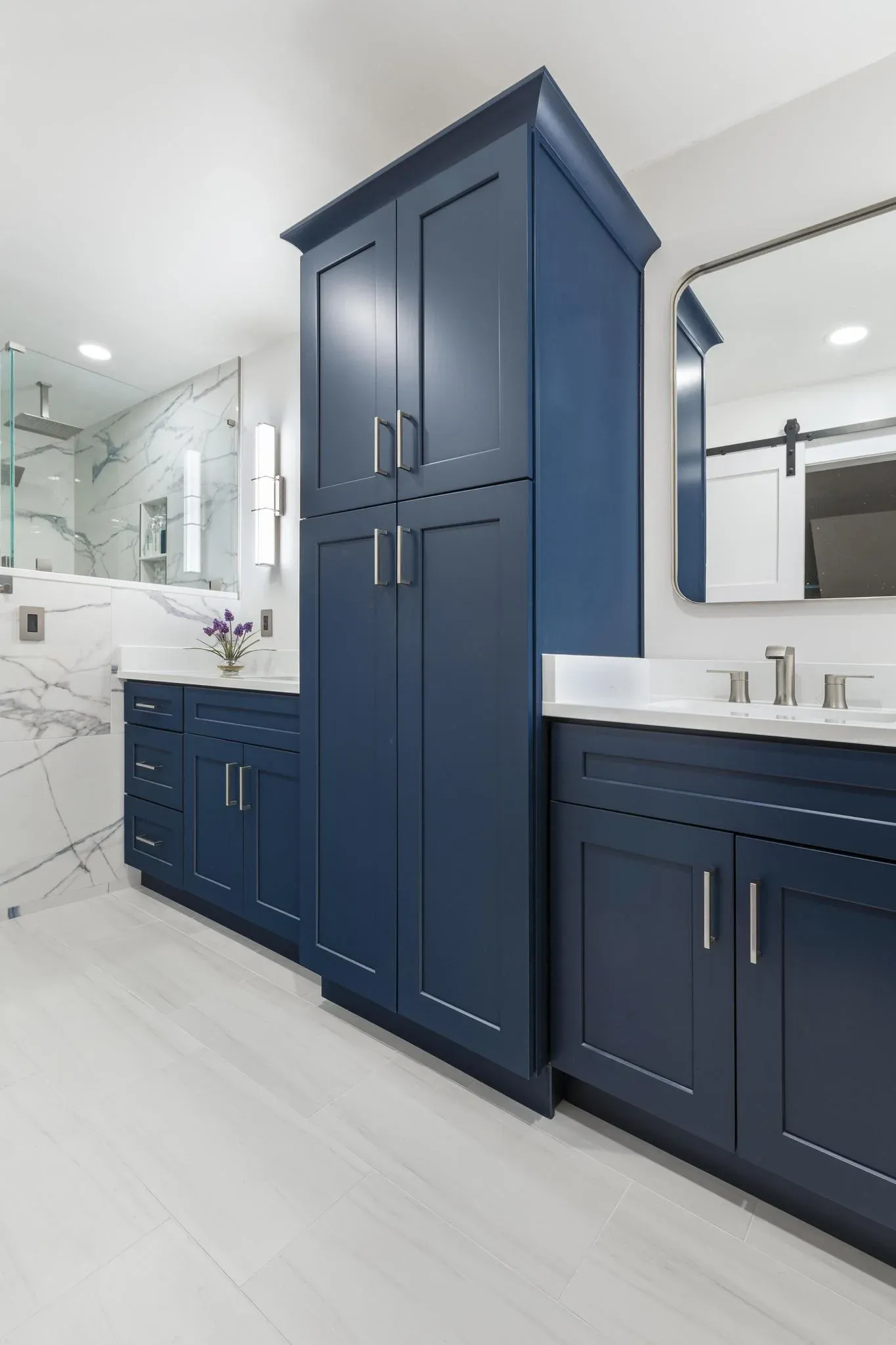
Using LVP as bathroom flooring: Pros and cons
If you’re still warming up to the idea of LVP as a bathroom material, check out this rapid-fire list of pros and cons.
Pros of LVP in bathrooms |
Cons of LVP in bathrooms |
|
One of the most budget-friendly options. |
Won’t conceal uneven subfloors. |
|
Finishes are more slip-resistant and comfortable underfoot than tile. |
Not appropriate for steam showers and wet rooms. Tile still wins here! |
|
Won’t swell or warp like laminate or wood. |
Unlike living areas, you may not want to DIY installation. Sealing seams is a must. |
|
Easy to clean and low maintenance. No grout! |
While easier to update or replace, buyers do not view LVP as a best-quality floor. |
|
Faster and easier to install than many other flooring options. |
Tips for using LVP in a bathroom remodel
Affordable, attractive, and comfortable underfoot. Before you start choosing colors, take the following tips into account:
-
Opt for SPC cores where possible. WPC core is still a waterproof product. But SPC in a higher-traffic bathroom might provide a little insurance.
-
Check out LVT. Luxury vinyl tile has many of the same benefits as LVP. See how LVT compares to tile if you want stone-look patterns and a classic tile shape.
-
Use savings for prep. LVP is very cost-effective. Dedicate some of what you save to increasing results. Repair or replace the subfloor, and lift the toilet to install underneath instead of cutting around.
Find your full range of bathroom flooring options at The Designery
LVP, LVT, and a stunning lineup of genuine tiles. No matter what you’re in the market for, it’s at The Designery. Get advice tailored to your property and lifestyle from a professional designer. It’s completely free to discuss.
“The Designery took the time with us. With many design changes, and then picking out the materials. I highly recommend them. They CARE to do the best for the customer.”
Sonya, The Designery client
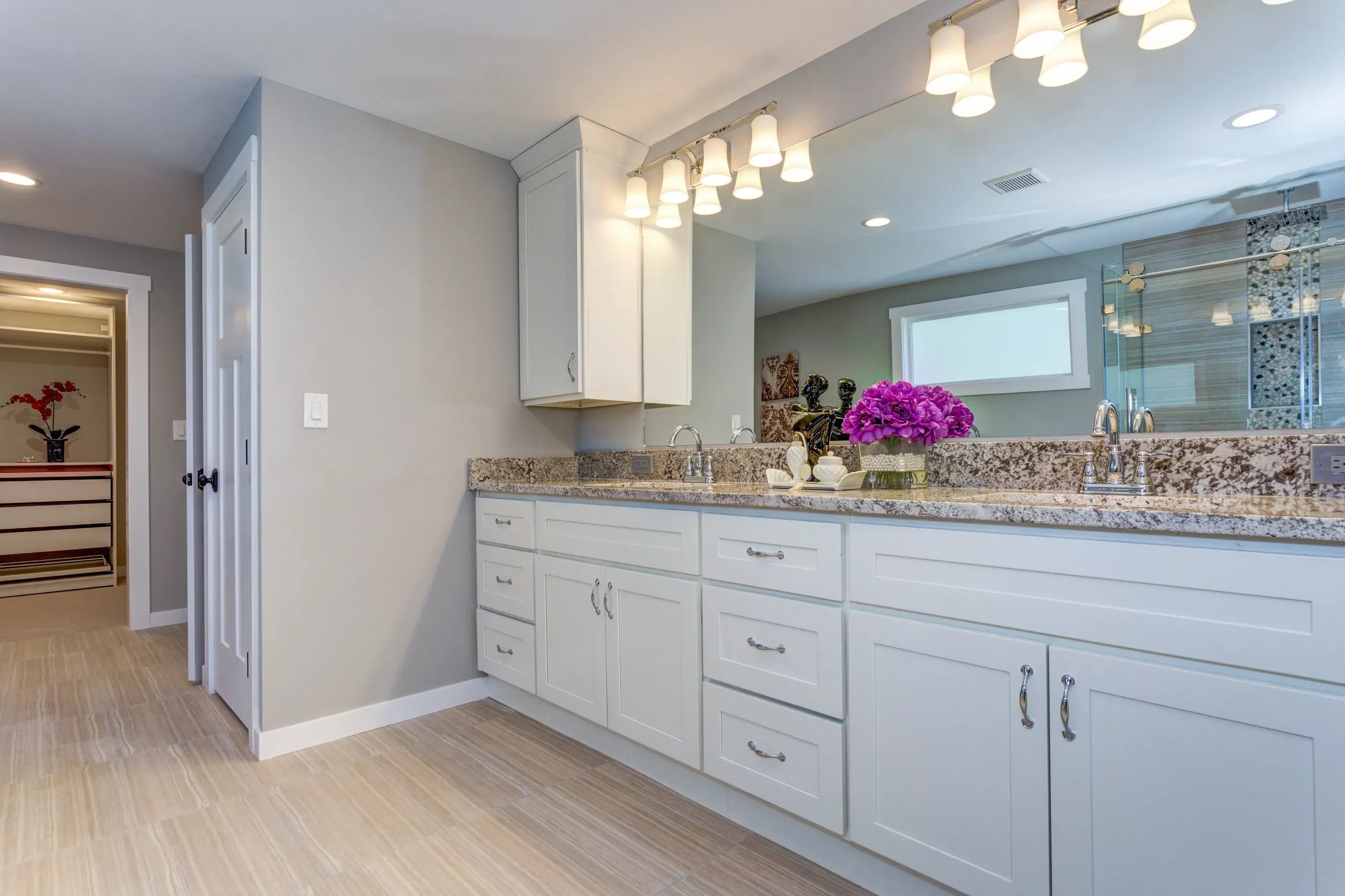
Can I use LVP in my bathroom remodel? FAQ
Will a toilet leak ruin LVP flooring?
Any slow leak that isn’t caught will damage the subfloor. Because LVP doesn’t swell or warp like other floors, it won’t alert you to what’s going on. That’s another reason to move the toilet instead of installing LVP around it. You can replace the ring, reset it, seal the base with silicone, and know that you’re up to date on waterproofing your toilet.
Do you need to glue down LVP in a bathroom?
Glue-down installation is great for additional waterproofing and overall stability. However, it’s not a must, and requires a perfectly level subfloor.
Does LVP in a bathroom hurt resale value?
It’s likely an exaggeration to say it “hurts” resale value, but it can be seen as substandard for a master bathroom. Buyers still prefer tile there. LVP can be a welcome sight in powder rooms and kids’ baths, since it offers excellent design flexibility and is low-maintenance and easy to replace.
What’s the best type of LVP for bathrooms?
Stone-plastic composite (SPC) is a bit more rigid than WPC. Bear in mind that it might not be as soft underfoot as WPC. In either instance, the thickness of the wear layer is better at 20 mil. This makes it more durable. For comparison, 12 mil wear layers are suitable for medium-traffic living areas.