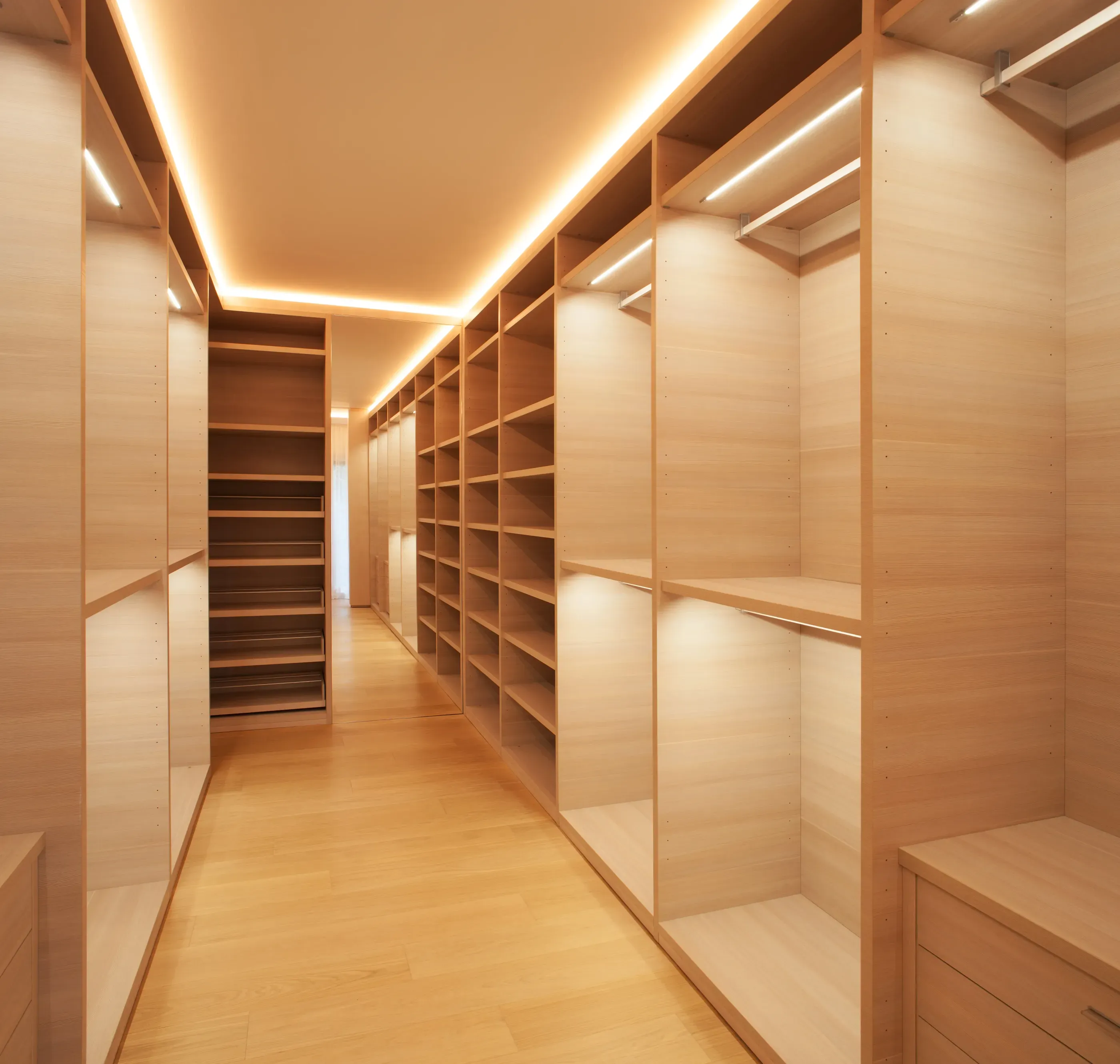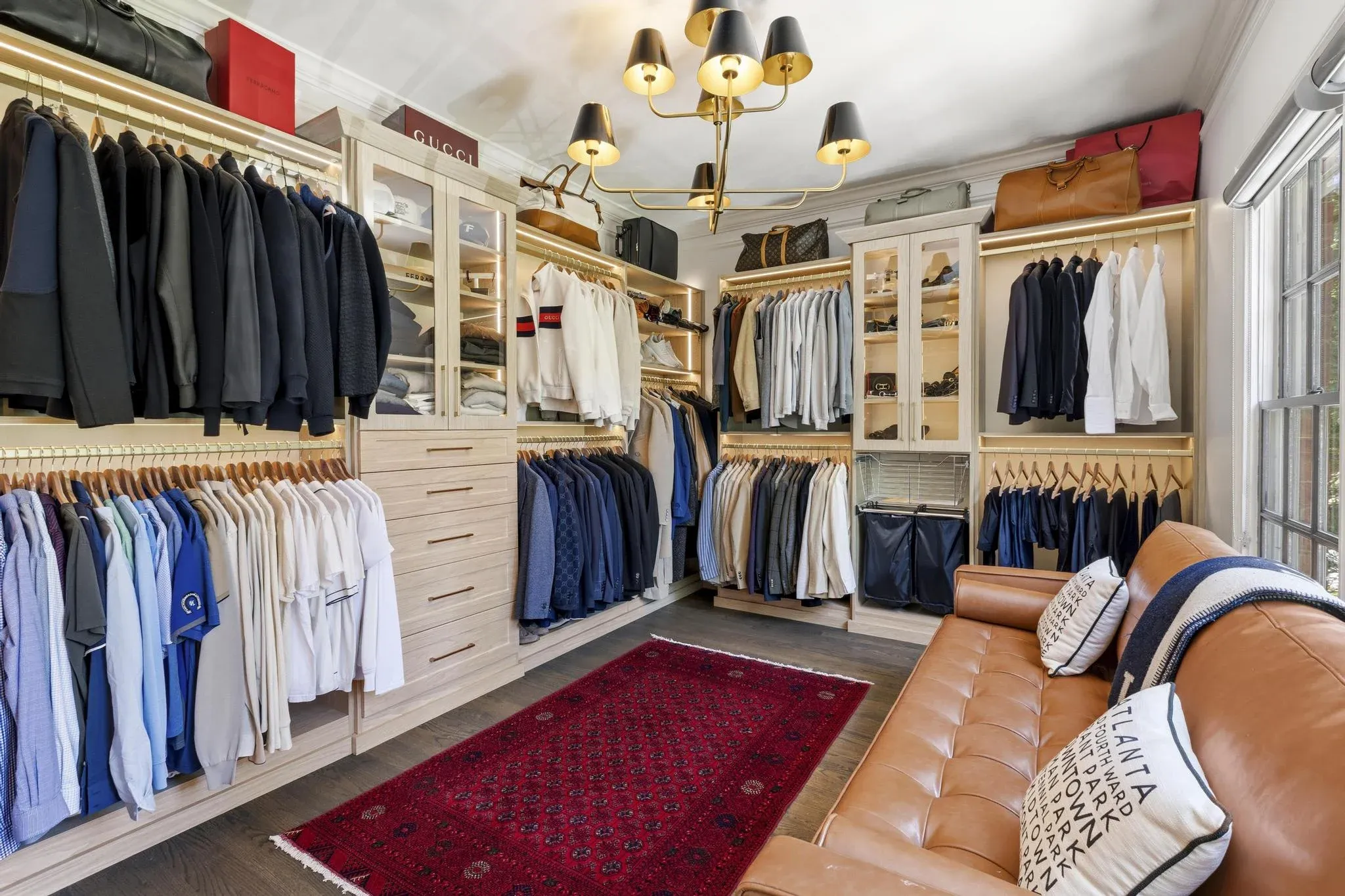
Many primary closets aren’t as small as their owners think; they’re just designed wrong. Custom closet remodeling is a unique opportunity to get it right. Keep reading to learn how to increase usable storage space by up to 40 percent.
Key takeaways:
-
Rows of hanging rods make better use of vertical space than just one.
-
Shelving that ages well is adjustable and rarely more than 14” deep.
-
Extra floor space is great, as long as it’s there for drawers and hampers.
-
Bringing your dimensions to a designer is the best way to avoid closet layout mistakes.
1. Including only one hanging rod at eye level.
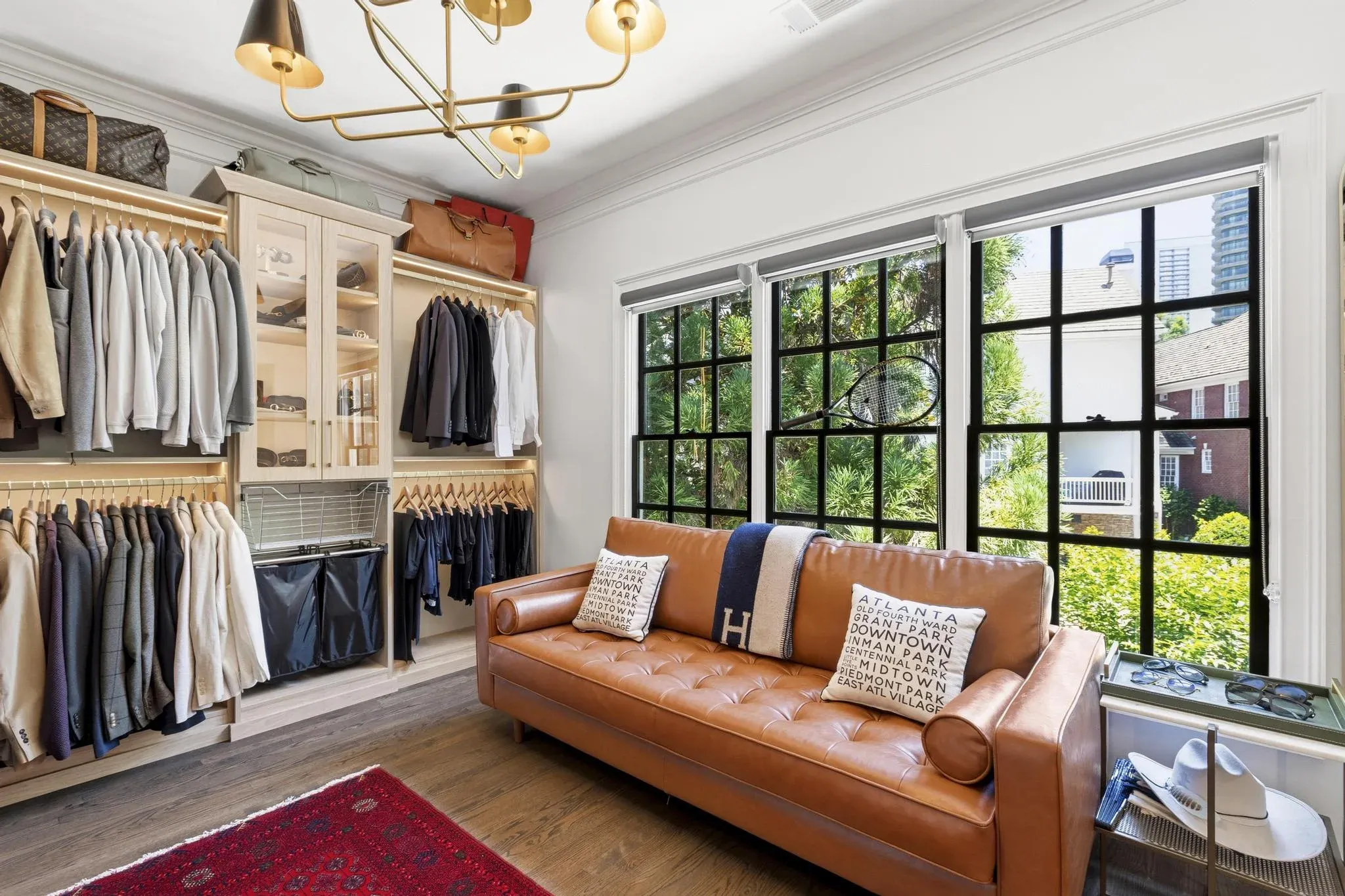
Two hanging rods placed at about 42” and 84” inches off the floor are the minimum standard for maximizing storage. One mid-level rod throughout divides a closet in the most inefficient way possible. Before you break ground on a new space, figure out how much hanging space you’ll actually need.
The fix: If you don’t need much hanging space, reserve the double rod for one wall or half of a large wall.
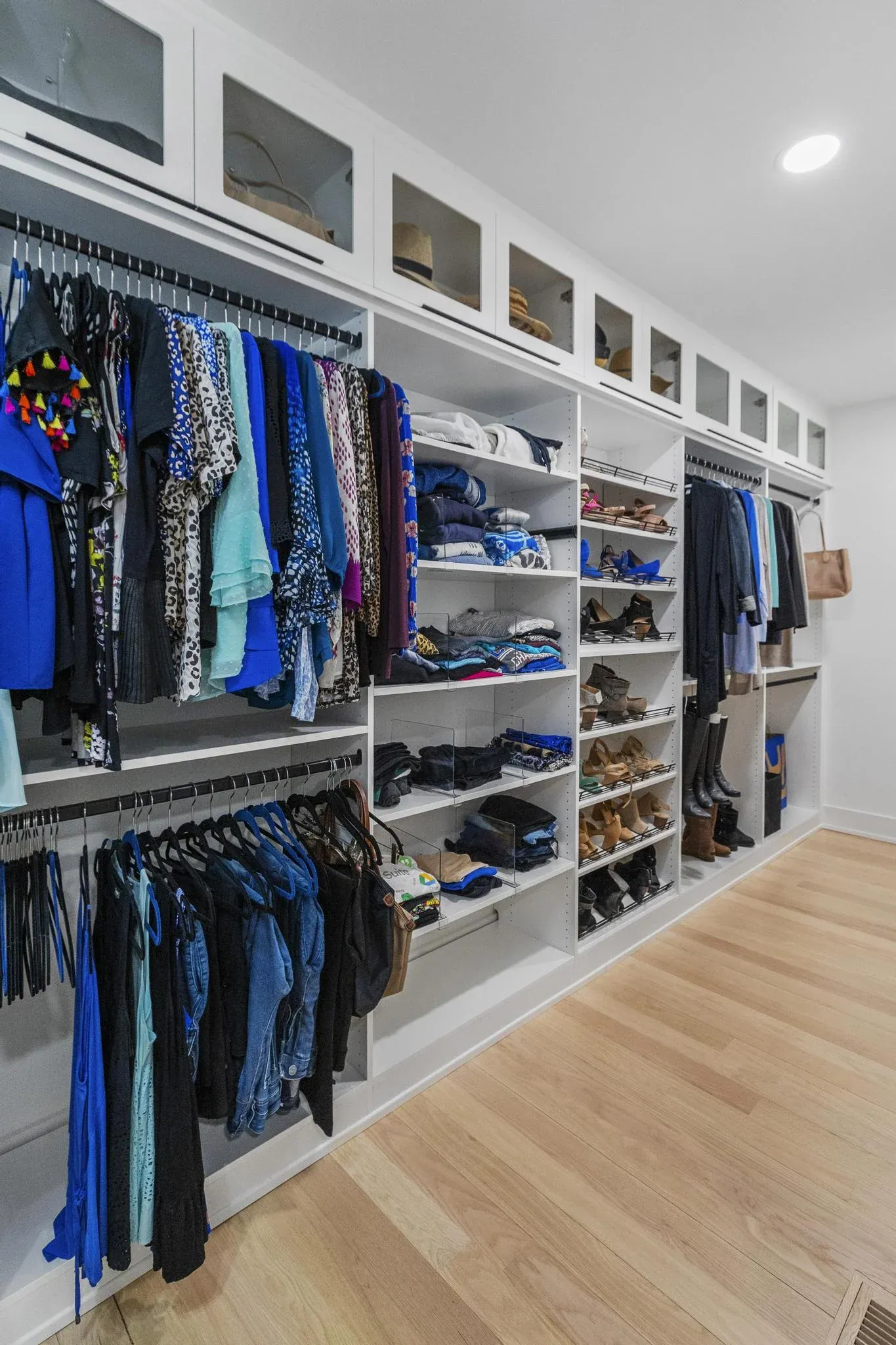
2. Not taking the system to the ceiling.
Gaps between your primary storage and the ceiling are practically inexcusable in 2026, even if it’s just several inches. The possibilities are greater than many know. Glass front display cases or even bins for seasonal storage fit here.
The fix: Sort out items that get used less than once a month and dedicate them to the highest reaches of a closet.
3. Keeping deep shelving.
This is one of the most prevalent closet organization mistakes. Shelves approaching or exceeding 14” in depth are cemeteries for stuff you forgot about. If you want that deeper shelf, it should be a pull-out or bin storage.
The fix: Install shallower shelving and see how items stay more well-organized. Deeper shelves can hold baskets of loose items, like knit accessories.
4. So much floor space for no reason.
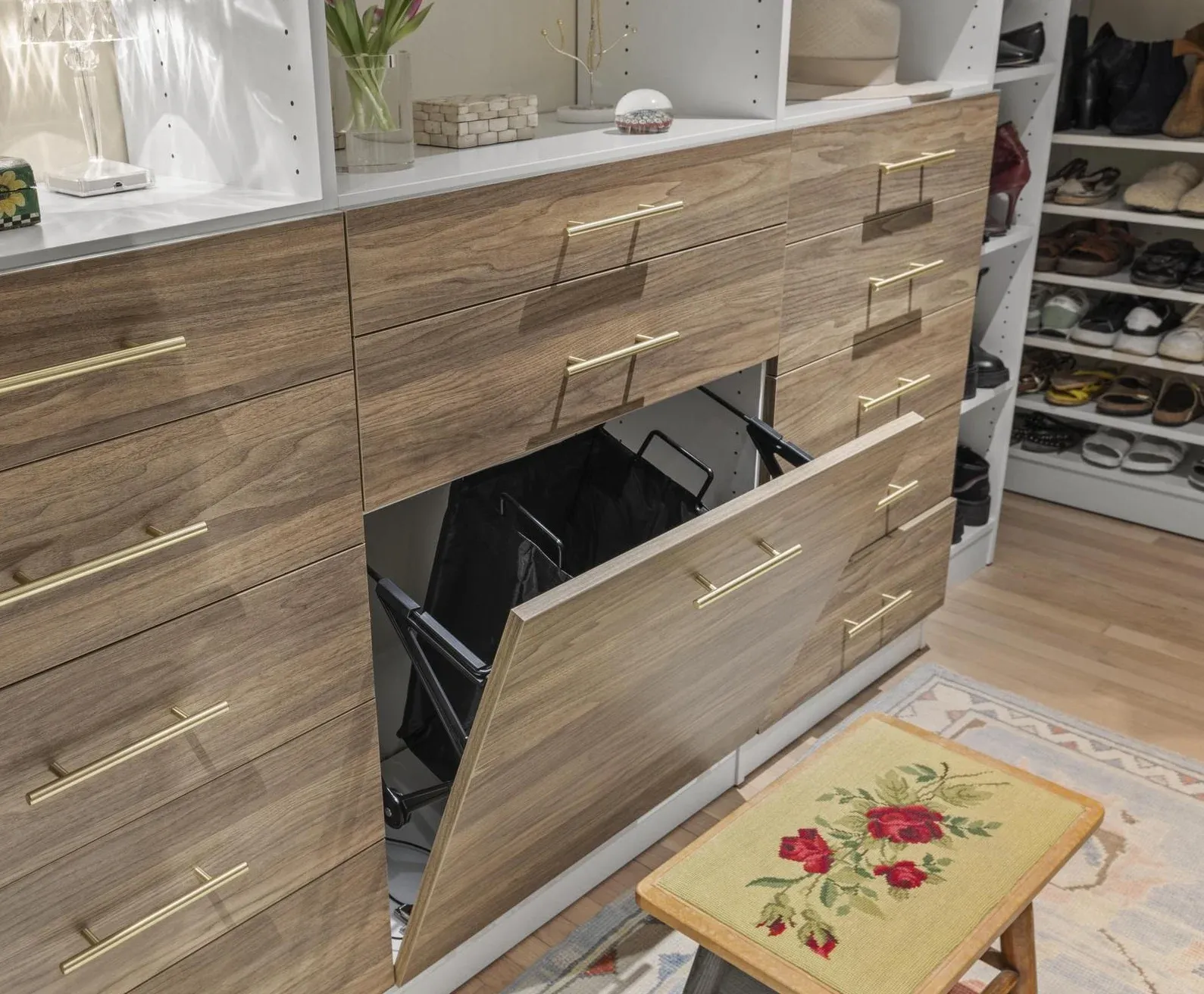
Take a tip from very small walk-in closets–every inch has a purpose. In large primary closets, additional non-traffic floor space should only exist to accommodate features. Deep drawers that pull out all of the way, tilt-out hampers, trouser racks, etc.
The fix: When designing a closet, check how much floor is left over when every door, drawer, and rack is fully extended. If a bunch of non-path floor is leftover, add features like an island or seating.
5. Zero adjustability with shelving.
Some shelves may be fixed, but all of them? Never. Once drawers and rods are in place, that’s where they sit. Adjustable shelving ensures that you do have at least one way to amend your layout over time.
The fix: Use adjustable shelves where you plan to stack folded clothing, store boots and bags, or rotate item displays.
6. Using bare wire shelves.
When you stack soft clothing and accessories on a coated wire closet shelf, you’re using about half of the storage potential available there. Go more than halfway up toward the next shelf, and it falls over. This is not how to keep a closet organized.
The fix: Some low wire shelves can be good for frequently worn shoes. Otherwise, install solid shelves or use containers on the wire shelf.
7. Not calling a pro for the perfect custom closet layout.
You’ve measured your closet. Now what? You can’t get ahead of most closet layout mistakes by buying a prefabricated system on your own. Bring those measurements to your local Designery instead.
We’re not just professional designers; we specialize in cabinetry of all kinds. Explore a beautiful showroom full of all the materials and products you need, right down to jewelry organizers. From creating a visual to confirm your layout to professional installation, we’re your hometown source.
“I was thoroughly impressed by the beautiful showroom and the wide variety of cabinetry, tile, flooring, and finish options available to view in person.”
Carrie, The Designery client
Find your showroom and visit us this week!