Open shelving photographs beautifully, but it's one of the most polarizing decisions homeowners face during a kitchen remodel — some love the airy, curated look, while others worry it just means more visible clutter and more dusting. If you're weighing open shelving against traditional closed cabinets for your Longmont kitchen, the right answer usually isn't one or the other exclusively, but understanding what each actually does well before deciding where to use them.
At The Designery Longmont, this comes up in nearly every kitchen design consultation. Both options can work beautifully — the key is matching the choice to your storage habits, your maintenance tolerance, and the specific areas of your kitchen where each makes the most sense.
What's the real difference between open shelving and closed cabinets, beyond looks?
The real difference goes beyond appearance — open shelving prioritizes visual openness and easy access, while closed cabinets prioritize concealment and protection from dust, grease, and daily clutter. Open shelves make everything on them part of the room's visual design, which means what you store there needs to look intentional, not just functional. Closed cabinets, by contrast, let you store items purely for convenience without worrying about how they look, since the cabinet doors handle that visual work for you.
This distinction matters more than most homeowners initially expect. A kitchen with too much open shelving can start to feel cluttered or high-maintenance if it's not curated carefully, while a kitchen with only closed cabinets can sometimes feel heavier or less visually dynamic, especially in smaller spaces.
Is open shelving actually more work to maintain?
Yes, open shelving generally requires more regular upkeep than closed cabinets, since everything displayed is exposed to kitchen grease, dust, and cooking splatter. Items near the stove or sink tend to need more frequent cleaning when stored on open shelves compared to the same items tucked behind cabinet doors. This doesn't mean open shelving isn't worth it — it just means it works best when homeowners are realistic about the maintenance commitment and thoughtful about what gets displayed there.
Placement matters significantly here. Open shelving positioned away from heavy grease zones, like near a stove, tends to require far less maintenance than shelving placed directly above cooking surfaces, which is worth discussing early in the design process.
Where does open shelving work best in a kitchen layout?
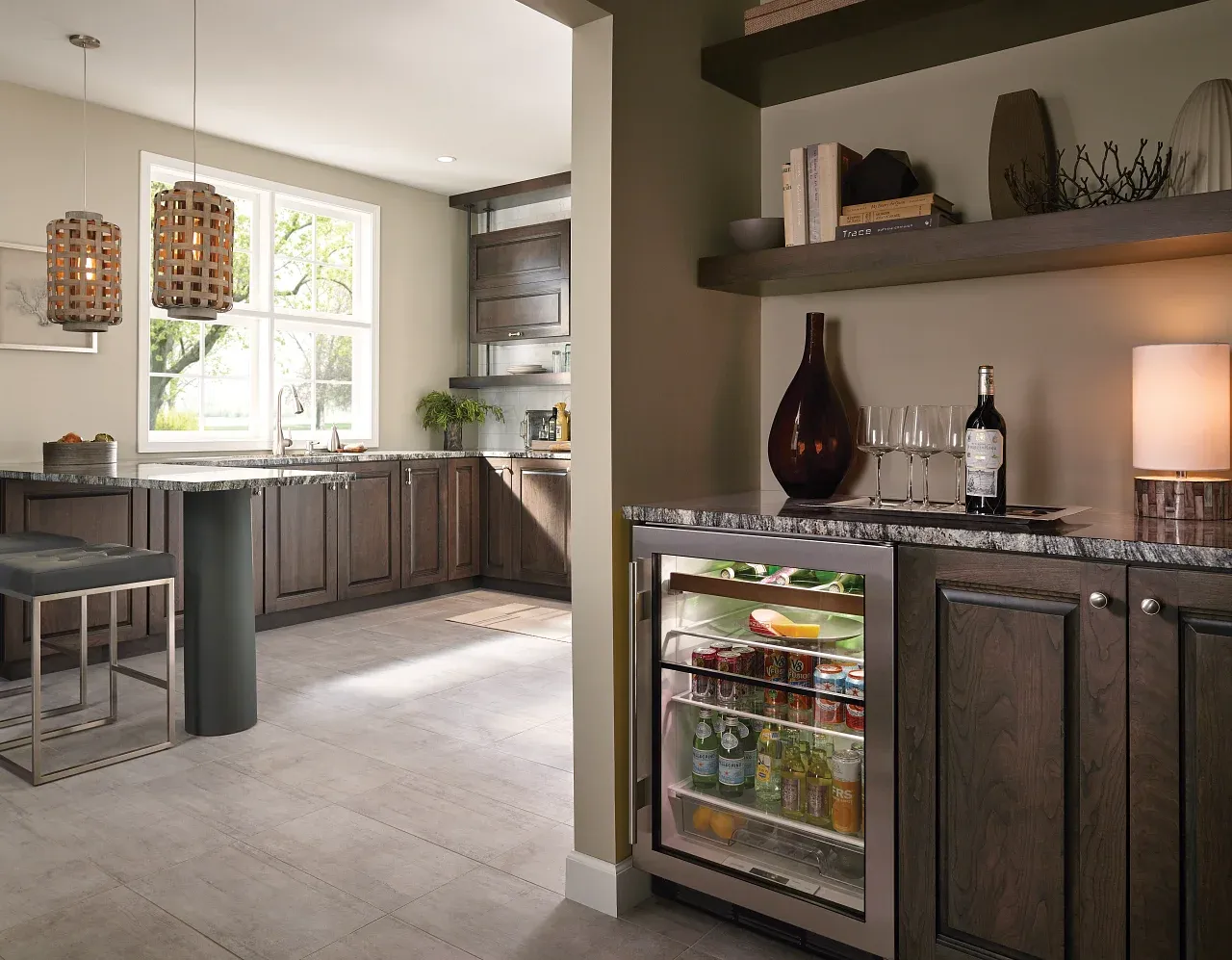
Open shelving tends to work best in areas away from heavy cooking activity, such as a run of wall space near a dining area, a coffee or beverage station, or as an accent alongside a larger bank of closed cabinetry. These lower-traffic, lower-grease zones let open shelving do what it does best — add visual interest and easy access — without the maintenance downsides that come with placement near a stove. Using open shelving as an accent rather than the dominant storage strategy also tends to age better stylistically over time.
Many Longmont homeowners land on a hybrid approach for exactly this reason, using open shelving selectively for display-worthy items while relying on closed custom kitchen cabinets for the bulk of everyday storage. This combination often delivers the visual benefit of open shelving without its full maintenance burden.
Does open shelving make a small kitchen feel bigger?
In many cases, yes — open shelving can make a small kitchen feel more open and less visually heavy compared to floor-to-ceiling closed cabinetry, since it doesn't create the same sense of enclosed bulk. This effect is especially noticeable in kitchens with lower ceilings or tighter layouts, where a full wall of upper cabinets can make the space feel more closed-in than it needs to. Replacing even a portion of upper cabinets with open shelving can visually lighten a small kitchen without sacrificing much practical storage.
That said, this benefit depends heavily on keeping the shelving tidy and intentionally styled. Overloaded or disorganized open shelves can have the opposite effect, making a small kitchen feel more cluttered rather than more spacious.
Are closed cabinets always the more practical choice?
Closed cabinets are generally more practical for households with a lot of daily-use items, growing families, or anyone who prefers not to think about how their everyday dishware looks. Custom kitchen cabinets designed with smart interior organization — pull-out shelves, dividers, deep drawers — can handle significantly more storage volume than open shelving while keeping everything out of sight and protected. For most Longmont households, closed cabinets remain the backbone of a functional kitchen, even in designs that also include open shelving accents.
That said, "practical" doesn't have to mean purely utilitarian. Well-designed closed cabinetry, with thoughtful finishes and hardware, can be just as visually striking as open shelving while offering significantly more day-to-day convenience.
How do I decide what mix is right for my kitchen?
Deciding the right mix comes down to being honest about your storage habits, your tolerance for visible maintenance, and which areas of your kitchen naturally lend themselves to display versus concealment. Households that entertain often and enjoy curating a few beautiful, functional pieces on display tend to benefit from open shelving as an accent, while households with heavier daily storage needs usually lean more toward closed cabinetry throughout. There's no universally "right" ratio — the best mix depends entirely on how you actually live in your kitchen.
This is exactly the kind of decision a kitchen design center can help clarify, since it often comes down to seeing real layout options rather than deciding in the abstract. Walking through your specific kitchen's traffic flow, storage needs, and style preferences typically makes the right balance much clearer than trying to choose sight unseen.
Finding the Right Balance for How You Actually Cook
There's no single right answer between open shelving and closed cabinets — there's only the right answer for your kitchen, your habits, and how much visible upkeep you actually want to deal with day to day. Many of the best-designed kitchens use both, letting open shelving add personality in the right spots while closed cabinetry handles the heavy lifting of everyday storage. The Designery Longmont helps homeowners figure out that balance as part of every kitchen remodel, so the final design looks great and actually works for how you live in it.