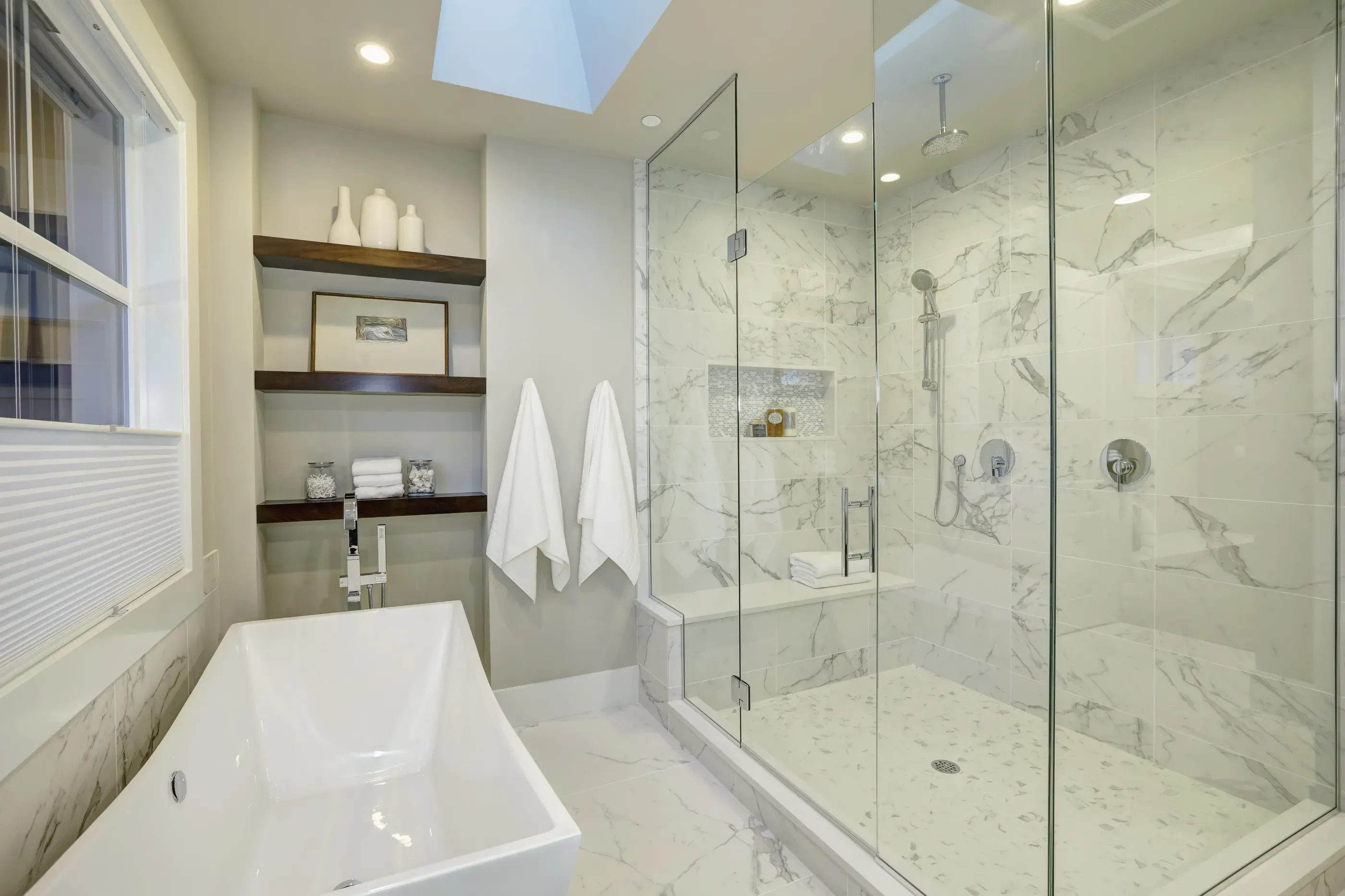
Ceramic tile should only be considered for shower walls. Porcelain tile for shower floors is a better choice because it absorbs less water and is more slip-resistant. Ceramic can absorb 3% of water or more, while porcelain absorbs 0.5% (vitreous) or less.
Glazed ceramic can still be great for shower walls, but this kind of info is important to know when taking on a bathroom remodel. Two tiles that look similar have totally different applications.
What’s the real difference between ceramic and porcelain tile?
Porcelain tiles are made of fine clay fired at high temperatures. Ceramic tiles are made of coarser clay and fired at temperatures lower than those of porcelain. As a result, porcelain is less porous and much denser.
Porcelain’s low porosity isn’t assumed; it’s regulated. ANSI A137.1 maintains that manufacturers must create a tile with a water absorption of 0.5% or less to call it porcelain. Otherwise, it defaults to becoming a ceramic tile. Same raw ingredients, different properties.
The water absorption factor is the most important property when we discuss tiling a shower. Unlike the rest of your home, these wet areas reach max humidity every day. Over time, ceramic tiles will continue sucking up water until they crumble. True porcelain is classified as impervious to moisture.
What is a DCOF slip rating?
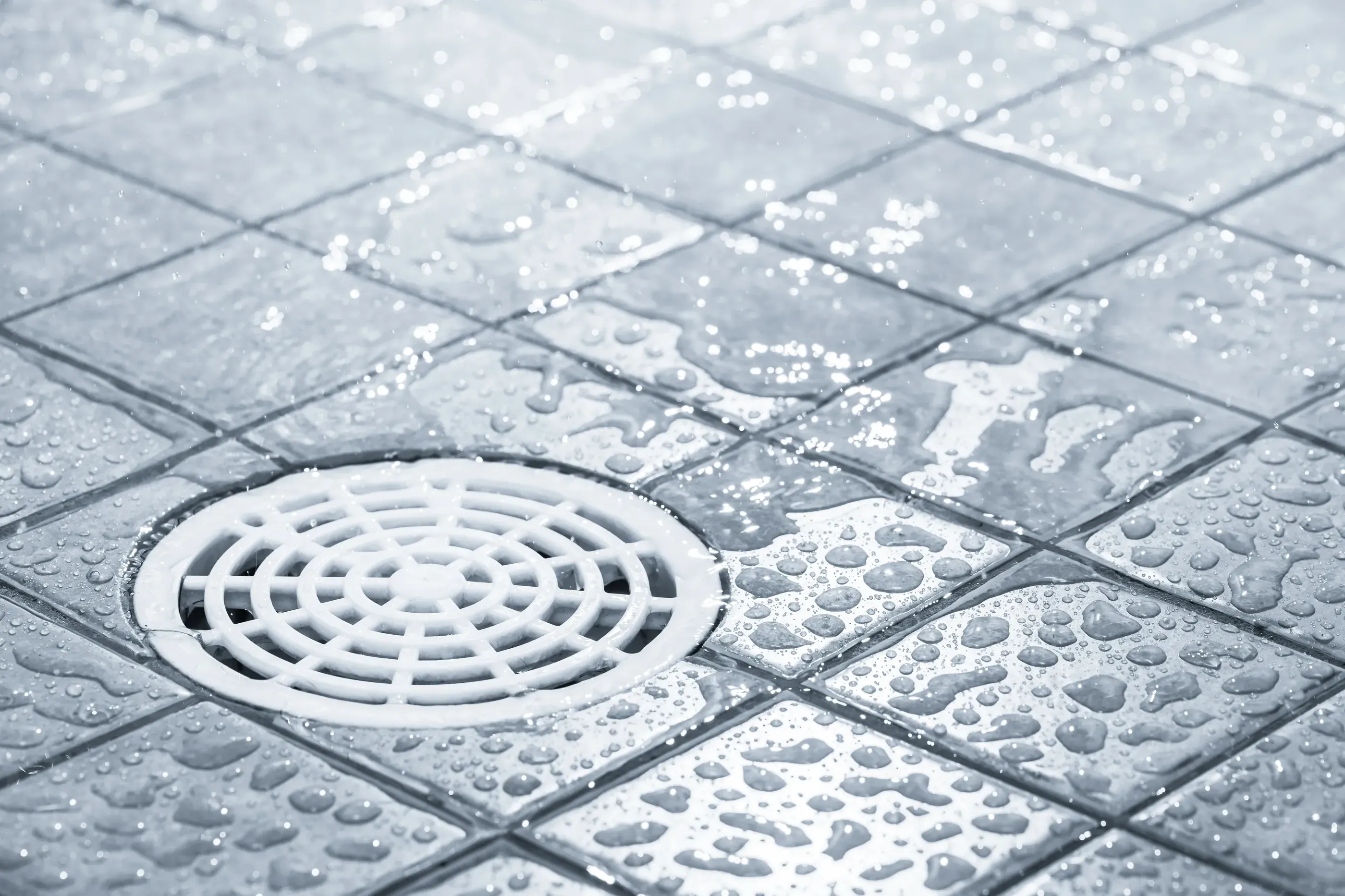
The DCOF slip rating is an industry standard that measures how slippery a tile is when you are walking on it while wet. It’s very convenient to have an ANSI rating system specifically for tiling your shower!
DCOF stands for “dynamic coefficient of friction.” Porcelain tiles, especially for use in a shower, are manufactured to meet or exceed the standard for slip resistance ( 0.42 or less). Some ceramic floor tiles may meet the standard for your entryway, but not for wet environments like the shower. Ceramic bathroom tiles are glazed, which makes them stunning, but more slippery. That’s why we usually save them for broad, less-wet areas and tile accent walls.
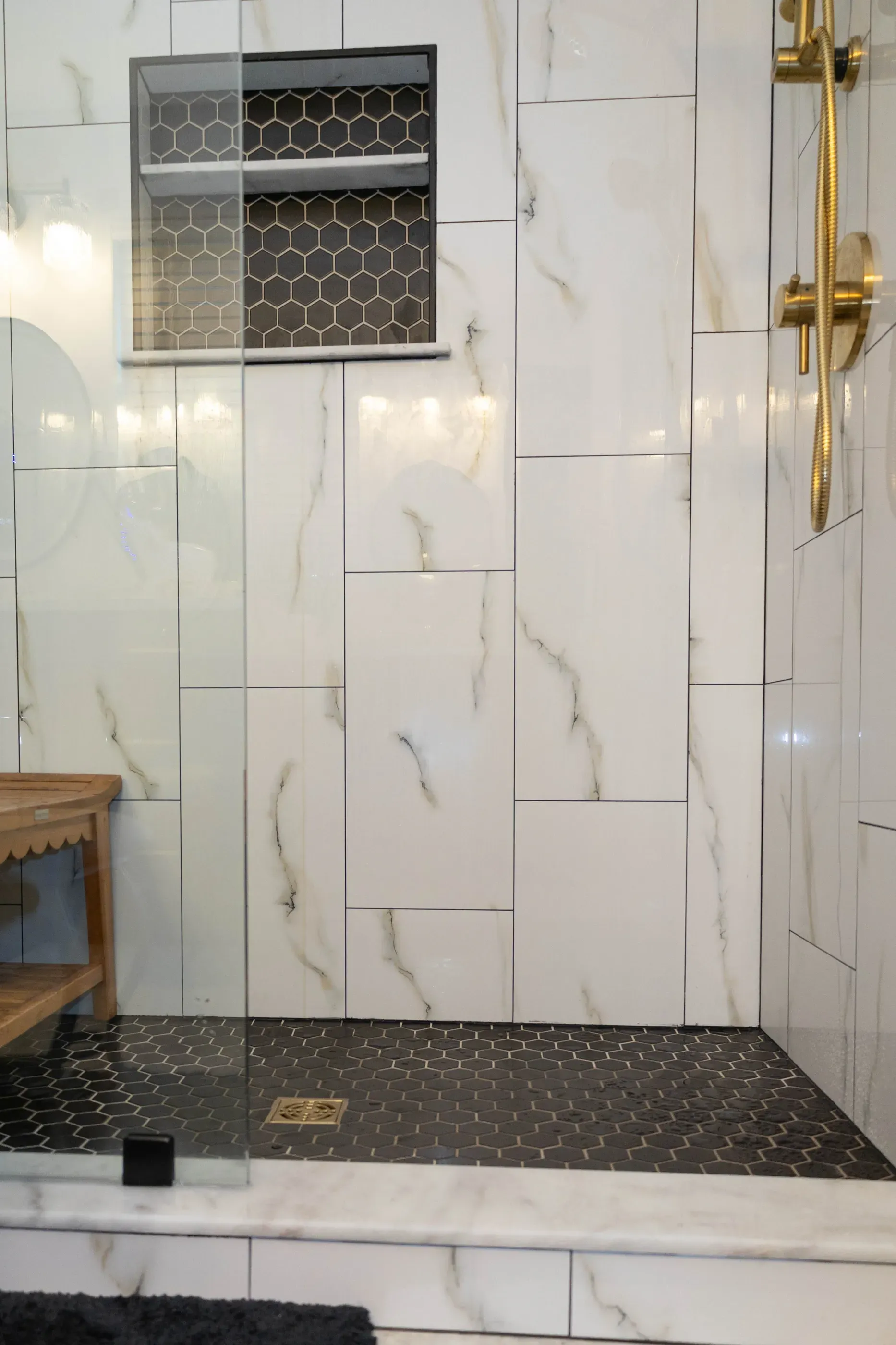
Designer tips: Using ceramic and porcelain tile in a shower remodel
You may not be able to tell a ceramic tile from a porcelain tile at first sight. A designer can, and they also know how to use it. Here’s how to get the best benefits of both materials in your bathroom.
Porcelain’s prime placements: floors and built-ins.
Water stands on floors and splashes into niches and on built-in benches. Therefore, these are the areas where porcelain is non-negotiable. If you’re going curbless, good on you. If not, the curb should probably be porcelain, too.
Mixed tile formats and patterns are trending big in bathrooms. Many designer clients take advantage of this by using porcelain as the shower’s accent tile. The floors, curbs, and built-ins are safer and more durable, but also high in aesthetic value.
Use ceramic as the main wall field tile.
Bathroom design inspo is jam-packed with gorgeous glazed ceramic tiles in every shape, color, and pattern. They’re also more affordable than comparable porcelain tiles, so we can’t resist.
Save these less water and slip-resistant tiles for your main wall tile. That’s the largest area of coverage, but it’s also the least wet. Use larger formats if you want fewer grout lines. Your tile may be glazed, but the grout will still need sealing. Decide ahead of time how easy you want maintenance to be.
If you want large-format floors, ask about linear drains.
Porcelain tile for shower floors is most popular in little mosaics or penny tiles. They offer design intricacy and extra slip resistance. That said, it’s just not everyone’s preference. If you just love the large format look, say so early in the remodel planning phase.
Why? Curbless showers and/or large-format tile floors can still become slippery with a regular center drain. It takes four subtle slopes to drain properly. Linear drains use a one-way slope. Many homeowners also agree that linear drains look more modern and upscale.
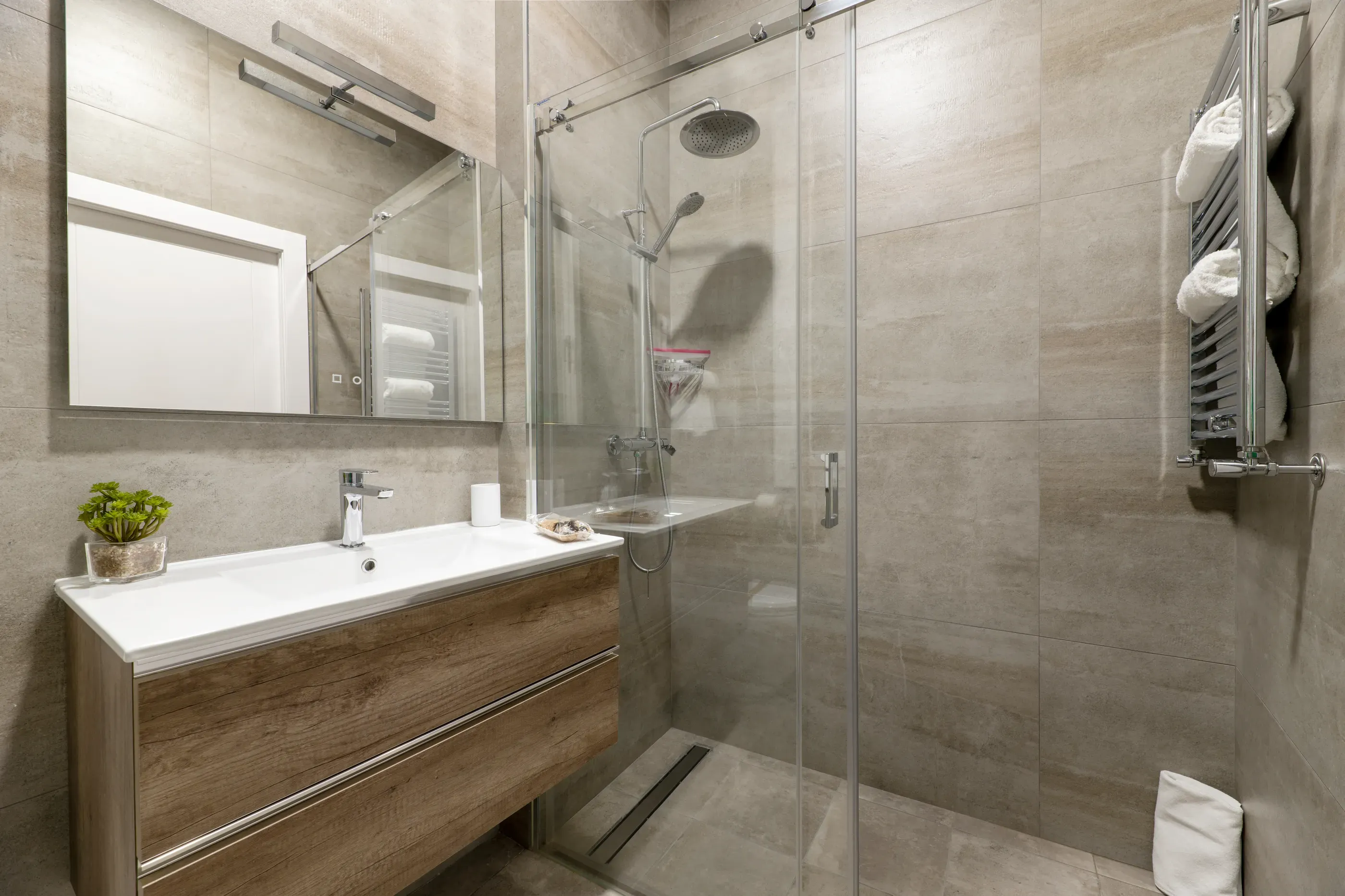
Big box store shower tile mistakes designers see most
Many of you may enjoy a stroll through the big home improvement stores. The most obvious mistake you can make here is buying a few boxes of ceramic wall tile for your shower floor.
However, there are other landmines to avoid in Aisle 13 past the paint pavilion. Don’t do any of these things, either:
-
Falling into a “floor and wall” trap. Some boxes of tile may say this, and yes, floor and wall tile does exist. But read it more closely, and the PEI rating (for durability) isn’t a 3 or higher. The DCOF isn’t 0.42 or below. It’s just a little better than wall tile. Not suitable for shower floors.
-
Porcelain large format that’s too smooth. Porcelain that looks just like marble is showstopping for sure. But no matter what claims are made, it’s best to avoid a polished surface on the shower floor. A designer can pull beautiful stone looks that have the right finish and appropriate texture.
-
Getting stuck on tile, period. No tile is going to survive bad waterproofing. The same goes for grout. There’s no use exploring the difference between ceramic and porcelain tile when the shower pan and the remainder of the waterproofing system are not up to par.
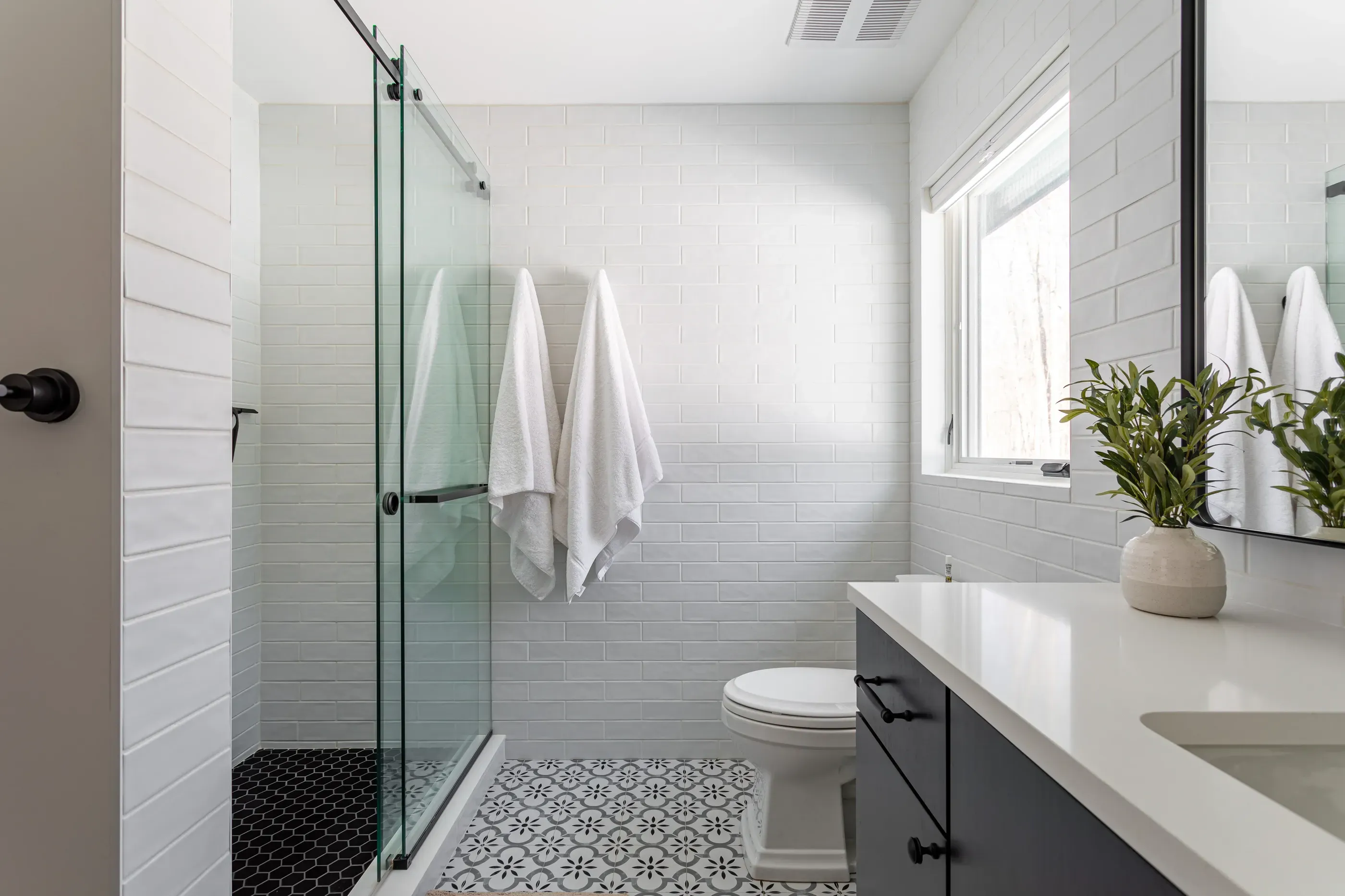
Don’t slip up; a professional designer can tell (and show) you more.
DCOF? ANSI? Impervious? PEI ratings? It wasn’t supposed to be this complicated. Fortunately, it doesn’t have to be. The Designery offers an exceptional range of ceramic and porcelain tile, plus professional design services to ensure you’re using it right. You can even ask us about our trusted network of contractors to make your new shower safe and beautiful.
“Great place to help bring your kitchen/bath/closet vision to life. They're super nice people, great communication, and eager to help.”
Kevin, The Designery client
Visit your local showroom to start exploring the selection.