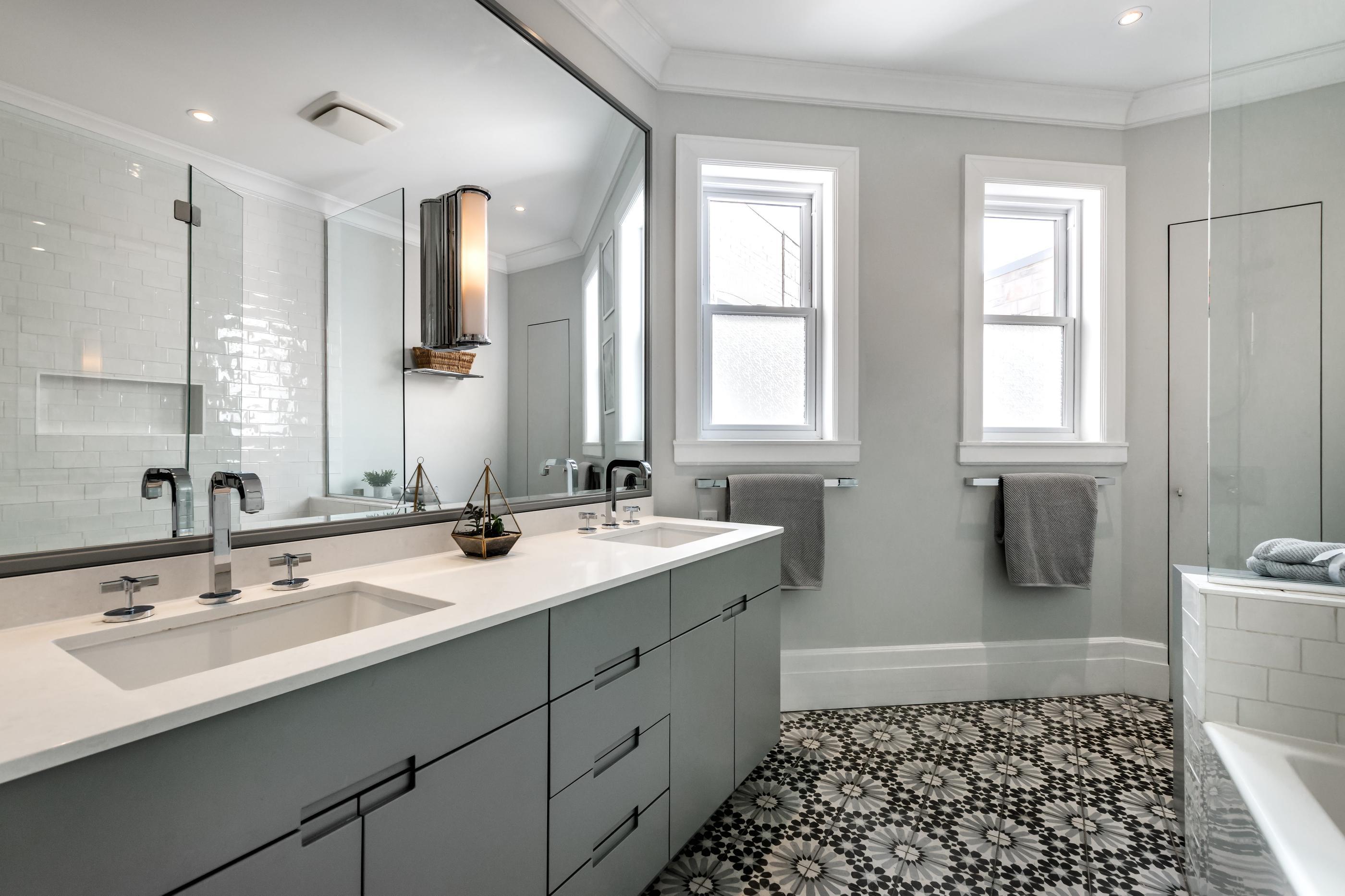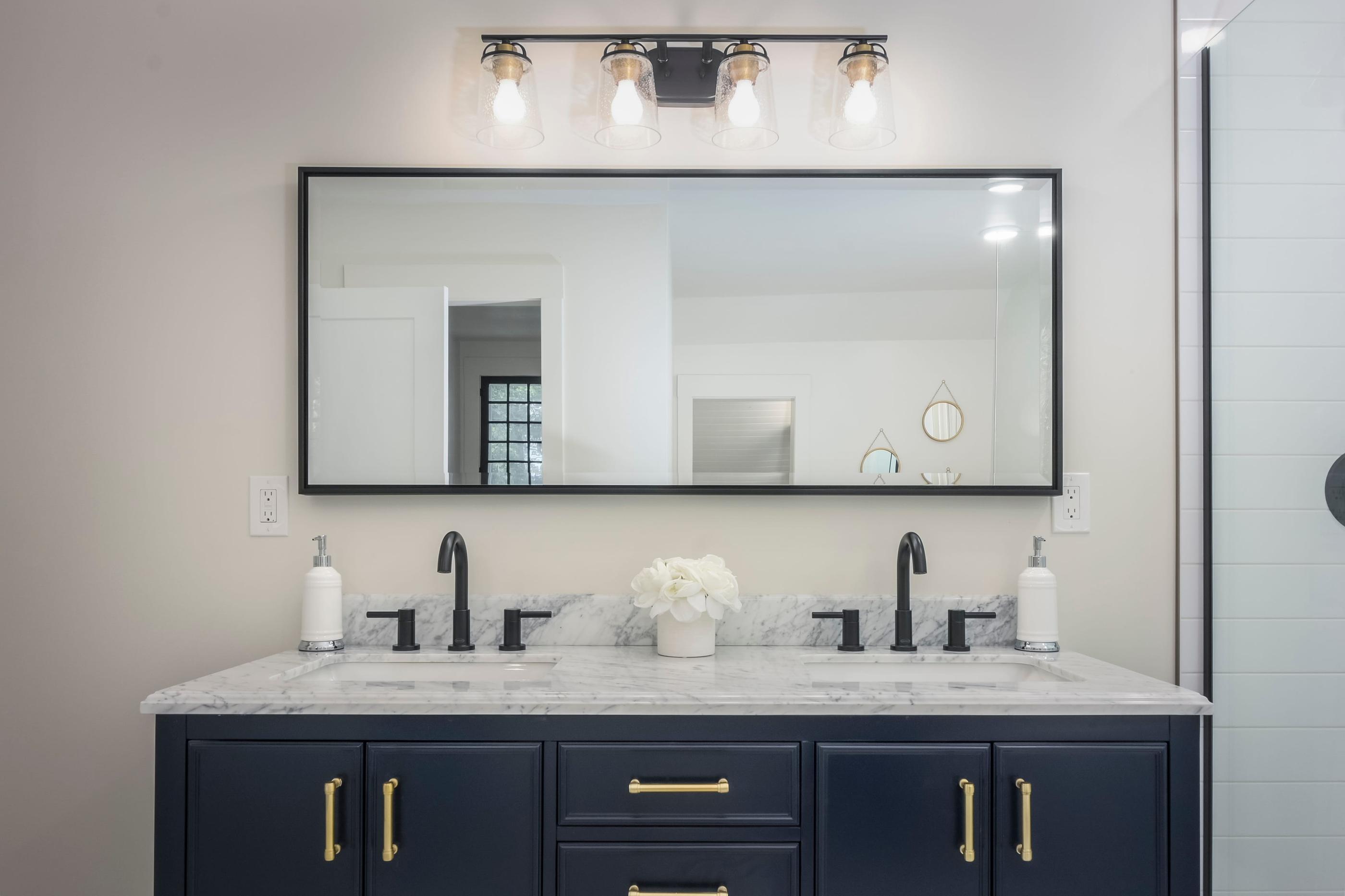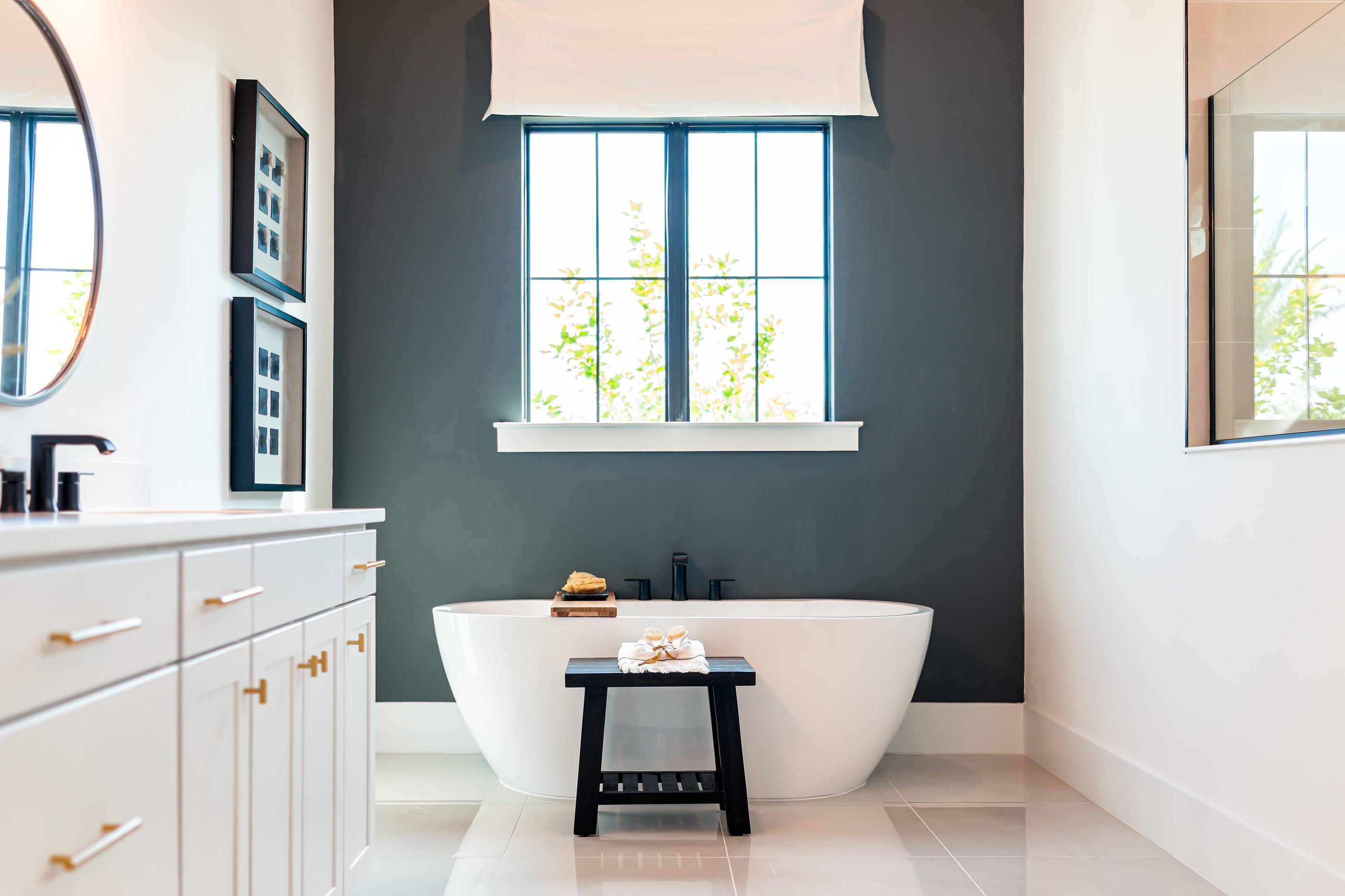

In 2025, floating vanities became a staple in bathroom remodeling. Now in 2026, their popularity isn’t letting up. The rise in their installation has given way to a broader range of styles.
Today, we’re sharing floating vanity inspiration for your remodel. Plus, if you’ve never owned a wall-mounted vanity before, stay tuned as we answer some of the most common questions about them.
What are the benefits of a floating vanity?
Floating vanities are secured to the walls behind them and therefore take up zero floor space. This can help showcase exceptional flooring, make cleaning easier, or even increase accessibility for wheelchair users.
Many people choose pedestal sinks over vanities for the space-saving benefits, but not all small bathroom remodels require small vanities. A floating vanity allows countertop space and storage while taking up even less floor space than the average pedestal.
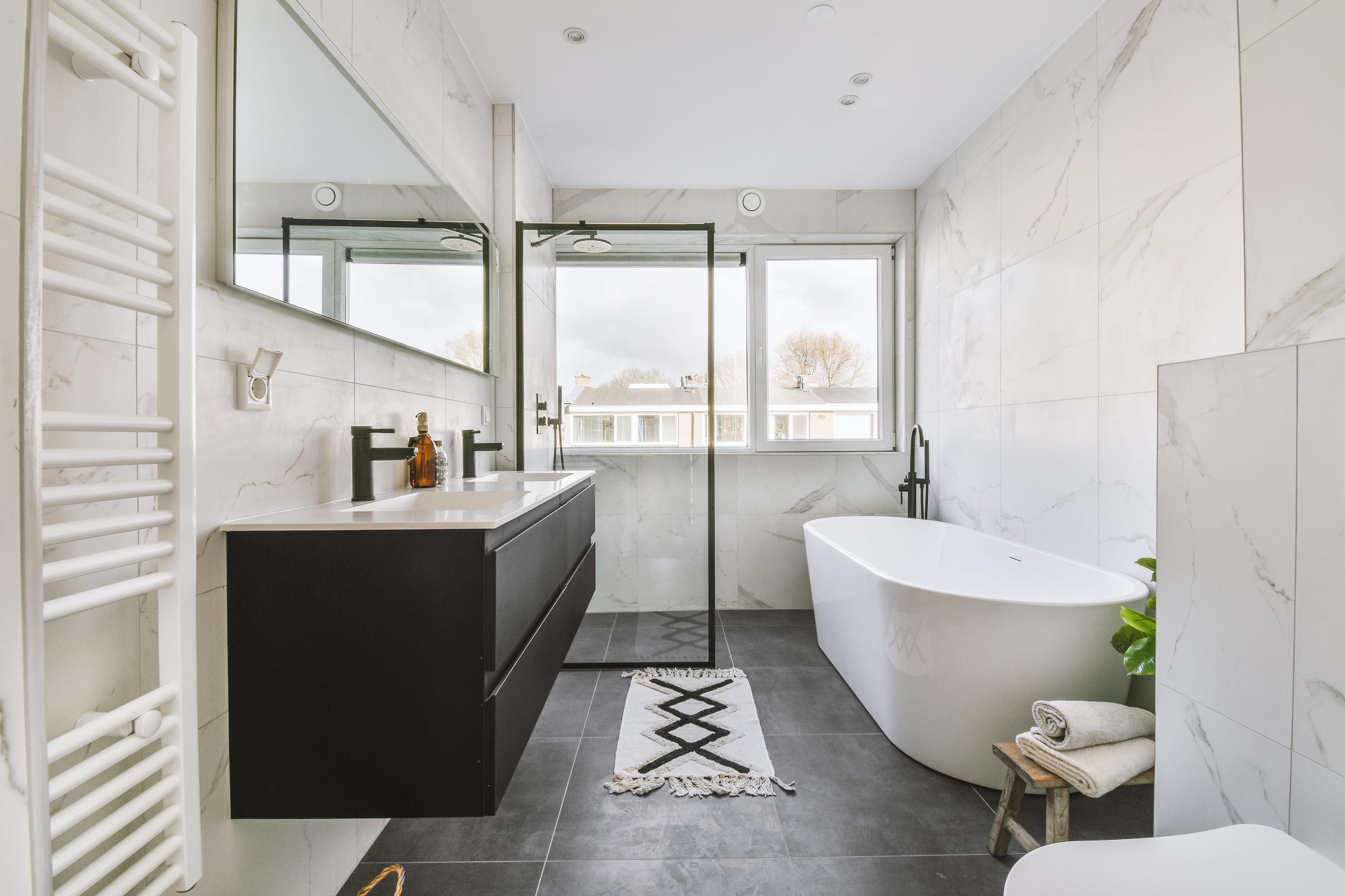
Floating vanity ideas for your bathroom remodel
Floating vanities are more versatile than many think. Industrial, rustic, classic, spa-like, eclectic–any aesthetic you prefer can include these wall-mounted sinks, counters, and cabinets.
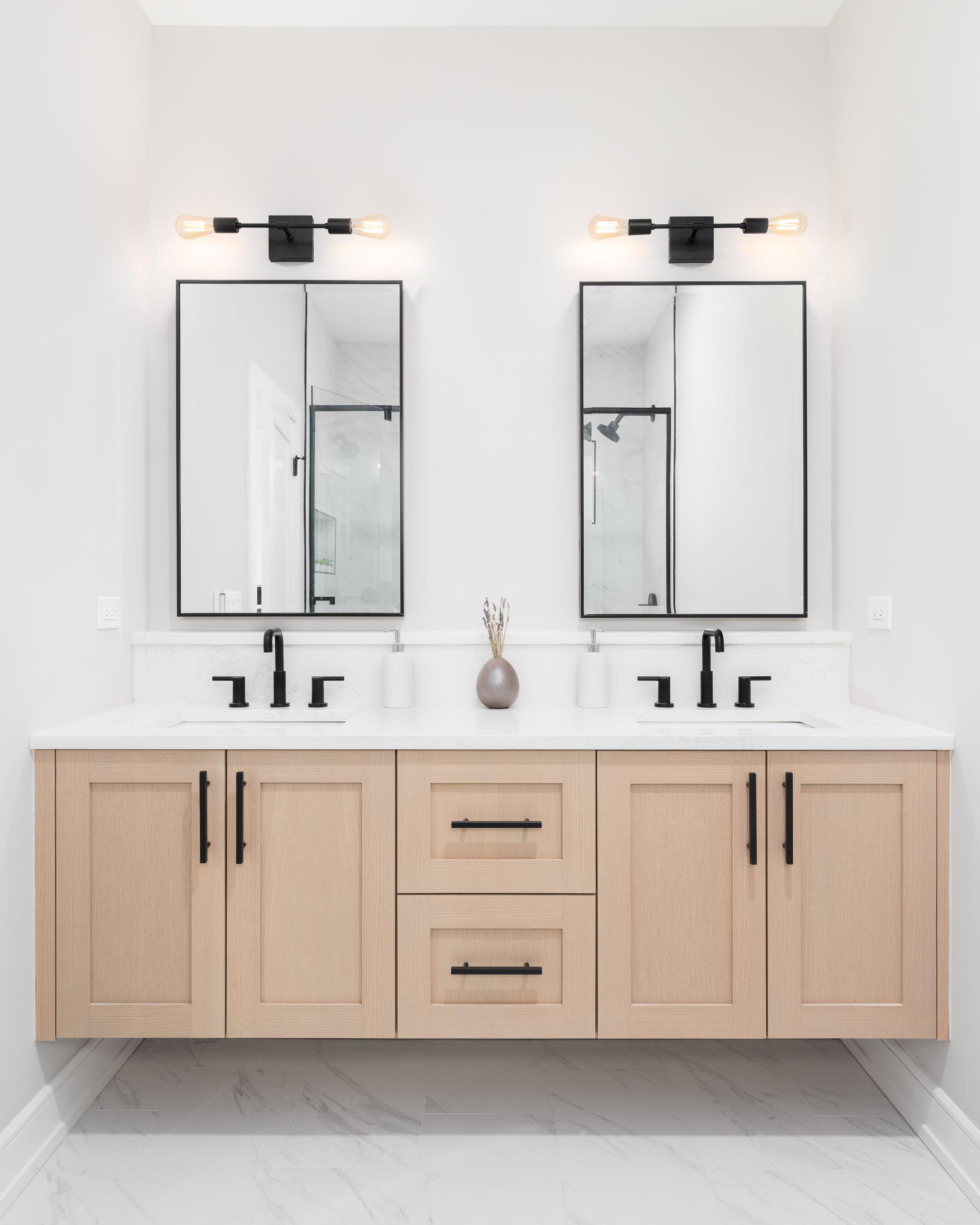
Modern ideas merge with traditional style.
Although they’re heavily associated with contemporary and minimalist designs, floating vanities can include the qualities of traditional cabinetry. The remodel above can look fresh for years with simple updates to hardware and fixtures.
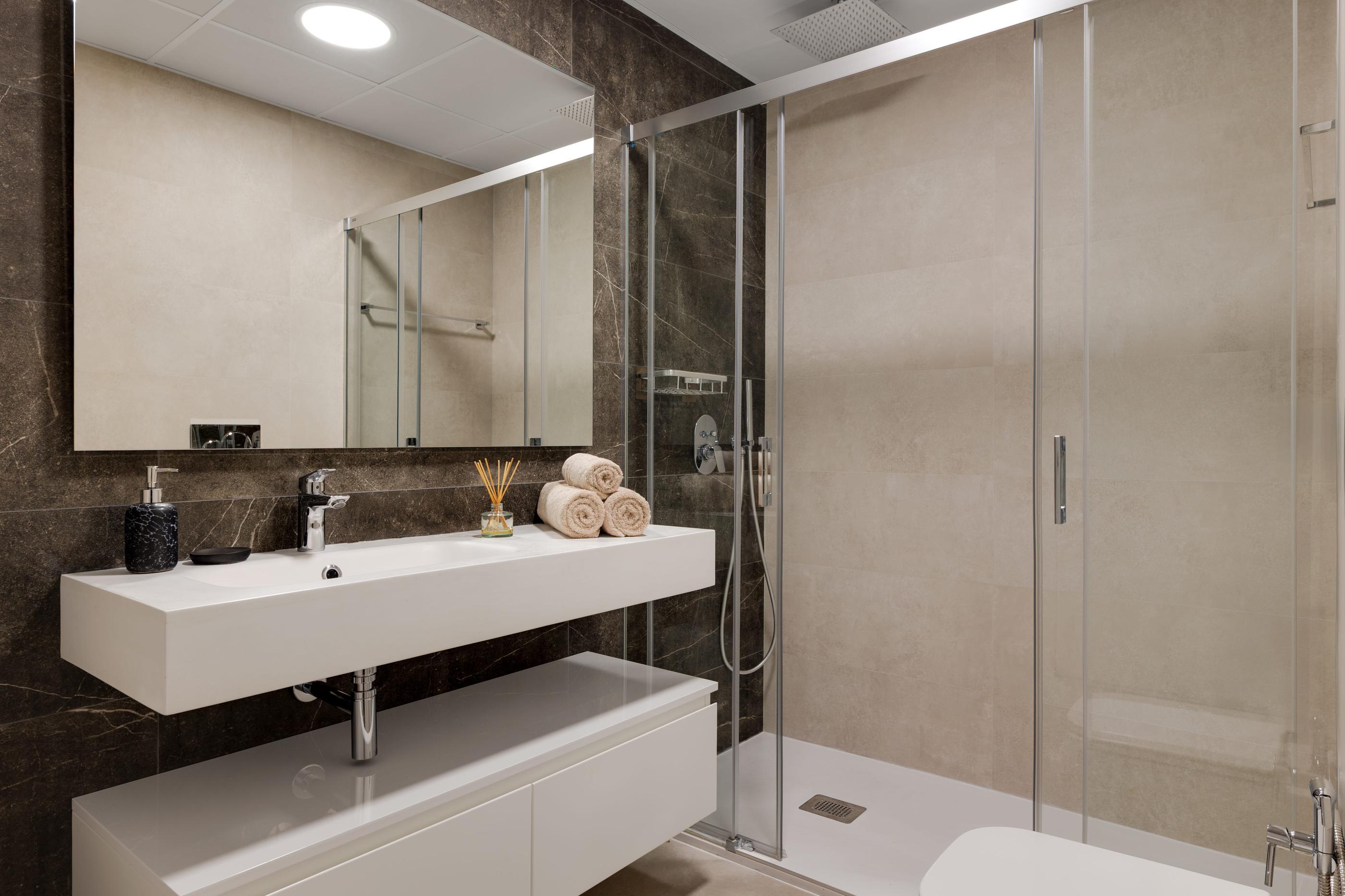
The bathroom vanity, deconstructed.
When you choose a floating vanity, it’s as though the vessel sink is implied. Defy expectations. A wall-mount sink above a floating vanity is a fresher take on modern bathroom design.
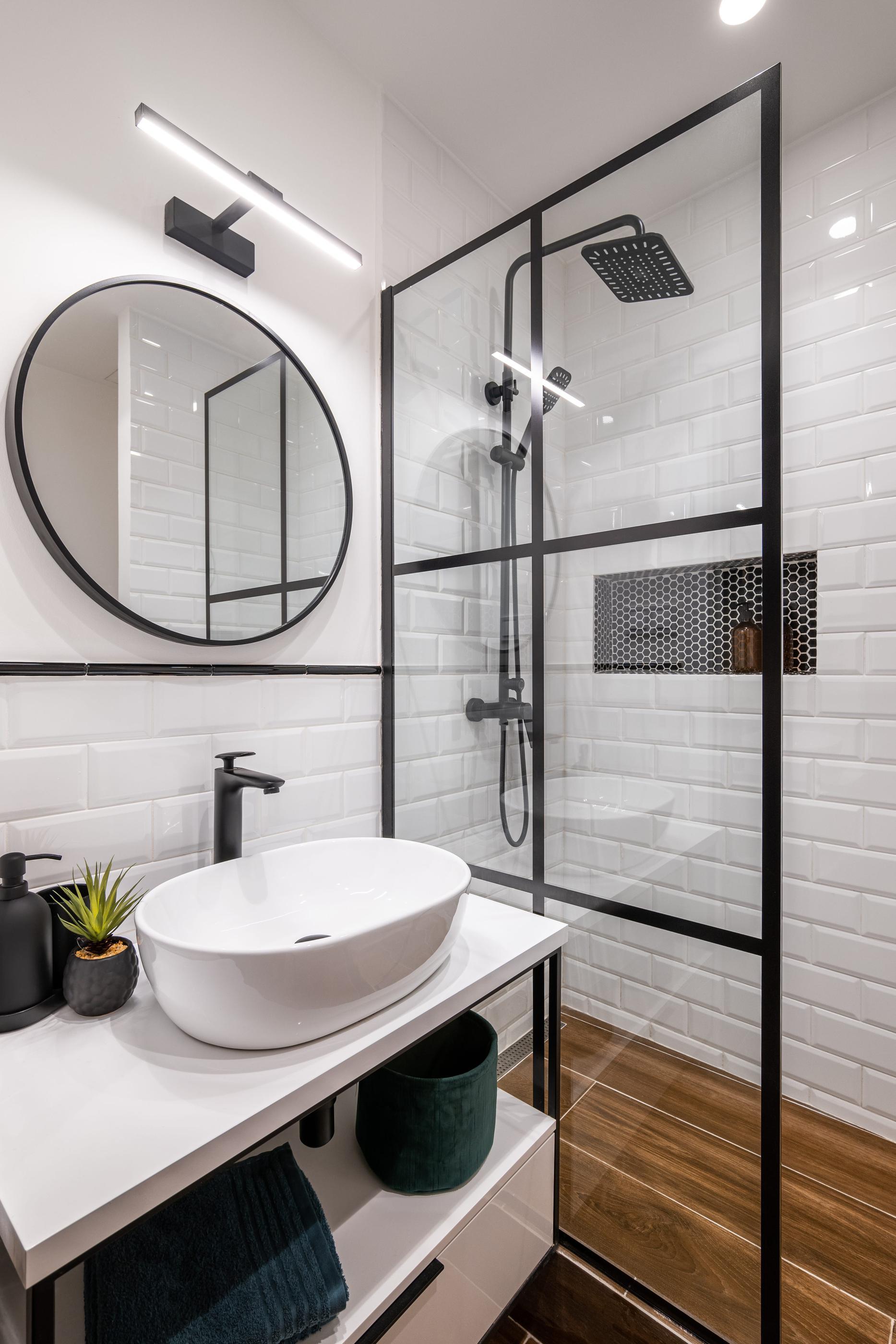
A better open shelf.
Floating vanities that include a divide between sink and storage create handy spaces for towels. This design configuration preserves both wall and floor space in smaller bathrooms.
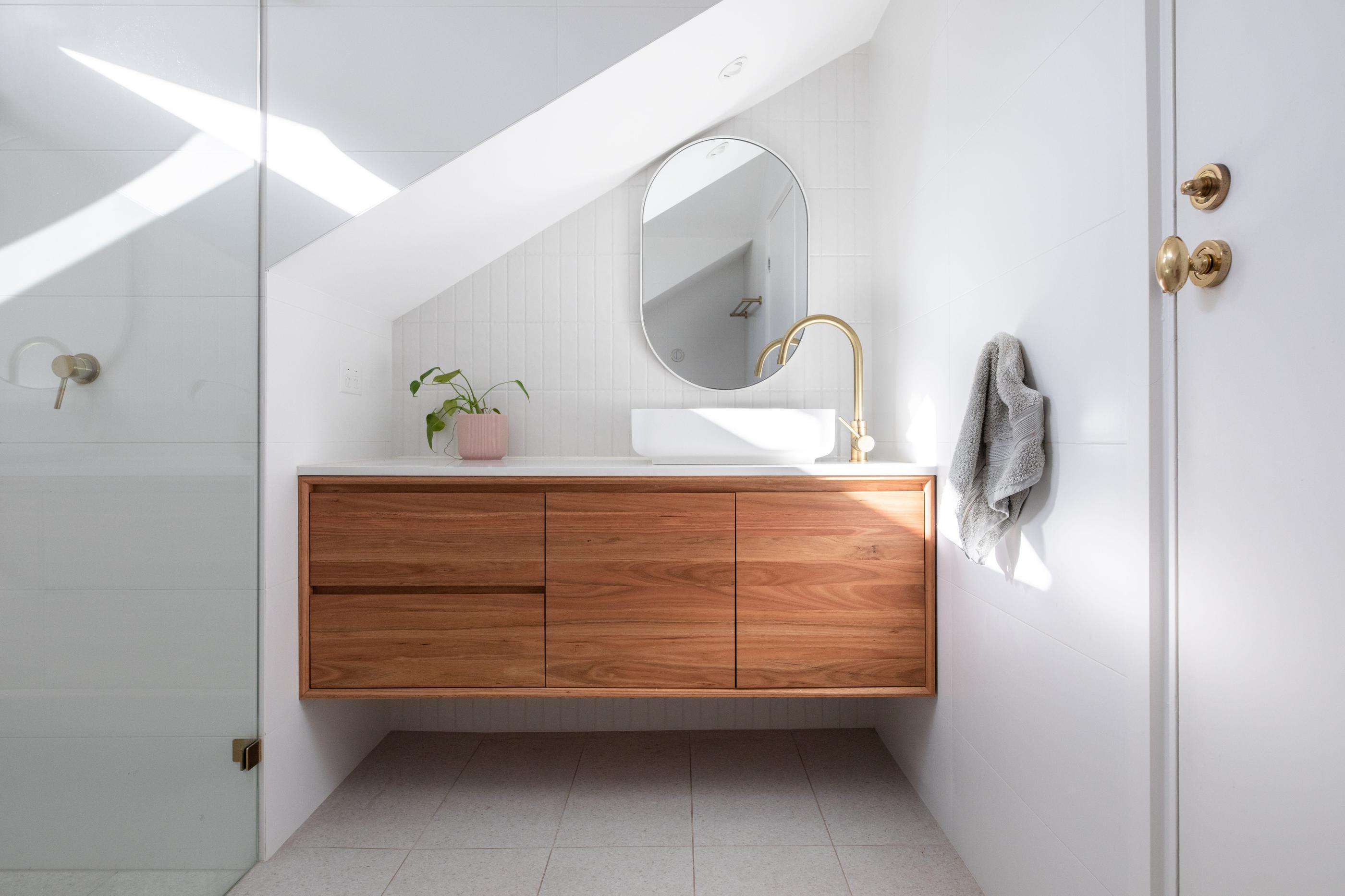
Warming up simple spaces with natural materials.
Clean white and neutral bathroom tilework is a wise design choice. It can still feel more clinical than clean at times. A fine wooden floating vanity with an elegant faucet and mirror adds grounded character.
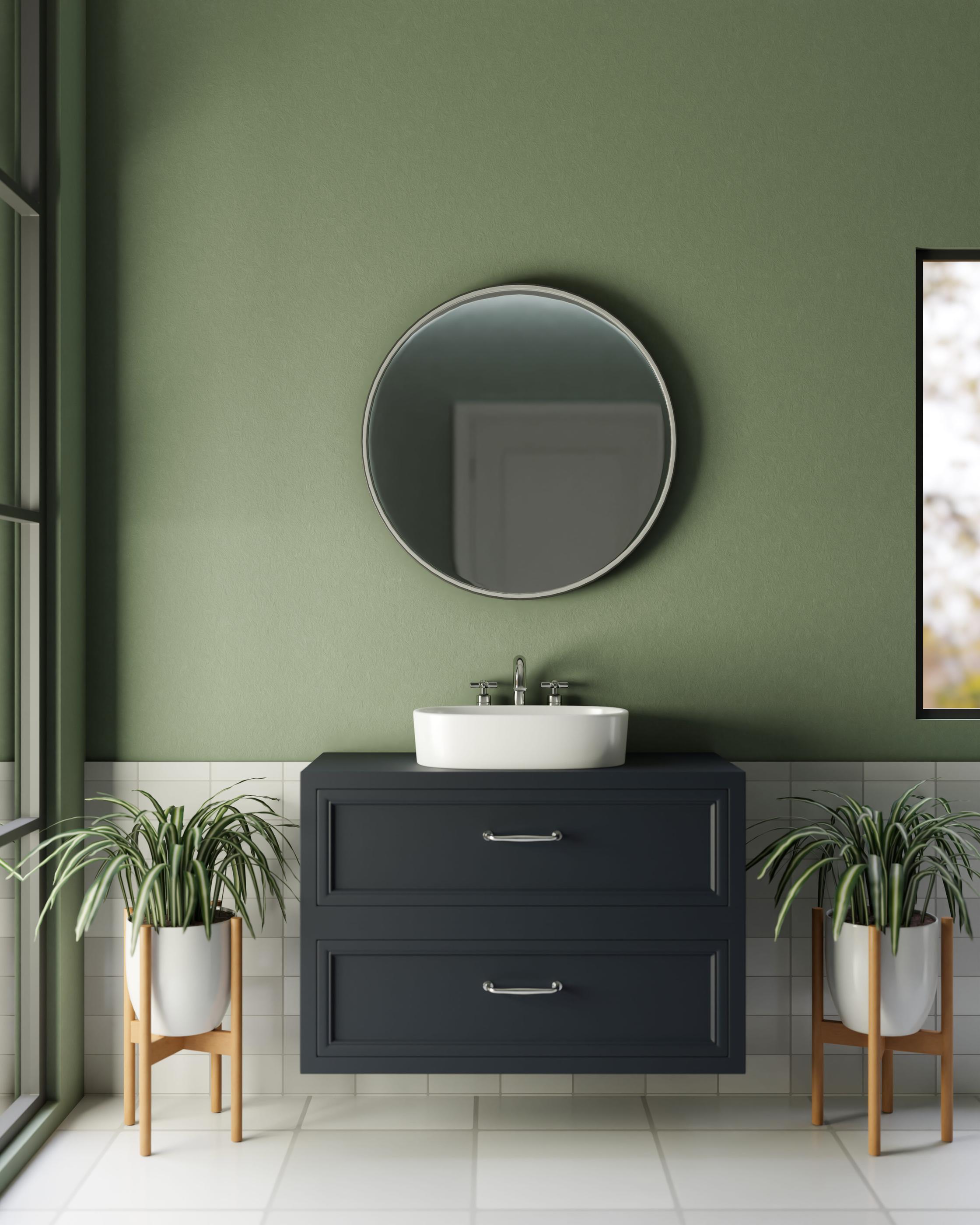
Highlighting tilework.
Great transitions are an underrated design feature. Floating vanities like the one above complete the color palette without interrupting or distracting from the half-tiled wall. It wouldn’t be as balanced and harmonious if it reached the floor.
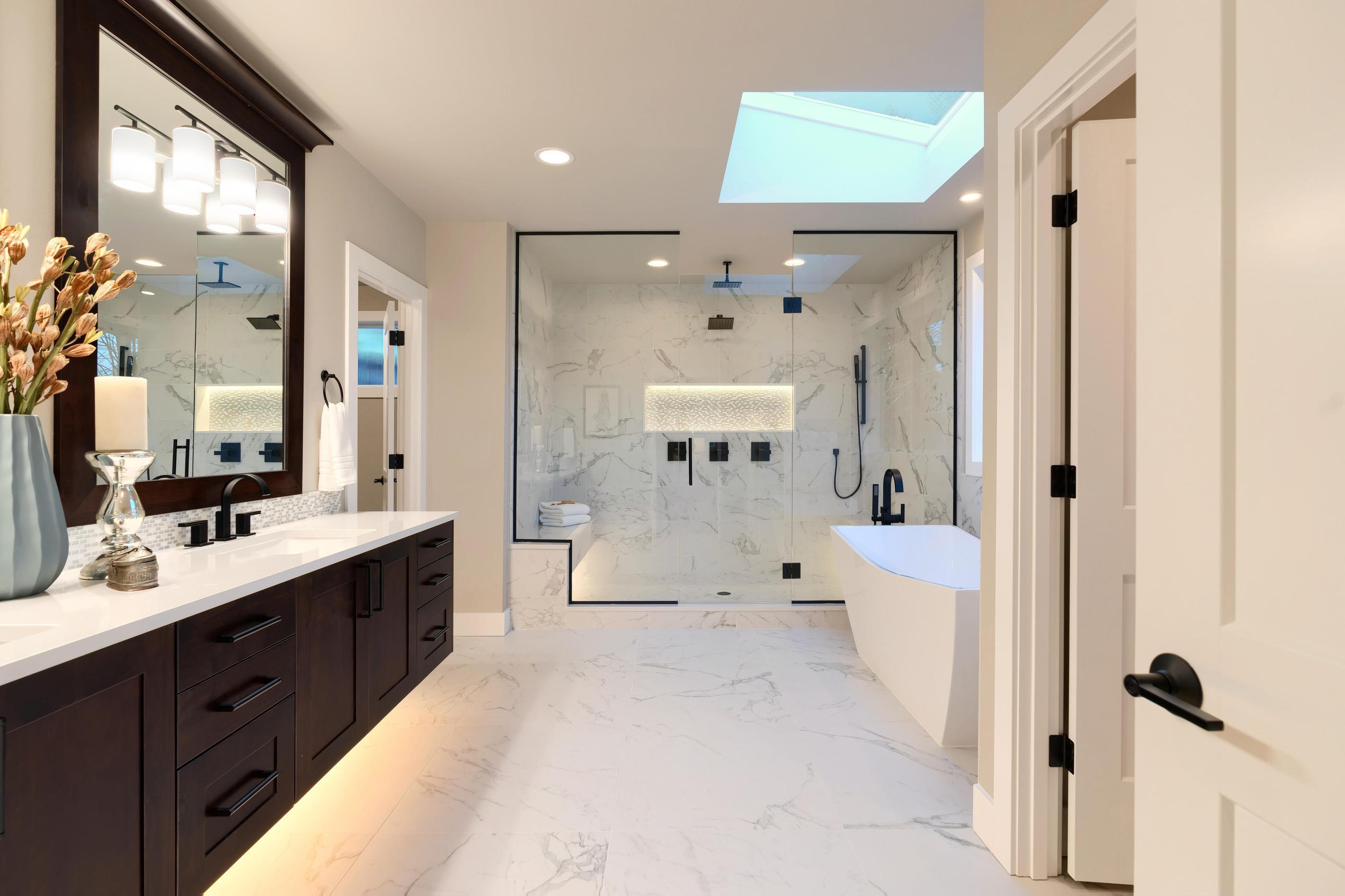
An incredible new layer to your lighting.
Eliminate shadowy corners and add interest with under-vanity lighting. It creates a safer path at night and contributes to a spa-like atmosphere, casting a flattering glow on your favorite stone tile.
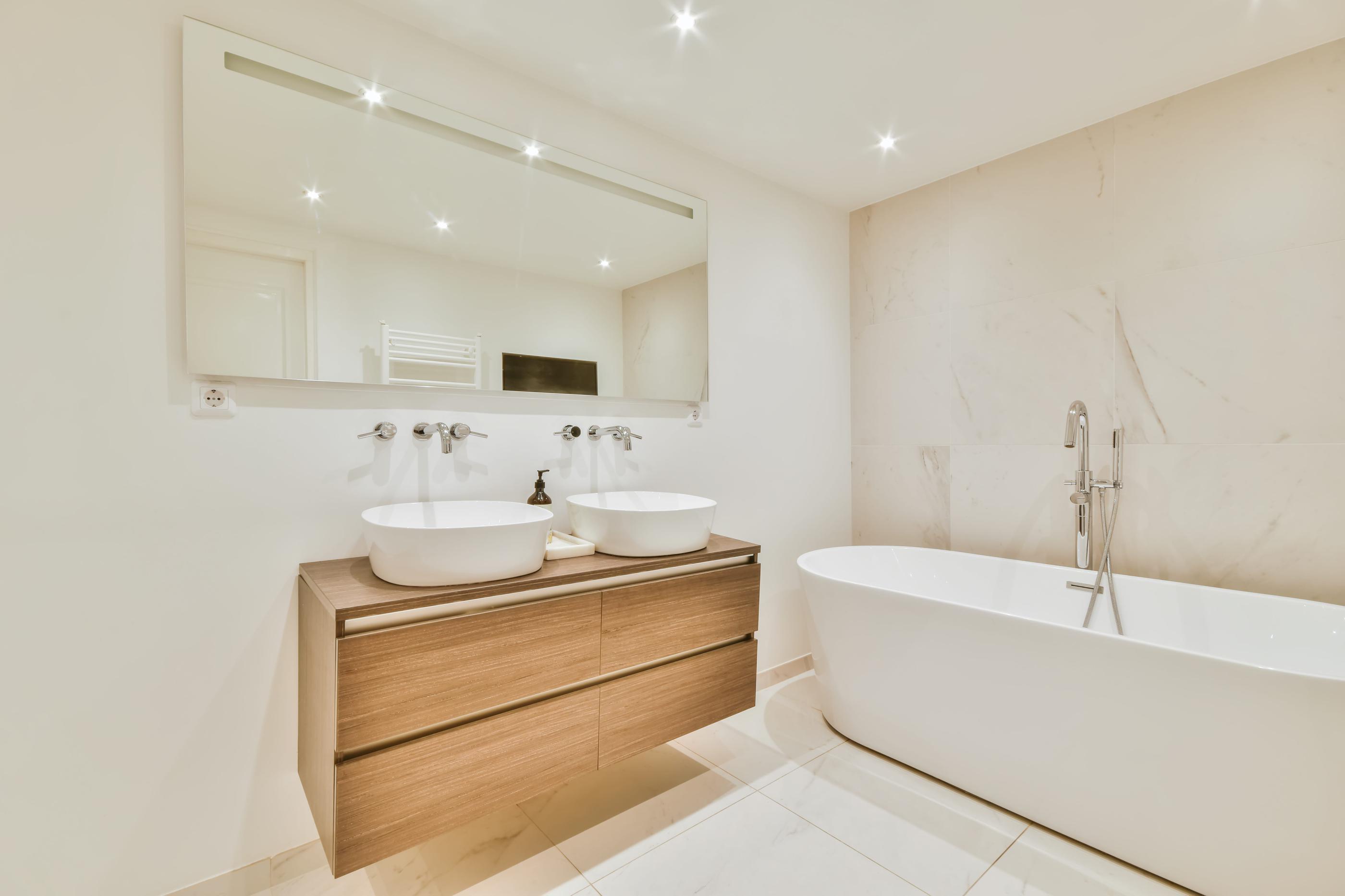
The ultimate in spa-like space savers.
An extra-long, double-deep bathtub doesn’t overwhelm when we maximize the space efficiency of the sink and vanity. One storage-forward floating vanity provides enough countertop for dual vessel sinks.
What are the design considerations for a floating vanity?
Your primary considerations will be size/proportions, plumbing and sink placement, storage space, and last but not least, installation.
Size and proportion.
Just because floating vanities save floor space doesn’t mean they can’t throw off the visual balance of a bathroom. How far they project from the wall and how they serve the bathroom’s layout matter just as much.
Plumbing.
Drain location, water supply, and more may need to be adjusted to accommodate a floating vanity. Maintenance access is another important pre-project consideration.
Storage.
There’s a wider range of storage configurations with modern floating vanities than we see with other standard types. Put function ahead of style and determine ahead of time how much storage you’ll need.
Installation.
Expert installation is a must. Some wall-mounted vanities, especially those with heavier stone countertops, may require some wall demo. A professional will also ensure the vanity is perfectly level, a tricky and important part of the process.
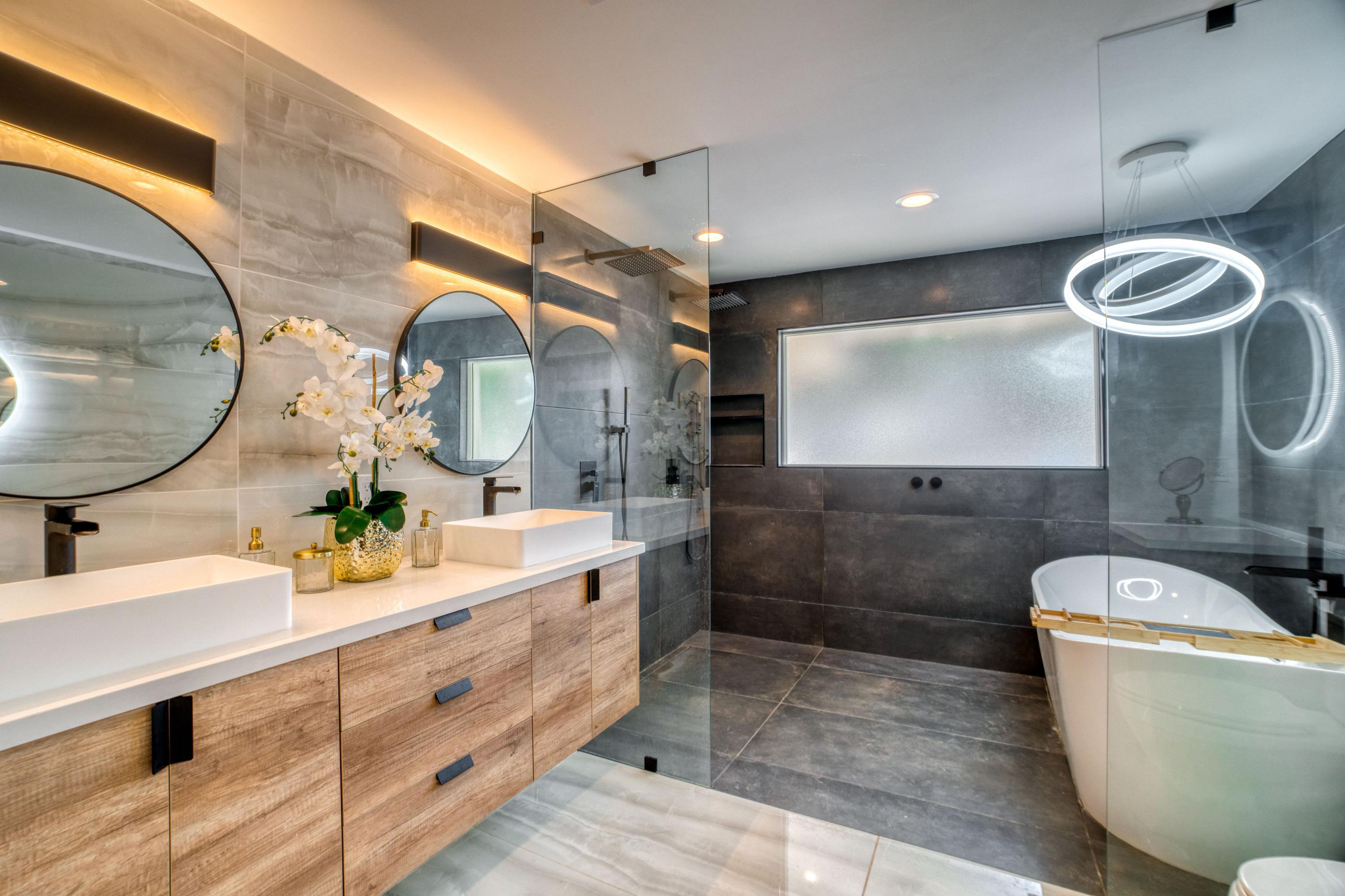
Have more bathroom remodeling questions? The Designery is here to answer them.
A hundred decisions, a thousand options. Not to mention, finding and hiring professionals to help execute every phase of the project.
Streamline your remodel without sacrificing. Your local Designery has the design expertise, materials, and contractor relationships to make it happen.
“We just completed a bathroom renovation, and Win’s services were top-notch! He made selecting materials a breeze, and the visualizations were exactly what I needed to help pull things together. The tile we purchased from The Designery is beautiful and was delivered very fast! We are very happy with the end result!”
–Maria, Designery client
Book your complimentary consultation with a designer today.
Floating Vanity FAQ
Are floating vanities more expensive?
Not necessarily. Floating vanities vary in cost as much as traditional ones. Size, materials, and quality of construction all factor in. However, they can edge out regular vanities due to installation costs and materials.
What’s the best material for a floating vanity?
Wood is the most common material used for floating vanities. Like all cabinets and furniture, these vary greatly in quality and appearance.
What’s the weight capacity of a floating vanity?
When wall-mounted cabinetry is professionally installed, it can hold more weight than you think. The main factors here will be the strength of the wall, the hardware used to install the vanity, and the quality of the vanity itself.
Many prefabricated floating vanities promise a weight capacity of 300-400 pounds. Other smaller models have a limit of 200 pounds. Always inquire with the manufacturer or contractor to make sure you know exactly how much weight your vanity can support.
How high should a floating vanity be installed?
It completely depends on your bathroom’s size and design, as well as the height of its primary user. Moreover, the exact location of your plumbing helps decide what height is best.
The average bathroom vanity is installed at a height between 30 and 36 inches. The lower end of that range is good for family use, while the higher end helps prevent stooping and back strain.
In small bathrooms, a floating vanity that’s taller than it is wide can help save even more space.