If you’re not using your outdoor kitchen at least eight months of the year, you’re not getting your best ROI. And we know why–the temperature, the wind, and the fact that it starts getting dark at 5 pm.
Today’s fall outdoor kitchen ideas stretch your usable time by up to two months. Heat, lighting, and practical protection are the way to go.
The best heating for outdoor kitchens: Propane, table, or infrared?
Keeping your outdoor kitchen fall-ready opens up your seasonal hosting opportunities. Holidays, game days, movie nights, and more are made comfortable by heating that actually warms guests.
Don’t just cast a burning, dry heat within five feet of a flame. Use these specs to see which heat source is best for your open-air kitchen.
|
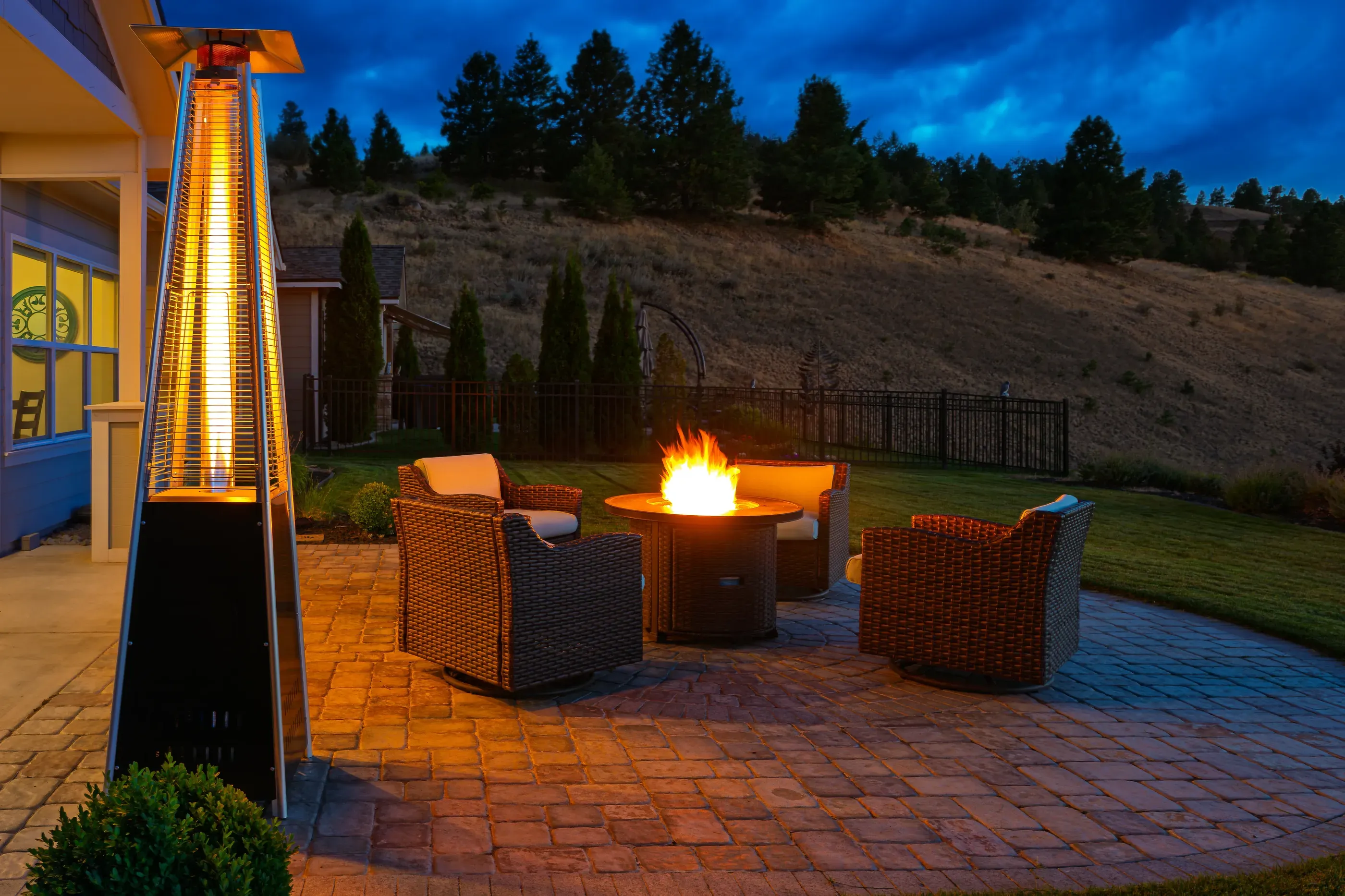
Propane patio heater |
Fire tables |
Infrared heaters |
|
40k-50k BTUs of heat/hour heats an approximate 15 foot diameter. |
Approx. 50k BTUs of heat/hour can warm an average 8 foot radius. |
Electric models have average wattage of 3k and heat 10 feet in line of sight. |
|
Requires around 3 ft of clearance. Can reach 7-8 feet tall. |
Requires about 4 ft of clearance. Usually 24-36” tall. |
Mounts to the exterior wall or ceiling and requires no floorspace. |
|
Portable and requires no gas line. |
Many are not portable and do require a gas line, but propane models exist. |
Most are intended for semi-permanent placement. |
|
Generates exhaust, tank must be swapped out regularly. |
Great aesthetic feature, adds ambiance, lower height protects heat from wind. |
Heats guests, not the air. Not susceptible to wind. Ideal for patios around 200 square feet and lower. |
|
Very susceptible to wind, even a strong breeze can carry the warm air away. |
More expensive and less warming than real fire pits and fireplaces. |
Line-of-sight heat only. If you cannot see it, it isn’t warming you. |
Weatherproofing that works: Covers, cabinets, & screens
You won’t find toppled tables, rusty grills, or warped wood among any of our fall outdoor kitchen ideas. Here’s what you need for the time between full-swing summer and total outdoor kitchen winterization.
The right grill cover to protect your investment.
An effective grill cover begins with heavy-duty polyester with a minimum denier of 600; the max 1,200 denier is preferred for harsher climates. Look for waterproof coatings on the exterior and a backing that further prevents moisture from seeping in.
Speaking of moisture, ensure the cover is vented. Getting a good fit without ventilation means pulling the cover off the grill for a big reveal: mold.
Weatherproof cabinets built for the outdoors.
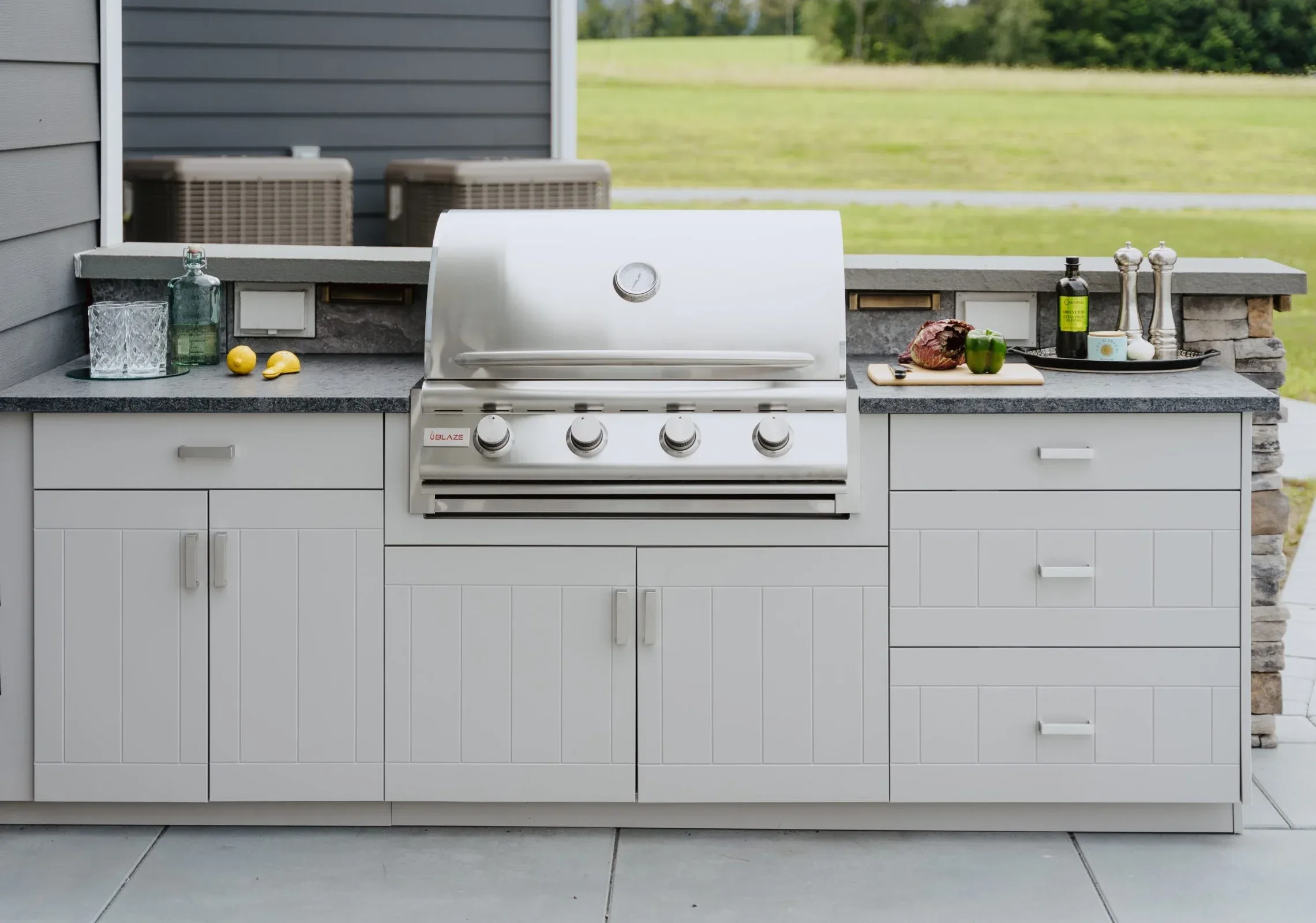
Outdoor-rated HDPE cabinets resist mold, moisture, and UV rays. Quality cabinetry will protect appliances, tanks, and all supplies. This is the most durable, attractive option for exterior kitchens. They simplify getting the right layout and keep the entire area organized.
If you’re tempted to choose concrete, think about cracks and stains. HDPE will not crack or stain. If your area heats and freezes throughout the year, or it’s a high-traffic kitchen, concrete will present some maintenance and repair issues.
Optional: Windscreens to beat off the elements.
Gusts of wind put a damper on any outdoor gathering. Want to maximize what you get from your outdoor heat source and enjoy uninterrupted grilling? Invest in a six-foot windscreen. It’ll reduce wind chill in the immediate area (by up to 15 degrees!) and provide a decent barrier during light to moderate weather events.
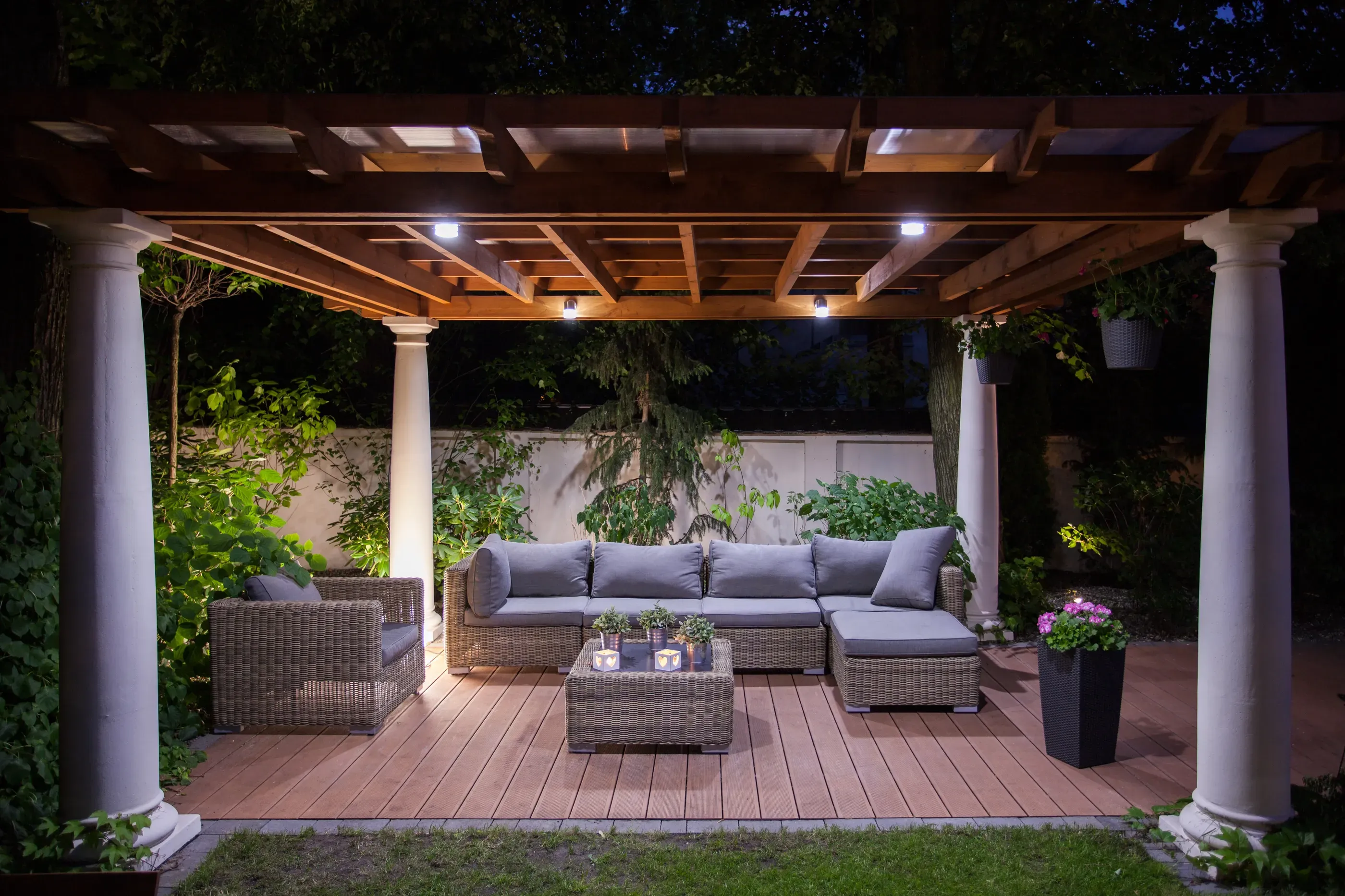
Ambient vs. task lighting for sooner sunsets
The sun is setting hours earlier. Your backyard oasis’s string lights and lanterns won’t compensate for this. Keep them around for mood, but consider adding these for a safe, comfortable layered lighting strategy:
-
LED strips at bar counters and backsplashes.
-
Grill-mounted lights for around cook and prep zones.
-
Motion sensor lights around hazardous areas like steps.
-
Pergola/patio downlights for overall visibility
Outdoor kitchen winterization: What to do before the first freeze
There’s a whole checklist of outdoor kitchen maintenance tasks, but here are the non-negotiables. Securing the kitchen in the months between use makes it possible to reopen as soon as the mood strikes.
1. Water
Shut down the supply and drain the lines. You can also clear out the P-trap and use antifreeze if you’re in a colder area.
2. Electric
Unplug and cover any refrigeration, as well as TVs, speakers, and any screens. Even if the product says it’s temperature-resistant, super-cold weather can hit batteries hard.
3. Surfaces
If you have a natural stone countertop, seal and cover it. Any other areas to be sealed or re-grouted can be addressed now, too.
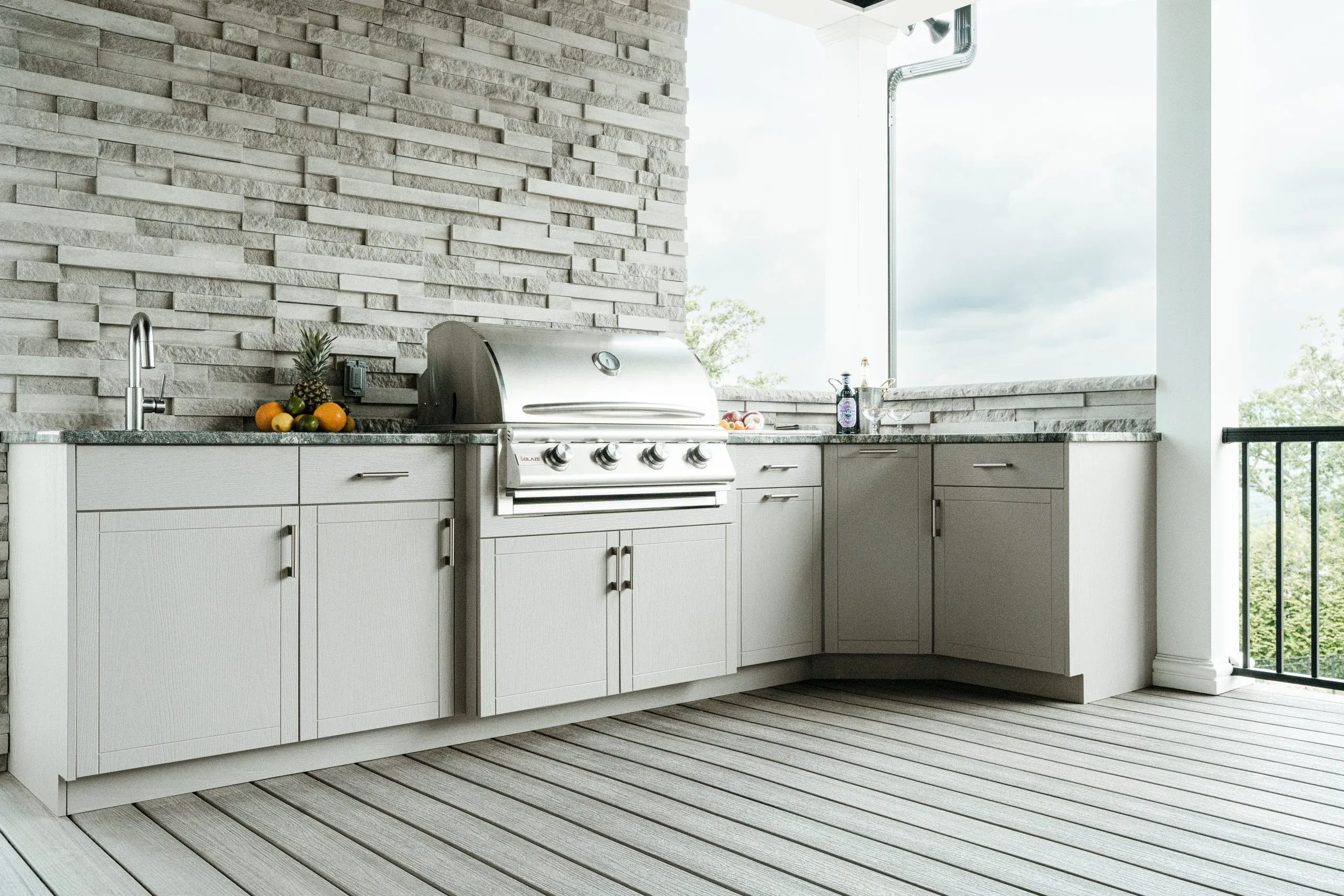
Update your outdoor kitchen with professional designers
What if you had a local source with special expertise in outdoor kitchens? If you’re near a Designery, you do. Outdoor kitchens aren’t just an “extra thing” we’re willing to take on. Get an in-person look at weatherproof cabinetry, premier countertops, and more features that support an exceptional open-air lifestyle.
"What really stands out is how attentive, thoughtful, and professional they are throughout the entire process. Their showroom is beautiful, their communication is excellent, and they make what can feel like an overwhelming remodel process feel exciting and manageable.”
Randi, The Designery client
Visit our showroom or book a free consultation with a pro today.