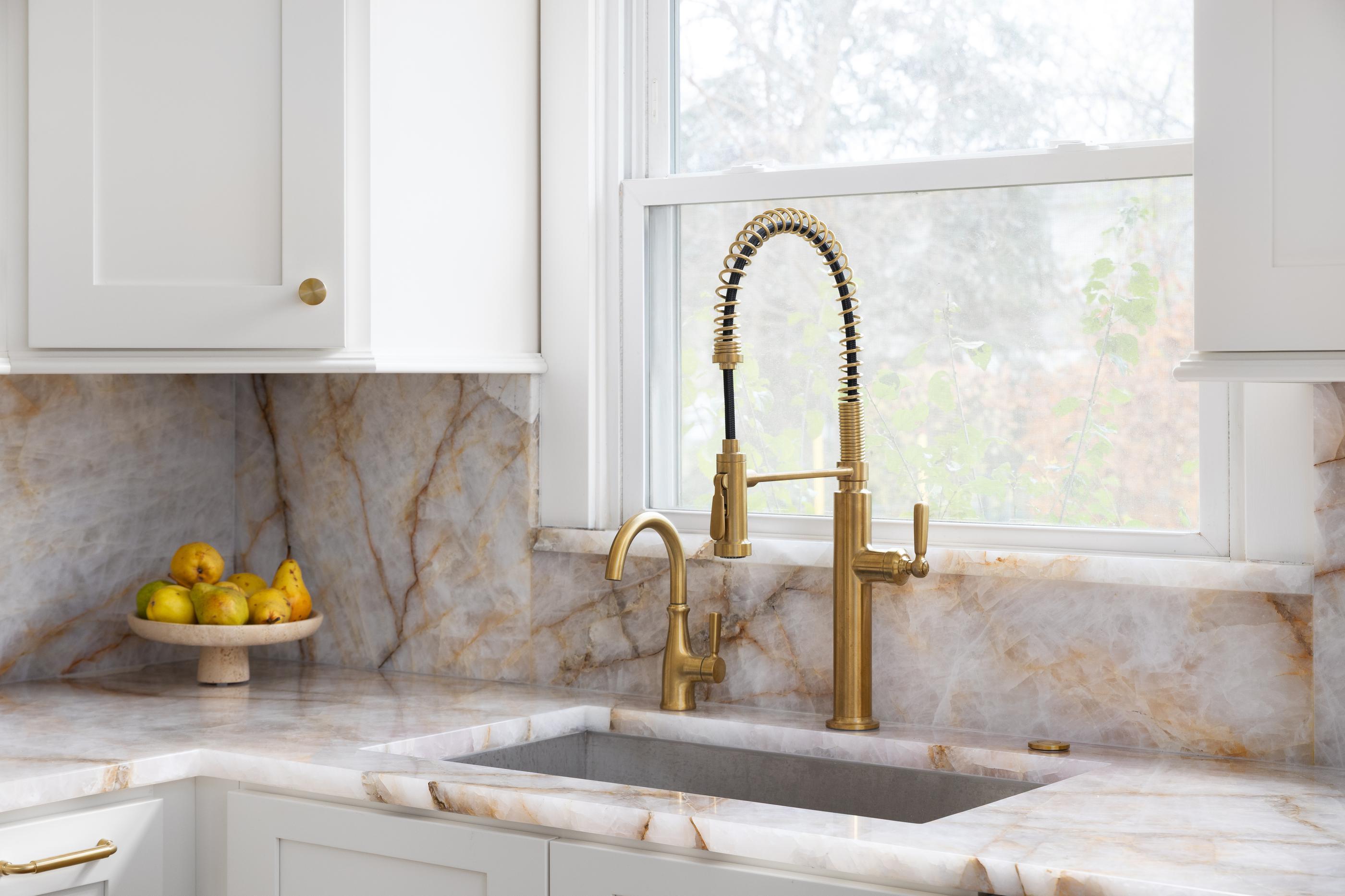
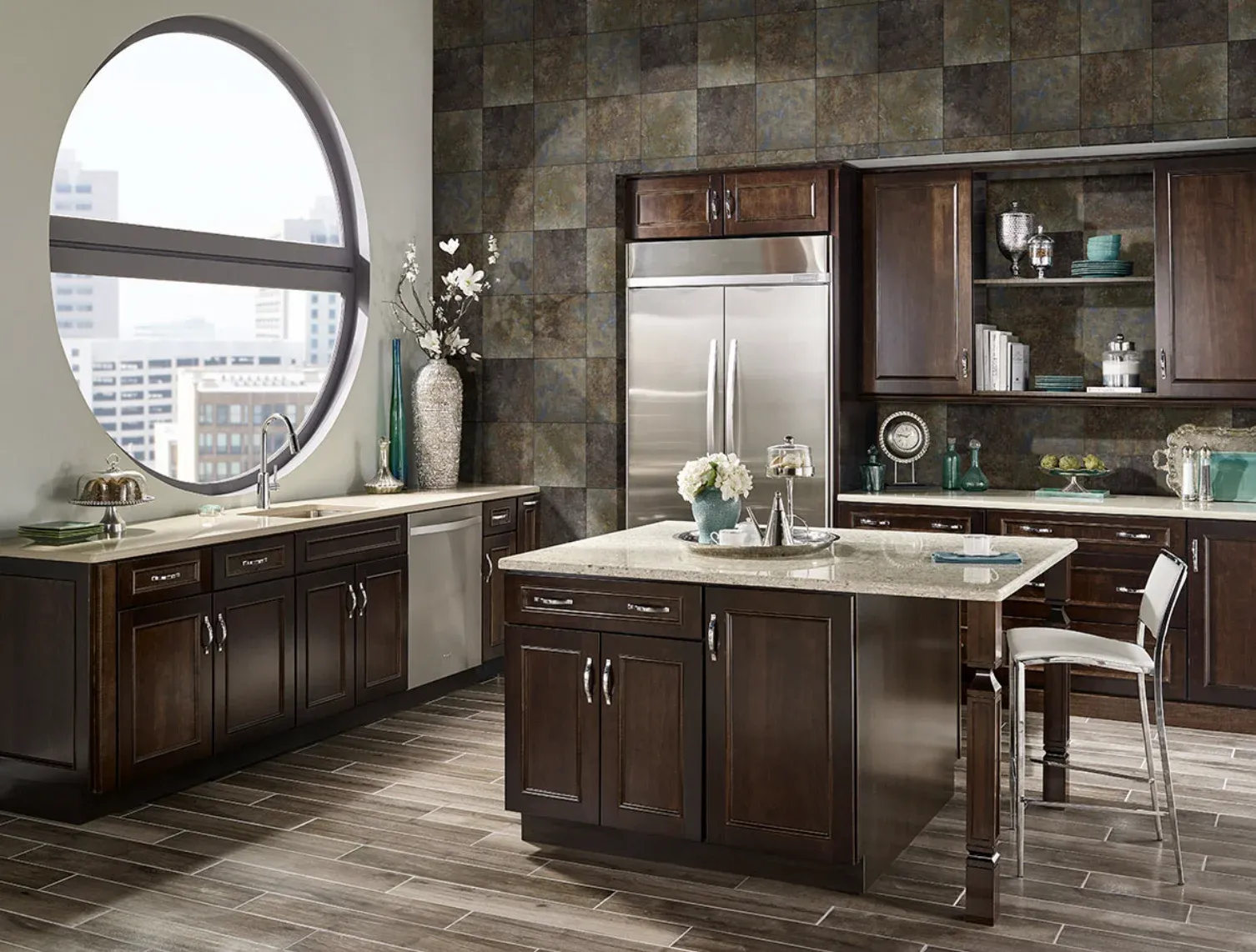
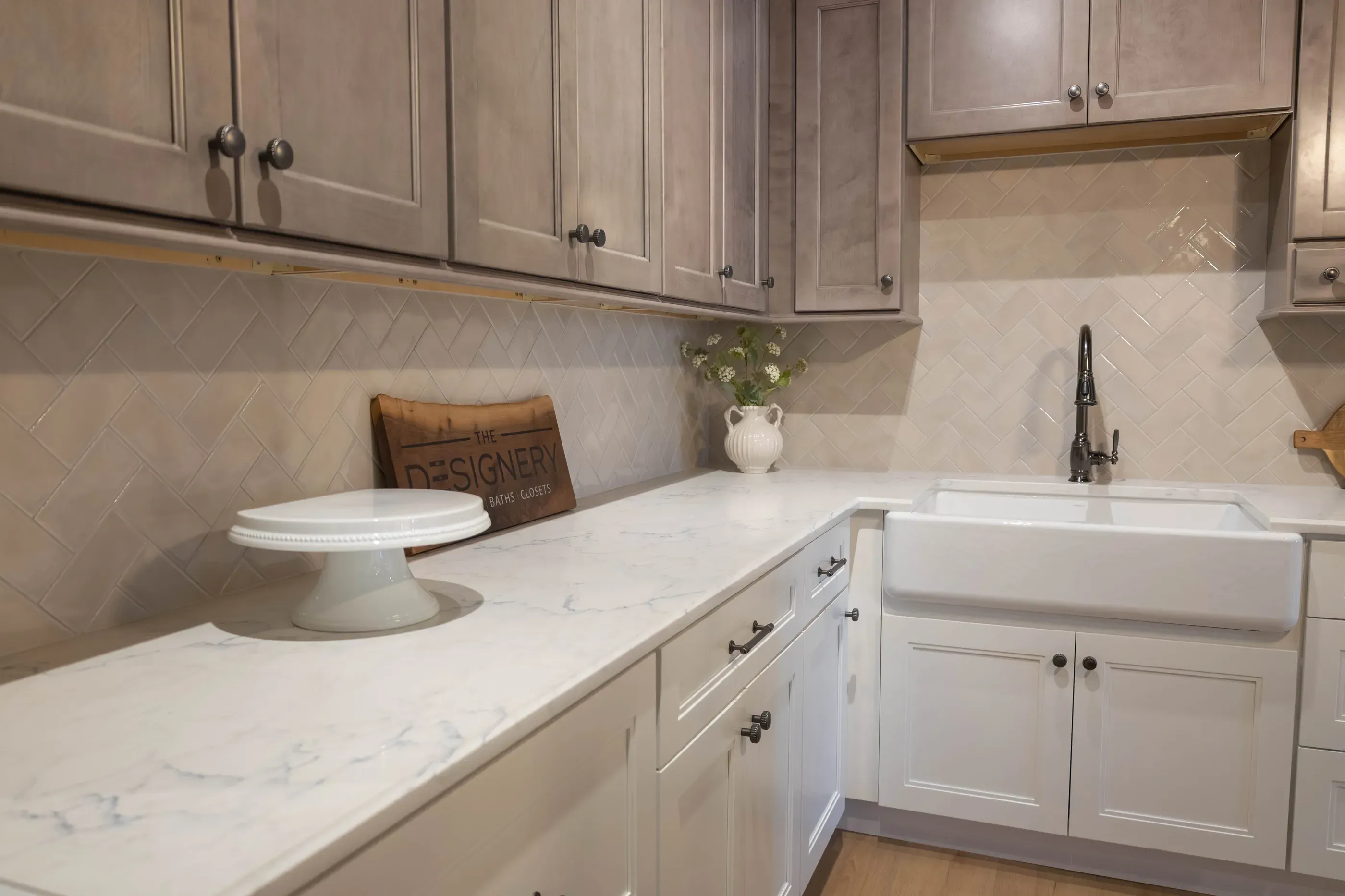
The difference between natural stone and engineered stone is that one is mined straight from the earth, and the other is man-made. How does this make a difference when it comes to bathroom vanities?
If you’ve been eyeing a rare slab of natural stone for your bathroom countertop, keep reading. There are some special considerations when using natural materials in a bathroom.
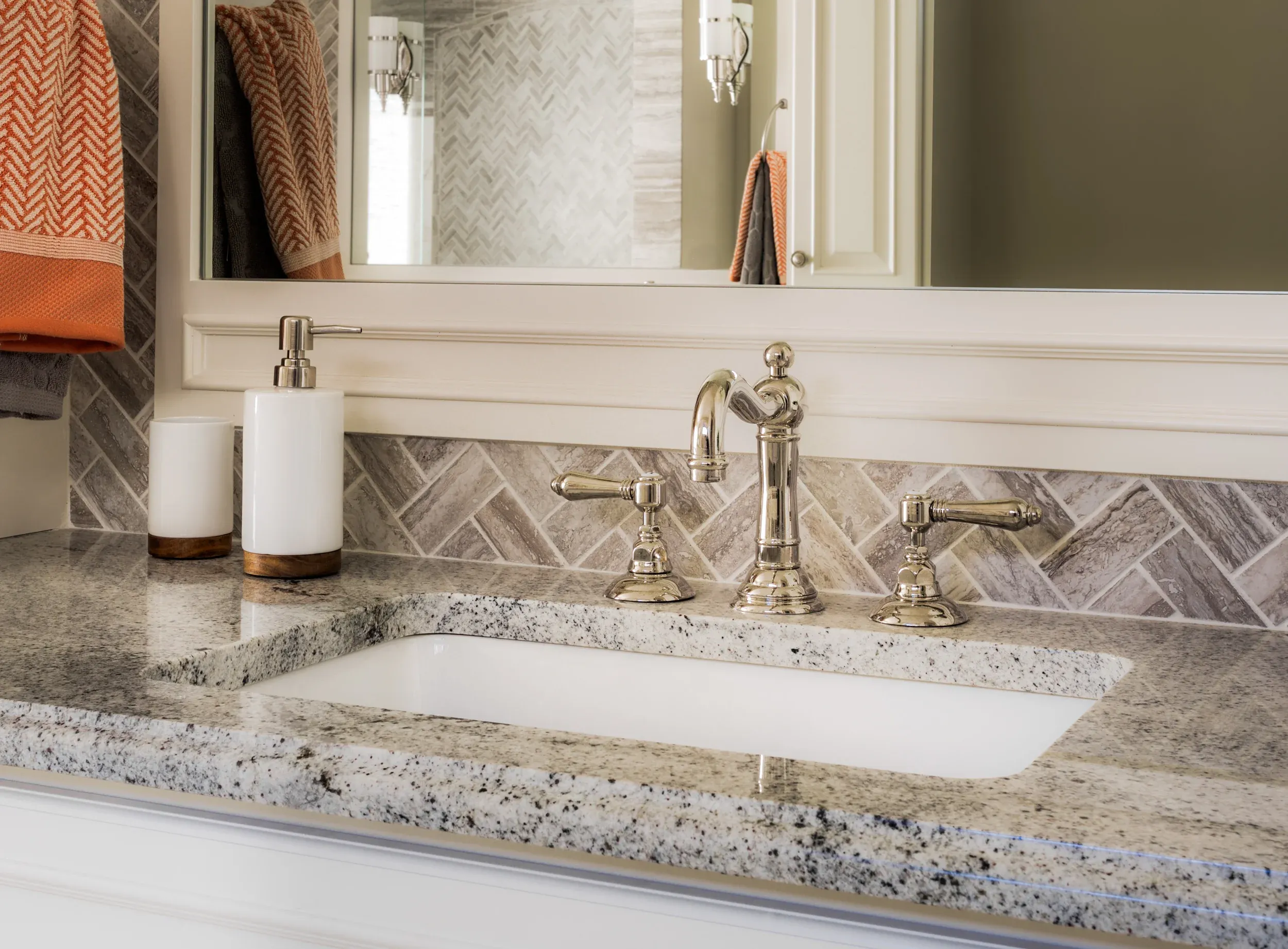
The biggest difference between natural stone and engineered stone for bathroom vanities
The biggest difference is what each countertop material is exposed to, and how far we routinely go in addressing it.
In the kitchen, we’re wiping up a little water and a smudge of pasta sauce. We take care to lay down a trivet for hot pans. Many natural and engineered stones alike tolerate this beautifully for decades.
Bathrooms involve greater, sustained exposure to water and humidity. We use more disinfecting cleansers. Toothpaste, hand soap, and makeup drip and smudge onto the stone. We rarely have a trivet handy for our heated styling tools, which frequently tip over.
In other words, kitchen countertops become someone’s pride and joy. After all, they’re the bigger investment. The bathroom is exposed to different circumstances with less consideration.
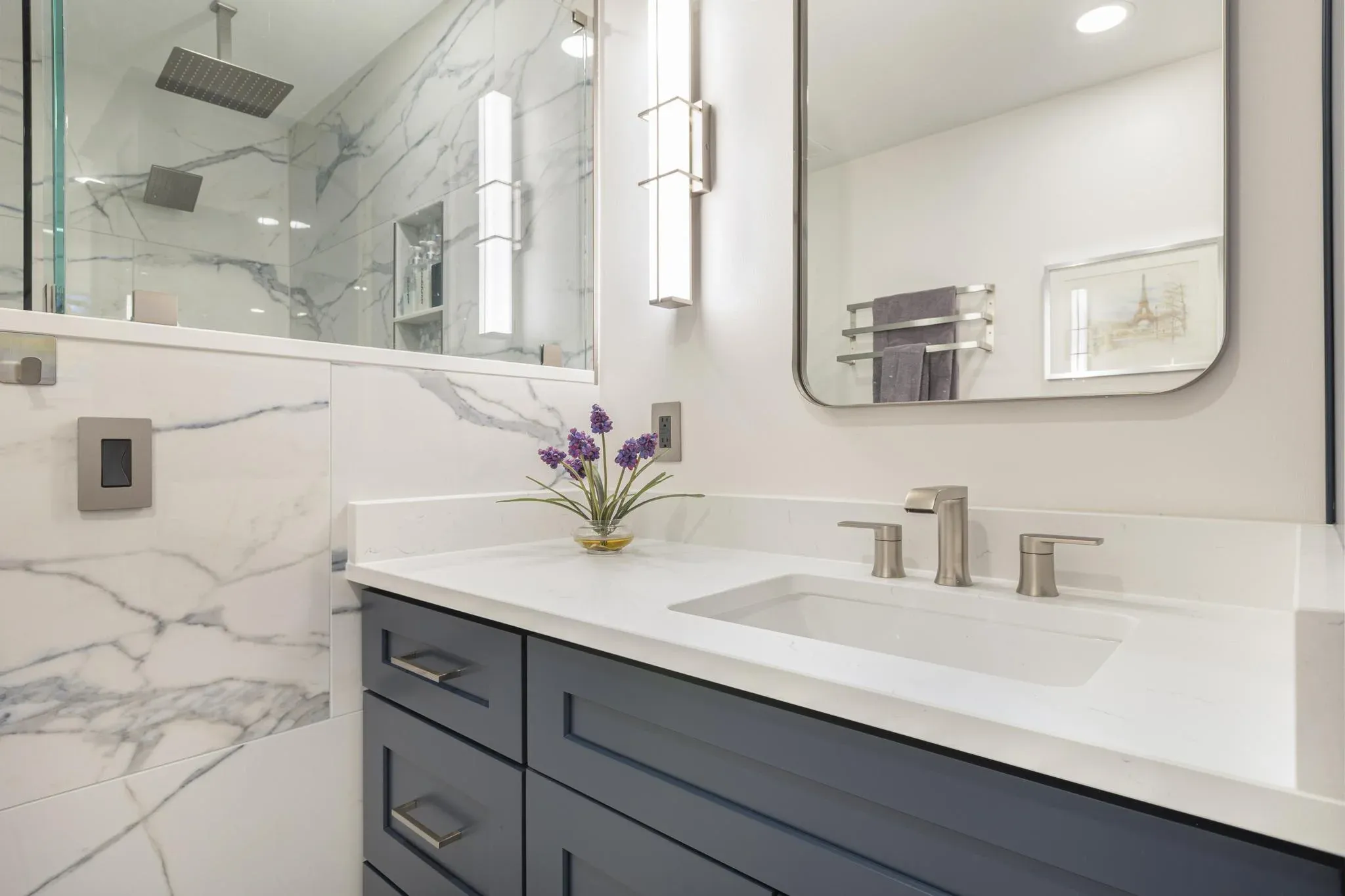
What’s the best stone for a bathroom vanity?
The best stone for a bathroom vanity won’t etch from water exposure, stands up to heat, and is easy to clean. It should also match your design preferences and budget.
Only choose a natural stone if you plan on maintaining it with re-sealing. An engineered stone like quartz is nearly foolproof in every regard.
Natural vs. engineered stone as bathroom countertops
Timeless granite, or resilient quartz? The choice is ultimately yours, but this side-by-side comparison can help.
Natural stone |
Engineered stone |
|
Natural stone is more porous, meaning it has miniscule holes that soak up liquids. |
Completely non-porous, engineered to be 100% waterproof. |
|
Choices such as granite are highly heat resistant. |
Also heat resistant, but resins in material can scorch at over 300℉. |
|
Moderate stain resistance. Marble cannot tolerate any acidic materials. Granite can eventually be stained by oils. |
Complete stain resistance. Everything from hair dye to toothpaste wipe away. |
|
Unique, one-of-a-kind design in each piece. |
Large range of designs with consistent patterns for total design control. |
|
Needs re-sealing and pH neutral cleansers. Must wipe spills immediately. |
No resealing, clean with soap and water. |
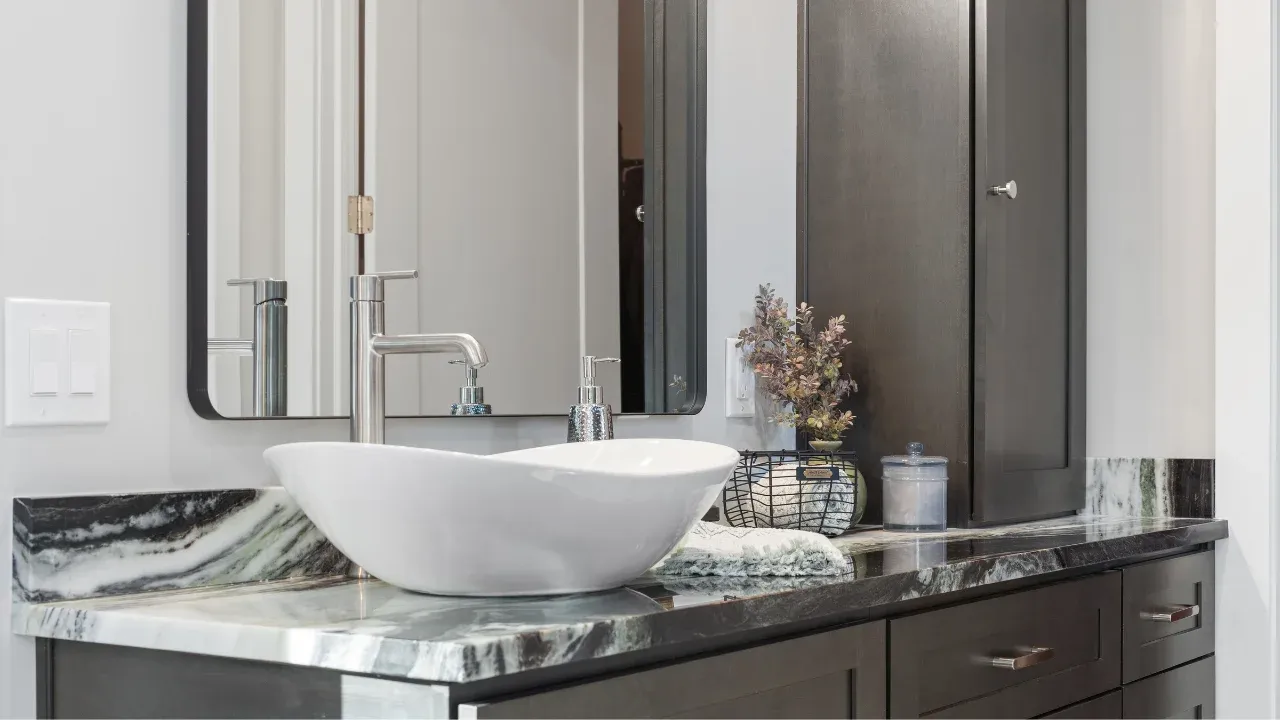
Come see your new countertop in person
The true difference between natural stone and engineered stone is how it fits into your lifestyle. Many like the patina a natural stone gains over time. Others prefer the clean, no-fuss ease of engineered.
In either case, choosing a bathroom countertop isn’t just like choosing one for the kitchen. Let a professional designer guide you through your options. We’ll help you find a quality stone that will fit your routine, not add to it.
“We worked with the team at the Designery to replace counters, backsplash, and sinks in our kitchen and lower-level bathroom. From the initial design process through installation, everything was seamless from start to finish.”
Justin, The Designery client
Book a free consultation with an experienced professional.
Best stone for bathroom vanity FAQ
Is natural or engineered stone cheaper for bathroom vanities?
In many cases, they’re comparable. Basic granite is usually less expensive than quartz. Higher-end natural stones cost more than both. Always consider customizations and installation when considering the price of countertops.
Which stone vanity top is the most durable for kids’ bathrooms?
Avoid natural stones that can sustain expensive damage. Go for quartz or a budget-friendlier option like porcelain. Both withstand stains and spills without sacrificing aesthetic value.
What’s the difference between quartz and quartzite for bathroom vanities?
Quartzite is a natural stone; quartz is engineered. Quartzite is very durable but requires sealing and is more expensive than quartz. Many choose quartz for low maintenance requirements and design control.
Is quartz or marble better for a bathroom vanity?
Quartz is better for cost, durability, and maintenance. The look you buy is the look you get. Marble is a soft natural stone that will etch and develop a patina over time. Each is suited to different bathrooms.
Marble is a good pick for bigger budgets and adult-only baths with lower traffic. Quartz can fit in practically anywhere, but is especially ideal for easy cleaning and precise integration into your design.