One of the most common surprises we see in kitchen remodels has nothing to do with design taste and everything to do with sequencing. Homeowners pick their cabinets first, fall in love with a layout, and then discover their dream refrigerator doesn't fit the opening, or their range needs a different clearance than planned. By that point, changes get expensive and timelines get pushed back.
At The Designery Longmont, we see both the design and construction sides of this problem, and the fix is simple: appliances need to be part of the conversation early, not treated as an afterthought once cabinets are ordered. Here's how to think about sequencing your appliance decisions the right way.
Why Appliances Should Come Early, Not Last
Cabinets are built around appliance dimensions, not the other way around. Every appliance, from your refrigerator to your dishwasher to your range, has a specific footprint, and cabinet openings need to be sized precisely to fit them, including clearances for doors, ventilation, and airflow. If cabinets are ordered before appliances are finalized, you're essentially guessing at dimensions, and guesses don't always hold up once the actual appliance arrives.
This matters even more for integrated appliances. Panel-ready refrigerators and dishwashers, which are designed to be covered with a custom cabinet front matching the rest of your kitchen, need to be selected at the same time as your cabinet order, since the panel dimensions are built specifically for that appliance model.
The Appliances That Matter Most to Lock In Early
Not every appliance needs to be finalized on day one, but a few carry enough impact on your layout that they're worth deciding early in the process.
Your range or cooktop affects more than just its own footprint. Gas, electric, and induction models each have different clearance and venting requirements, and the width you choose determines how much counter space surrounds it. If you're considering a range hood, its size and venting path also depend on the range beneath it, along with your ceiling height and any structural considerations for ductwork.
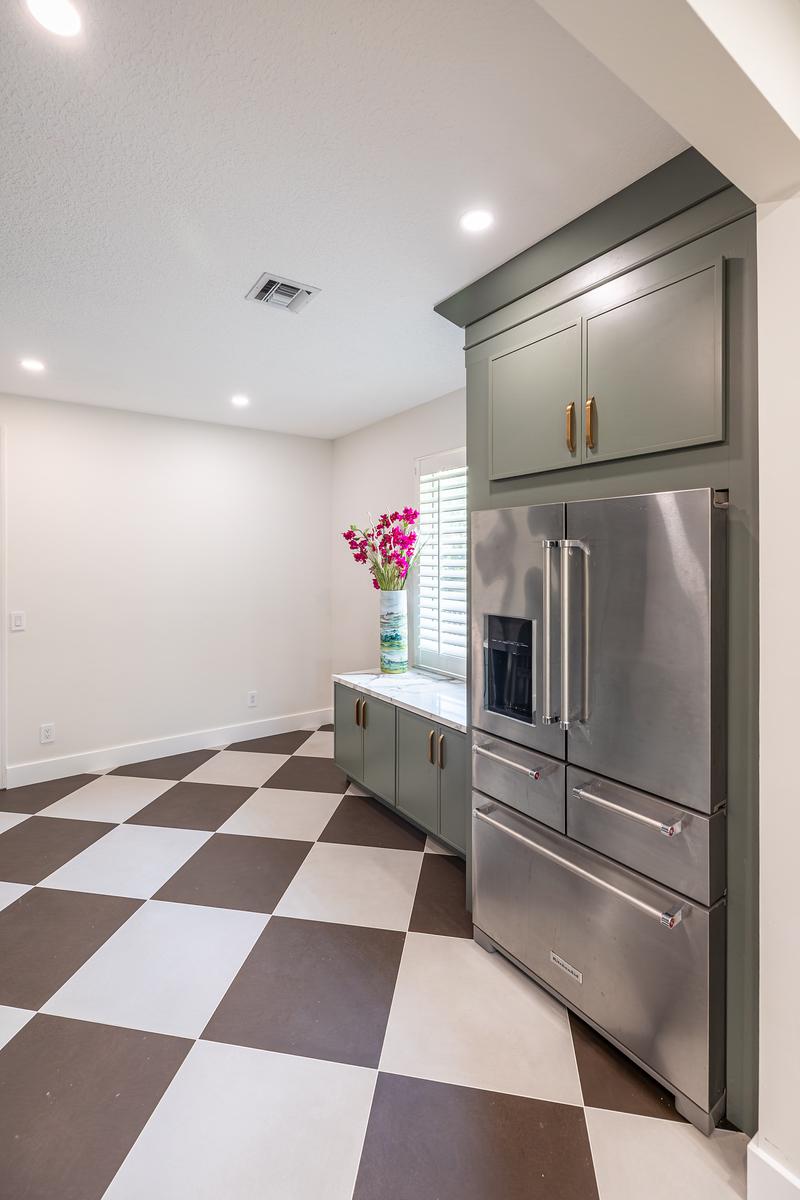
Your refrigerator is another early decision. Counter-depth models sit flush with cabinetry for a built-in look, while standard-depth models protrude further but often offer more interior storage. Panel-ready models require custom cabinet fronts ordered alongside your cabinetry, so this decision can't wait until the end.
Your dishwasher follows a similar logic. Standard dishwashers fit a fairly universal opening, but panel-ready models again require coordinated cabinet fronts, so this needs to be decided before cabinet ordering, not after.
A Simple Sequencing Checklist
A helpful way to think about the order of operations: start by selecting your major appliances, at least in terms of make, model, and dimensions, even if final purchase happens later. Bring those specifications to your design consultation so your designer can confirm exact clearances and cabinet openings. From there, your cabinet layout gets finalized around real dimensions, not assumptions. Only after that should cabinets be ordered.
Following this order prevents the most common and costly mistake we see, which is cabinets built to a "standard size" that doesn't actually match the appliance the homeowner ends up choosing.
Don't Forget the Smaller Appliances
Major appliances get most of the attention, but built-in microwaves, wine refrigerators, warming drawers, and second dishwashers, if you're planning one, all have their own dimensional requirements that affect cabinet layout too. If you know you want any of these included in your kitchen, it's worth bringing them into the early conversation alongside your range, refrigerator, and primary dishwasher, rather than trying to squeeze them in after the main layout is set.
Microwave placement in particular has shifted a lot in recent kitchen designs, with many homeowners opting for a built-in or drawer-style microwave rather than an over-the-range model. This decision affects both cabinet layout and, in some cases, whether a range hood is needed in place of a microwave vent, so it's worth deciding early rather than as a late addition.
Electrical and Plumbing Rough-In Timing
Every appliance decision has a ripple effect on the rough-in work that happens behind the walls before cabinets ever go in. Your range needs the correct gas or electrical connection in the right location. Your refrigerator, especially one with a water and ice dispenser, needs a water line run to the exact spot it will sit. Your dishwasher needs both water supply and drainage positioned correctly.
If appliances aren't finalized before rough-in work happens, electricians and plumbers are working from assumptions rather than confirmed specifications, which increases the risk of a connection ending up in the wrong spot once the actual appliance arrives. Finalizing appliances early avoids this entirely, since rough-in work can be planned around confirmed locations from the start.
Working With Your Designer on This Decision
A good designer won't just ask what appliances you want, they'll help you think through how those choices affect your layout, your budget, and your timeline together. If you're unsure about specific models, that's completely normal at the early stages. What matters most early on is having a general sense of size and type, standard versus panel-ready, gas versus induction, counter-depth versus standard, so your cabinet plan can be built around realistic dimensions rather than best guesses.
Common Mistakes to Avoid
One of the most frequent mistakes is buying an appliance on sale before confirming it fits the planned space. A great deal on a refrigerator isn't a great deal if it doesn't fit the opening or requires reworking cabinetry to accommodate it.
Another common mistake is assuming "standard size" appliances are truly universal. Dimensions vary meaningfully between brands and models, even within categories that are marketed as standard. A few inches of difference can mean the gap between a clean installation and a costly adjustment.
Panel-ready appliances also tend to catch homeowners off guard on cost and lead time. They typically cost more than standard finishes and can take longer to order, so factoring that into your budget and timeline early avoids a scramble later in the project.
Why This Is a Design Conversation, Not Just a Shopping Trip
Appliance selection isn't purely about picking a brand you like, it's a design decision that shapes the rest of your kitchen. Clearances, venting, electrical and plumbing rough-ins, and even your overall layout depend on the appliances you choose. This is exactly why we bring appliance selection into the design process early, rather than treating it as a separate errand homeowners handle on their own after cabinets are already ordered.
Let's Get the Sequence Right From the Start
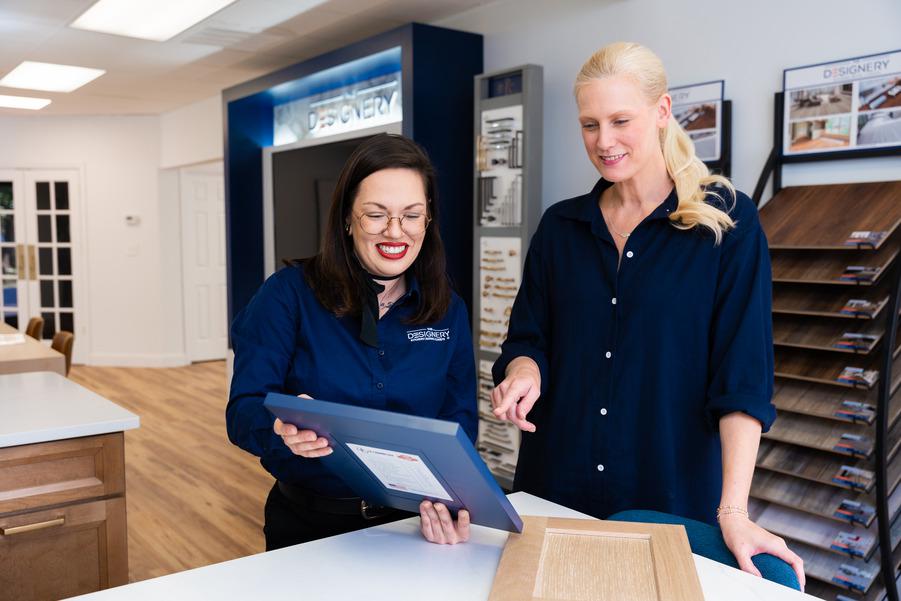
Choosing appliances before your cabinets are finalized saves money, prevents delays, and results in a kitchen that actually fits the way you cook and live. Our team at The Designery Longmont walks through appliance selection as part of your design consultation, so nothing gets ordered out of sequence.
Ready to start your kitchen the right way? Schedule a free consultation with The Designery Longmont.
Frequently Asked Questions about Appliance Selection
1. Should I buy my appliances before or after my cabinets?
Before, or at least select the make, model, and dimensions before your cabinets are ordered. Cabinet openings are built around appliance dimensions, so finalizing appliances first prevents costly adjustments later.
2. What's a panel-ready appliance, and why does it affect my cabinet order?
A panel-ready appliance is designed to be covered with a custom cabinet front matching your kitchen's finish. Since the panel is built specifically for that appliance model, it needs to be selected at the same time as your cabinetry.
3. Are appliance dimensions really that different between brands?
Yes. Even within categories marketed as "standard size," dimensions can vary by a few inches between brands and models, which is often enough to affect whether an appliance fits a planned cabinet opening.