In Longmont and the broader Boulder County area, most kitchen renovations fall into one of three tiers: a cosmetic refresh runs $25,000–$45,000, a mid-range renovation $50,000–$85,000, and a high-end transformation $90,000–$150,000+. Because construction and material costs across Boulder County trend roughly 8% above national averages, a generic internet estimate won't account for regional labor rates, municipal permitting fees, or Front Range logistics.
For homeowners along the Front Range, the kitchen is the true center of the home — whether you're hosting a gathering after a day hiking the St. Vrain Greenway or preparing a quiet meal with Rabbit Mountain framing your view. At The Designery Longmont, located right on Ken Pratt Blvd, we believe that true investment clarity protects your budget and ensures your design delivers functional value for decades. Here is an analytical breakdown of what it actually costs to remodel a kitchen in the Longmont area.
What Is the Average Cost of a Kitchen Remodel in Boulder County?
Kitchen remodeling costs are determined by three main variables: the square footage of your space, the structural modifications required, and the quality tier of your finishes. In Longmont, home values dictate that a kitchen investment should generally scale between 10% and 15% of your total property value to optimize home equity and avoid over-improving for your neighborhood.
Most regional kitchen renovations fall into one of three distinct pricing tiers:
1. The Cosmetic Refresh ($25,000 – $45,000)
This tier is designed for kitchens with functional layouts and structurally sound infrastructure that need updated finishes rather than significant reconfiguration.
What's Included: Retaining the existing layout while replacing outdated finishes with more contemporary materials. Cabinetry at this level often consists of stock or semi-custom options, including standardized RTA (Ready-to-Assemble) cabinets shipped flat-packed and assembled on-site. These products can substantially reduce material and labor costs compared to fully custom cabinetry. Homeowners should be aware that lower-cost cabinet lines often achieve their pricing through lighter-duty box construction, thinner side panels and backs, and more basic hardware systems. Countertop upgrades typically include entry-level quartz or granite, standard ceramic or porcelain tile backsplashes, updated fixtures, and appliance replacements that do not require major electrical, plumbing, or gas-line modifications.
Best For: Homeowners seeking the greatest visual impact per dollar, preparing a property for resale within the next several years, or renovating within a fixed budget while maintaining the existing kitchen footprint.
2. The Mid-Range Renovation ($50,000 – $85,000)
The most common project scope for Longmont families, this investment tier fundamentally upgrades the room's livability, storage efficiency, and long-term durability.
What's Included: Full demolition of old materials; installation of high-quality semi-custom cabinetry featuring smart interior storage organization; mid-to-high-tier engineered quartz countertops; custom porcelain or glass tile backsplashes; updated luxury vinyl plank (LVP) or engineered hardwood flooring; and a complete mid-tier appliance package. Minor footprint shifts — such as widening an opening or slightly relocating a plumbing stack — are often absorbed here.
Best For: Growing families looking for personalized styling, exceptional lifespan, and a reliable return on investment hovering around 75% to 85% in regional resale value.
3. The High-End Transformation ($90,000 – $150,000+)
A complete redesign tailored to open-concept architectural layouts or luxury properties in areas like Somerset or exclusive Boulder County estates.
What's Included: Complete structural space reconfiguration (including load-bearing wall removal to establish open-concept living); fully custom cabinetry built with premium finishes and exotic woods; premium natural stone slabs (like quartzite or high-grade marble); professional-grade appliance suites (such as Sub-Zero or Wolf); advanced layered LED task and ambient lighting configurations; and high-end plumbing fixtures.
Best For: Homeowners seeking deep personal alignment with their space, uncompromised material performance, and long-term estate enjoyment.
A Note on Moving Utilities
Regardless of which tier your project falls into, moving major utility anchors — the main sink drain line, dishwasher electrical connections, or a dedicated gas line for a range — can add $3,000 to $7,000 per fixture to your budget. This is worth factoring in early if your design requires relocating the sink, range, or dishwasher.
How Do Semi-Custom vs. Fully Custom Cabinets Impact Your Kitchen Budget?
Cabinetry is the single largest line item in any kitchen renovation, routinely consuming 30% to 40% of the total remodeling budget. Because cabinetry sets the structural blueprint and visual tone for the entire room, understanding the financial and practical differences between semi-custom and fully custom options is essential.
Semi-Custom Cabinetry: The Sweet Spot of Value
Semi-custom cabinets are built to order using established, standardized box sizing (typically in 3-inch increments) but offer a vast selection of door styles, modifications, and finish choices.
Estimated Cost Range: $15,000–$38,000 for an average-sized kitchen
Customization Options: Preset widths, over 50 standard colors, and top-tier factory finishes
At The Designery Longmont, our national supply chain partnerships allow us to provide semi-custom cabinets with premium construction elements like all-plywood boxes and soft-close dovetail drawers — achieving a tailored, designer appearance while keeping costs manageable.
Fully Custom Cabinetry: Uncompromised Spatial Tailoring
Fully custom cabinetry removes all manufacturing constraints. If your kitchen features non-standard ceiling heights, historical quirks common in Old Town Longmont homes, or if you require a highly specific wood species or custom-matched paint color, custom cabinets are the solution.
Estimated Cost Range: $30,000–$60,000+
Customization Options: Unlimited sizing to the exact millimeter, raw premium wood selections, and bespoke architectural details
These cabinets eliminate the need for filler strips or standard sizing workarounds.
Pro Tip: Many homeowners use a hybrid approach — leveraging high-quality semi-custom lines for 90% of the kitchen and integrating fully custom elements exclusively for a statement island or focal-point hood. This maximizes visual impact while keeping overall costs in check.
What Kitchen Layout Gives You the Best Return on Investment?
The L-Shaped Layout with a Center Island
From both an ergonomics and financial return perspective, the L-shaped layout with an open center island consistently outperforms alternatives. Compared to a galley (which limits circulation to a single corridor) or a U-shape (which can feel enclosed in smaller footprints), the L-shape with an island maximizes the classic "Kitchen Work Triangle" — the fluid distance between your refrigerator, sink, and cooking surface — while seamlessly connecting the kitchen to the dining or living area.
An island adds continuous countertop workspace, deep drawer storage, and an informal seating zone. Because this configuration fits the open-concept lifestyle desired by modern home buyers in Northern Colorado, it consistently yields the strongest equity return.
Maximizing Value Without Moving Walls
If budget efficiency is the priority, preserving your kitchen's existing structural footprint and concentrating investment on premium materials delivers the best dollar-for-dollar return.
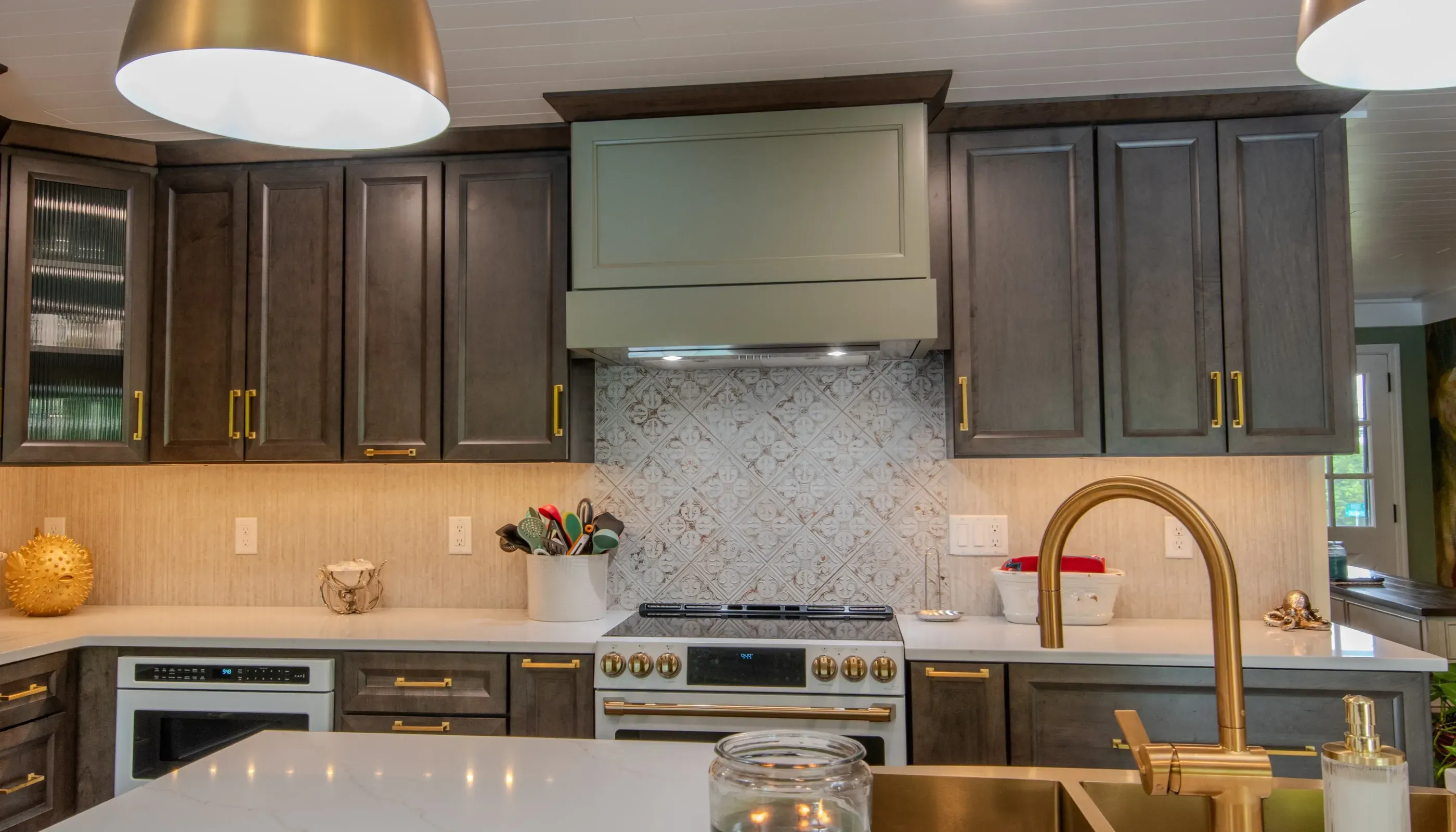
By keeping plumbing and major appliances in their original locations, you bypass complex subfloor trenching or wall restructuring entirely — and preserving your existing utility locations alone can save $10,000 or more compared to a layout that requires re-routing plumbing and electrical lines. Those saved dollars can then go directly into upgrades that deliver both functional and visual impact. Tailored interior accessories — pull-out drawer organizers, custom spice pull-outs, deep pot drawers, and soft-close inserts — transform everyday usability in ways that a layout change alone rarely achieves. Layered lighting design adds another dimension: under-cabinet task lighting eliminates shadows on work surfaces, while pendant lighting over an island and ambient recessed fixtures create depth and visual warmth that elevate the entire space. These are investments that contribute tangible, visible value without touching a single load-bearing wall.
Frequently Asked Questions
How much do new kitchen countertops cost to install in Longmont?
For a standard kitchen with roughly 40 square feet of countertop surface, total fabrication and installation costs generally range from $8,000 to $15,000 for high-quality engineered quartz or natural granite. Premium options like exotic natural quartzite or custom-mitered thick-slab profiles can exceed $12,000 to $20,000.
Are permit fees included in the initial kitchen design estimate?
Initial material-only or standard design estimates typically exclude municipal permit costs. When moving into the formal contract phase for full-scale installation, professional firms will explicitly itemize the city or county building permit fees — which generally scale between $800 and $2,500 in Longmont based on the total valuation of the mechanical, electrical, and structural work.
Why is construction labor more expensive across Boulder County?
Boulder County and the northern Front Range corridor maintain robust regional licensing frameworks, strict green building compliance mandates, and high demand for specialized sub-contractors. These local factors push average skilled labor rates to approximately $75 to $250 per hour, making it critical to hire licensed, insured, and thoroughly vetted local installation teams to avoid costly regulatory or structural mistakes.