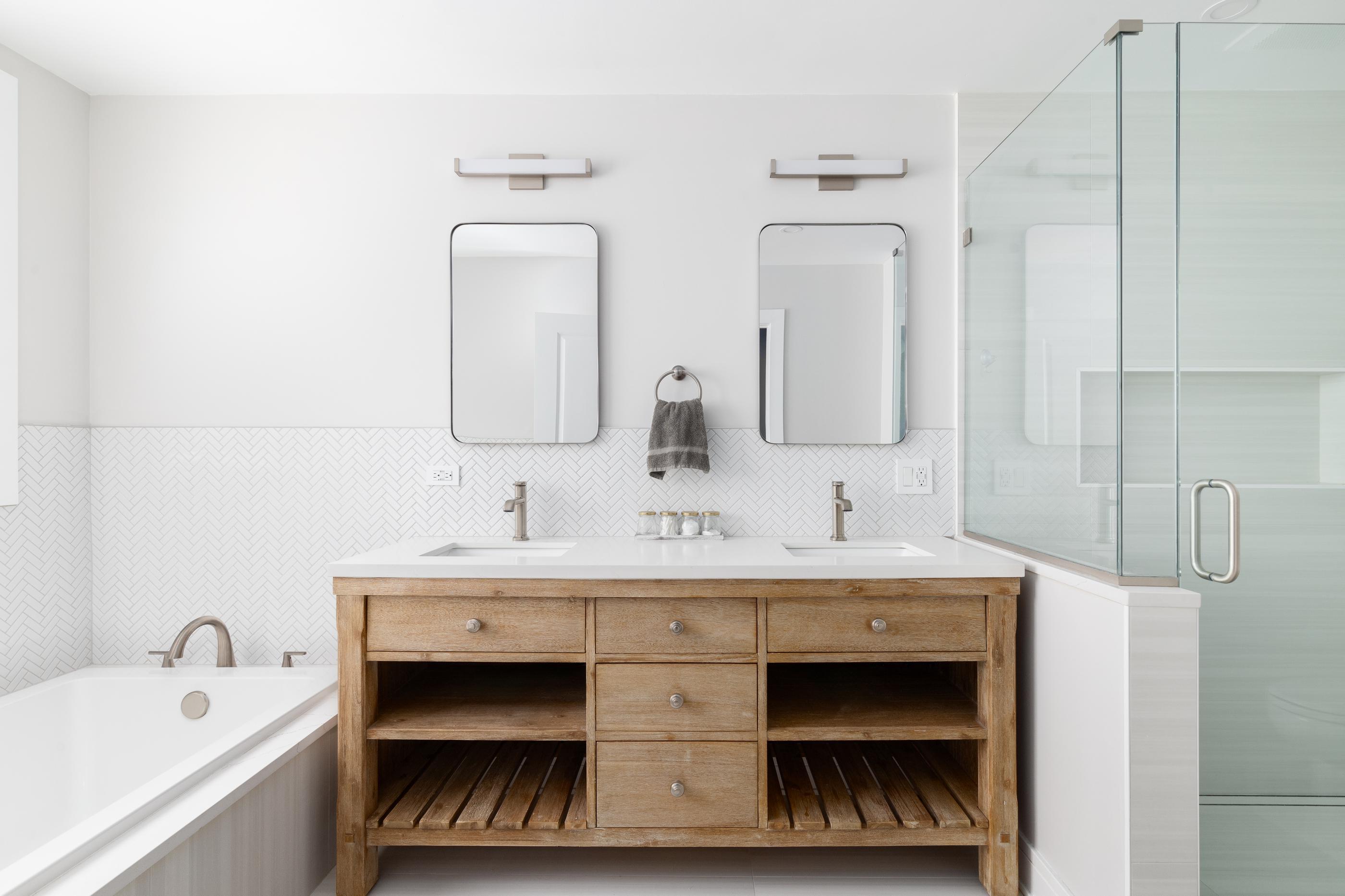
A custom bathroom vanity is built to your bathroom's exact dimensions, storage needs, and design style — instead of the fixed sizes and finishes you get with a stock vanity off the shelf. Custom makes the most sense when your bathroom has an unusual footprint, you want a specific wood species or finish, or you're designing a primary bathroom meant to feel like a genuine furniture piece rather than a builder-grade fixture. And contrary to what "custom" might suggest, it doesn't have to mean a blank-check budget — it means building the right vanity for your space instead of settling for whatever happens to fit.
At The Designery Longmont, this is one of the most design-driven decisions in any bathroom remodel, and it's worth understanding your options before you start picking finishes.
What's the Difference Between Custom, Semi-Custom, and Stock Vanities?
Stock vanities come in standard widths and a limited set of finishes. They're the fastest to source and typically the most budget-friendly, but you're working within someone else's dimensions and design choices.
Semi-custom vanities allow some flexibility — finish, hardware, and drawer configuration — within a set range of base sizes. This is a solid middle ground for homeowners who want more say in the look without the longer lead time of a fully custom build.
Custom vanities are built to your exact specifications: width, depth, height, wood species, finish, sink configuration, and interior storage layout are all decided by you rather than chosen from a catalog. This is the right call when a stock size simply doesn't fit your space, or when you want complete control over how the piece looks and functions.
Which Vanity Style Actually Fits Your Bathroom?
Floating (wall-mounted) vanities are mounted directly to the wall, leaving the floor space beneath open — a look that reads as more modern and makes a bathroom feel larger, especially in smaller spaces where visible floor is at a premium. Cleaning is also easier, since there's nothing blocking access to the floor.
Furniture-style vanities are designed to look like a genuine piece of furniture rather than a built-in fixture, often with tapered legs and decorative hardware that matches other furniture in the home. These typically sit at a higher price point than standard cabinet-style vanities, but bring a distinct, high-end look along with real storage capacity.
Double-sink vanities are one of the most requested upgrades in a shared primary bathroom, giving each person their own sink and storage. This works best when the room has enough width to keep the two basins from feeling cramped together — a good designer will help you confirm the room can actually support it before you commit
Is a Floating Vanity the Right Call for a Small Bathroom?
Often, yes. A floating vanity opens up visible floor space and lets light travel further across the room, which makes a compact bathroom feel noticeably larger than the same footprint with a floor-standing vanity. Light-colored finishes amplify the effect further, since they bounce more light around the space than dark, dramatic tones.
One important note: because a floating vanity carries its full weight without cabinet legs for support, it requires professional installation with proper wall reinforcement. This isn't a spot to cut corners — it's a safety and longevity issue, not just an aesthetic one.
What Countertop Material Should You Pair With a Custom Vanity?
The countertop is doing as much visual work as the cabinetry itself, so it's worth matching the material to how you'll actually use the space:
● Quartz is non-porous and low-maintenance — a strong everyday choice for busy bathrooms that see daily use.
● Natural stone, like marble or granite, offers a distinctive, high-end look but needs periodic sealing to stay protected.
● Solid surface or engineered stone options split the difference — solid performance and a refined look without the upkeep natural stone requires.
Undermount or Vessel Sink — Which One Actually Works Better Day to Day?
Undermount sinks sit below the counter's edge, creating a clean, seamless look that also makes wiping counters directly into the sink easier — a small but real convenience in daily use.
Vessel sinks sit on top of the counter as a decorative, statement piece. They make a strong visual impression, but can be slightly less practical for everyday splash cleanup since water tends to pool around the base rather than wipe straight in.
Neither is objectively "better" — it comes down to whether you're prioritizing a showpiece look or day-to-day practicality in that particular bathroom.
How Do You Choose the Right Hardware Finish?
Brushed nickel, matte black, and brushed brass or gold are the most requested finishes right now, and hardware is one of the easiest ways to tie a vanity into the rest of the bathroom's fixtures — faucet, shower trim, and lighting included. If you're unsure, bringing a photo of your existing (or planned) fixtures to your design consultation makes this decision much faster.
What Should You Actually Think Through Before Designing Yours?
● How much storage do you really need? Drawers tend to be more functional day to day than doors with shelving behind them, since you can see everything at a glance instead of digging through a cabinet.
● One sink or two? Double vanities need real width — confirm the room can accommodate two sinks comfortably before committing to the layout.
● Floating or floor-standing? Floating vanities read as more modern and help small bathrooms feel larger; floor-standing vanities offer more storage volume and a more traditional feel.
● Does it connect to the rest of your home? If you've done custom cabinetry in your kitchen, matching wood species or finish in the bathroom vanity creates a more cohesive, considered feel throughout the house — a detail that reads as high-end without requiring a high-end price tag on every single piece.
Where's the Best Place to See These Options in Person?
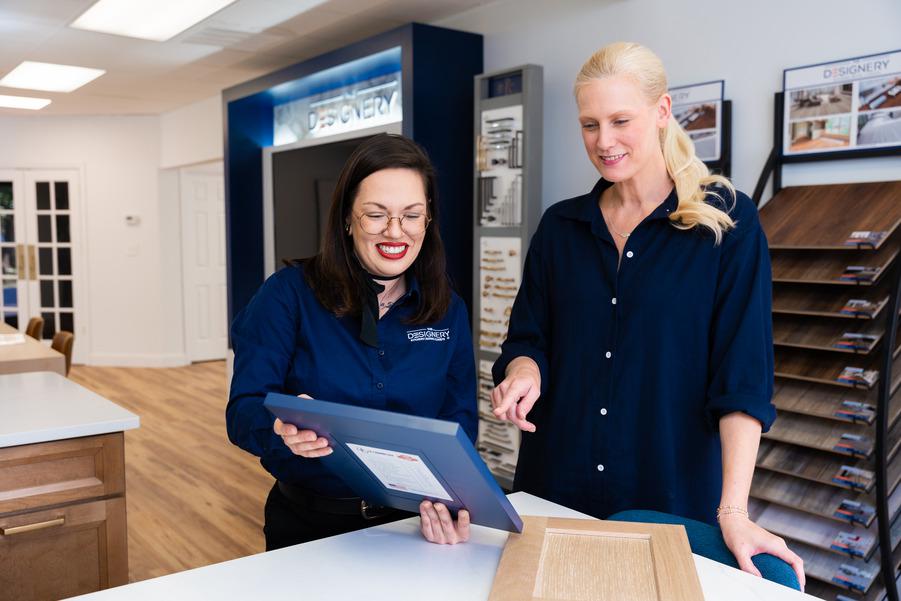
Renderings and online photos can only tell you so much about how a vanity will actually look and feel in your space. At The Designery Longmont, our Longmont showroom lets you see and touch real vanity styles, wood finishes, and countertop pairings side by side — so you can make a confident decision instead of guessing from a screen.