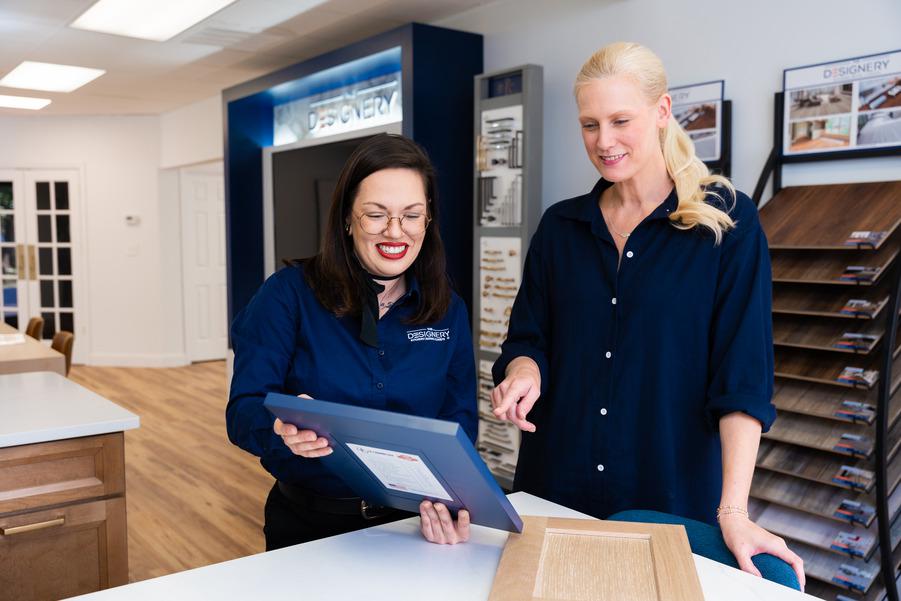
Walk into any kitchen remodel showroom and the conversation almost always starts the same way: door styles, countertop slabs, paint chips. It's easy to get swept up in the big-picture choices. But ask any designer who's finished projects along the Front Range, and they'll tell you the same thing — the details that make a kitchen feel finished are usually the smallest ones on the wall.
Cabinet hardware and interior organizers are the quiet workhorses of a remodel. They're what your hand actually touches every single day, and they're what separates a kitchen that merely looks good from one that lives well. Whether you're channeling a classic Colorado lodge or a clean modern farmhouse, the knobs, pulls, and drawer organizers you choose do double duty — they finish the look, and they protect the investment you just made in your cabinetry.
Why Does Cabinet Hardware Matter So Much in a Remodel?
Hardware is often called the "jewelry" of a kitchen, and that's not just a design cliché — it's doing real structural and practical work, too.
- It ties the room together. Hardware is the visual thread connecting your cabinet finish, your light fixtures, your faucet, and your appliances. Get it right and a room feels intentional. Get it wrong and even beautiful cabinets can feel disjointed.
- It protects your cabinetry. Every time a hand skips the knob and grabs the door edge instead, that's oil, moisture, and wear transferring straight onto your finish. Good hardware takes the hit so your cabinets don't have to.
- It makes daily life easier. Properly scaled, properly placed hardware means doors and heavy drawers open smoothly for everyone in the house — kids, grandparents, anyone in between.
Choose thoughtfully here, and you're not just decorating — you're extending the life of your cabinetry by years.
Knobs, Pulls, or Handles: What's the Actual Difference?
This is one of the most common questions we field in the showroom, and the answer is simpler than it sounds.
A cabinet knob is a single-screw fixture — round, square, oval, or something more sculptural — mounted mainly on doors, where a compact grip point is all you need.
A cabinet pull uses two mounting screws set at a specific "center-to-center" distance, giving you a longer gripping surface. Pulls are the better call for heavy drawers, deep pull-out storage, or tall pantry doors where leverage matters.
So how do you decide which to use where? A few tried-and-true rules of thumb:
- Knobs on doors, pulls on drawers — the classic pairing that creates gentle contrast between upper and lower cabinetry.
- All pulls, everywhere — for a modern kitchen, running horizontal pulls across doors and drawers alike creates one clean, continuous line.
- Cup pulls for farmhouse charm — those half-moon "bin" pulls bring craftsman warmth and a sturdy grip to lower drawers in transitional or farmhouse-style homes.
How Do You Choose a Finish — and Mix Metals Without It Looking Like a Mistake?
Longmont homes run the style gamut, from foothill-view modern builds to century-old bungalows near downtown, and hardware finish is where a lot of that personality shows up.
The finishes we're seeing the most right now:
- Matte black — crisp contrast, fingerprint-resistant, at home in almost any style.
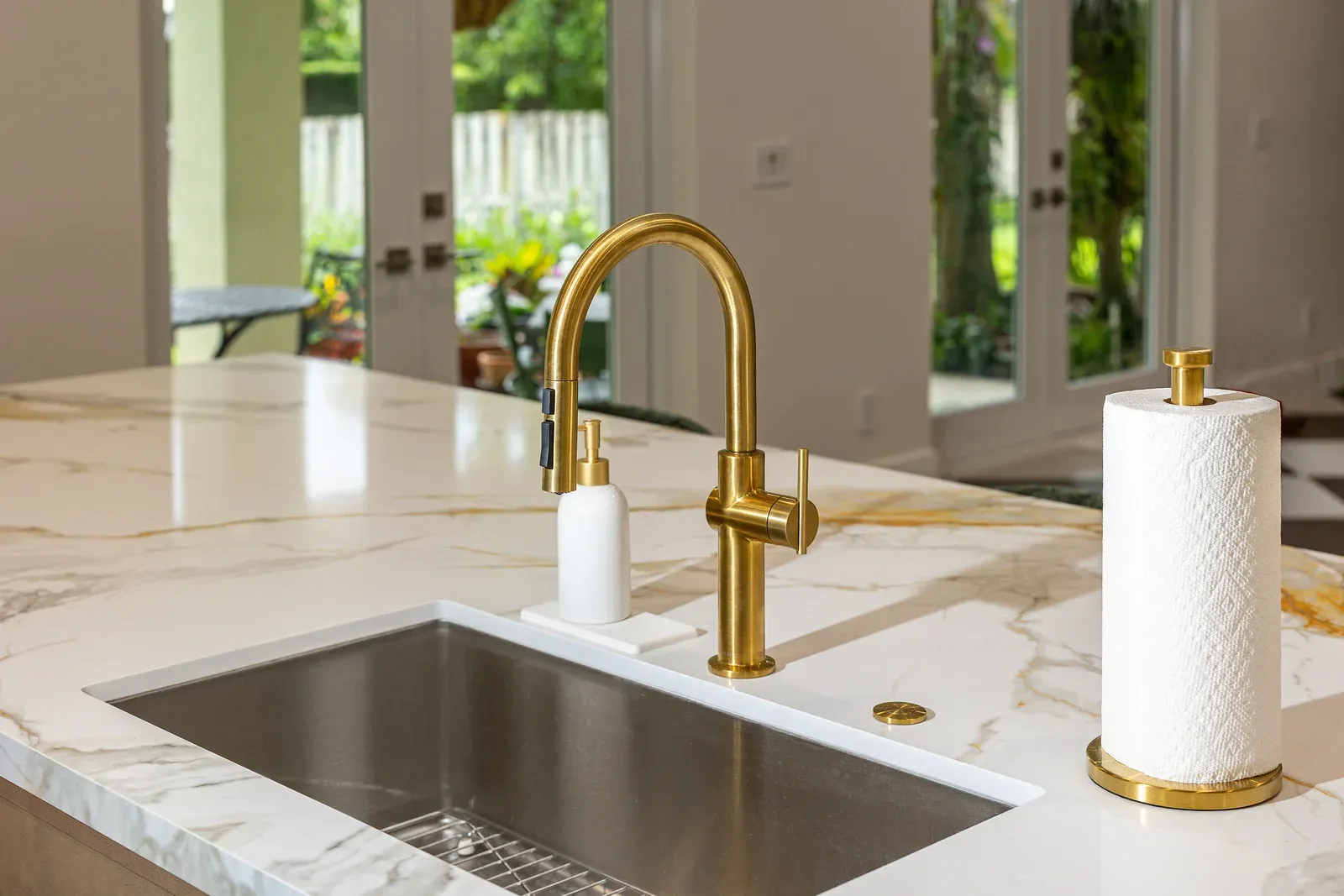
- Brushed brass and warm bronze — a warm, layered richness that pairs beautifully with natural wood and moody paint colors like navy or forest green.
- Satin nickel and stainless — the reliable, timeless choice that blends with just about any appliance suite.
- Polished chrome — bright and reflective, especially well suited to spa-style bathrooms.
Can you mix metals? Absolutely — you don't need everything in the house to match. The trick is proportion, not perfection:
- Pick a dominant finish (say, brushed nickel on your faucet and light fixtures) and let it carry roughly 60–70% of the room's metal tones.
- Layer in one accent finish — matte black or warm brass on cabinet hardware, for instance — to add contrast and interest.
- Keep undertones consistent. Warm metals pair with warm woods and creams; cool metals pair with grays and crisp whites. Undertone consistency is what makes a mixed-metal kitchen feel curated instead of accidental.
What Interior Accessories Actually Make a Kitchen Easier to Live In?
Hardware sets the tone on the outside. What happens inside the cabinet box is what determines whether your kitchen actually functions the way you cook, day to day.
A few upgrades worth prioritizing:
- Soft-close trash and recycling pull-outs — bins stay hidden, floor space stays open, odors stay contained.
- Deep drawer roll-outs — smooth-glide wood or wire trays in base cabinets mean no more kneeling on the floor, digging through the back of a dark cabinet.
- Custom spice and utensil inserts — built directly into drawers near your prep zone, so tools live exactly where you reach for them.
- Blind corner pull-outs and Lazy Susans — the fix for that notoriously wasted corner cabinet, bringing everything forward with a rotation or slide.
- Vertical tray dividers — a dedicated, upright home for baking sheets, cutting boards, and platters that otherwise stack and slide.
These are the upgrades homeowners rarely mention when they first walk into the showroom — and the ones they almost always say they wish they'd added, once the project is done.
Why Longmont Homeowners Choose The Designery Longmont for Hardware & Accessories
Hardware is deceptively hard to shop for online. A finish that reads warm and rich on a screen can look flat or brassy in your actual kitchen light. Weight, texture, and scale are things you really have to hold in your hand.
That's the case for visiting us in person. At our showroom, you'll find:
- Tactile finish displays — real hardware, shown against real cabinet doors, countertops, and lighting, so you're never guessing.
- Design consultants who know the details — scale, center-to-center spacing, and interior organization are all things our team walks you through, not leaves you to figure out alone.
- Turnkey support — from your first hardware selection through precise measurement and professional installation, we're with you at every stage.
Visit our showroom: The Designery Longmont 1350 Ken Pratt Blvd, Ste 4, Longmont, CO 80501
Frequently Asked Questions
How do I measure center-to-center distance when replacing cabinet pulls?
Measure from the center of one mounting screw hole to the center of the other. Standard sizes include 3", 3.75" (96mm), 5.04" (128mm), and 6.3" (160mm). Measure your existing hardware carefully before ordering replacements — even a few millimeters off means new drill holes.
Can you mix hardware styles or finishes between upper and lower cabinets?
Yes, and it's a common, intentional design move. Many homeowners pair small knobs on upper cabinets for a light visual profile with horizontal pulls or cup pulls on lower drawers for better leverage. Just keep the undertones consistent across finishes to maintain visual harmony.
Which cabinet accessories give the best return on convenience?
Trash and recycling pull-outs, full-extension soft-close drawer shelves, and corner organizers like Lazy Susans or magic corners tend to deliver the biggest everyday payoff — more storage, easier access, and cleaner counters in high-traffic kitchens.
Do I need an appointment to visit The Designery Longmont showroom?
Walk-ins are always welcome during regular business hours at 1350 Ken Pratt Blvd, Ste 4, Longmont, CO. That said, booking ahead with a design consultant gets you dedicated one-on-one time, personalized finish pairings, and a tailored 3D preview of your project.