Most homeowners in North Carolina begin planning an outdoor kitchen with a number in mind. They set a budget, then try to build a layout around it. While that approach feels responsible, it often leads to a kitchen that looks fine but functions poorly. The better starting point is your grill.
Your grill is the anchor of the entire space. Every other element, including your cabinets, countertops, sink, and storage, should flow from where your grill lives and how you use it. Starting with the grill first gives your layout a purpose-driven foundation that no budget spreadsheet can provide.
Why the Grill Drives Everything Else
Think about how you actually cook outside. You move from prep surface to grill and back. You reach for tools, plates, and seasonings without thinking. You manage heat, smoke, and timing all at once. Your layout needs to support those natural movements.
If your grill ends up in the wrong position, the rest of the kitchen fights against you. Cabinets end up too far from the cooking zone. Counter space falls on the wrong side. Traffic flow becomes awkward for both the cook and guests. Additionally, fixing a poor grill placement after installation is expensive and sometimes impossible without starting over.
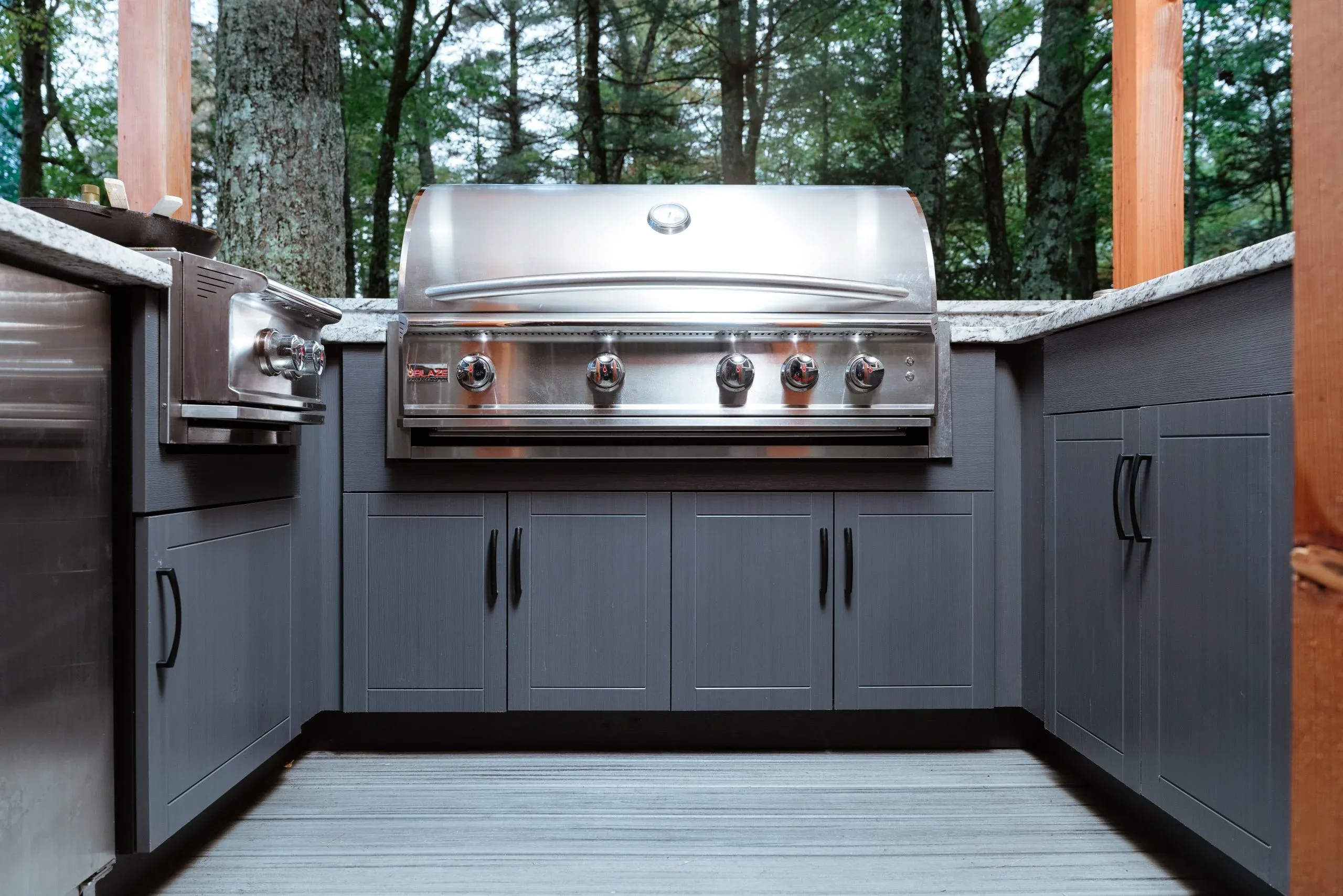
Placing your grill first solves these problems before they begin. It tells you exactly where your prep cabinets should land, where you need landing space on each side, and how much room you need for safe clearance from walls, fences, or covered structures.
The Safety Case for Leading with the Grill
Safety is a compelling reason to prioritize grill placement above all else. Built-in grills require specific clearances from combustible materials. Many require ventilation underneath or around the cabinet housing. Local codes in Greensboro and across North Carolina may dictate minimum distances from structures.
If you build your cabinet layout around a budget and then drop the grill in wherever it fits, you risk violating those clearances. In contrast, when you establish the grill location first, every cabinet and structural element gets placed with safety already accounted for. That protects your home, your guests, and your investment.
How Grill Size Shapes Your Cabinet Needs
Grills vary widely in size, from compact two-burner models to large professional-grade units spanning 40 inches or more. The size of your grill directly determines the size of the cabinet housing it, which in turn affects how many base cabinets can fit on either side.
A larger grill means less room for flanking storage unless you extend your overall footprint. A smaller grill gives you more flexibility with cabinet runs. Therefore, knowing your grill dimensions before you finalize any cabinet plan prevents costly redesigns later. It also helps your designer give you accurate estimates from the start, which makes your budget conversations far more productive.
Grill Type Matters Too
The type of grill you choose affects more than size. A natural gas grill requires a gas line run to a specific location. A kamado-style cooker needs reinforced support due to its weight. A pellet grill requires electrical access nearby for its digital controls.
Each of these requirements influences where the grill can realistically go. Additionally, each one affects what your cabinet contractor needs to coordinate with other trades before installation begins. Locking in your grill type early keeps the entire project moving on schedule.
What to Plan Around the Grill
Once your grill is positioned, the rest of your layout becomes much clearer. You need a minimum of 12 to 15 inches of counter space on each side of the grill for landing and prep. Cabinets directly below or beside the grill housing can store grilling tools, propane accessories, or cleaning supplies.
A side burner, if desired, should sit adjacent to the grill rather than across the layout. An outdoor sink works best when positioned within a few steps of the grill, not on the far end of the kitchen. Refrigeration units benefit from a spot near the prep zone so ingredients stay close without crossing the cooking area.
Each of these placements becomes logical and natural when the grill anchors your plan. Without that anchor, the layout becomes a guessing game.
Why Budget Conversations Go Better After Grill Placement
Here is the practical truth: your budget still matters. However, it becomes a much more useful tool once you know what your layout actually requires. When you start with grill placement, you can identify must-have elements versus nice-to-haves. You can phase the project intelligently, adding a sink or outdoor refrigerator later without redesigning the core structure.
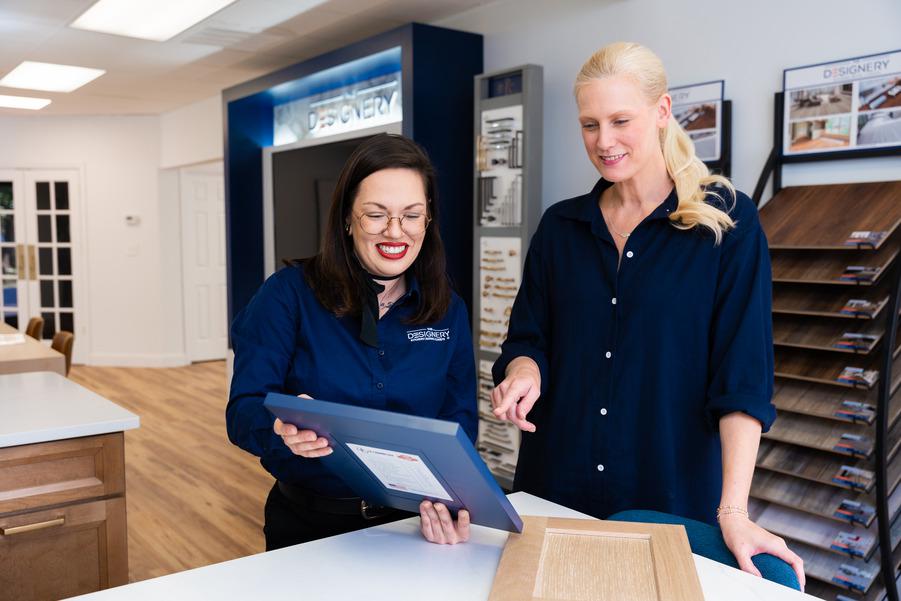
At The Designery Greensboro, our kitchen remodeling team works with homeowners to design outdoor kitchens that are built around how you cook, not just how much you want to spend. We offer semi-custom and fully customized options in materials built to handle the Carolina climate. Starting with your grill and working outward, we help you create a space that functions beautifully from day one.
Schedule a consultation with our team and bring your grill model and measurements. That one step gives us everything we need to start building your ideal outdoor kitchen layout.