Upgrading from a grill on the patio to an outdoor kitchen is one way to change your lifestyle for the better. Outdoor kitchen owners note they eat healthier, enjoy more fresh air, and spend more time with family and friends.
But to be loved, it must be used. Nothing will determine how often you want to use your new outdoor kitchen more than its function. Today, we’re discussing the outdoor kitchen triangle. We’ll find out if it really matters and discuss location, layout, and workstation ideas.
What is the kitchen triangle?
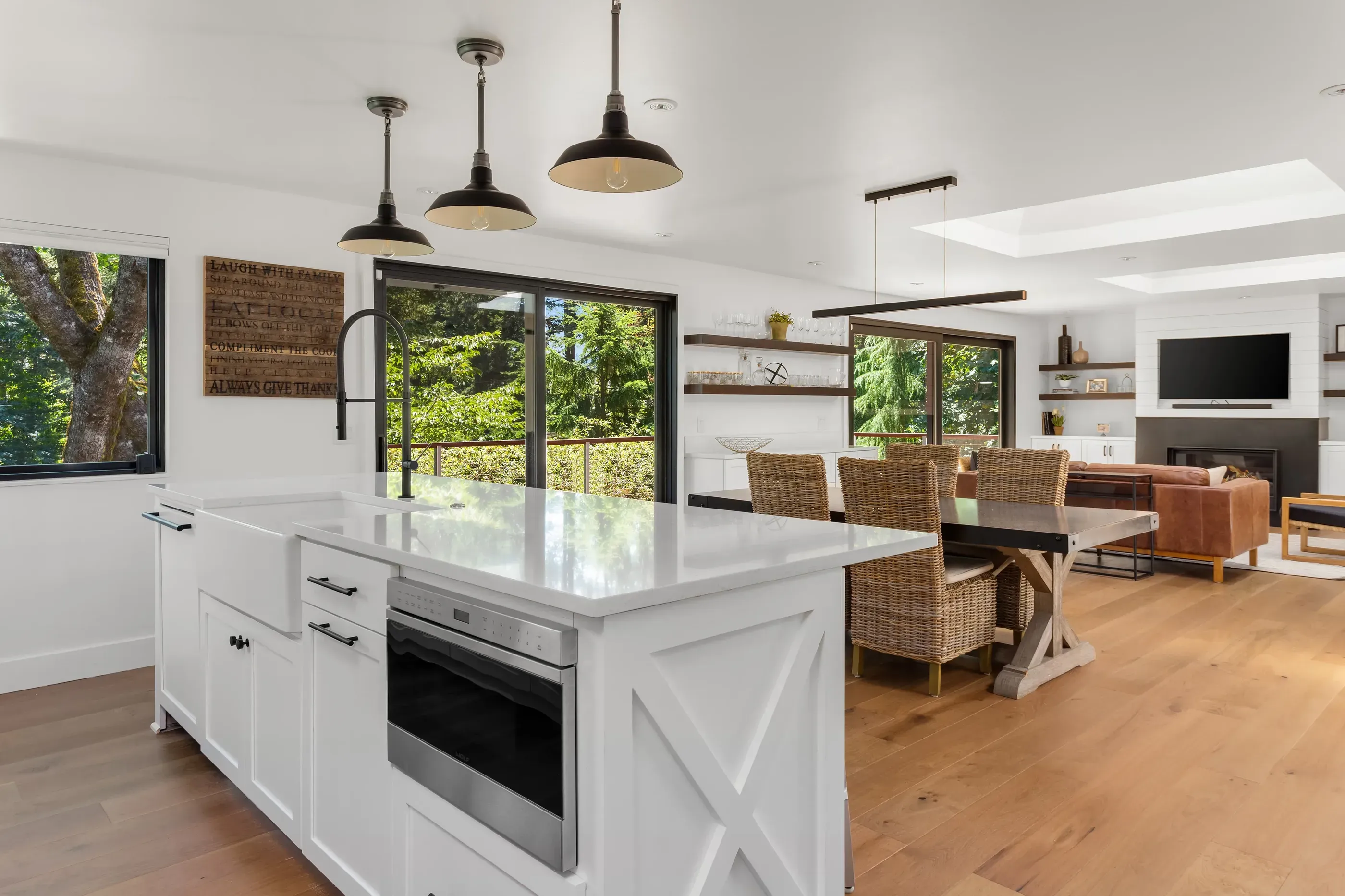
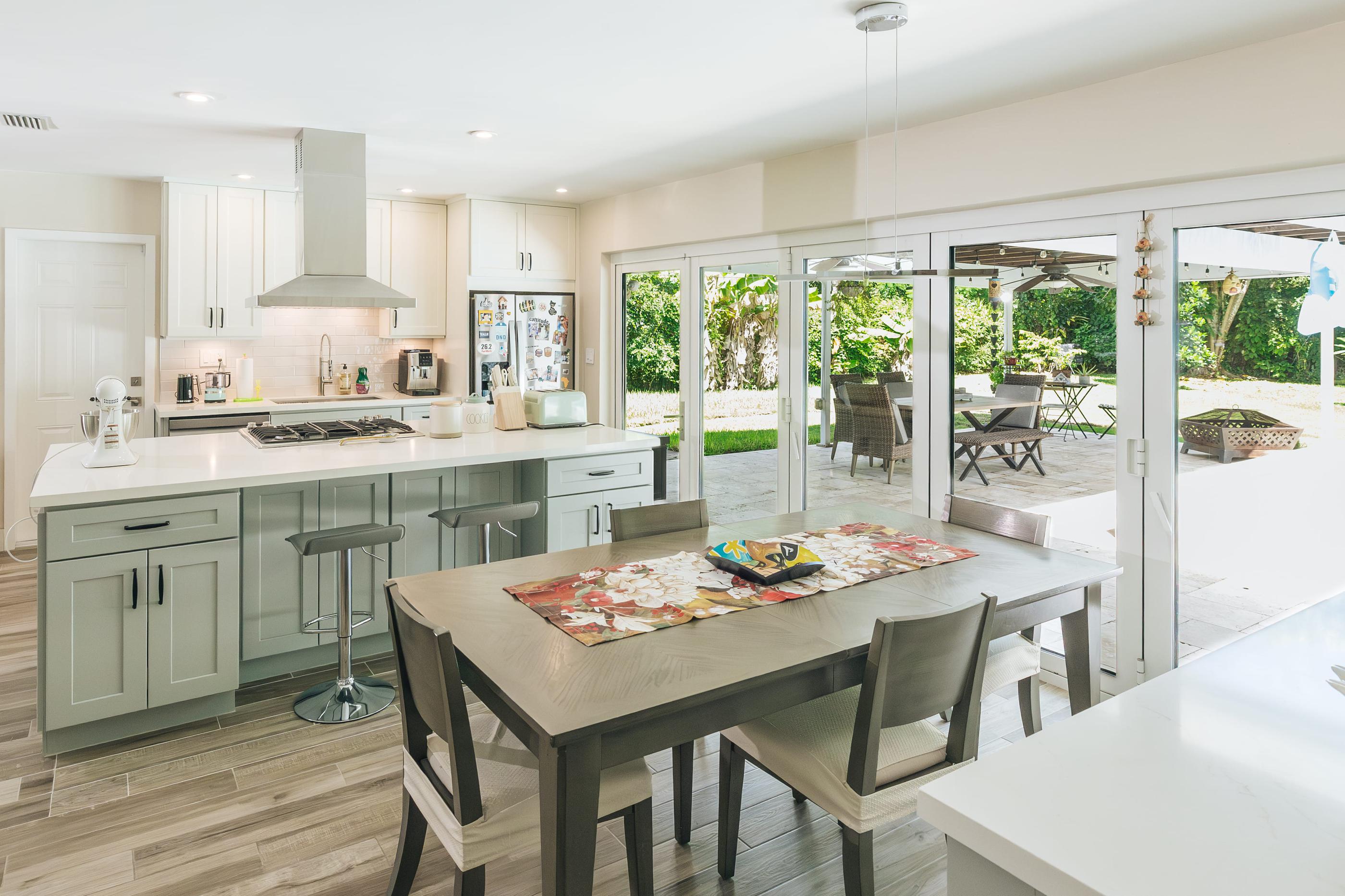
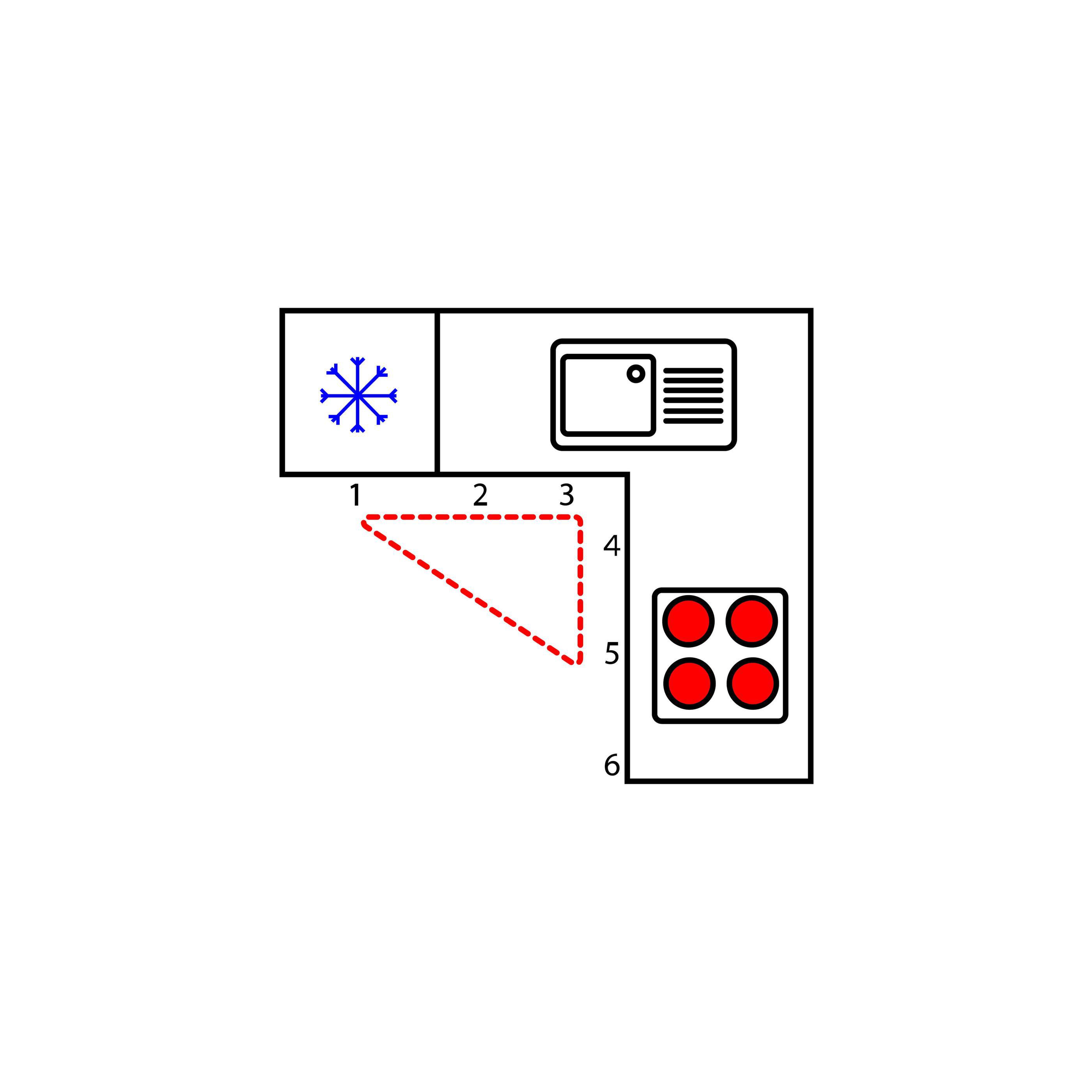
The kitchen triangle is where you intentionally arrange the refrigerator, stove, and sink in a triangle. The goal is to optimize workflow.
The example below shows a common kitchen triangle. The sink is the midway point or apex for the two other main appliances. A certain amount of distance between each station further supports logical processes and common-sense convenience.
How is the outdoor kitchen triangle different?
Outdoor kitchen triangles are different for a few reasons, including but not limited to:
-
The appliance lineup. Not every outdoor kitchen includes both a sink and a refrigerator. Some have multiple cooking areas, like a grill plus burners or a brick oven. Many are just a grill, sink, prep area, and storage.
-
Weather and space considerations. Trying to design a classic kitchen triangle that leaves a refrigerator protruding out from under a patio overhang? It doesn’t make practical sense. Durability and weather resistance are more important.
-
Purpose and style. Indoor kitchen workflows involve daily, time-bound tasks. Outdoor kitchens are more about recreation and leisure. Less about getting breakfast on the table every day in under 20 minutes.
Where should I put my outdoor kitchen?
The first step in choosing an outdoor kitchen layout is the general location. This will define the square footage we’re working with. The most popular choice is alongside/against the house, leveraging an exterior wall and/or existing deck. The other is a standalone patio or pavilion away from the house. Here’s a quick rundown of benefits and considerations for the two:
|
Alongside the house |
Away from the house |
|
Reduced construction costs due to the home providing at least part of the structure |
Can leave space for more features, such as a fire pit |
|
Offers more built-in protection and blockage from the elements |
More layout flexibility and customization than working with the existing structure |
|
Can serve as an extension of your home, increasing livable space |
Should include amenities you’d have to walk back to the home for, like a sink |
|
Need to plan for distance between the grill and the indoor living spaces |
Higher costs associated with installing a patio floor and roof/covering |
Designing an outdoor kitchen: Layout and workstation ideas
If you’re pursuing a classic layout and appliance lineup, an outdoor kitchen triangle may be possible for you. However, many of our clients prefer to scale their outdoor kitchen to specific needs.
Here are some ways to configure efficient workstations away from or right up against your home.
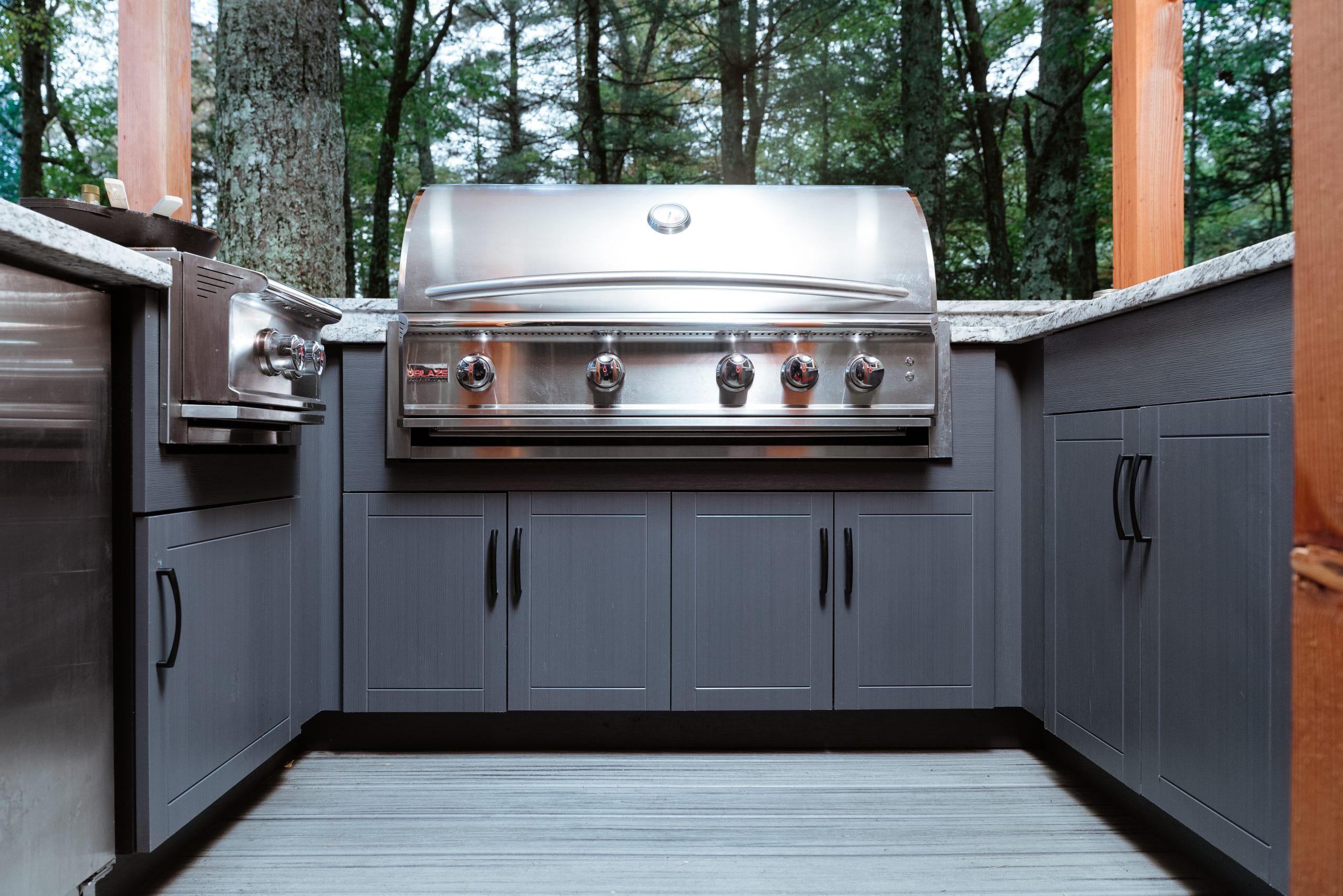
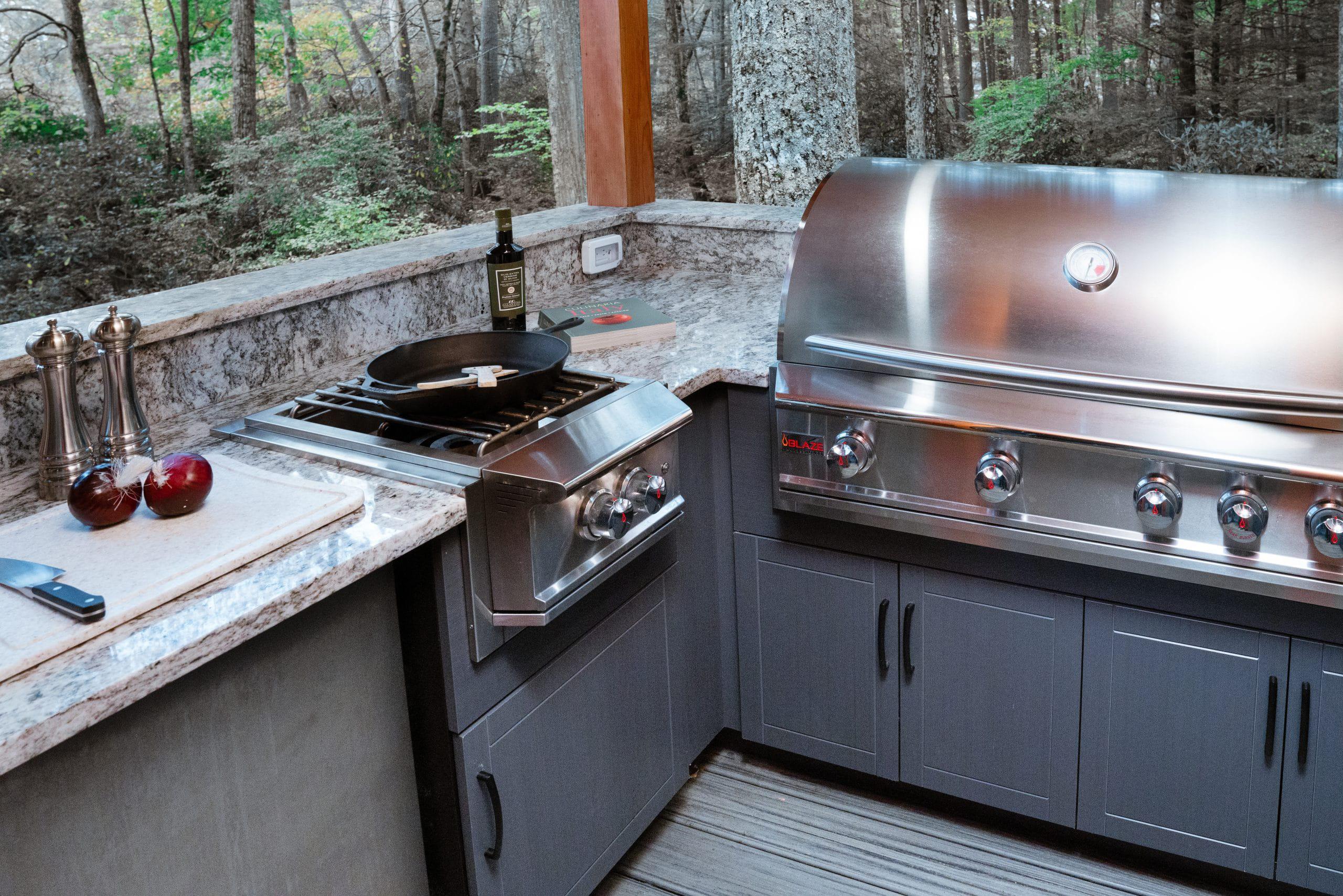
U-shaped layouts for cooking multiple dishes at the same time.
Two sides of this triangle are both occupied by cooking areas. It’s a better choice for the compact size of this layout because the owner does not have to move from one spot to another.
There’s plenty of space for prep on the left next to the countertop range. The entire right side is ideal for serving and entertaining. Ample below-counter storage means fewer trips away from workstations. The cabinet’s custom fit to the grill creates a neat, clean look.
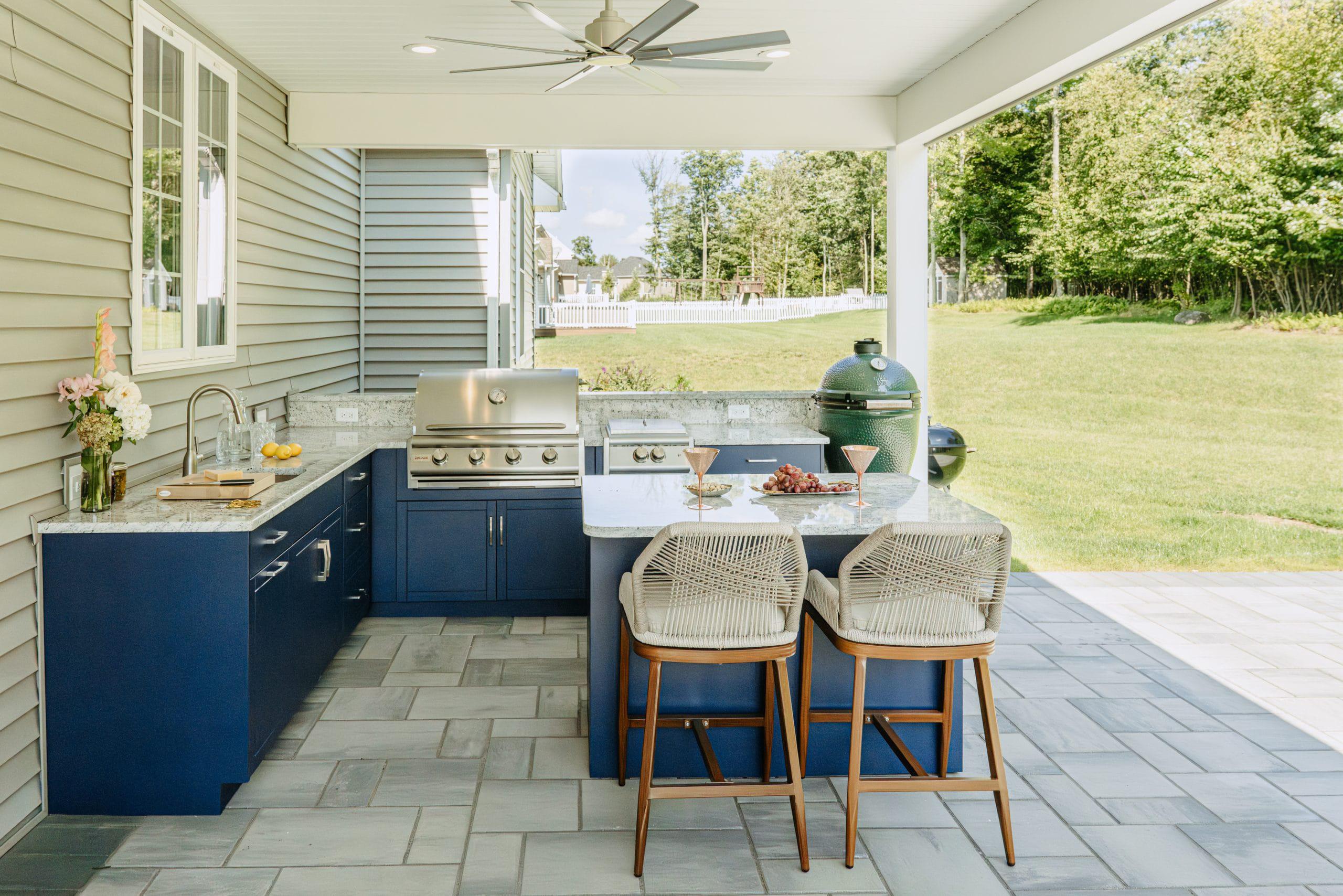
A well-considered L-shaped layout.
This outdoor kitchen masters every consideration that truly matters when building onto your home.
The sink and prep counter are against the exterior wall of the house. This can simplify plumbing as well as keep heat and smoke further away. The smoker is closest to the open air. The grill is entirely under cover and integrated into the cabinetry.
Refrigeration is secured in the island cabinetry, protected from the elements and unobstructed by other features. The owner only has to turn their back to guests when using heat, maintaining focus for better safety.
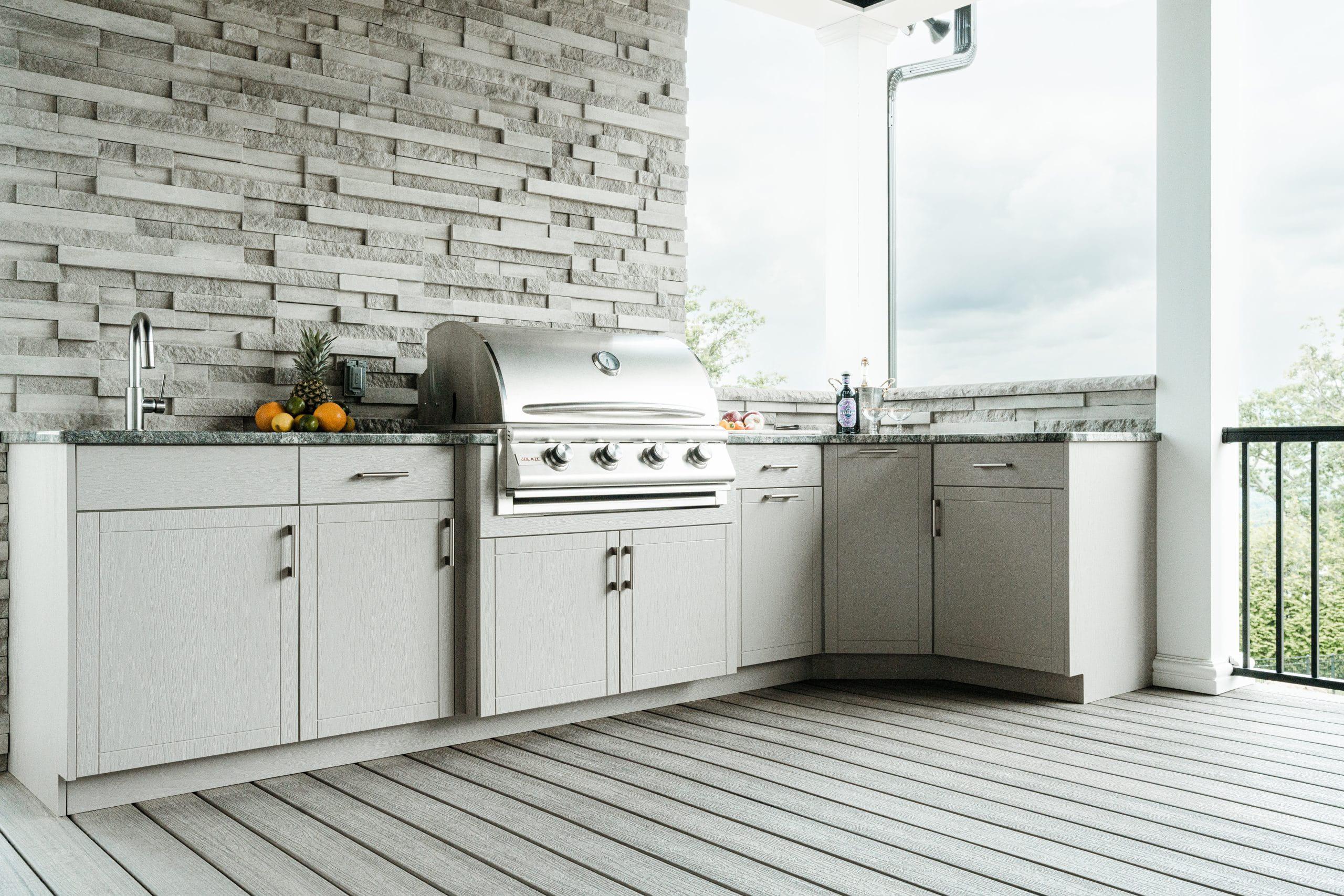
Seamless, aesthetically pleasing design.
One end of a porch or deck is a premium position for an outdoor kitchen. The remainder of the floor space can be dedicated to seating and entertaining. A heat-resistant stacked stone accent wall is the perfect backdrop for a built-in grill and coordinates nicely with natural granite countertops.
All works and utilities are neatly concealed in weatherproof HDPE outdoor cabinetry with room to spare for storage. Complemented by composite decking, the natural, neutral color palette makes it a feature as attractive as it is useful and durable.
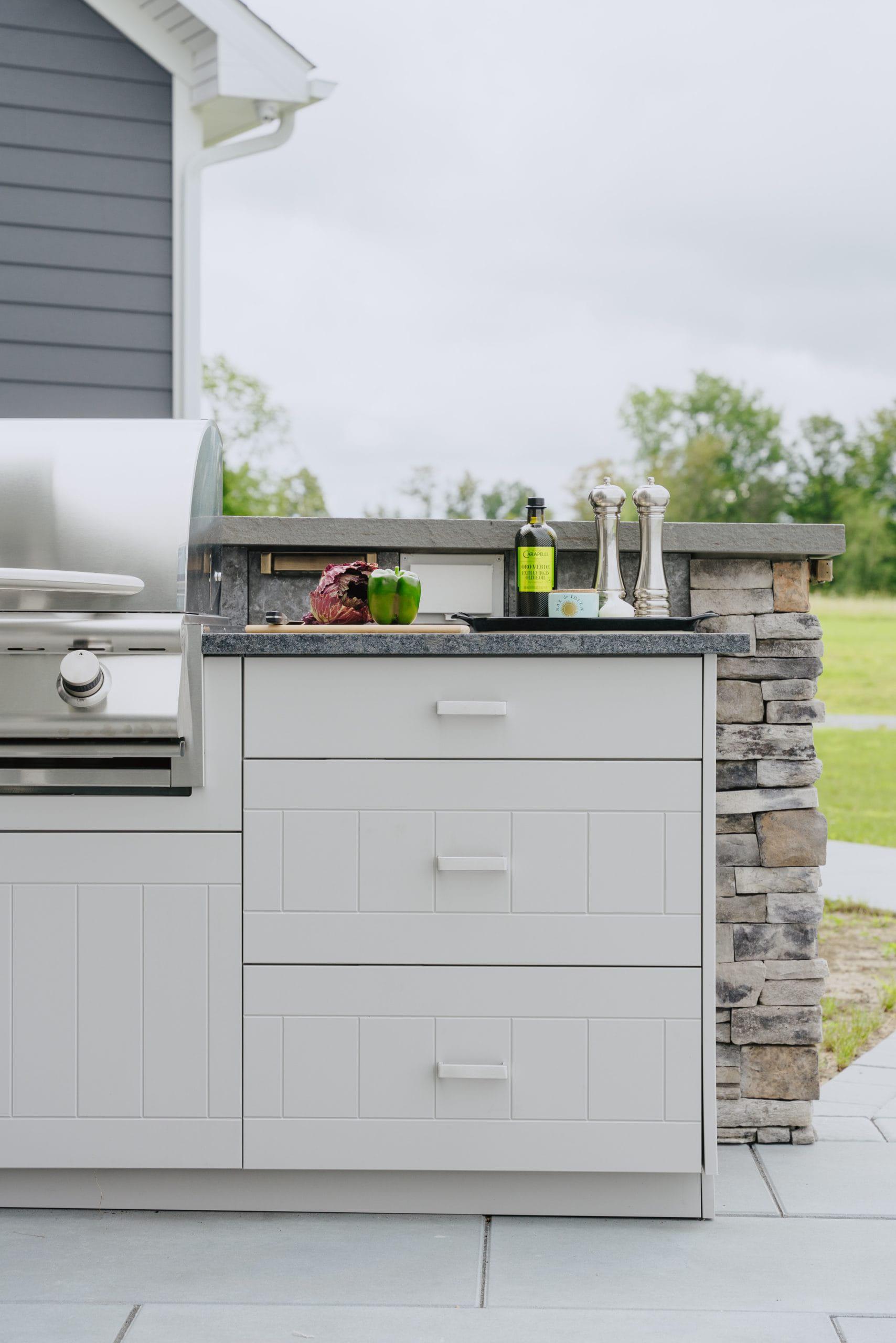
Outdoor kitchens are a four-season passion at The Designery.
Call around, and you can find someone who has completed an outdoor kitchen or two. But at The Designery, it’s something of a specialty. We offer base designs, prefabricated outdoor kitchen layouts, customized built-ins, sinks, countertops, and more. All are designed to support your workflows, withstand every element, and look beautiful.
“The project management and design options and process are second to none. Can’t say enough about this company and their professionalism.”
Ben, Designery client
Contact us today, schedule a free consultation, and ensure your new outdoor kitchen is ready for summer fun.