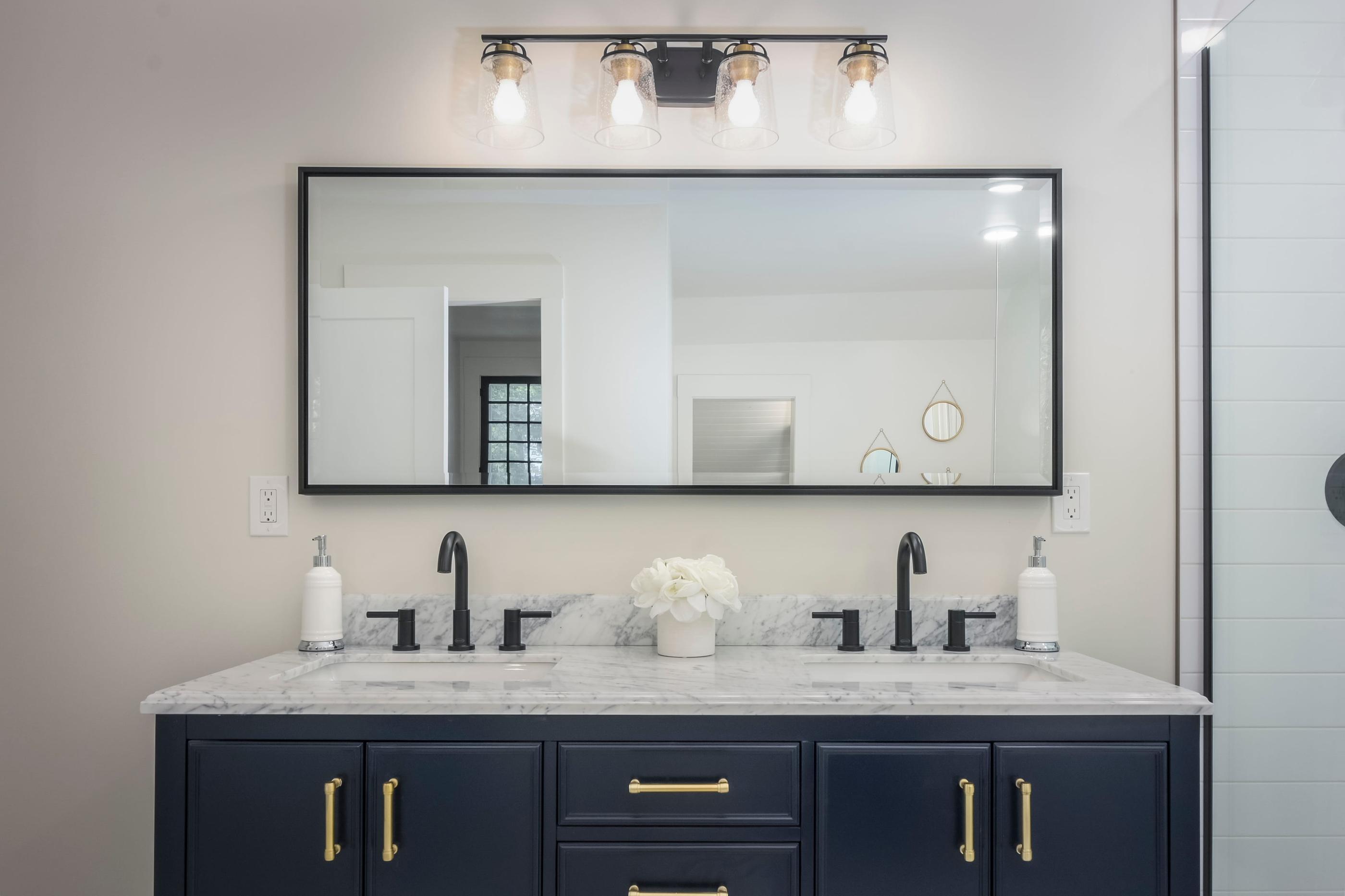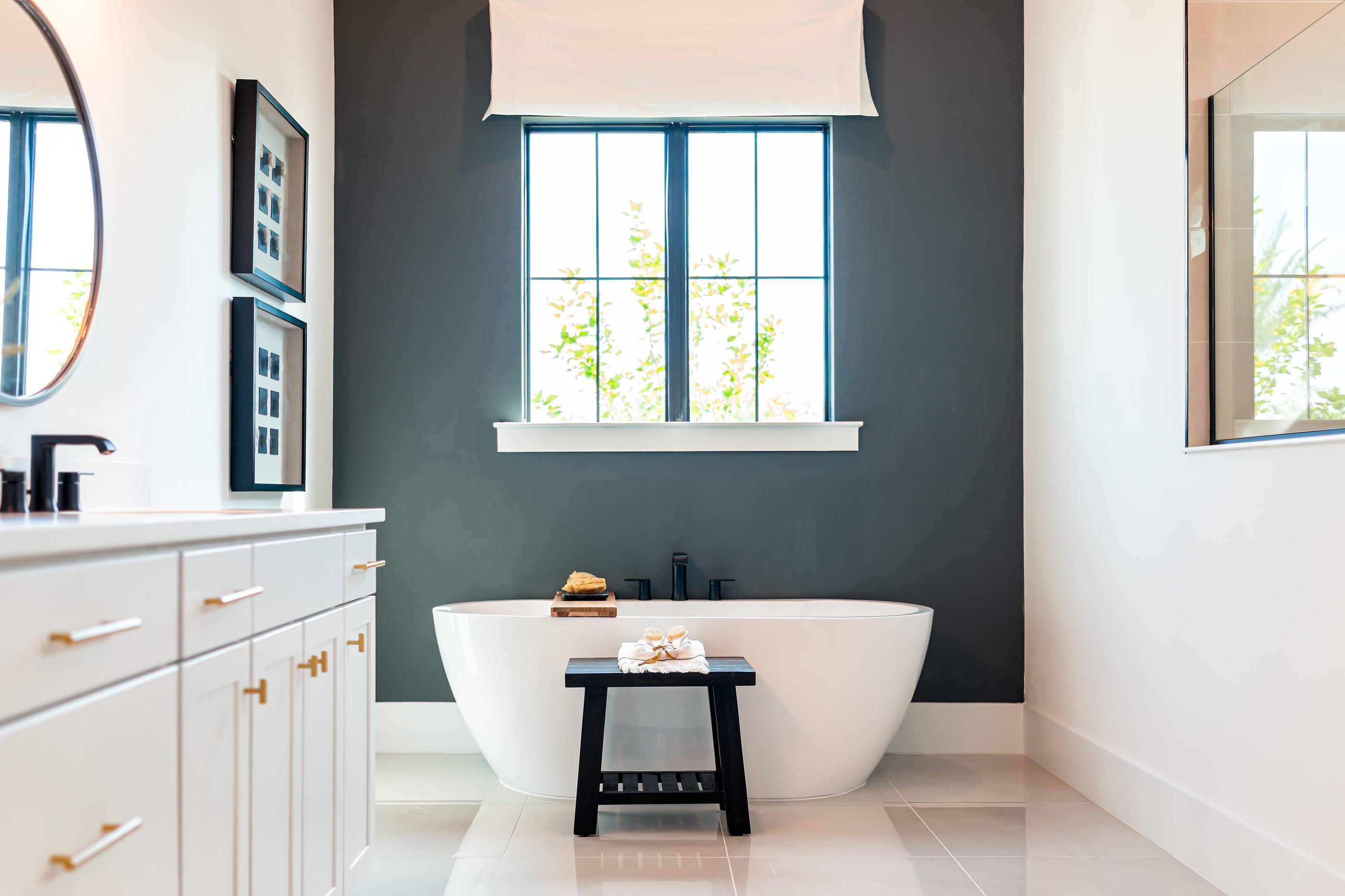
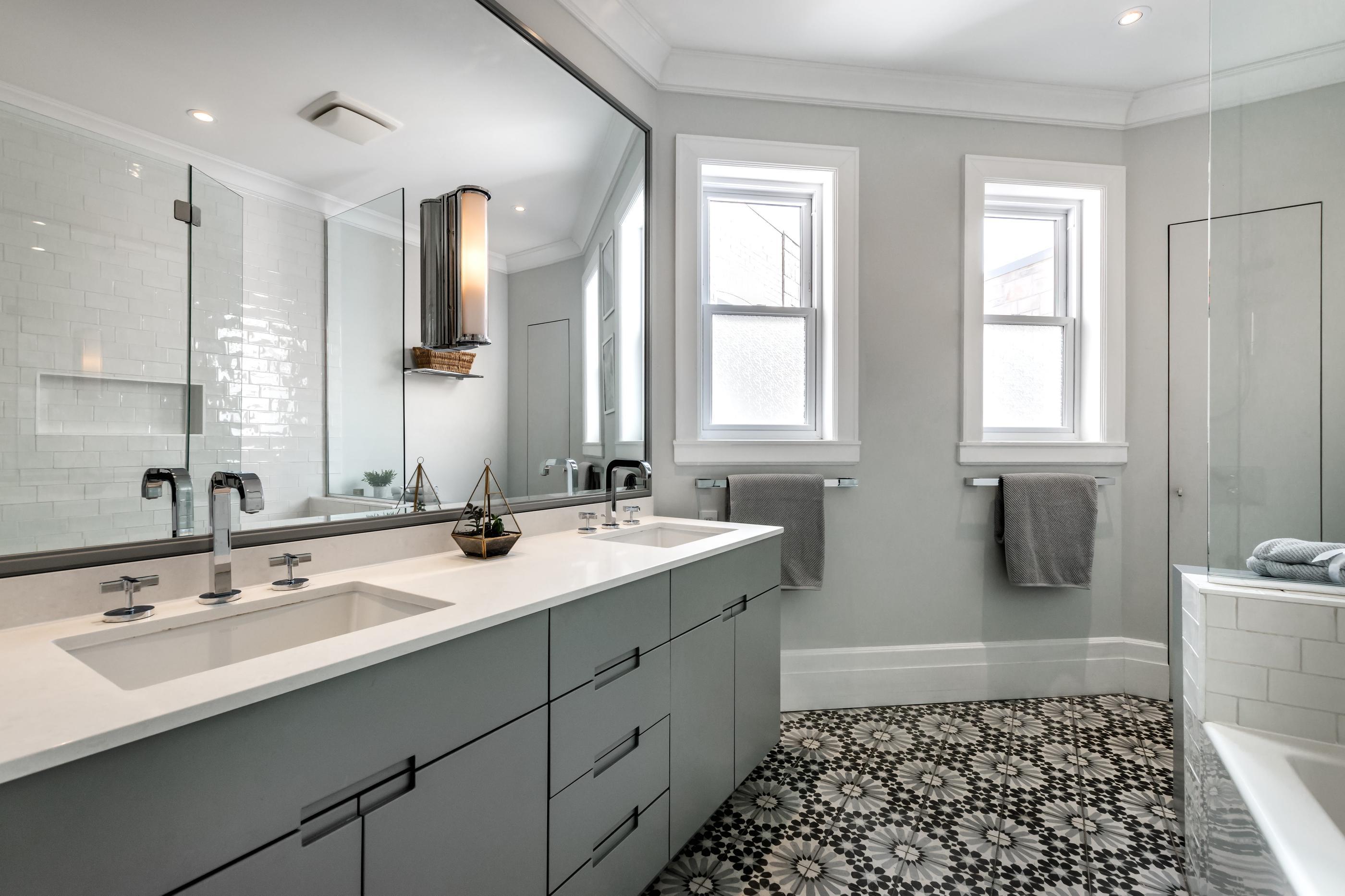
Top-quality tile, quartz counters, and plenty of ventilation. You know what you want in your new bathroom, but where does it all go? Indeed, the first part of the bathroom remodeling process is the floor plan.
Today, we’re sharing some tips and considerations for learning how to plan your bathroom layout.
What is the best bathroom layout?
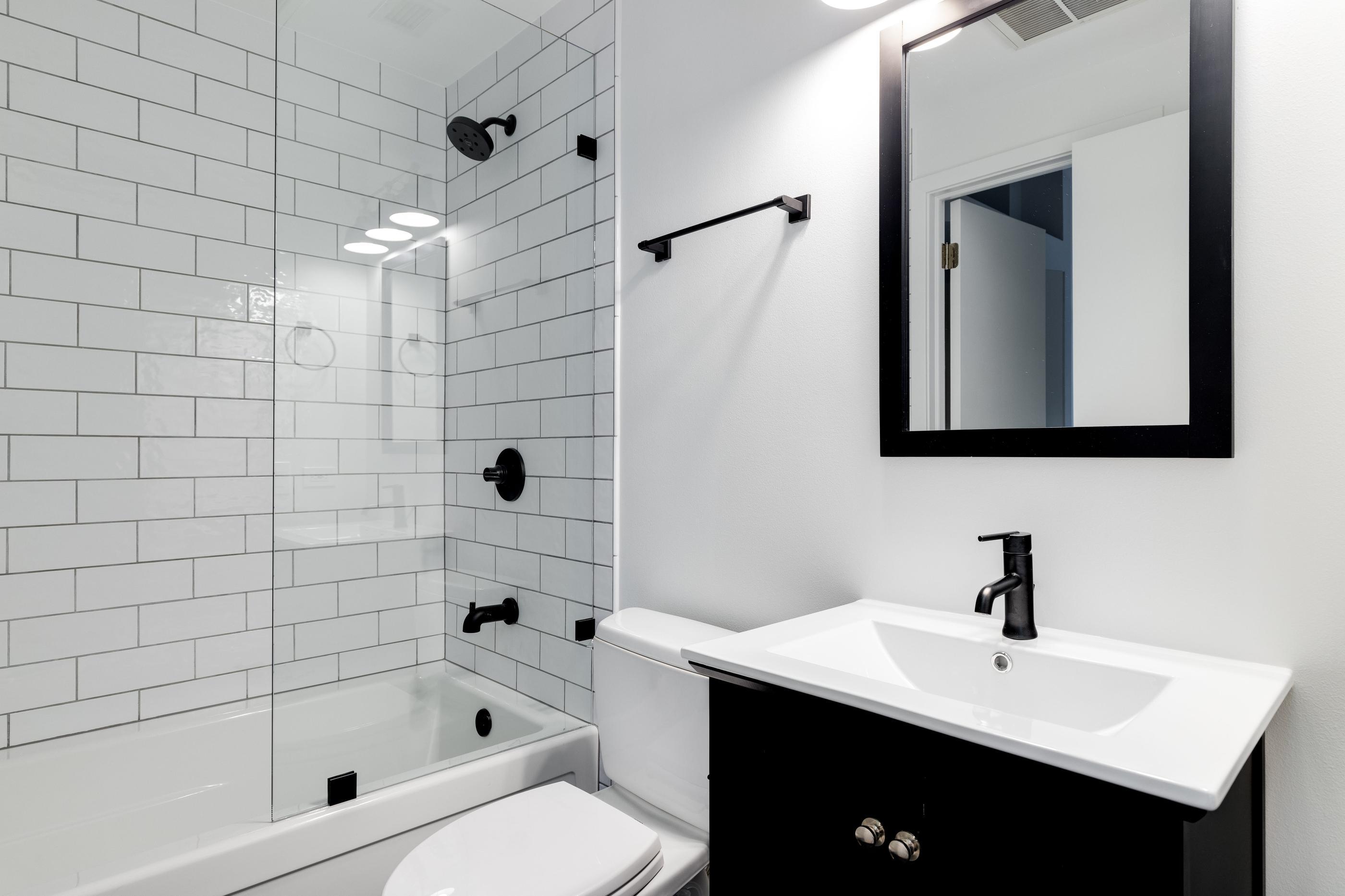
The best bathroom layout will use no more than two walls for plumbing. This saves on costs and keeps wet zones in a neat group.
If a “three-in-a-row” configuration (sink, toilet, shower) is possible along one wall, this can be highly efficient. Altering this existing layout can be complex and ultimately, not worth it.
However, an elongated rectangular bathroom can be optimized by keeping sinks and the shower/tub on one wall. The shorter wall at the end is dedicated to a privatized toilet area. This allows for more vanity storage and counterspace, and potentially a bigger shower.
It’s all going to depend on the dimensions of your property. Larger master baths can get away with a lot. What a bathroom layout should never have is a high-visibility toilet. That means you have an unobstructed, side-on view immediately upon entry.
How to plan your bathroom layout: Tips for success
No one who hasn’t seen your particular bathroom could say what the best layout would be. However, these tips and ideas can help anyone begin brainstorming.
1. Start with the toilet.
The first location you’ll confirm is the commode. New construction projects have an edge here, as moving an existing toilet hookup can be a sizable additional expense. Here’s what to keep in mind as you decide where the toilet sits:
-
Privacy. Even if it won’t be located in its own closet, avoid a clear, multi-angle view. It should never be a focal point.
-
Plumbing. Ensure it’s situated near water lines and drains.
-
Accessibility. Allow some clearance on either side, as well as making sure the fixture itself is the appropriate height.
2. Take style into account.
If you’re dreaming of a minimalist spa-like bathroom, you have to keep an eye on lines. Large bathrooms that feel luxurious allow space between each zone of use. A traditional master bathroom rarely features an unusual layout; it prefers centered features and symmetry.
It’s not just the pattern on your tile or the shape of your showerhead. Your bathroom floor plan is the foundation of your style.
3. Sky-high storage.
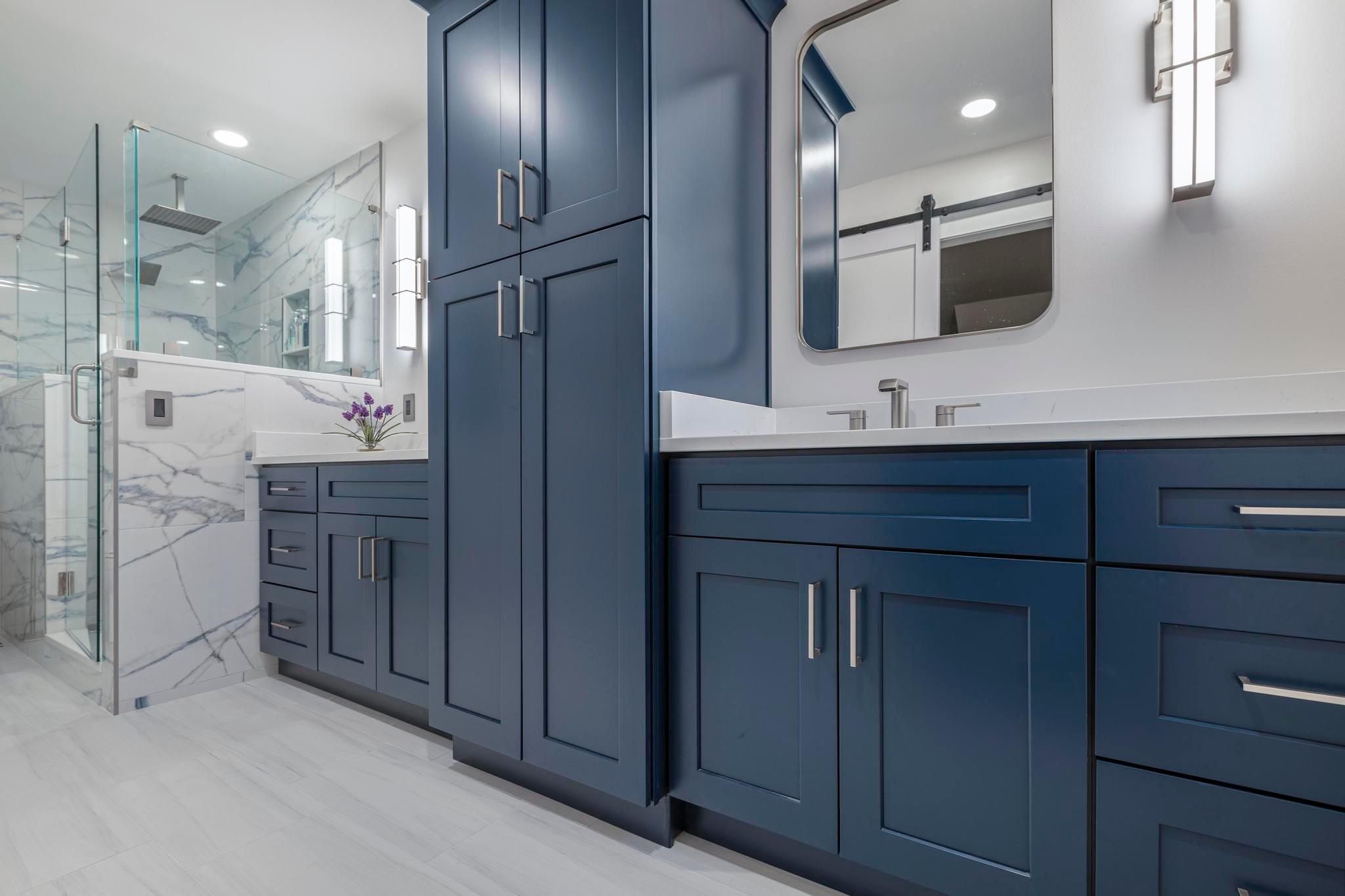
We talk about maximizing vertical space constantly in closets. However, vertical usage in bathrooms is a bit underrated. If you have an overpacked or nonexistent linen closet, don’t use your walk-in closet as extra bathroom storage.
The space between double sinks in a master bath is woefully underutilized. Forget traditional medicine cabinets. Don’t struggle to keep open shelves tidy with towels. Instead, level up storage with floor-to-ceiling cupboards.
Shower, bath, or both?
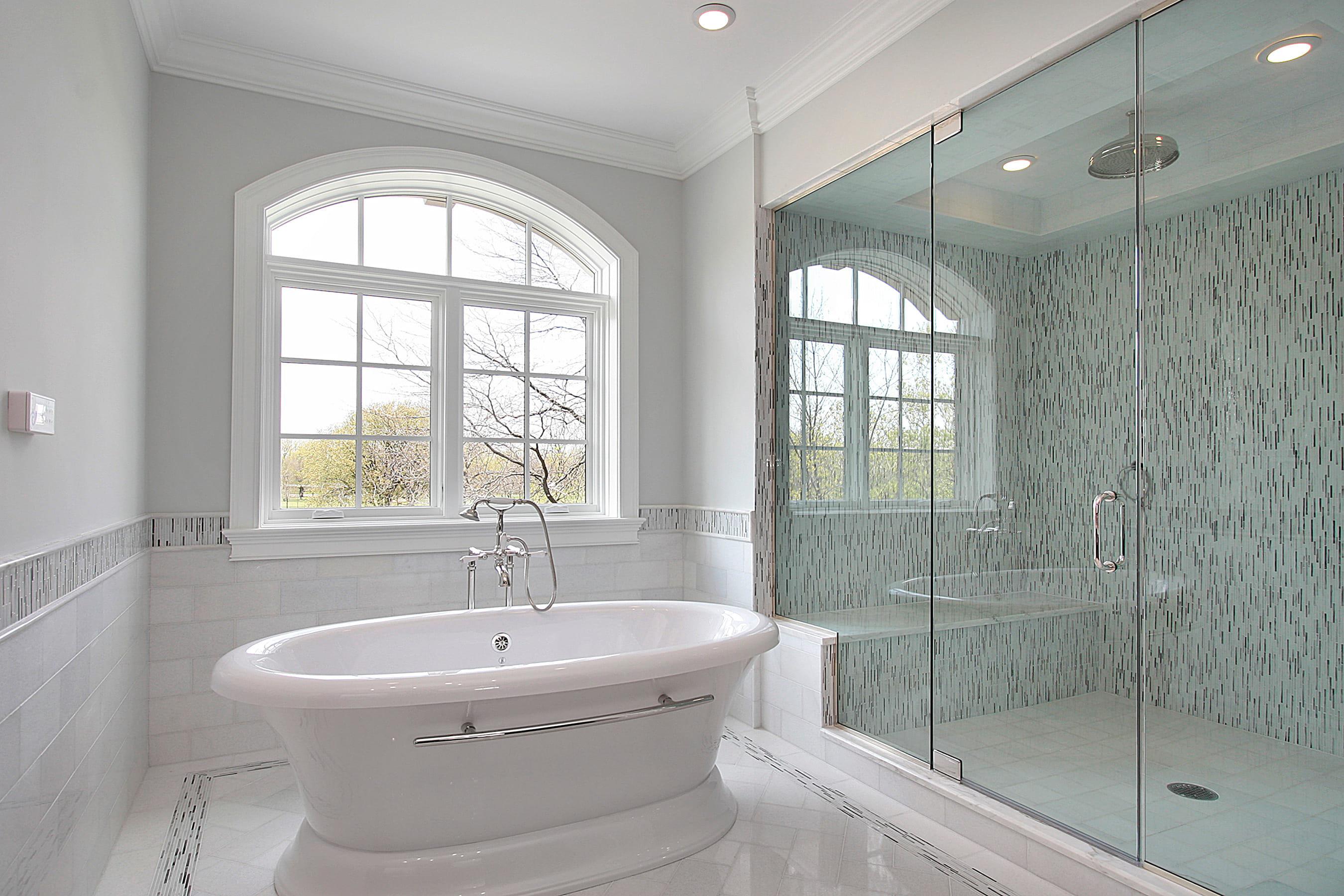
If choosing both, keep them in the same general area. Tubs and showers on opposite ends are rarely practical. From there, be realistic and size each according to your needs. With today’s bathtub options, you can go smaller and deeper to expand the shower.
If you have doubts about including a bathtub, go ahead and skip it. Fewer people regret upgrading to a larger shower with improved tilework and built-ins like benches.
Small bathroom layout tips
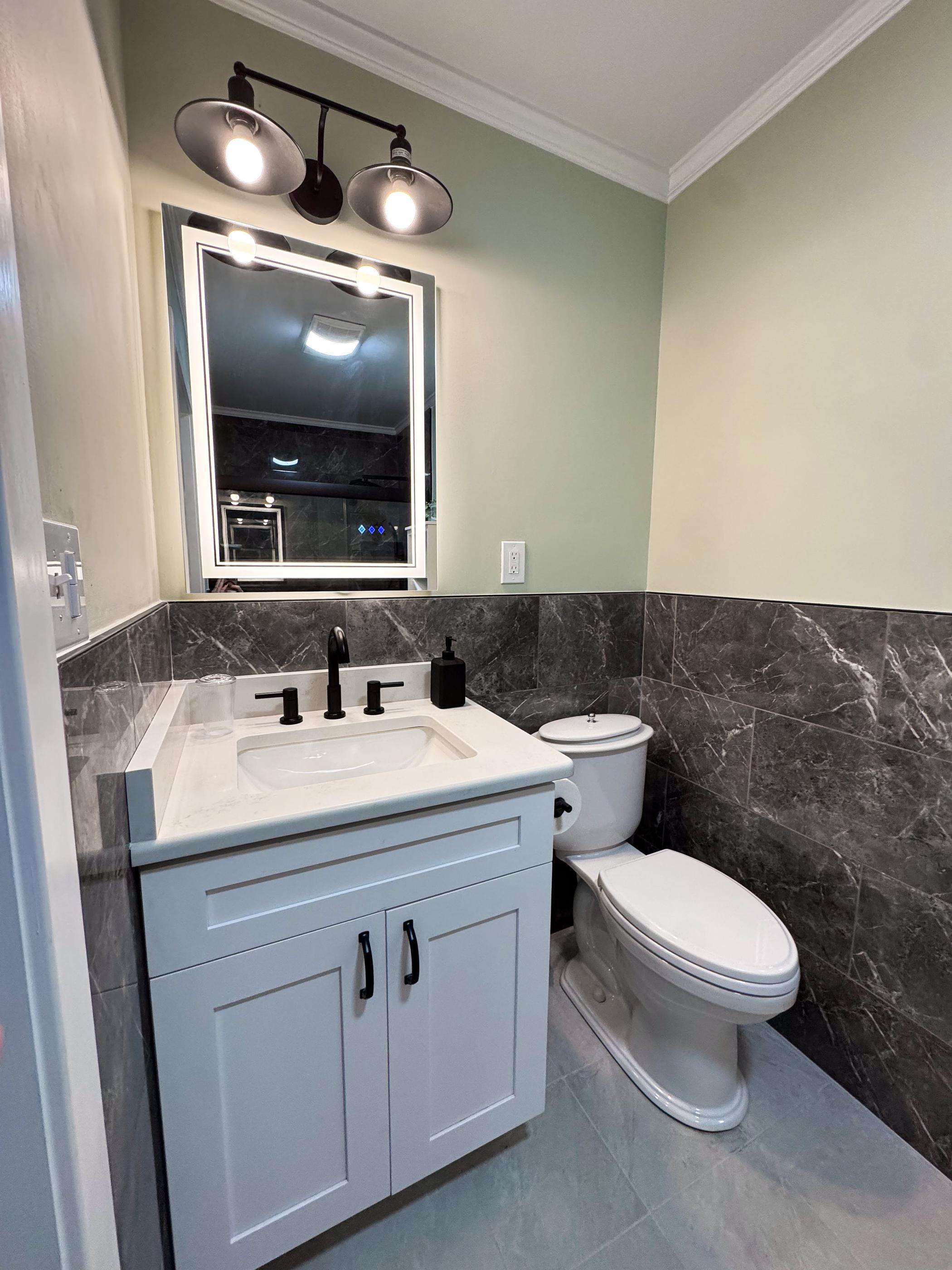
It’s not all about cramming it in wherever it will fit. Smaller bathrooms still require strategic planning for the best layout. Use these tips as a list of considerations while you remodel a compact space.
-
Factor in the doors. When the door swings all the way in, what is it blocking? Is anything affected by the use of cupboards or entry doors? Check this multiple times during the actual remodel as well as planning.
-
Sizing hardware and fixtures. Dramatically sized cabinet handles and big, elaborate widespread faucets may be visually overwhelming. Choose them on a case-by-case basis, always keeping an eye on proportions.
-
Toilet next to vanity. The safe choice in most baths, but practically a must in small ones. It’s more efficient from a plumbing standpoint, and you can always extend the counter behind the toilet.
-
Preserve floor space. Wall-mounted toilets and floating vanities can keep floors clear for a more spacious feel. Avoid widening shower spaces into the main foot traffic zone.
- Overlapping zones is okay. As long as doors aren’t in the way, zones that share space can work out. For example, the floor space around the toilet is fine to share with space for entering and exiting the shower.
Learn how to plan your bathroom layout with a professional designer.
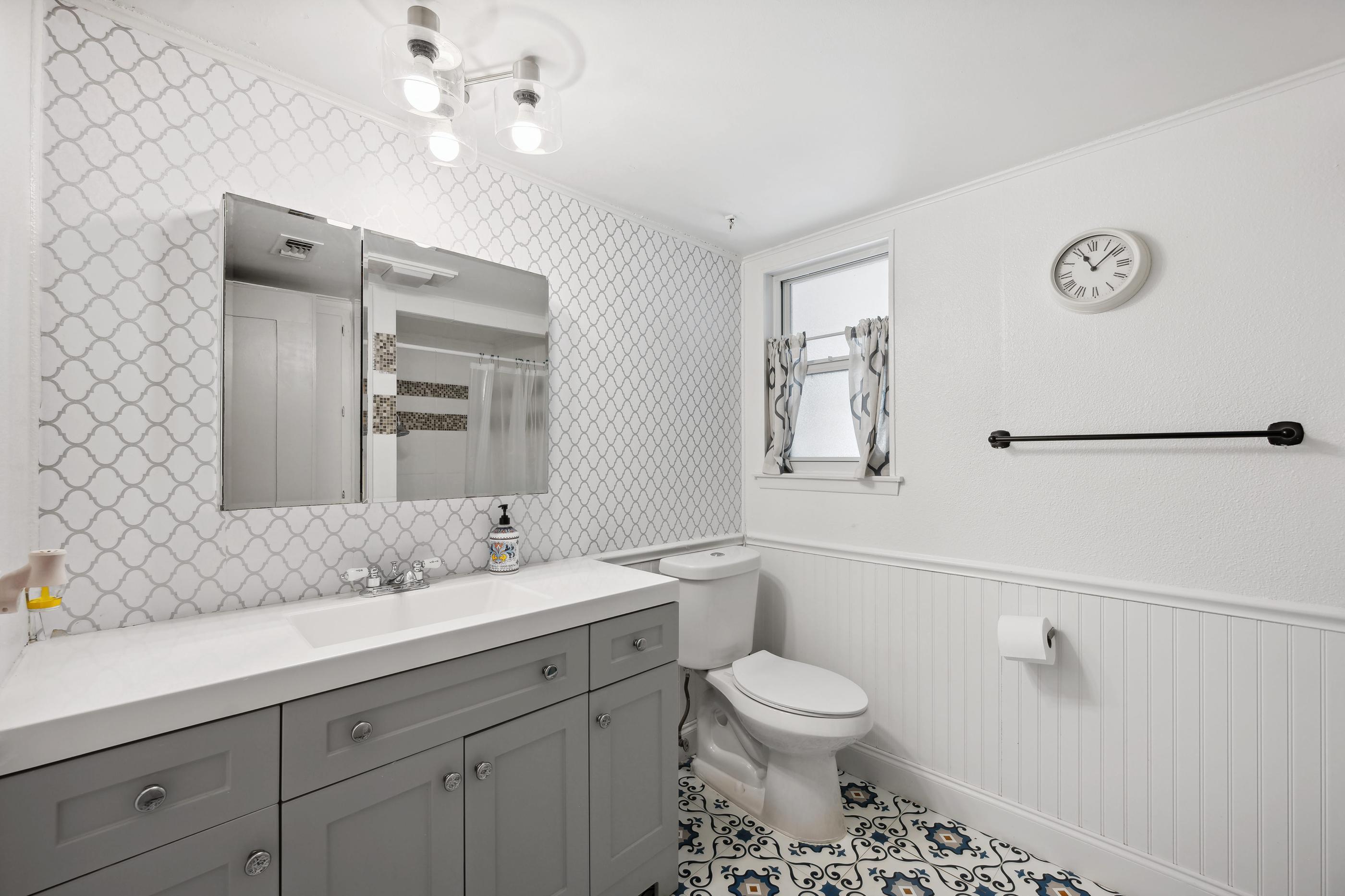
If you expanded the shower, how would it look? Would the vanity you want most be a good fit for that space? You can measure over and over again, but a design professional can actually show you. Get advice from a designer, visual renders that help provide an accurate preview of your plans, and more options for every situation.
All that plus access to high-quality materials, custom craftsmanship, and experienced installation. It’s available under one roof at The Designery.
“The team was professional, welcoming, and truly cared about quality and client satisfaction. Communication was great, the process was smooth, and the results were beautiful. I highly recommend them to anyone looking for a reliable and talented design team!”
Mica, The Designery client
Visit the nearest showroom or contact us to book a free consultation.