Aging in place means remaining in the home you already own instead of retiring to another location. It can be more cost-effective and allow seniors to continue a familiar, independent lifestyle that’s more beneficial to them. Some also prefer maintaining their family home for kids and grandkids to visit, and perhaps inherit.
However, some adjustments are usually necessary. Knowing how to prioritize remodel projects is as important for experienced residents as it is for first-time home buyers. Today, we’re sharing some ideas for keeping a home safe and functional while aging in place, whether or not you’re planning a full remodel.
What are the five pillars of aging in place?
The five pillars of aging in place are:
-
Health and wellness
-
Home safety and accessibility
-
Financial resources
-
Technology and support
The upgrades we discuss today appear to focus on the home safety and accessibility factor, but can impact others. Modifying your home helps prevent accidents that affect your health and wellness. One recommendation is part of your technology and support strategy.
Finally, if you make wise upgrades and avoid a full remodel, it can help preserve your financial resources. In the long run, aging in place can be more affordable than moving to a specialized community or facility.
How to age in place without a full remodel
The first changes homeowners rightfully make typically include installing medical alert systems and grab bars, as well as tossing those slippery throw rugs. Here are five more areas that support safe everyday living.
1. Make storage easier to access.
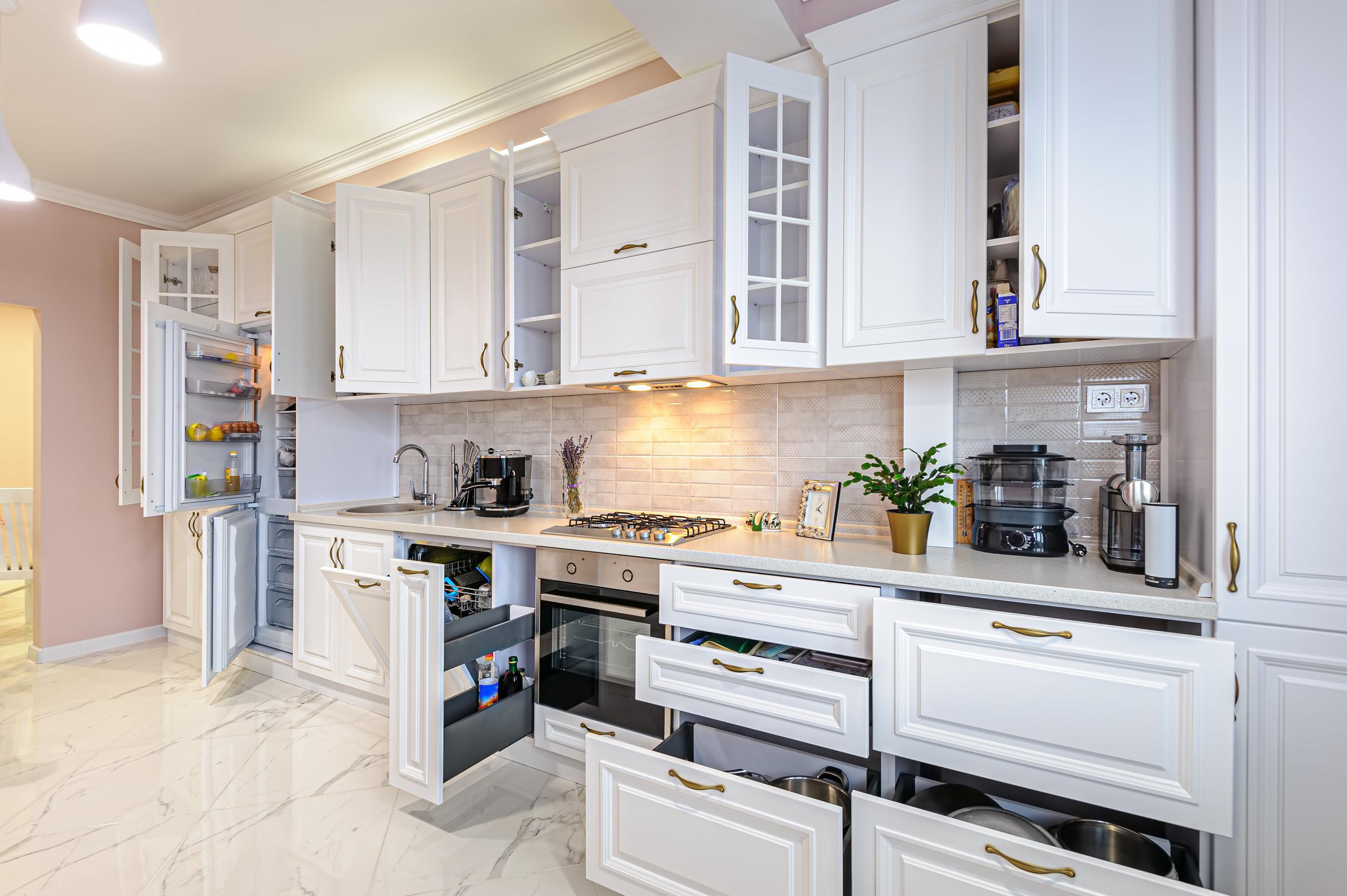
Reaching, pulling, and bearing weight overhead can be massive hazards as our muscle tone and mobility change. One of the first kitchen modifications to make is increasing space and organization at more accessible heights.
Look into pull-out storage for cabinets and pantries. Wider drawers with inserts to accommodate unwieldy objects like pots, smooth-operating tracks, and cabinets with soft-close hinges are a must.
2. Look into smart appliances.
We’ve all worried about an aging parent or newly independent child forgetting they’ve left the oven on. Smart appliances offer more safety features, including automatic shut-off and remote monitoring.
Refrigerators that alert homeowners when the door is ajar and washers with overflow and leak protections are also great options.

3. Change up the hardware.
Lever-style door handles and faucets can be easier to operate than round knobs and twist faucets. Cup pulls on drawers can be easier for reduced grip strength or fine motor skills.
Learn more, including what type of hardware to avoid, in our post on the best home hardware for accessibility.
4. Enhance the lighting.
Brighter or dimmable lights may be in order, but there are even more little features you can consider for easier visibility. Motion detectors can be programmed so that lights on stairs or in hallways automatically switch on to light your path.
Easy-operate rocker-style switches can also work with a wider range of capabilities. All controls, including those for the thermostat, may need to be height-adjusted or otherwise updated as time passes.

5. Clear more floor space.
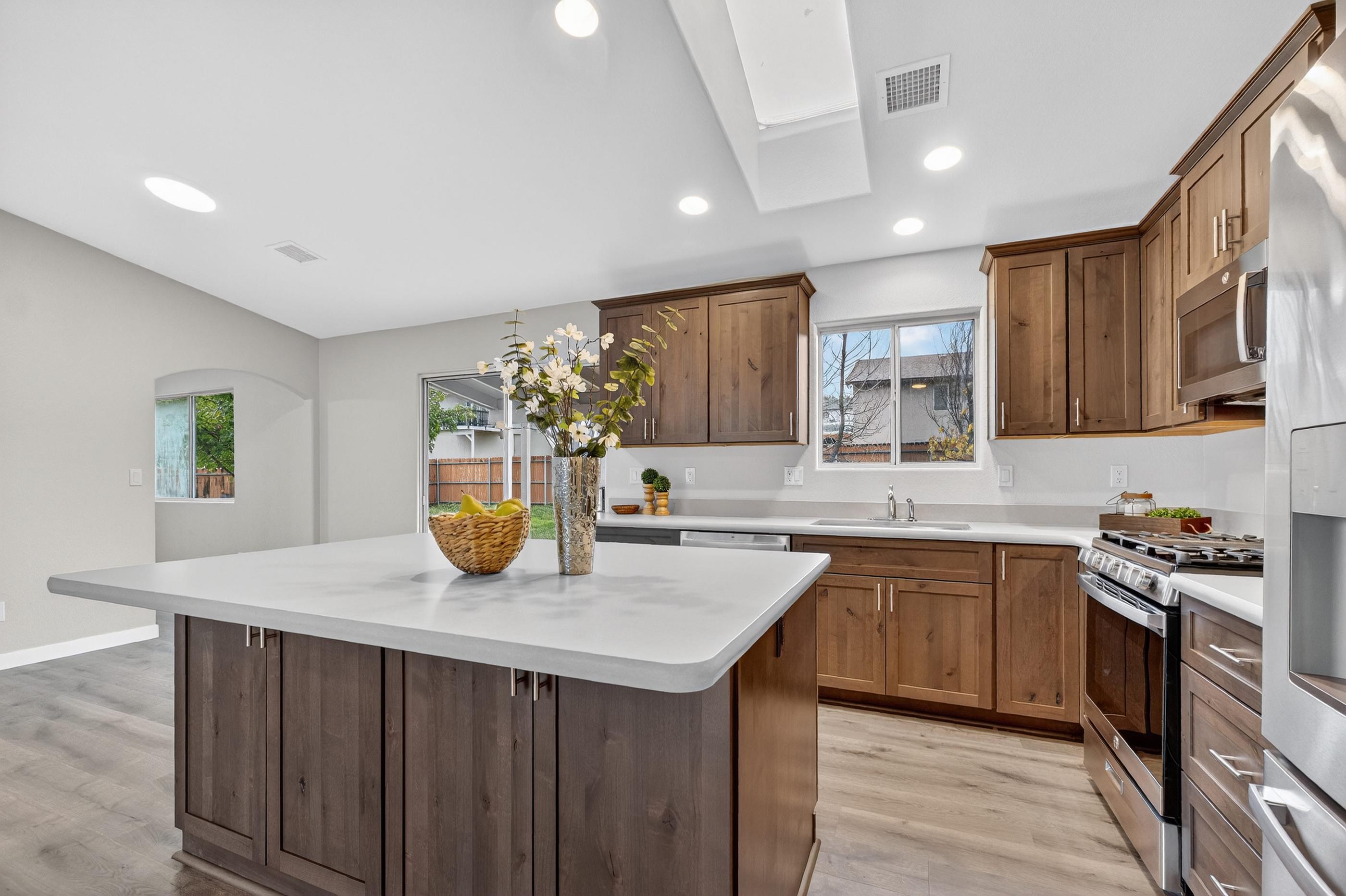
Not every person who ages in place requires wider doorways. However, ensuring more clearance in heavily trafficked areas does help prevent falls and other accidents. Repositioning or reducing the size of a kitchen island is one way to achieve this.
Speaking of floor space, there’s no better time to address any awkward flooring transitions. If you can upgrade to similar flooring throughout an open plan, you’ll reduce trip hazards and create a cohesive design that ages like a dream.
BONUS: Bathroom design for aging in place
The master bathroom may be the most critical place to add accessibility updates. However, it can be the remodel those aging in place regret most.
After installing pull bars, a lower toilet, and a walk-in tub, their cozy, personalized home looks like a hospital. Here are some quick tips to get that new, safer bathroom without making it look like the facility you are trying to avoid:
-
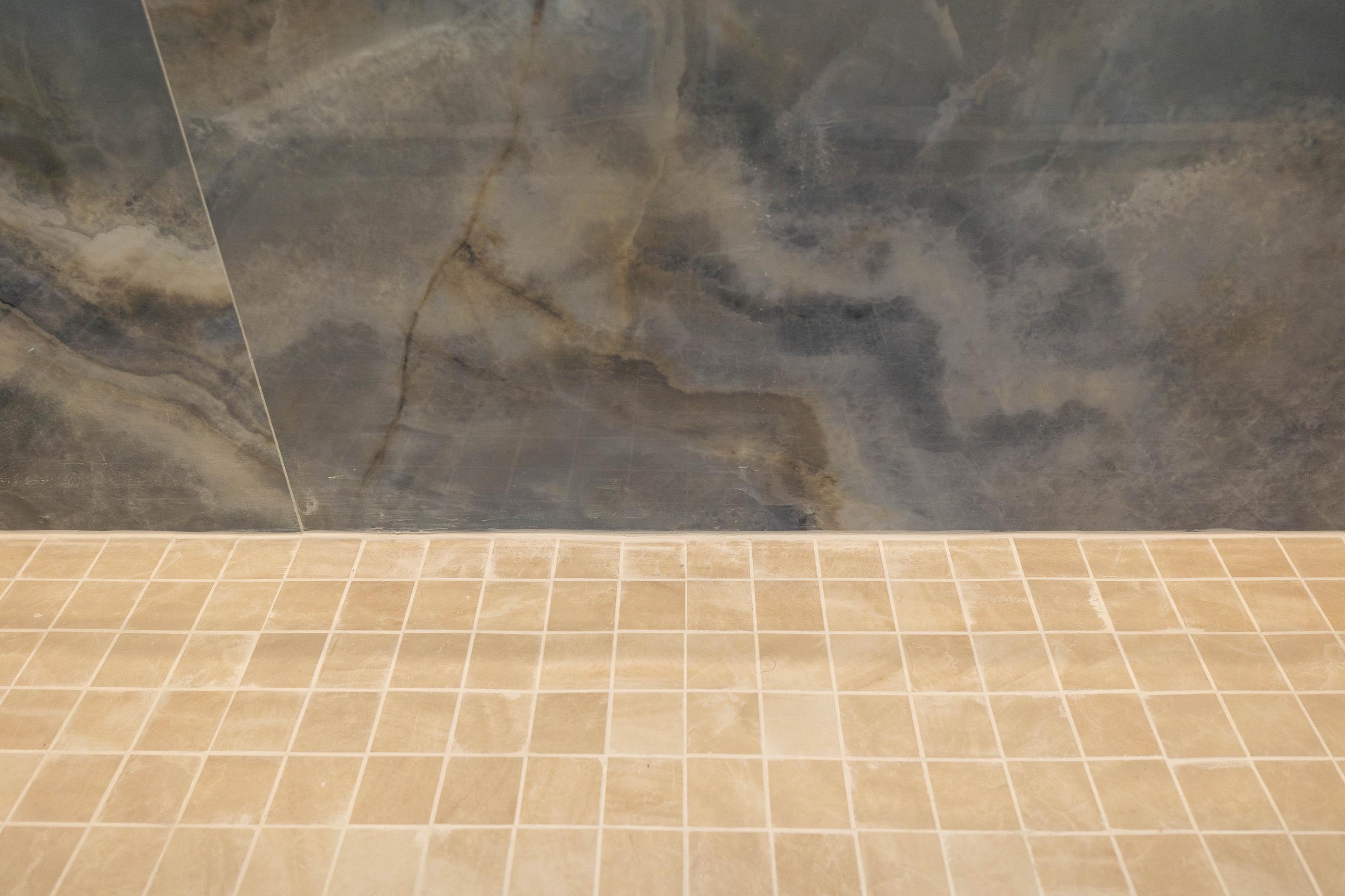
Walk straight into a seamless or curbless shower. They present no trip hazards at the entryway.
-
Choose modern grab bars in a metal color or finish that coordinates with cabinet hardware or fixtures, blending it into the design.
-
Built-in shower benches are the height of style and luxury in your choice of tile. They also make for safer bathing.
-
Smaller penny tiles can provide a safer, less slippery surface while offering excellent design flexibility.

Enter a new chapter with The Designery
A professional designer can help you select the perfect features that enhance accessibility while keeping your home’s character and style intact. From expert tilework and custom storage modifications to the latest in smart, safe appliances, The Designery makes it happen.
“I am so glad we found the Designery to help us with our renovation needs. I was very impressed with the quality of cabinets and countertops available. Moreover, Win was very knowledgeable and attentive, and I appreciated his efforts to create the kitchen of our dreams.”
–Esther, Designery client
Find a showroom near you or book a complimentary consultation today.
Aging in place FAQ
What are the most common remodels to make for aging in place?
Kitchen and bathroom remodels are the most common among people who plan to age in place. This is because more fall injuries happen in the bathroom than in any other room. Kitchens contain many hazards of their own, emphasizing the importance of accessible features.
What is the average cost of aging in place?
The national average for an aging-in-place remodel is estimated at $3,000 to $15,000. However, if a home has been well-maintained or the owner has a more flexible timeline to make gradual upgrades, a successful project can cost significantly less.
What are some common aging-in-place remodel mistakes?
Making style sacrifices and doing full-scale remodels are among the most regrettable mistakes for aging in place. The two are linked, too. Some senior homeowners found they didn’t feel as comfortable in a clinical-looking home after a comprehensive overhaul.
Others found that pricier accessibility features, like elevators, didn’t have the ROI they thought when compared to options like chair lifts.