
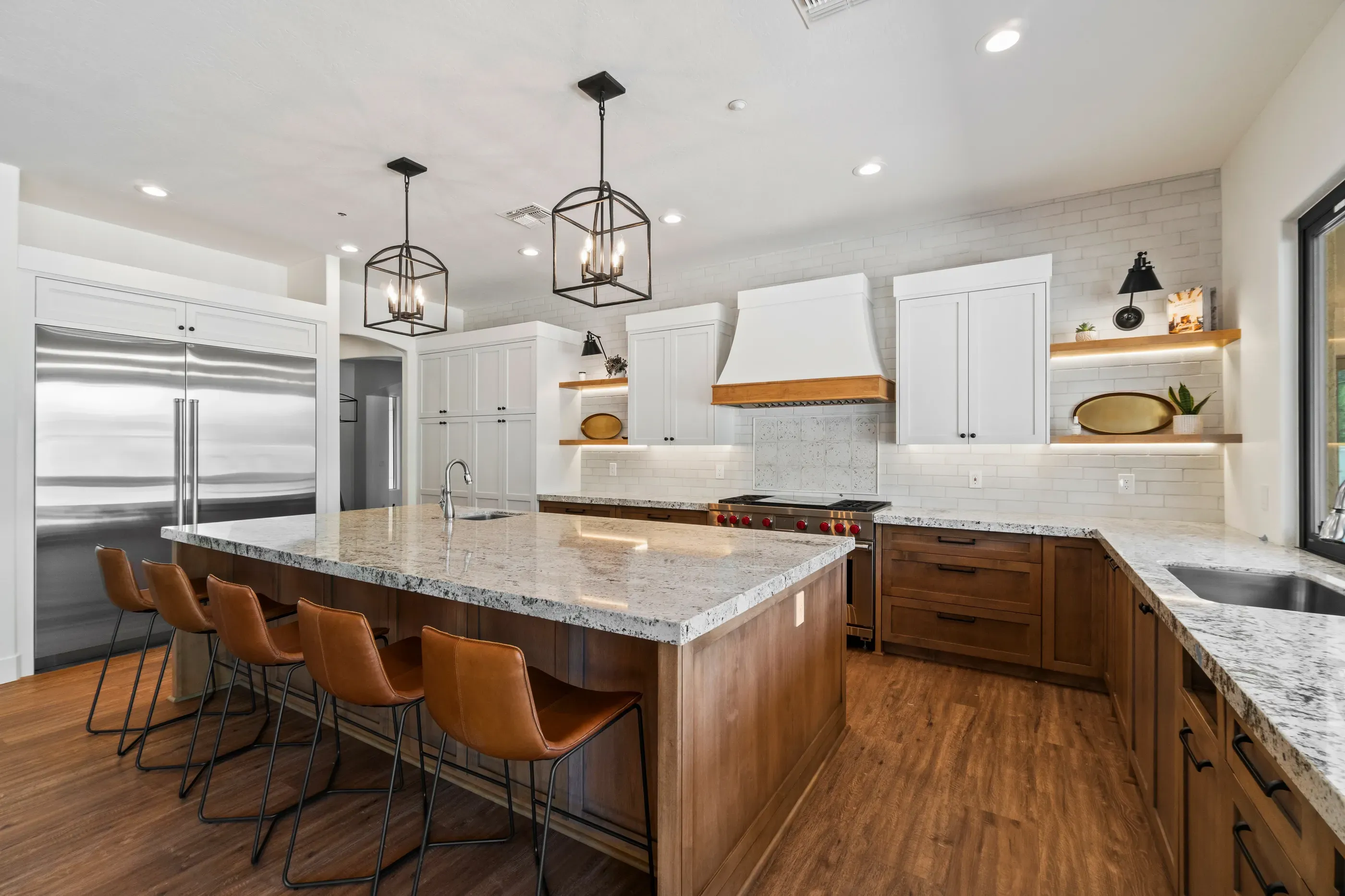
Choosing a countertop material is one of the biggest decisions in a kitchen or bathroom renovation. Granite and quartz consistently rank as the two most popular options, and for good reason. Both offer durability and beauty, but they differ in several important ways. Understanding these differences will help you select the material that best fits your home and lifestyle.
What Is Granite?
Granite is a natural stone quarried from the earth. Each slab is unique, formed over thousands of years through natural geological processes. No two granite slabs look exactly alike, which gives homeowners a truly one-of-a-kind surface. The stone is prized for its natural veining, mineral flecks, and rich color variations.
Because granite is a product of nature, its patterns can range from subtle to dramatic. Some homeowners love this unpredictability, while others prefer more consistency. Either way, granite brings an organic, timeless quality to any space.
What Is Quartz?
Quartz countertops, in contrast, are engineered. Manufacturers combine roughly 90 percent ground quartz with resins and pigments to create a durable, consistent slab. This process allows for precise color matching and pattern control, which is ideal for homeowners who want a uniform look throughout their kitchen.
Since quartz is engineered rather than mined, it offers far more design flexibility. Manufacturers can replicate the look of marble, concrete, or even granite itself, all while maintaining consistent performance across every slab.
Durability Comparison
Both materials are known for strength, but they perform differently under stress. Granite is extremely heat resistant, so placing a hot pan directly on the surface typically won't cause damage. However, granite is porous and can chip if struck by a heavy object at the wrong angle.
Quartz, on the other hand, is non-porous and highly resistant to scratches and stains. This makes it a strong choice for busy kitchens. Quartz is not entirely heat-proof, though. Direct contact with very hot cookware can cause discoloration or cracking, so trivets are still recommended.
In terms of overall daily wear, quartz generally has a slight edge for high-traffic households. Granite, however, holds up exceptionally well in outdoor kitchens or spaces exposed to heat.
Maintenance Requirements
Maintenance is where these two materials diverge the most. Granite requires periodic sealing, typically once a year, to protect against stains and bacterial growth. Skipping this step can shorten the countertop's lifespan and affect its appearance over time.
Quartz, by contrast, never needs sealing. Its non-porous surface resists stains, bacteria, and moisture without any additional treatment. For homeowners who want a low-maintenance option, quartz is often the more practical choice.
Additionally, quartz is easier to clean day to day. A simple wipe with soap and water keeps it looking new, whereas granite may require specialty cleaners to avoid damaging the sealant.
Cost Considerations
Pricing for both materials varies widely based on quality, thickness, and location. Granite costs typically range from mid to high, depending on the rarity of the slab pattern. Exotic granite colors can be significantly more expensive than common varieties.
Quartz pricing tends to be more predictable since it's manufactured rather than quarried. In many markets, granite and quartz fall within a similar price range overall. Therefore, cost alone shouldn't be the deciding factor. It's worth requesting quotes for both materials before making a final decision, since local availability can influence pricing considerably.
Style and Design Options
When it comes to style, granite offers unmatched natural beauty. Its unique veining and mineral deposits make every countertop a genuine work of art. This appeals to homeowners who want a distinctive, nature-inspired look.
Quartz, in contrast, offers consistency and versatility. Because it's engineered, quartz can be produced in nearly any color or pattern, including bold hues not found in nature. This makes it easier to match quartz to a specific design vision or existing decor.
Making the Right Choice
Ultimately, the decision between granite and quartz comes down to priorities. If you value natural uniqueness and don't mind occasional sealing, granite may be the better fit. If you prefer low maintenance and consistent patterns, quartz is likely the stronger option.
Both materials are excellent investments that add value and beauty to a home. Consulting with a countertop specialist in Columbus can help you compare samples in person and choose the material that best suits your kitchen's needs, budget, and design goals.